1
/
of
20
Chōsen-Karatsu Chawan 'Hana' by Katō Tōkurō, Inscribed by Hōunsai with Konnichian Seal
Regular price
Dhs. 10,881.00 AED
Regular price
Sale price
Dhs. 10,881.00 AED
Taxes included.
Shipping calculated at checkout.
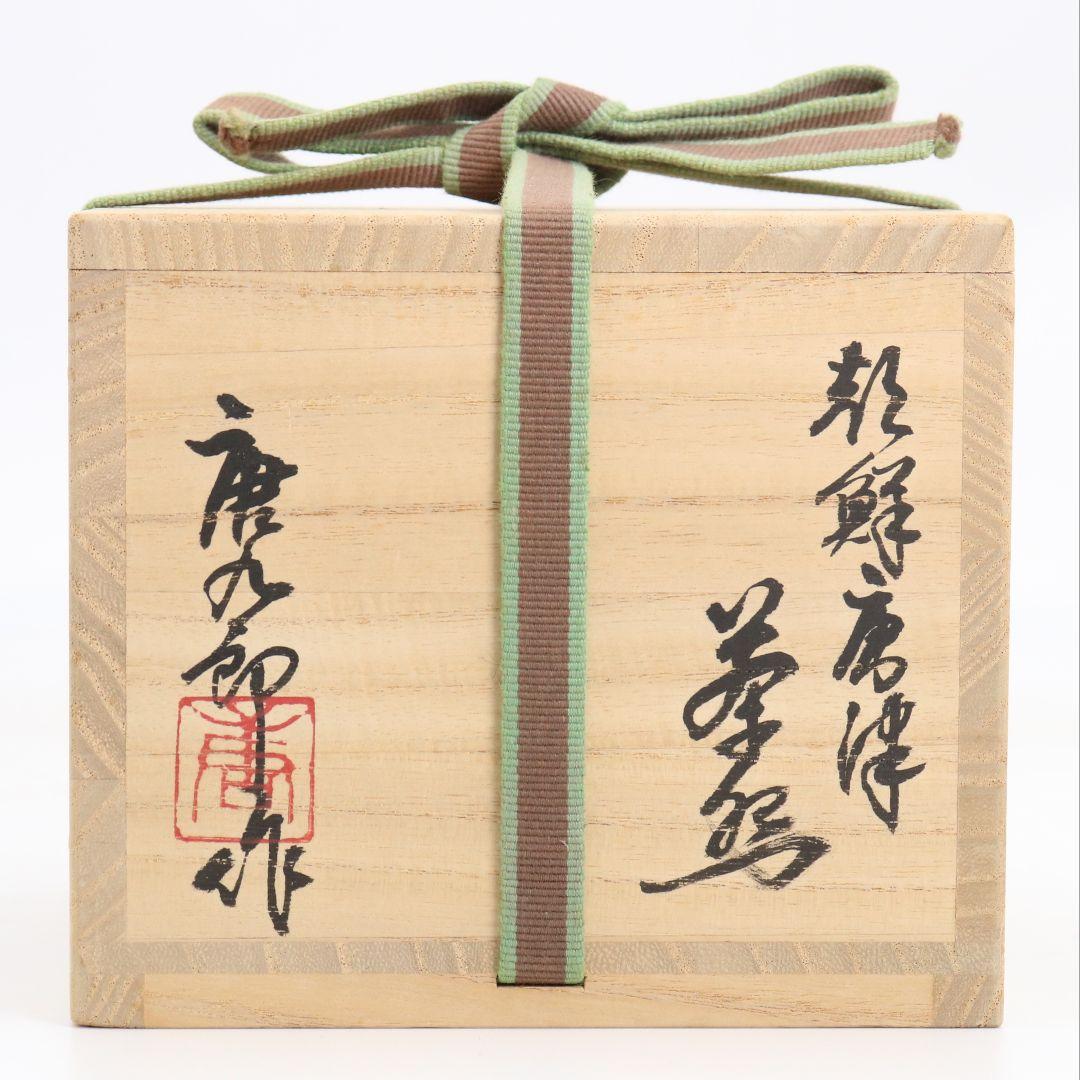
A Chōsen-Karatsu chawan by Katō Tōkurō (1898–1985), bearing the poetic name 「華」(Hana, "Flower"). The kiri-wood box is inscribed by Hōunsai Genshitsu, the fifteenth iemoto of Urasenke, and stamped with the Konnichian temple seal — the inner cipher of Urasenke's tearoom lineage in Kyoto.
Few names carry the weight that Katō Tōkurō does in twentieth-century Japanese ceramics. Born in Seto in 1898, he gave his life to recovering what had been forgotten: the Momoyama-era voices of Shino, Setoguro, Kiseto, and the rough Korean-rooted traditions of Karatsu. His excavations of old Mino kiln sites in the 1930s rewrote the history of tea ceramics in Japan. He did not merely study these wares — he rebuilt the kilns, relearned the clays, and pulled the Momoyama spirit back into living hands. The modern Mino tradition, in nearly every meaningful sense, descends from him.
Chōsen-Karatsu — "Korean-style Karatsu" — is one of the great dual-glaze idioms of the early Edo kilns of northern Kyushu. An iron-rich black or amber glaze is laid over the lower body; a straw-ash white (wara-bai) cascades from the rim. Where the two meet, they do not blend politely. They argue. They split, run, crater, and crystallize. The bowl becomes a record of that argument — fire and ash writing on iron and clay.
This chawan holds that drama with restraint. The white falls from the lip in long irregular veils, breaking into rivulets, pooling against the dark glaze below. The lower body is the color of wet riverstone — a deep iron-brown that reads almost black in shadow, then opens into amber where the firing thinned the glaze. The kōdai is cut clean and steady; the exposed clay at the foot is warm, slightly grogged, the unmistakable fingerprint of Tōkurō's hand.
The interior pools dark and glassy. Tea sits beautifully against this depth — the green of matcha against black glaze is one of the oldest visual pleasures in chanoyu, and this bowl was clearly built with that meeting in mind.
The mei 「華」 — Hana, "Flower" — is not decorative. In tea naming, a single character is a reading: it tells you how the iemoto received the bowl. Hōunsai saw a flower here — perhaps in the white veil opening from the rim, perhaps in the way the glaze blooms where it parts. Once a chawan is named by a sitting iemoto, the name travels with it. The bowl is no longer only a vessel. It is an entry in the lineage's quiet ledger.
The Konnichian (今日庵) seal on the box is the authorizing mark of Urasenke's founding tearoom in Kyoto. To find it pressed beside Hōunsai's brushwork, alongside Tōkurō's own signed and sealed inscription, is to hold a meeting of two of the most consequential lines in modern Japanese tea: the potter who restored the Momoyama voice, and the iemoto who carried Urasenke through the second half of the twentieth century.
Dimensions: H 8.2 cm × Dia 11.5 cm. Comes with the original kiri-wood tomobako, signed and sealed by both the artist and Hōunsai, with shifuku and full presentation.
A piece of this density rarely passes through quietly. We are simply its caretaker for now.
🔹 [ BASIC DETAILS ]
🔹 [ CULTURAL & ARTISTIC INSIGHT ]
🔹 [ DEEP-DIVE COMMENTARY ]
🔹 [ 日本語解説 ]
加藤唐九郎による朝鮮唐津茶碗、銘「華」。裏千家十五代鵬雲斎の書付・今日庵印を伴う共箱付き。藁灰白釉と鉄黒釉が交わる景色は唐九郎の桃山再興の到達点を示す一碗。
🔹 [ 日本語解説 ]
加藤唐九郎による朝鮮唐津茶碗、銘「華」。裏千家十五代鵬雲斎の書付・今日庵印を伴う共箱付き。藁灰白釉と鉄黒釉が交わる景色は唐九郎の桃山再興の到達点を示す一碗。
🔹 [ SHIPPING & PACKAGING ]
• Dispatch: Within 1-6 business days
• Carrier: Japan Post EMS / UPS (with tracking)
• Packaging: Carefully wrapped with protective materials
Few names carry the weight that Katō Tōkurō does in twentieth-century Japanese ceramics. Born in Seto in 1898, he gave his life to recovering what had been forgotten: the Momoyama-era voices of Shino, Setoguro, Kiseto, and the rough Korean-rooted traditions of Karatsu. His excavations of old Mino kiln sites in the 1930s rewrote the history of tea ceramics in Japan. He did not merely study these wares — he rebuilt the kilns, relearned the clays, and pulled the Momoyama spirit back into living hands. The modern Mino tradition, in nearly every meaningful sense, descends from him.
Chōsen-Karatsu — "Korean-style Karatsu" — is one of the great dual-glaze idioms of the early Edo kilns of northern Kyushu. An iron-rich black or amber glaze is laid over the lower body; a straw-ash white (wara-bai) cascades from the rim. Where the two meet, they do not blend politely. They argue. They split, run, crater, and crystallize. The bowl becomes a record of that argument — fire and ash writing on iron and clay.
This chawan holds that drama with restraint. The white falls from the lip in long irregular veils, breaking into rivulets, pooling against the dark glaze below. The lower body is the color of wet riverstone — a deep iron-brown that reads almost black in shadow, then opens into amber where the firing thinned the glaze. The kōdai is cut clean and steady; the exposed clay at the foot is warm, slightly grogged, the unmistakable fingerprint of Tōkurō's hand.
The interior pools dark and glassy. Tea sits beautifully against this depth — the green of matcha against black glaze is one of the oldest visual pleasures in chanoyu, and this bowl was clearly built with that meeting in mind.
The mei 「華」 — Hana, "Flower" — is not decorative. In tea naming, a single character is a reading: it tells you how the iemoto received the bowl. Hōunsai saw a flower here — perhaps in the white veil opening from the rim, perhaps in the way the glaze blooms where it parts. Once a chawan is named by a sitting iemoto, the name travels with it. The bowl is no longer only a vessel. It is an entry in the lineage's quiet ledger.
The Konnichian (今日庵) seal on the box is the authorizing mark of Urasenke's founding tearoom in Kyoto. To find it pressed beside Hōunsai's brushwork, alongside Tōkurō's own signed and sealed inscription, is to hold a meeting of two of the most consequential lines in modern Japanese tea: the potter who restored the Momoyama voice, and the iemoto who carried Urasenke through the second half of the twentieth century.
Dimensions: H 8.2 cm × Dia 11.5 cm. Comes with the original kiri-wood tomobako, signed and sealed by both the artist and Hōunsai, with shifuku and full presentation.
A piece of this density rarely passes through quietly. We are simply its caretaker for now.
🔹 [ BASIC DETAILS ]
🔹 [ CULTURAL & ARTISTIC INSIGHT ]
🔹 [ DEEP-DIVE COMMENTARY ]
🔹 [ 日本語解説 ]
加藤唐九郎による朝鮮唐津茶碗、銘「華」。裏千家十五代鵬雲斎の書付・今日庵印を伴う共箱付き。藁灰白釉と鉄黒釉が交わる景色は唐九郎の桃山再興の到達点を示す一碗。
🔹 [ 日本語解説 ]
加藤唐九郎による朝鮮唐津茶碗、銘「華」。裏千家十五代鵬雲斎の書付・今日庵印を伴う共箱付き。藁灰白釉と鉄黒釉が交わる景色は唐九郎の桃山再興の到達点を示す一碗。
🔹 [ SHIPPING & PACKAGING ]
• Dispatch: Within 1-6 business days
• Carrier: Japan Post EMS / UPS (with tracking)
• Packaging: Carefully wrapped with protective materials
Quantity
Couldn't load pickup availability
Low stock: 1 left
View full details