1
/
of
9
Celadon Matcha Bowl by Yamaguchi Takashi — Goryeo-Style Crackle Glaze, Signed Wooden Box
Celadon Matcha Bowl by Yamaguchi Takashi — Goryeo-Style Crackle Glaze, Signed Wooden Box
Regular price
Dhs. 653.00 AED
Regular price
Sale price
Dhs. 653.00 AED
Taxes included.
Shipping calculated at checkout.
Experience Authentic Japan Art with this celadon matcha bowl Yamaguchi Takashi. This Japanese celadon chawan serves as a Goryeo style crackle glaze tea bowl and handmade stoneware matcha bowl, featuring signed artist wooden box and kannyu crackle glaze ceramic—a must-have for any Art Collector. Each detail of this celadon tea ceremony bowl speaks to a tradition older than memory itself, making it a distinguished Japanese pottery gift for tea ceremony.
🔹 [ BASIC DETAILS ]
• Artist: Yamaguchi Takashi (山口孟作)
• Technique: Goryeo-style celadon glaze (高麗写し青磁) with pronounced kannyu crackle
• Era: 1980s–2000s (Showa–Heisei period)
• Origin: Japan (Goryeo-influenced ceramic tradition)
• Dimensions: Diameter approx. 13 cm, Height approx. 7 cm
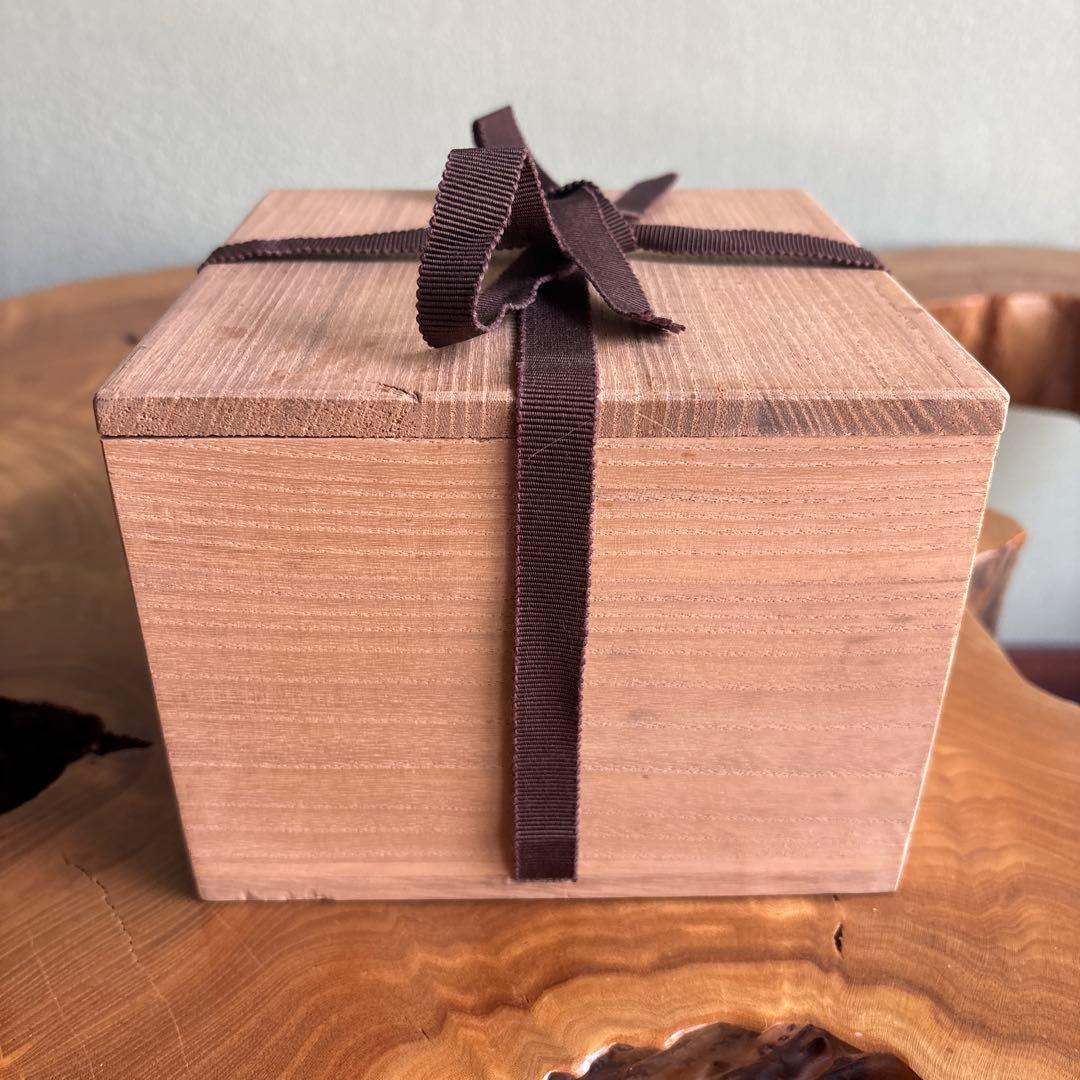
• Box: Tomobako (共箱) — original signed wooden box with artist inscription and red seal
• Condition: Excellent — no chips, no cracks; rich crackle glaze is intentional and undamaged
🔹 [ CULTURAL & ARTISTIC INSIGHT ]
Celadon — known in Japanese as seiji (青磁) — carries one of the oldest pedigrees in East Asian ceramics. The Goryeo dynasty of Korea (918–1392) elevated celadon to an art form that captivated Chinese emperors and Japanese tea masters alike. Its distinctive jade-grey-blue glaze, suffused with a faint inner luminosity, was compared in historical records to "the color of the sky after rain" — a phrase that persists in connoisseur vocabulary to this day.
Yamaguchi Takashi works within this lineage through a practice known as utsushi — the art of honoring a historical prototype while giving it one's own breath. His Goryeo-style celadon is not imitation; it is dialogue. The kannyu crackle that maps the entire surface of this bowl is the result of deliberate tension engineered between glaze and clay body during cooling. Each line is a record of that event — the kiln's last word, written in the language of contraction.
The interior of this bowl opens with quiet authority. The pale celadon deepens at the base, and scattered iron flecks from the clay body surface through the glaze like distant islands seen from altitude. The misty blue-green tone shifts perceptibly as light changes — warmer in candlelight, cooler in shadow.
Poetic Line: "The crackled glaze holds the color of distance — water just before it becomes sky."
🔹 [ DEEP-DIVE COMMENTARY ]
Seiji (青磁 / celadon) in Japanese ceramic history occupies a rare position: it arrived as a foreign prestige ware and was slowly absorbed into the vocabulary of wabi-cha (侘び茶), the austere aesthetic of the tea ceremony as codified by Sen no Rikyū. Unlike the deliberately imperfect earthenwares of Raku or Hagi, celadon's precision and restrained elegance presented tea masters with a different register of beauty — one of translucent depth rather than tactile roughness.
The Goryeo-style (高麗写し) tradition Yamaguchi Takashi draws upon is distinguished by several technical hallmarks. First, the base clay is typically composed of fine-grained stoneware that fires to a tight, nearly porcelain-like body. Second, the feldspar-rich glaze is applied with exacting control — too thick and the crackle becomes coarse, too thin and the characteristic blue-green color fails to develop. The glaze is fired to approximately 1250–1300°C in a reduction atmosphere, starving the kiln of oxygen to shift iron oxide compounds toward the blue-green spectrum.
The kannyu (貫入) — the crackle network — forms as the glaze cools faster than the clay body. In traditional Goryeo celadon, kilns sometimes induced staining of these cracks to make the pattern more visible; Yamaguchi's version keeps the lines clean and pale, allowing the network to function as pure surface drawing. Viewed under raking light, the crackle reads as a topographical map of the firing event.
For the collector, this bowl offers a coherent artistic statement: a Japanese ceramicist in dialogue with a 1,000-year-old Korean tradition, mediated through the aesthetic demands of the Japanese tea ceremony. The tomobako, signed and sealed by the artist, confirms authenticity and provides direct provenance. The form — hemispherical, with a low foot ring and gently inward rim — is well-suited to both temae (tea preparation) and display. Condition is outstanding.
🔹 [ 日本語解説 ]
【基本情報】
作家:山口孟作
技法:高麗写し青磁(貫入)
時代:昭和〜平成(推定1980〜2000年代)
産地:日本(高麗磁器の系譜を継ぐ)
サイズ:口径約13cm、高さ約7cm
箱:共箱(作家直筆署名・落款入り)
状態:優良。ヒビ・カケなし。貫入は意図的な釉薬表現であり、破損ではありません。
【文化・芸術的解説】
青磁とは、鉄分を含む釉薬を還元焔焼成することによって生まれる青灰色の陶磁器です。高麗時代(918〜1392年)に朝鮮半島で発展したその技法は、「雨上がりの空の色」と称えられた玉青色の光沢を持ち、中国の皇帝も日本の茶人も深く魅了しました。
山口孟作は、こうした歴史的な高麗青磁の写し(utsushi)を通じて制作します。写しとは模倣ではなく、過去の名品と対話を交わすことです。この茶碗の全面に走る貫入――釉薬と素地の収縮差によって焼成後に生まれる細かなひび模様――は、窯出しの瞬間に刻まれた記録であり、偶然と意図が交差する景色です。
見込みに広がる青灰色は、光によって緑みを帯びたり、翳ると深く落ち着いた青みを見せたりします。素地の鉄分が釉薬の表面近くに浮かび上がり、散在する点となって景色に奥行きを与えています。
詩的な一文:「貫入に閉じこめられた色は、水が空になろうとする、その直前の静けさ。」
【上級者向け解説】
青磁が日本の茶道に取り込まれた経緯は興味深いものがあります。侘び茶の美学において、楽茶碗や萩焼のような土の質感と対極にある青磁の端正な美しさは、茶席に異なる緊張感を与えます。それは「深さの静けさ」とも言うべき存在感です。
技法的には、高麗青磁の胎土は緻密な石器質の素地で、約1250〜1300℃の還元焰で焼成されます。還元焰とは酸素を意図的に絞った環境であり、これにより釉薬中の酸化鉄が青緑色に変化します。貫入は、焼成後の冷却過程で釉薬が素地より速く収縮することで生じます。山口孟作の作品では、この貫入を染色せずに白く保つことで、釉薬の表面上に純粋な「素描」として機能させています。
この茶碗は、日本の陶芸家が千年に及ぶ朝鮮の伝統と向き合いながら、茶道という美的文脈の中で自分の声を刻んだ作品です。共箱の存在は作家の真作であることを示し、直接的な来歴の証となっています。
🔹 [ SHIPPING & PACKAGING ]
• Dispatch: Within 1-6 business days
• Carrier: Japan Post EMS / UPS (with tracking)
• Packaging: Carefully wrapped with protective materials
🔹 [ BASIC DETAILS ]
• Artist: Yamaguchi Takashi (山口孟作)
• Technique: Goryeo-style celadon glaze (高麗写し青磁) with pronounced kannyu crackle
• Era: 1980s–2000s (Showa–Heisei period)
• Origin: Japan (Goryeo-influenced ceramic tradition)
• Dimensions: Diameter approx. 13 cm, Height approx. 7 cm
• Box: Tomobako (共箱) — original signed wooden box with artist inscription and red seal
• Condition: Excellent — no chips, no cracks; rich crackle glaze is intentional and undamaged
🔹 [ CULTURAL & ARTISTIC INSIGHT ]
Celadon — known in Japanese as seiji (青磁) — carries one of the oldest pedigrees in East Asian ceramics. The Goryeo dynasty of Korea (918–1392) elevated celadon to an art form that captivated Chinese emperors and Japanese tea masters alike. Its distinctive jade-grey-blue glaze, suffused with a faint inner luminosity, was compared in historical records to "the color of the sky after rain" — a phrase that persists in connoisseur vocabulary to this day.
Yamaguchi Takashi works within this lineage through a practice known as utsushi — the art of honoring a historical prototype while giving it one's own breath. His Goryeo-style celadon is not imitation; it is dialogue. The kannyu crackle that maps the entire surface of this bowl is the result of deliberate tension engineered between glaze and clay body during cooling. Each line is a record of that event — the kiln's last word, written in the language of contraction.
The interior of this bowl opens with quiet authority. The pale celadon deepens at the base, and scattered iron flecks from the clay body surface through the glaze like distant islands seen from altitude. The misty blue-green tone shifts perceptibly as light changes — warmer in candlelight, cooler in shadow.
Poetic Line: "The crackled glaze holds the color of distance — water just before it becomes sky."
🔹 [ DEEP-DIVE COMMENTARY ]
Seiji (青磁 / celadon) in Japanese ceramic history occupies a rare position: it arrived as a foreign prestige ware and was slowly absorbed into the vocabulary of wabi-cha (侘び茶), the austere aesthetic of the tea ceremony as codified by Sen no Rikyū. Unlike the deliberately imperfect earthenwares of Raku or Hagi, celadon's precision and restrained elegance presented tea masters with a different register of beauty — one of translucent depth rather than tactile roughness.
The Goryeo-style (高麗写し) tradition Yamaguchi Takashi draws upon is distinguished by several technical hallmarks. First, the base clay is typically composed of fine-grained stoneware that fires to a tight, nearly porcelain-like body. Second, the feldspar-rich glaze is applied with exacting control — too thick and the crackle becomes coarse, too thin and the characteristic blue-green color fails to develop. The glaze is fired to approximately 1250–1300°C in a reduction atmosphere, starving the kiln of oxygen to shift iron oxide compounds toward the blue-green spectrum.
The kannyu (貫入) — the crackle network — forms as the glaze cools faster than the clay body. In traditional Goryeo celadon, kilns sometimes induced staining of these cracks to make the pattern more visible; Yamaguchi's version keeps the lines clean and pale, allowing the network to function as pure surface drawing. Viewed under raking light, the crackle reads as a topographical map of the firing event.
For the collector, this bowl offers a coherent artistic statement: a Japanese ceramicist in dialogue with a 1,000-year-old Korean tradition, mediated through the aesthetic demands of the Japanese tea ceremony. The tomobako, signed and sealed by the artist, confirms authenticity and provides direct provenance. The form — hemispherical, with a low foot ring and gently inward rim — is well-suited to both temae (tea preparation) and display. Condition is outstanding.
🔹 [ 日本語解説 ]
【基本情報】
作家:山口孟作
技法:高麗写し青磁(貫入)
時代:昭和〜平成(推定1980〜2000年代)
産地:日本(高麗磁器の系譜を継ぐ)
サイズ:口径約13cm、高さ約7cm
箱:共箱(作家直筆署名・落款入り)
状態:優良。ヒビ・カケなし。貫入は意図的な釉薬表現であり、破損ではありません。
【文化・芸術的解説】
青磁とは、鉄分を含む釉薬を還元焔焼成することによって生まれる青灰色の陶磁器です。高麗時代(918〜1392年)に朝鮮半島で発展したその技法は、「雨上がりの空の色」と称えられた玉青色の光沢を持ち、中国の皇帝も日本の茶人も深く魅了しました。
山口孟作は、こうした歴史的な高麗青磁の写し(utsushi)を通じて制作します。写しとは模倣ではなく、過去の名品と対話を交わすことです。この茶碗の全面に走る貫入――釉薬と素地の収縮差によって焼成後に生まれる細かなひび模様――は、窯出しの瞬間に刻まれた記録であり、偶然と意図が交差する景色です。
見込みに広がる青灰色は、光によって緑みを帯びたり、翳ると深く落ち着いた青みを見せたりします。素地の鉄分が釉薬の表面近くに浮かび上がり、散在する点となって景色に奥行きを与えています。
詩的な一文:「貫入に閉じこめられた色は、水が空になろうとする、その直前の静けさ。」
【上級者向け解説】
青磁が日本の茶道に取り込まれた経緯は興味深いものがあります。侘び茶の美学において、楽茶碗や萩焼のような土の質感と対極にある青磁の端正な美しさは、茶席に異なる緊張感を与えます。それは「深さの静けさ」とも言うべき存在感です。
技法的には、高麗青磁の胎土は緻密な石器質の素地で、約1250〜1300℃の還元焰で焼成されます。還元焰とは酸素を意図的に絞った環境であり、これにより釉薬中の酸化鉄が青緑色に変化します。貫入は、焼成後の冷却過程で釉薬が素地より速く収縮することで生じます。山口孟作の作品では、この貫入を染色せずに白く保つことで、釉薬の表面上に純粋な「素描」として機能させています。
この茶碗は、日本の陶芸家が千年に及ぶ朝鮮の伝統と向き合いながら、茶道という美的文脈の中で自分の声を刻んだ作品です。共箱の存在は作家の真作であることを示し、直接的な来歴の証となっています。
🔹 [ SHIPPING & PACKAGING ]
• Dispatch: Within 1-6 business days
• Carrier: Japan Post EMS / UPS (with tracking)
• Packaging: Carefully wrapped with protective materials
Quantity
Couldn't load pickup availability
Low stock: 1 left
View full details