1
/
of
10
Cast Iron Tsutsugama Tea Kettle by Takahashi Keizan, Karamatsu Relief, Boxed
Cast Iron Tsutsugama Tea Kettle by Takahashi Keizan, Karamatsu Relief, Boxed
Regular price
Dhs. 2,293.00 AED
Regular price
Sale price
Dhs. 2,293.00 AED
Taxes included.
Shipping calculated at checkout.
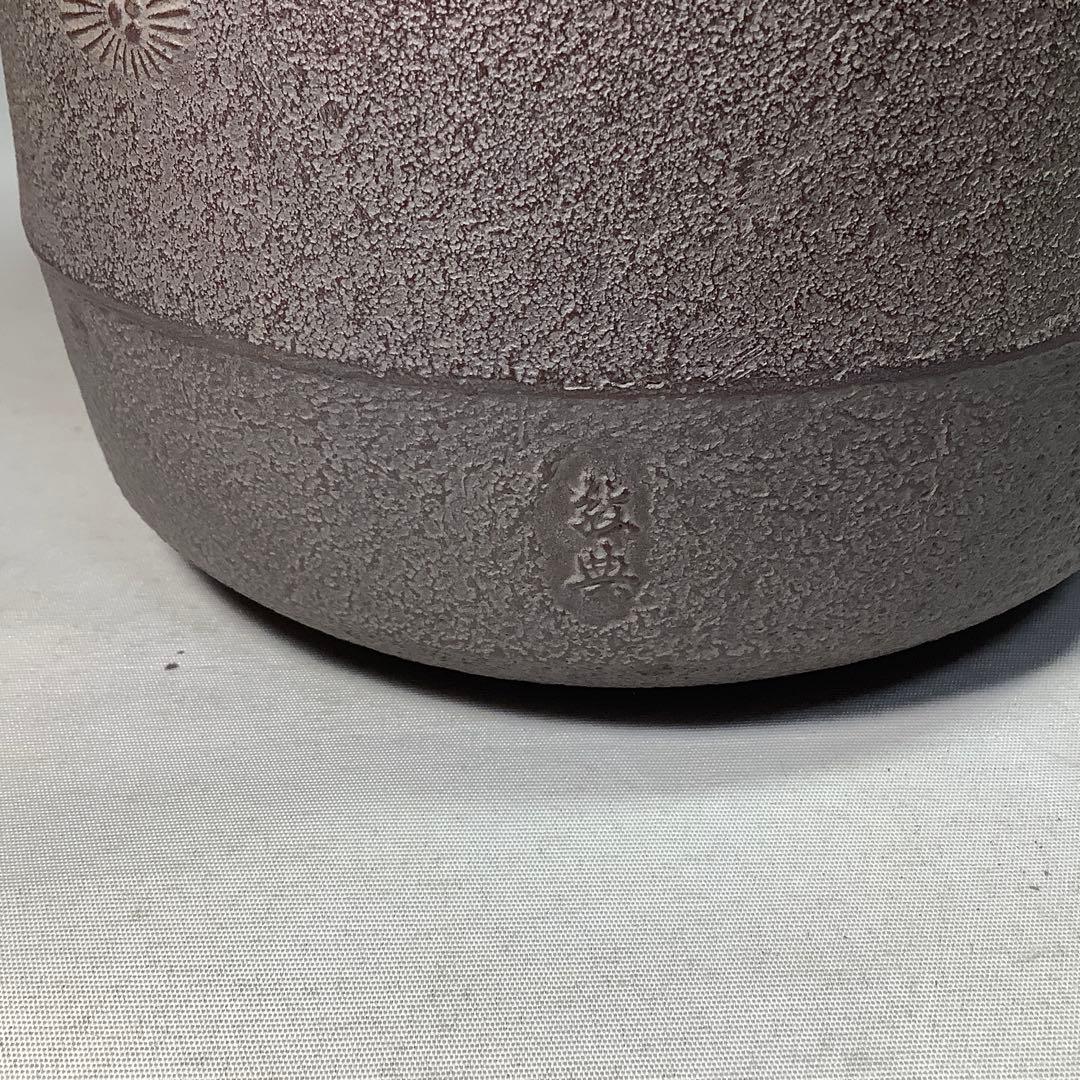
A tsutsugama — a cylindrical iron tea kettle for chanoyu — cast by Takahashi Keizan, the Yamagata kettle master named a Living National Treasure. The body rises straight and quiet, its rough sand-cast skin scattered with karamatsu chimon: small chrysanthemum-like bursts in low relief, like larch needles caught against iron. A sculpted bronze knob crowns the dark lacquered lid; two small lugs sit at the shoulder. Within, the interior keeps the deep black-grey of seasoned cast iron, the wheel-turned spiral of the mold still legible, and a clover-shaped mokkō mark pressed into the floor.
🔹 [ BASIC DETAILS ]
• Artist: Takahashi Keizan (高橋敬典), Yamagata — Living National Treasure (kettle master)
• Technique: Cast iron (chagama), sand-cast body with karamatsu relief ground; lacquered lid with cast bronze knob
• Form: Tsutsugama (cylindrical kettle), suited to furo and year-round use
• Era: Shōwa–Heisei (20th century)
• Origin: Yamagata, Japan
• Dimensions: Height approx. 20 cm (cylindrical body; please treat as approximate)
• Box: Signed kiri tomobako inscribed 「唐松地紋 筒釜」 (Karamatsu-jimon Tsutsugama), with original outer carton
• Accessories: Tomobako, original outer box, kan (carrying ring), fukusa cloth, and the Takahashi Keizan work catalog (Furo edition)
• Condition: Good. Clean karamatsu relief on the exterior; sound black iron interior
🔹 [ CULTURAL & ARTISTIC INSIGHT ]
Historical Context. The chagama is the still center of the tea gathering — the vessel from which water is drawn for every bowl. Yamagata has been a seat of iron kettle craft for centuries, and in the modern era Takahashi Keizan carried that lineage to its highest recognition, designated a holder of Important Intangible Cultural Property for his tea kettles. A tsutsugama, with its tall straight wall, holds heat with composure and reads as upright and reticent on the furo.
Technique & Aesthetic. The surface is the work. Karamatsu chimon — the larch motif rendered as scattered chrysanthemum bursts — is set into the sand mold so that each mark sits in low relief against a granular iron ground. The lid answers in lacquered darkness, its bronze knob a small point of warmth above the cool body. Inside, the spiral of the casting and the mokkō seal are left honest and unhidden.
Philosophical Reflection. Iron does not flatter. It holds the fire, darkens with use, and keeps the season's weather in its skin — quiet, upright, and alive.
🔹 [ DEEP-DIVE COMMENTARY ]
A tsutsugama is defined by its cylinder: a tall, straight-walled kettle whose form distinguishes it from the rounded shinnari or the wide kimen-buro pairing. The shape is associated with the furo season but is read by many practitioners as quietly year-round, its verticality lending presence on the brazier.
The body is achieved by sand casting — a mold built from fine sand and clay, into which the chimon pattern is impressed before the iron is poured. The karamatsu motif emerges as part of the casting itself, not applied afterward, so the relief and the iron are one continuous surface. The granular skin is the natural record of that mold.
For the collector, the weight here is authorship. A signed tomobako, an outer box, and the maker's own work catalog (Furo edition) together place this kettle within a documented hand — that of a master whose tea kettles entered the national record. Provenance of this density is what separates a working kettle from a piece held for its lineage.
In contemporary practice, a Keizan tsutsugama remains entirely usable while carrying the cultural weight of its authorship — an object that performs in the room and rewards study out of it.
🔹 [ JAPANESE DESCRIPTION / 日本語解説 ]
鋳鉄の筒釜。茶の湯のための筒形の茶釜で、人間国宝、山形の釜師・高橋敬典の作。胴はまっすぐに立ち、砂肌の粗い鉄肌に唐松地紋—菊花状の点を散らした文様—が低く浮き出ている。黒漆の蓋には造形された銅の摘みがのり、肩には小さな耳が二つ。内部は黒灰色の鉄肌を保ち、鋳造の渦と木瓜型の印が底に残る。
茶釜は茶事の静かな中心であり、一碗一碗の湯を汲む器である。山形は古くから鉄釜の地として知られ、近代において高橋敬典はその系譜を重要無形文化財の認定にまで高めた。胴の高い筒釜は湯を落ち着いて保ち、風炉の上で清らかに立つ。
唐松地紋は鋳型の段階で砂型に押され、鉄と一体となって浮き出す。後付けではないため、地肌と文様が一つの連続した表面となる。鉄は誘わず、火を抱え、使うほどに黒く、季節の表情を肌に残す。
コレクターにとっての重みは作者性にある。共箱の箱書「唐松地紋 筒釜」、元箱、帛紗、鐶、そして作者自身の作品集(風炉編)が揃うことで、記録された一つの手の中に位置づけられる。今なお実用に耐えながら、その系譜とともに手元に置かれるべき作である。
🔹 [ SHIPPING & PACKAGING ]
• Dispatch: Within 1-6 business days
• Carrier: Japan Post EMS / UPS / FedEx (with tracking)
• Packaging: Carefully wrapped with protective materials
🔹 [ BASIC DETAILS ]
• Artist: Takahashi Keizan (高橋敬典), Yamagata — Living National Treasure (kettle master)
• Technique: Cast iron (chagama), sand-cast body with karamatsu relief ground; lacquered lid with cast bronze knob
• Form: Tsutsugama (cylindrical kettle), suited to furo and year-round use
• Era: Shōwa–Heisei (20th century)
• Origin: Yamagata, Japan
• Dimensions: Height approx. 20 cm (cylindrical body; please treat as approximate)
• Box: Signed kiri tomobako inscribed 「唐松地紋 筒釜」 (Karamatsu-jimon Tsutsugama), with original outer carton
• Accessories: Tomobako, original outer box, kan (carrying ring), fukusa cloth, and the Takahashi Keizan work catalog (Furo edition)
• Condition: Good. Clean karamatsu relief on the exterior; sound black iron interior
🔹 [ CULTURAL & ARTISTIC INSIGHT ]
Historical Context. The chagama is the still center of the tea gathering — the vessel from which water is drawn for every bowl. Yamagata has been a seat of iron kettle craft for centuries, and in the modern era Takahashi Keizan carried that lineage to its highest recognition, designated a holder of Important Intangible Cultural Property for his tea kettles. A tsutsugama, with its tall straight wall, holds heat with composure and reads as upright and reticent on the furo.
Technique & Aesthetic. The surface is the work. Karamatsu chimon — the larch motif rendered as scattered chrysanthemum bursts — is set into the sand mold so that each mark sits in low relief against a granular iron ground. The lid answers in lacquered darkness, its bronze knob a small point of warmth above the cool body. Inside, the spiral of the casting and the mokkō seal are left honest and unhidden.
Philosophical Reflection. Iron does not flatter. It holds the fire, darkens with use, and keeps the season's weather in its skin — quiet, upright, and alive.
🔹 [ DEEP-DIVE COMMENTARY ]
A tsutsugama is defined by its cylinder: a tall, straight-walled kettle whose form distinguishes it from the rounded shinnari or the wide kimen-buro pairing. The shape is associated with the furo season but is read by many practitioners as quietly year-round, its verticality lending presence on the brazier.
The body is achieved by sand casting — a mold built from fine sand and clay, into which the chimon pattern is impressed before the iron is poured. The karamatsu motif emerges as part of the casting itself, not applied afterward, so the relief and the iron are one continuous surface. The granular skin is the natural record of that mold.
For the collector, the weight here is authorship. A signed tomobako, an outer box, and the maker's own work catalog (Furo edition) together place this kettle within a documented hand — that of a master whose tea kettles entered the national record. Provenance of this density is what separates a working kettle from a piece held for its lineage.
In contemporary practice, a Keizan tsutsugama remains entirely usable while carrying the cultural weight of its authorship — an object that performs in the room and rewards study out of it.
🔹 [ JAPANESE DESCRIPTION / 日本語解説 ]
鋳鉄の筒釜。茶の湯のための筒形の茶釜で、人間国宝、山形の釜師・高橋敬典の作。胴はまっすぐに立ち、砂肌の粗い鉄肌に唐松地紋—菊花状の点を散らした文様—が低く浮き出ている。黒漆の蓋には造形された銅の摘みがのり、肩には小さな耳が二つ。内部は黒灰色の鉄肌を保ち、鋳造の渦と木瓜型の印が底に残る。
茶釜は茶事の静かな中心であり、一碗一碗の湯を汲む器である。山形は古くから鉄釜の地として知られ、近代において高橋敬典はその系譜を重要無形文化財の認定にまで高めた。胴の高い筒釜は湯を落ち着いて保ち、風炉の上で清らかに立つ。
唐松地紋は鋳型の段階で砂型に押され、鉄と一体となって浮き出す。後付けではないため、地肌と文様が一つの連続した表面となる。鉄は誘わず、火を抱え、使うほどに黒く、季節の表情を肌に残す。
コレクターにとっての重みは作者性にある。共箱の箱書「唐松地紋 筒釜」、元箱、帛紗、鐶、そして作者自身の作品集(風炉編)が揃うことで、記録された一つの手の中に位置づけられる。今なお実用に耐えながら、その系譜とともに手元に置かれるべき作である。
🔹 [ SHIPPING & PACKAGING ]
• Dispatch: Within 1-6 business days
• Carrier: Japan Post EMS / UPS / FedEx (with tracking)
• Packaging: Carefully wrapped with protective materials
Quantity
Couldn't load pickup availability
Low stock: 1 left
View full details