1
/
of
10
Camellia Maki-e Natsume Tea Caddy by Nakatide Shoho — White-Eye Bird, Silver Dust, Lacquer, Tomobako
Camellia Maki-e Natsume Tea Caddy by Nakatide Shoho — White-Eye Bird, Silver Dust, Lacquer, Tomobako
Regular price
Dhs. 1,076.00 AED
Regular price
Sale price
Dhs. 1,076.00 AED
Taxes included.
Shipping calculated at checkout.
Experience Authentic Japan Art with this Japanese Maki-e Tea Caddy. This Lacquer Natsume serves as a Japanese Tea Ceremony Utensil and Art Collector Gift, featuring Camellia Maki-e Lacquerware and Silver Dust Decoration—a must-have for any Art Collector. Crafted by Nakatide Shoho, this Vintage Japanese Lacquer Box presents a Handmade Japanese Craft of enduring refinement, complete with Original Signed Wooden Box.
🔹 [ BASIC DETAILS ]
• ARTIST: Nakatide Shoho (中出松峰) — master lacquer artist in the maki-e tradition
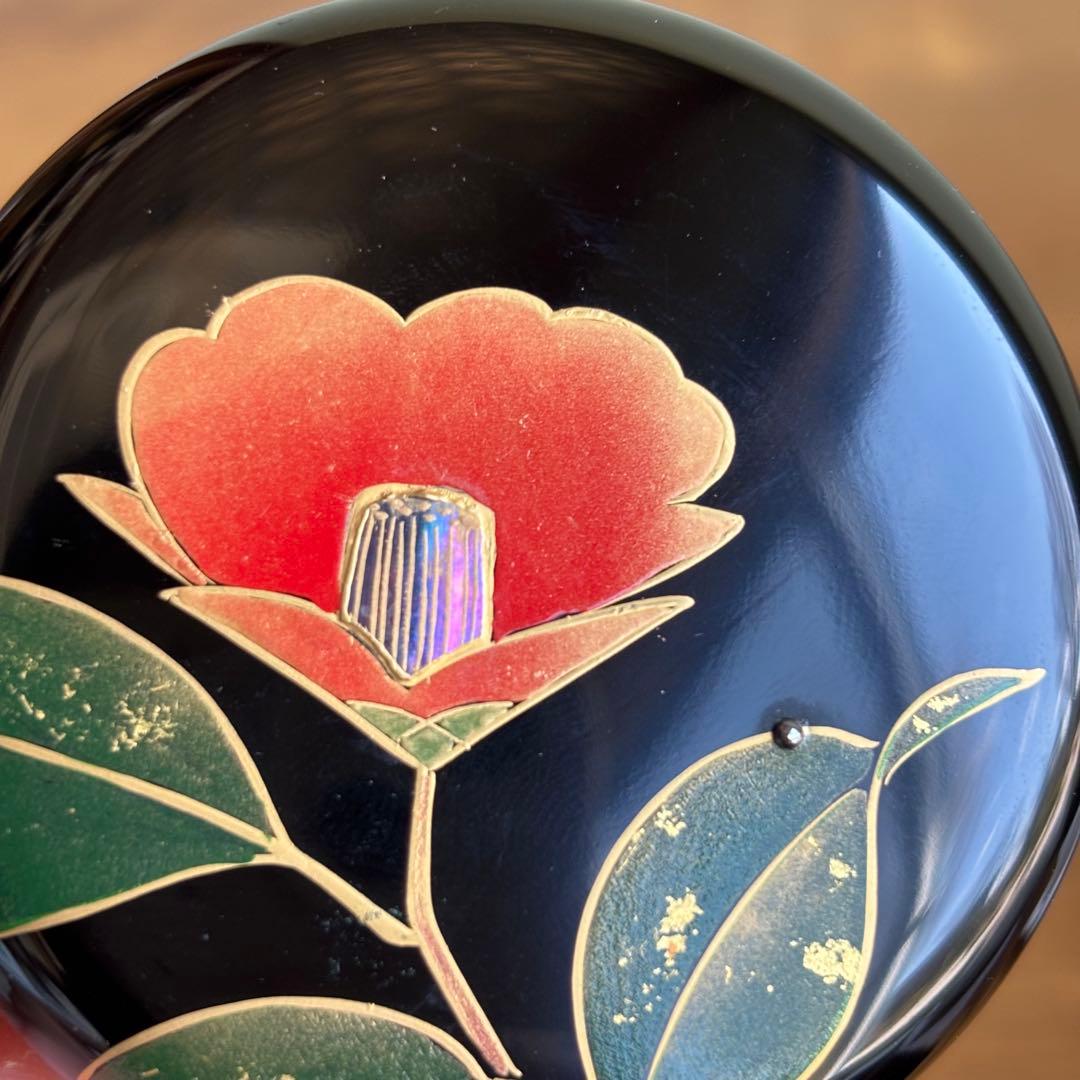
• TECHNIQUE: Ro-iro-nuri (black mirror lacquer ground) with camellia maki-e and mejiro (Japanese white-eye bird) motif; silver dust (gin-tsubu) scattered to evoke morning dew and light
• ERA: Late Showa / Heisei period (est. 1980s–2000s)
• ORIGIN: Japan
• DIMENSIONS: Diameter approx. 6.7 cm, Height approx. 7 cm
• BOX: Original signed wooden tomobako — lid inscribed 椿蒔絵 中棗, artist seal affixed
• CONDITION: No cracks or chips (ヒビ・カケなし). Minor surface scuffs consistent with age and careful use. Lacquer surface retains deep mirror gloss.
🔹 [ CULTURAL & ARTISTIC INSIGHT ]
The camellia (tsubaki) has held a singular place in the Japanese tea ceremony since the Muromachi period. Unlike the cherry blossom — which falls whole in a moment of pure transience — the camellia drops its entire flower, head intact, a gesture at once bold and silent. Chanoyu masters of the Urasenke and Omotesenke schools have long favored the camellia as the foremost flower of the winter-into-spring tea gathering (hatsugama, January), precisely because it blooms when the world is still cold and inward.
Nakatide Shoho compounds this seasonal poetry by pairing the camellia with a mejiro — the Japanese white-eye, a small songbird of vivid emerald plumage whose arrival announces winter's thaw. On the natsume's lid, the mejiro perches on a camellia branch with extraordinary delicacy: its teal-green body is rendered in layered colored lacquer, each feather suggested rather than described. Below, the main camellia — saturated red against a field of ro-iro black — is outlined in gold line-drawing (kirikane-style margins) that catches candlelight like a flame seen through paper.
The gin-tsubu (silver dust) scattered across the deep green leaves does not merely decorate; it replicates the scattered light on wet foliage after rain. In this, Shoho works within the classical maki-e philosophy: not to impose a pattern upon nature, but to witness it.
Poetic line: "A bird rests on a branch it will leave — the silver morning holds the silence between wingbeats."
🔹 [ DEEP-DIVE COMMENTARY ]
Maki-e (蒔絵, "sprinkled picture") is among the most technically demanding of all Japanese lacquer arts. The artist draws a design onto a lacquer-coated surface while the urushi is still tacky, then sprinkles metallic powders — gold, silver, or alloy — through a fine tube (tsutsu) with controlled breath. The surface is then sealed with additional lacquer layers and polished to bring the metal flush with the ground. A single natsume of this quality may require thirty or more lacquer applications, each dried in a humidity-controlled room (furo) over weeks.
Ro-iro-nuri, the ground technique here, is the most demanding mirror-polish finish in Japanese lacquer. The black surface is built up through alternating layers of plain and carbon-pigmented urushi, then hand-polished through progressively finer abrasives — deer antler, charcoal, and finally the artisan's palm — until the surface achieves a depth that appears liquid rather than solid. Against this ground, even the subtlest gin-tsubu reads as starlight.
The natsume (棗) is the standard tea caddy form for thin matcha (usucha), and its proportions are among the most codified in all of chado. The chu-natsume (medium) format — as used here — is the most versatile, appropriate for both formal and informal tea settings across all major schools. A natsume bearing original tomobako with the artist's hand-inscription and seal is provenance in physical form: the box certifies attribution, period, and intent directly from the maker's hand.
Nakatide Shoho worked within the Kyoto lacquer tradition, where figurative maki-e with seasonal motifs — birds, flowers, and water — reached its fullest expression in the late Edo and Meiji periods and was continued by studio artists throughout the twentieth century. The camellia-and-bird combination (tsubaki-ni-kotori) is among the most beloved of these classical pairings, its appeal resting on the contrast between the flower's weight and the bird's lightness.
For the collector, this natsume offers a complete object: technical mastery (ro-iro ground + colored maki-e + gin-tsubu), seasonal specificity (early spring / hatsugama appropriate), documented provenance (tomobako), and the rare quality of a design that reveals new detail with each viewing — the mejiro's iridescent chest, the gold-line margins of the leaves, the silver light on the green.
〔日本語解説〕
🔹【基本情報】
作家:中出松峰(蒔絵師)
技法:黒蝋色塗地に椿蒔絵、木に止まるメジロ(目白)、銀粒散らし
推定年代:昭和末期〜平成(1980〜2000年代)
産地:日本
寸法:径約6.7cm、高さ約7cm
付属品:共箱(「椿蒔絵 中棗」墨書、松峰印)
状態:ヒビ・カケなし。若干の擦れ(使用感)あり。蝋色の艶、健在。
🔹【文化・芸術的考察】
椿は茶の湯において、冬から春への転換を告げる花として特別な地位を占めてきた。散り際に花弁を一枚ずつではなく、頭ごと落とすその潔さは、武家の美学とも重なり、初釜の取り合わせとして古来珍重されてきた。
中出松峰はこの椿に、目白という鳥を添えることで、作品に季節の詩情を重ねた。蓋の内景に描かれた目白は、翡翠色の小身に彩漆を幾層にも重ね、一羽の生命の重さを写し取っている。外蓋の椿は、深い黒の蝋色地の上に朱塗りの花弁が息づき、葉脈を縁取る金線が蝋燭の炎に映える。葉面に散らされた銀粒は、雨上がりの朝露のごとく、この景色全体に光の呼吸を与えている。
「枝に止まった鳥は、やがて飛び立つ——銀色の朝が、その間を静かに受けとめている。」
🔹【深層解説】
蒔絵とは、まだ乾かぬ漆面に図案を描き、金銀の粉を蒔いて定着させる漆芸の最高技法である。一点の中棗が完成するまでには、乾燥室(風呂)での何十もの漆塗り、研ぎ出し、粉蒔きの工程が繰り返される。蝋色塗は漆芸における最高峰の鏡面仕上げであり、炭・鹿の角・職人の手のひらによる段階的な研磨によってのみ達成される深みある光沢は、固体でありながら液体のように見える。
中棗はすべての流派で薄茶点前に用いられる標準的な茶器であり、共箱に作家直筆の書と印が備わることは、作品の帰属・時代・意図を物語る一次資料となる。椿に小鳥という取り合わせは、古典蒔絵の中でも最も愛されてきた組み合わせの一つであり、花の重量感と鳥の軽やかさとの対比が、見るたびに新たな発見をもたらす。
🔹 [ SHIPPING & PACKAGING ]
• Dispatch: Within 1-6 business days
• Carrier: Japan Post EMS / UPS (with tracking)
• Packaging: Carefully wrapped with protective materials
🔹 [ BASIC DETAILS ]
• ARTIST: Nakatide Shoho (中出松峰) — master lacquer artist in the maki-e tradition
• TECHNIQUE: Ro-iro-nuri (black mirror lacquer ground) with camellia maki-e and mejiro (Japanese white-eye bird) motif; silver dust (gin-tsubu) scattered to evoke morning dew and light
• ERA: Late Showa / Heisei period (est. 1980s–2000s)
• ORIGIN: Japan
• DIMENSIONS: Diameter approx. 6.7 cm, Height approx. 7 cm
• BOX: Original signed wooden tomobako — lid inscribed 椿蒔絵 中棗, artist seal affixed
• CONDITION: No cracks or chips (ヒビ・カケなし). Minor surface scuffs consistent with age and careful use. Lacquer surface retains deep mirror gloss.
🔹 [ CULTURAL & ARTISTIC INSIGHT ]
The camellia (tsubaki) has held a singular place in the Japanese tea ceremony since the Muromachi period. Unlike the cherry blossom — which falls whole in a moment of pure transience — the camellia drops its entire flower, head intact, a gesture at once bold and silent. Chanoyu masters of the Urasenke and Omotesenke schools have long favored the camellia as the foremost flower of the winter-into-spring tea gathering (hatsugama, January), precisely because it blooms when the world is still cold and inward.
Nakatide Shoho compounds this seasonal poetry by pairing the camellia with a mejiro — the Japanese white-eye, a small songbird of vivid emerald plumage whose arrival announces winter's thaw. On the natsume's lid, the mejiro perches on a camellia branch with extraordinary delicacy: its teal-green body is rendered in layered colored lacquer, each feather suggested rather than described. Below, the main camellia — saturated red against a field of ro-iro black — is outlined in gold line-drawing (kirikane-style margins) that catches candlelight like a flame seen through paper.
The gin-tsubu (silver dust) scattered across the deep green leaves does not merely decorate; it replicates the scattered light on wet foliage after rain. In this, Shoho works within the classical maki-e philosophy: not to impose a pattern upon nature, but to witness it.
Poetic line: "A bird rests on a branch it will leave — the silver morning holds the silence between wingbeats."
🔹 [ DEEP-DIVE COMMENTARY ]
Maki-e (蒔絵, "sprinkled picture") is among the most technically demanding of all Japanese lacquer arts. The artist draws a design onto a lacquer-coated surface while the urushi is still tacky, then sprinkles metallic powders — gold, silver, or alloy — through a fine tube (tsutsu) with controlled breath. The surface is then sealed with additional lacquer layers and polished to bring the metal flush with the ground. A single natsume of this quality may require thirty or more lacquer applications, each dried in a humidity-controlled room (furo) over weeks.
Ro-iro-nuri, the ground technique here, is the most demanding mirror-polish finish in Japanese lacquer. The black surface is built up through alternating layers of plain and carbon-pigmented urushi, then hand-polished through progressively finer abrasives — deer antler, charcoal, and finally the artisan's palm — until the surface achieves a depth that appears liquid rather than solid. Against this ground, even the subtlest gin-tsubu reads as starlight.
The natsume (棗) is the standard tea caddy form for thin matcha (usucha), and its proportions are among the most codified in all of chado. The chu-natsume (medium) format — as used here — is the most versatile, appropriate for both formal and informal tea settings across all major schools. A natsume bearing original tomobako with the artist's hand-inscription and seal is provenance in physical form: the box certifies attribution, period, and intent directly from the maker's hand.
Nakatide Shoho worked within the Kyoto lacquer tradition, where figurative maki-e with seasonal motifs — birds, flowers, and water — reached its fullest expression in the late Edo and Meiji periods and was continued by studio artists throughout the twentieth century. The camellia-and-bird combination (tsubaki-ni-kotori) is among the most beloved of these classical pairings, its appeal resting on the contrast between the flower's weight and the bird's lightness.
For the collector, this natsume offers a complete object: technical mastery (ro-iro ground + colored maki-e + gin-tsubu), seasonal specificity (early spring / hatsugama appropriate), documented provenance (tomobako), and the rare quality of a design that reveals new detail with each viewing — the mejiro's iridescent chest, the gold-line margins of the leaves, the silver light on the green.
〔日本語解説〕
🔹【基本情報】
作家:中出松峰(蒔絵師)
技法:黒蝋色塗地に椿蒔絵、木に止まるメジロ(目白)、銀粒散らし
推定年代:昭和末期〜平成(1980〜2000年代)
産地:日本
寸法:径約6.7cm、高さ約7cm
付属品:共箱(「椿蒔絵 中棗」墨書、松峰印)
状態:ヒビ・カケなし。若干の擦れ(使用感)あり。蝋色の艶、健在。
🔹【文化・芸術的考察】
椿は茶の湯において、冬から春への転換を告げる花として特別な地位を占めてきた。散り際に花弁を一枚ずつではなく、頭ごと落とすその潔さは、武家の美学とも重なり、初釜の取り合わせとして古来珍重されてきた。
中出松峰はこの椿に、目白という鳥を添えることで、作品に季節の詩情を重ねた。蓋の内景に描かれた目白は、翡翠色の小身に彩漆を幾層にも重ね、一羽の生命の重さを写し取っている。外蓋の椿は、深い黒の蝋色地の上に朱塗りの花弁が息づき、葉脈を縁取る金線が蝋燭の炎に映える。葉面に散らされた銀粒は、雨上がりの朝露のごとく、この景色全体に光の呼吸を与えている。
「枝に止まった鳥は、やがて飛び立つ——銀色の朝が、その間を静かに受けとめている。」
🔹【深層解説】
蒔絵とは、まだ乾かぬ漆面に図案を描き、金銀の粉を蒔いて定着させる漆芸の最高技法である。一点の中棗が完成するまでには、乾燥室(風呂)での何十もの漆塗り、研ぎ出し、粉蒔きの工程が繰り返される。蝋色塗は漆芸における最高峰の鏡面仕上げであり、炭・鹿の角・職人の手のひらによる段階的な研磨によってのみ達成される深みある光沢は、固体でありながら液体のように見える。
中棗はすべての流派で薄茶点前に用いられる標準的な茶器であり、共箱に作家直筆の書と印が備わることは、作品の帰属・時代・意図を物語る一次資料となる。椿に小鳥という取り合わせは、古典蒔絵の中でも最も愛されてきた組み合わせの一つであり、花の重量感と鳥の軽やかさとの対比が、見るたびに新たな発見をもたらす。
🔹 [ SHIPPING & PACKAGING ]
• Dispatch: Within 1-6 business days
• Carrier: Japan Post EMS / UPS (with tracking)
• Packaging: Carefully wrapped with protective materials
Quantity
Couldn't load pickup availability
Low stock: 1 left
View full details