1
/
of
10
Buriburi Kogo — Gold Maki-e Pine Bamboo Plum Crane, Mineharu, Box
Buriburi Kogo — Gold Maki-e Pine Bamboo Plum Crane, Mineharu, Box
Regular price
Dhs. 954.00 AED
Regular price
Sale price
Dhs. 954.00 AED
Taxes included.
Shipping calculated at checkout.
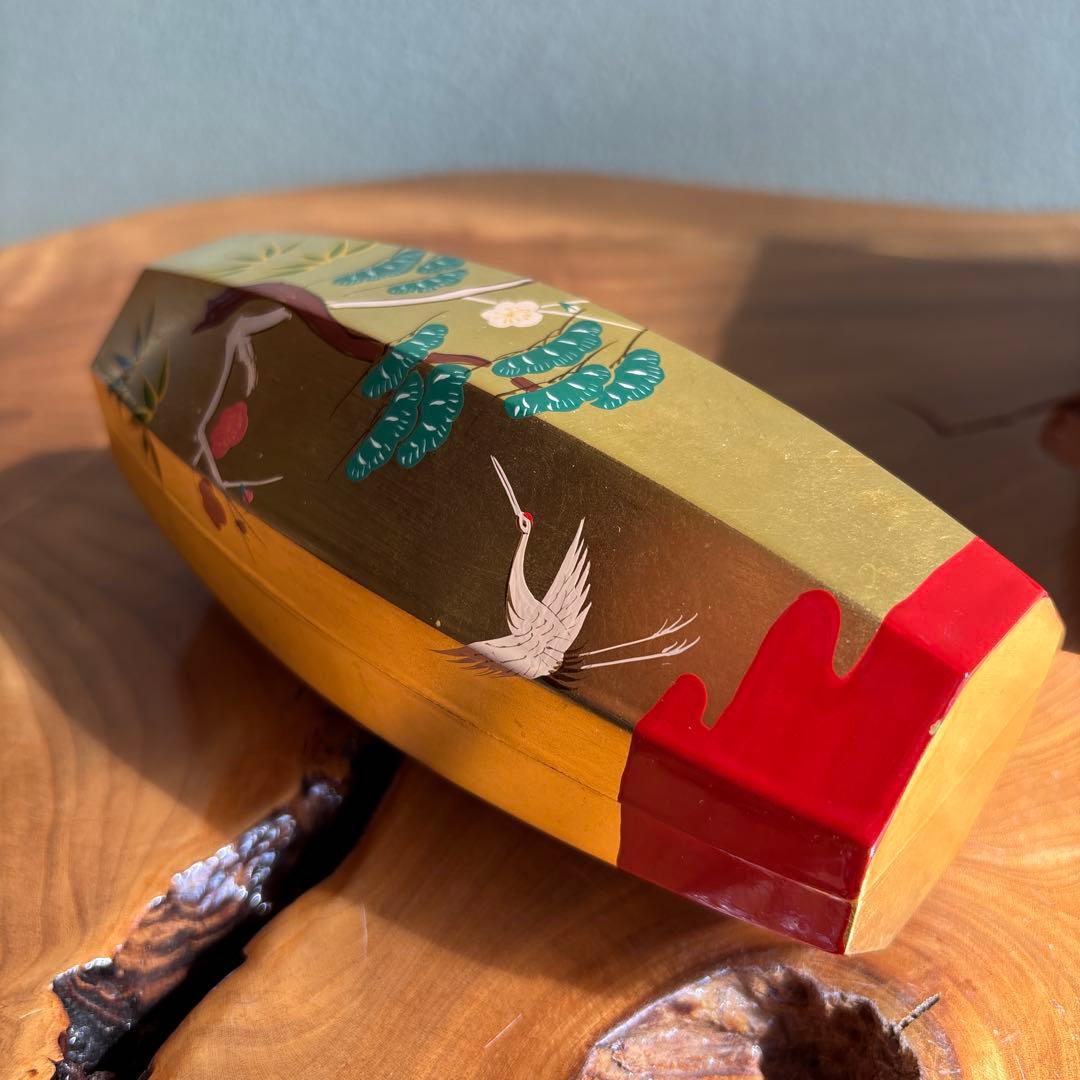
Buriburi (shuttle-shaped) kogo incense container by Mineharu. Gold lacquer ground with detailed pine, bamboo, plum, and crane maki-e. Red lacquer accent ends. Signed tomobako. Among the most auspicious compositional vocabularies in Japanese decorative art.
Collectors seeking maki-e kogo, Japanese lacquer incense container, buriburi kogo, sho-chiku-bai crane lacquer, or gold lacquer tea ceremony objects will find this piece articulates the full weight of its tradition.
【 DETAILS 】
• Technique: Maki-e (gold powder lacquer painting) on lacquered wood
• Artist: Mineharu — signed tomobako
• Form: Buriburi (shuttle / comma shape) — a classical kogo form associated with auspicious imagery
• Decoration: Sho-chiku-bai (pine, bamboo, plum) with crane — the complete auspicious quartet
• Condition: Excellent. No chips, cracks, or damage to lacquer
• Provenance: Original signed wooden tomobako
• Dimensions: Diameter approx. 16 cm / Height approx. 7 cm
【 CULTURAL INSIGHT 】
The kogo — incense container — is one of the most intimate objects in the tea ceremony. Smaller than a chawan, handled before the fire is laid, it carries fragrance as its single function. The buriburi form, shaped like a traditional toy associated with auspicious play, carries layers of meaning: longevity, celebration, protection. The sho-chiku-bai (pine, bamboo, plum) together with the crane — symbols of endurance, resilience, renewal, and longevity respectively — make this among the most auspicious compositional vocabularies in Japanese decorative art. On gold ground, executed in maki-e, the effect is not decoration but declaration.
【 DEEP DIVE 】
Maki-e is among the most technically demanding of Japanese lacquer arts. Gold powder (or silver, or colored pigments) is applied to a wet lacquer surface, fixed by subsequent lacquer coats, and polished through multiple cycles to achieve the final surface. The finest maki-e work maintains dimensional clarity across the polishing stages — each motif holds its line. On this kogo, the pine needles, bamboo culms, plum blossoms, and crane feathers each require different techniques and densities of gold application. Mineharu's execution brings them into a single coherent surface that reads from a distance as celebration and, at close range, as the evidence of many hours of patient hands.
---
【 ぶりぶり香合 峰春造 】
金地に松竹梅鶴の蒔絵を施した舟形(ぶりぶり)香合。赤漆の縁飾りが華やかさを添える。峰春造・共箱付き。直径約16cm、高さ約7cm。茶道の場を彩る工芸品。
🔹 [ SHIPPING & PACKAGING ]
• Dispatch: Within 1-6 business days
• Carrier: Japan Post EMS / UPS (with tracking)
• Packaging: Carefully wrapped with protective materials
Collectors seeking maki-e kogo, Japanese lacquer incense container, buriburi kogo, sho-chiku-bai crane lacquer, or gold lacquer tea ceremony objects will find this piece articulates the full weight of its tradition.
【 DETAILS 】
• Technique: Maki-e (gold powder lacquer painting) on lacquered wood
• Artist: Mineharu — signed tomobako
• Form: Buriburi (shuttle / comma shape) — a classical kogo form associated with auspicious imagery
• Decoration: Sho-chiku-bai (pine, bamboo, plum) with crane — the complete auspicious quartet
• Condition: Excellent. No chips, cracks, or damage to lacquer
• Provenance: Original signed wooden tomobako
• Dimensions: Diameter approx. 16 cm / Height approx. 7 cm
【 CULTURAL INSIGHT 】
The kogo — incense container — is one of the most intimate objects in the tea ceremony. Smaller than a chawan, handled before the fire is laid, it carries fragrance as its single function. The buriburi form, shaped like a traditional toy associated with auspicious play, carries layers of meaning: longevity, celebration, protection. The sho-chiku-bai (pine, bamboo, plum) together with the crane — symbols of endurance, resilience, renewal, and longevity respectively — make this among the most auspicious compositional vocabularies in Japanese decorative art. On gold ground, executed in maki-e, the effect is not decoration but declaration.
【 DEEP DIVE 】
Maki-e is among the most technically demanding of Japanese lacquer arts. Gold powder (or silver, or colored pigments) is applied to a wet lacquer surface, fixed by subsequent lacquer coats, and polished through multiple cycles to achieve the final surface. The finest maki-e work maintains dimensional clarity across the polishing stages — each motif holds its line. On this kogo, the pine needles, bamboo culms, plum blossoms, and crane feathers each require different techniques and densities of gold application. Mineharu's execution brings them into a single coherent surface that reads from a distance as celebration and, at close range, as the evidence of many hours of patient hands.
---
【 ぶりぶり香合 峰春造 】
金地に松竹梅鶴の蒔絵を施した舟形(ぶりぶり)香合。赤漆の縁飾りが華やかさを添える。峰春造・共箱付き。直径約16cm、高さ約7cm。茶道の場を彩る工芸品。
🔹 [ SHIPPING & PACKAGING ]
• Dispatch: Within 1-6 business days
• Carrier: Japan Post EMS / UPS (with tracking)
• Packaging: Carefully wrapped with protective materials
Quantity
Couldn't load pickup availability
Low stock: 1 left
View full details