1
/
of
20
Blue White Galloping Horses Tea Bowl by Terao Tosho - Kyo-yaki Sometsuke Chawan
Blue White Galloping Horses Tea Bowl by Terao Tosho - Kyo-yaki Sometsuke Chawan
Regular price
Dhs. 881.00 AED
Regular price
Sale price
Dhs. 881.00 AED
Taxes included.
Shipping calculated at checkout.
Experience authentic Japanese tea culture with this Blue White Horses Bowl. This Japanese Matcha Chawan serves as a Kyo-yaki Sometsuke Art and Galloping Horses Chawan, featuring Cobalt Blue Painting and Auspicious Horse Motif—a must-have for any Art Collector seeking Zen Tea Accessories and Tea Ceremony Bowl.
━━━━━━━━━━━━━━━━━━━━
🔹 [ BASIC DETAILS ]
• Artist: Terao Tosho (寺尾陶象)
• Technique: Sometsuke (染付) — cobalt blue underglaze painting on porcelain
• Era: Contemporary (Showa–Heisei period)
• Origin: Kyoto, Japan — Kyo-yaki tradition
• Motif: Uma-ku-iku (馬九行く) — Nine galloping horses (auspicious wordplay)
• Dimensions: Diameter approx. 12.2 cm, Height approx. 7 cm
• Box: Signed tomobako with artist seal "陶象" (共箱・印)
• Condition: Good — minor age-appropriate wear consistent with vintage piece
━━━━━━━━━━━━━━━━━━━━
🔹 [ CULTURAL & ARTISTIC INSIGHT ]
This tea bowl carries one of Japanese culture's most beloved visual puns. "Uma-ku-iku" (馬九行く) literally means "nine horses go" — but spoken aloud, it becomes "umaku iku" (うまくいく), meaning "things go well" or "everything succeeds." Nine galloping horses are therefore a powerful auspicious symbol, painted on tea bowls, hanging scrolls, and seasonal displays to invoke good fortune. The wordplay is ancient, reaching back through centuries of Japanese visual culture, but it retains its charm because the image itself is irresistibly dynamic.
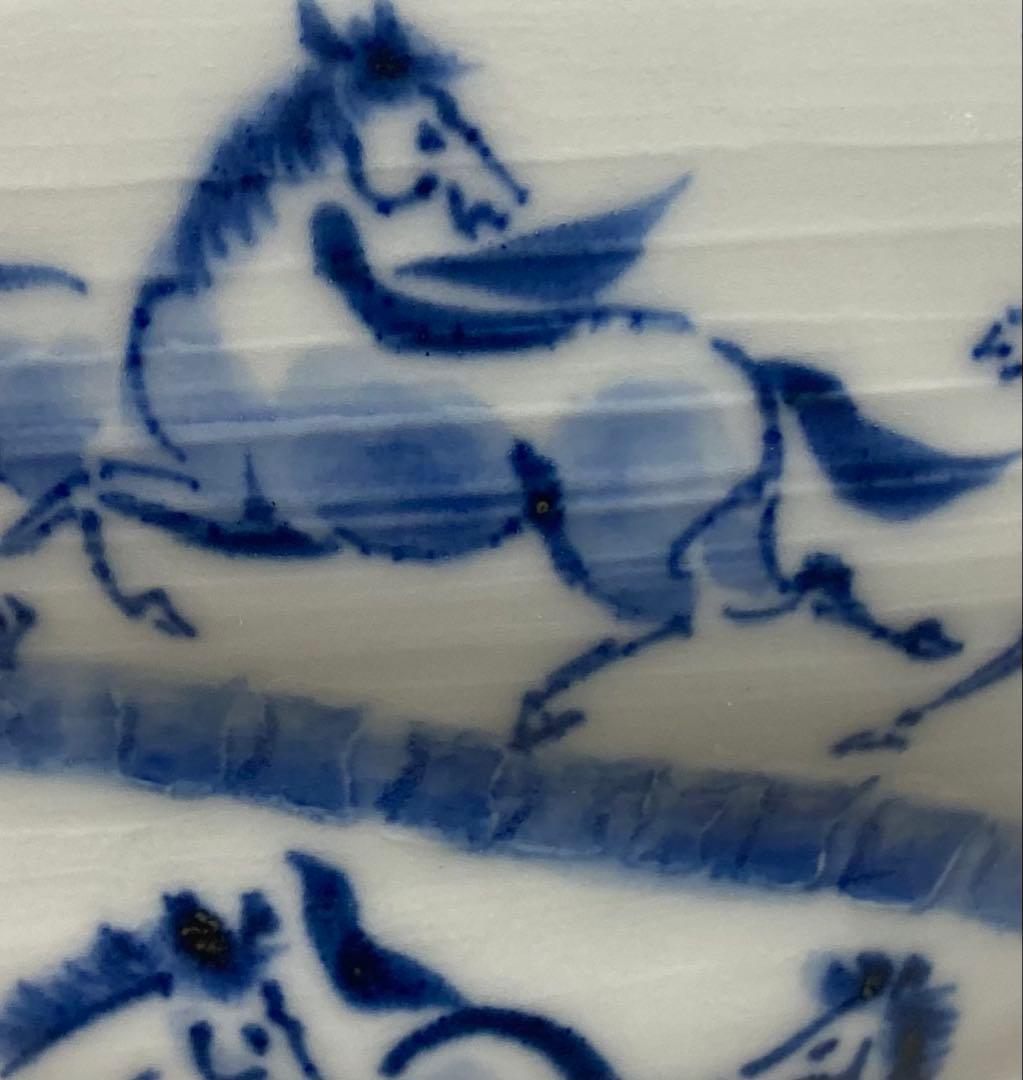
Terao Tosho's interpretation fills every surface with spirited motion. Nine horses gallop across the exterior and interior of the bowl in fluid cobalt brushwork — manes flying, legs extended, bodies twisting with muscular energy. The painting style is loose and confident, each horse rendered in just a few decisive strokes that capture movement rather than anatomical detail. Diagonal lines suggesting wind or terrain add kinetic energy between the figures. Against the clean white porcelain, the blue horses appear to race through snow or cloud.
*"Nine horses. One wish. The bowl spins, and they run — endlessly circling toward good fortune."*
━━━━━━━━━━━━━━━━━━━━
🔹 [ DEEP-DIVE COMMENTARY ]
**The Uma-ku-iku Tradition**: The punning connection between nine horses (uma-ku) and success (umaku) has made this motif one of the most popular auspicious designs in Japanese art. It appears on New Year decorations, celebratory gifts, and tea utensils associated with auspicious occasions. In the tea room, a host selecting this bowl signals festivity, encouragement, or the marking of a new beginning — making it appropriate for New Year's gatherings, celebrations, or any occasion where goodwill deserves emphasis.
**Kyo-yaki Sometsuke**: Kyoto's blue-and-white porcelain tradition draws on centuries of exchange with Chinese and Korean ceramics while maintaining a distinctly Japanese character. Where Chinese sometsuke tends toward precision, Kyo-yaki examples like this bowl favor expressiveness — the brushwork is calligraphic rather than illustrative, capturing essence rather than outline. Terao Tosho's horses belong to this tradition of spirited, painterly freedom.
**Compositional Energy**: The nine horses are not arranged in a neat procession but in overlapping, dynamic groups at different scales and angles. Some gallop left to right; others charge toward the viewer. This compositional complexity prevents the repeated motif from becoming monotonous and creates a sense of genuine stampede. The horses even continue into the bowl's interior, so the drinker discovers additional figures as the matcha is consumed — a delightful surprise that rewards attention.
**Collector Significance**: Terao Tosho is a respected Kyoto ceramicist whose work in sometsuke demonstrates both technical command and artistic personality. The "陶象" seal on the box confirms authenticity. As an auspicious-themed bowl, this piece has particular versatility in the tea room — appropriate for New Year, birthdays, promotions, or any gathering where the host wishes to express hope and goodwill through the choice of utensils.
━━━━━━━━━━━━━━━━━━━━
🔹 [ 日本語解説 ]
【基本情報】
• 作家:寺尾陶象
• 技法:染付(呉須下絵付)
• 時代:現代(昭和〜平成)
• 産地:京都(京焼)
• 文様:馬九行く(九頭の駆馬・吉祥文)
• 寸法:口径約12.2cm、高さ約7cm
• 付属:共箱(「陶象」印入り)
• 状態:良好(経年による軽微な使用感あり)
【解説】
「馬九行く」は「うまくいく」の語呂合わせで、九頭の馬が疾走する吉祥文様です。新年の茶事や祝い事の席で、亭主が客への祝意を器の選びに込める——この文化的な「しつらえ」の伝統が、この茶碗に込められています。
寺尾陶象は、躍動感あふれる筆致で九頭の馬を碗全面に展開しています。それぞれの馬はわずか数筆で動きの本質を捉え、たてがみを靡かせ、脚を伸ばして駆ける姿は、染付の筆触ならではの勢いに満ちています。外側だけでなく見込みにも馬が描かれ、茶を飲み進めるうちに次々と馬が現れる趣向は、客を楽しませる心遣いです。白磁に映える呉須の青は、雪原や雲間を駆ける幻想的な情景を生み出しています。
━━━━━━━━━━━━━━━━━━━━
🔹 [ SHIPPING & PACKAGING ]
• Dispatch: Within 1-6 business days
• Carrier: Japan Post EMS / UPS (with tracking)
• Packaging: Carefully wrapped with protective materials
*Nine horses run. The word for nine and the word for well sound the same — and in tea, every coincidence is an invitation.*
━━━━━━━━━━━━━━━━━━━━
🔹 [ BASIC DETAILS ]
• Artist: Terao Tosho (寺尾陶象)
• Technique: Sometsuke (染付) — cobalt blue underglaze painting on porcelain
• Era: Contemporary (Showa–Heisei period)
• Origin: Kyoto, Japan — Kyo-yaki tradition
• Motif: Uma-ku-iku (馬九行く) — Nine galloping horses (auspicious wordplay)
• Dimensions: Diameter approx. 12.2 cm, Height approx. 7 cm
• Box: Signed tomobako with artist seal "陶象" (共箱・印)
• Condition: Good — minor age-appropriate wear consistent with vintage piece
━━━━━━━━━━━━━━━━━━━━
🔹 [ CULTURAL & ARTISTIC INSIGHT ]
This tea bowl carries one of Japanese culture's most beloved visual puns. "Uma-ku-iku" (馬九行く) literally means "nine horses go" — but spoken aloud, it becomes "umaku iku" (うまくいく), meaning "things go well" or "everything succeeds." Nine galloping horses are therefore a powerful auspicious symbol, painted on tea bowls, hanging scrolls, and seasonal displays to invoke good fortune. The wordplay is ancient, reaching back through centuries of Japanese visual culture, but it retains its charm because the image itself is irresistibly dynamic.
Terao Tosho's interpretation fills every surface with spirited motion. Nine horses gallop across the exterior and interior of the bowl in fluid cobalt brushwork — manes flying, legs extended, bodies twisting with muscular energy. The painting style is loose and confident, each horse rendered in just a few decisive strokes that capture movement rather than anatomical detail. Diagonal lines suggesting wind or terrain add kinetic energy between the figures. Against the clean white porcelain, the blue horses appear to race through snow or cloud.
*"Nine horses. One wish. The bowl spins, and they run — endlessly circling toward good fortune."*
━━━━━━━━━━━━━━━━━━━━
🔹 [ DEEP-DIVE COMMENTARY ]
**The Uma-ku-iku Tradition**: The punning connection between nine horses (uma-ku) and success (umaku) has made this motif one of the most popular auspicious designs in Japanese art. It appears on New Year decorations, celebratory gifts, and tea utensils associated with auspicious occasions. In the tea room, a host selecting this bowl signals festivity, encouragement, or the marking of a new beginning — making it appropriate for New Year's gatherings, celebrations, or any occasion where goodwill deserves emphasis.
**Kyo-yaki Sometsuke**: Kyoto's blue-and-white porcelain tradition draws on centuries of exchange with Chinese and Korean ceramics while maintaining a distinctly Japanese character. Where Chinese sometsuke tends toward precision, Kyo-yaki examples like this bowl favor expressiveness — the brushwork is calligraphic rather than illustrative, capturing essence rather than outline. Terao Tosho's horses belong to this tradition of spirited, painterly freedom.
**Compositional Energy**: The nine horses are not arranged in a neat procession but in overlapping, dynamic groups at different scales and angles. Some gallop left to right; others charge toward the viewer. This compositional complexity prevents the repeated motif from becoming monotonous and creates a sense of genuine stampede. The horses even continue into the bowl's interior, so the drinker discovers additional figures as the matcha is consumed — a delightful surprise that rewards attention.
**Collector Significance**: Terao Tosho is a respected Kyoto ceramicist whose work in sometsuke demonstrates both technical command and artistic personality. The "陶象" seal on the box confirms authenticity. As an auspicious-themed bowl, this piece has particular versatility in the tea room — appropriate for New Year, birthdays, promotions, or any gathering where the host wishes to express hope and goodwill through the choice of utensils.
━━━━━━━━━━━━━━━━━━━━
🔹 [ 日本語解説 ]
【基本情報】
• 作家:寺尾陶象
• 技法:染付(呉須下絵付)
• 時代:現代(昭和〜平成)
• 産地:京都(京焼)
• 文様:馬九行く(九頭の駆馬・吉祥文)
• 寸法:口径約12.2cm、高さ約7cm
• 付属:共箱(「陶象」印入り)
• 状態:良好(経年による軽微な使用感あり)
【解説】
「馬九行く」は「うまくいく」の語呂合わせで、九頭の馬が疾走する吉祥文様です。新年の茶事や祝い事の席で、亭主が客への祝意を器の選びに込める——この文化的な「しつらえ」の伝統が、この茶碗に込められています。
寺尾陶象は、躍動感あふれる筆致で九頭の馬を碗全面に展開しています。それぞれの馬はわずか数筆で動きの本質を捉え、たてがみを靡かせ、脚を伸ばして駆ける姿は、染付の筆触ならではの勢いに満ちています。外側だけでなく見込みにも馬が描かれ、茶を飲み進めるうちに次々と馬が現れる趣向は、客を楽しませる心遣いです。白磁に映える呉須の青は、雪原や雲間を駆ける幻想的な情景を生み出しています。
━━━━━━━━━━━━━━━━━━━━
🔹 [ SHIPPING & PACKAGING ]
• Dispatch: Within 1-6 business days
• Carrier: Japan Post EMS / UPS (with tracking)
• Packaging: Carefully wrapped with protective materials
*Nine horses run. The word for nine and the word for well sound the same — and in tea, every coincidence is an invitation.*
Quantity
Couldn't load pickup availability
Low stock: 1 left
View full details