1
/
of
8
Black Stoneware Matcha Bowl by Toan — Hand-Painted Amber Crest Motif, Signed Box
Black Stoneware Matcha Bowl by Toan — Hand-Painted Amber Crest Motif, Signed Box
Regular price
Dhs. 791.00 AED
Regular price
Sale price
Dhs. 791.00 AED
Taxes included.
Shipping calculated at checkout.
Experience Authentic Japan Art with this Black Stoneware Matcha Bowl. This Toan Studio Chawan serves as a Hand Painted Tea Bowl and Decorative Ceramic Teabowl, featuring Amber Painted Crest Motif and Wabi Sabi Japanese Tea Art—a must-have for any Art Collector.
🔹 [ BASIC DETAILS ]
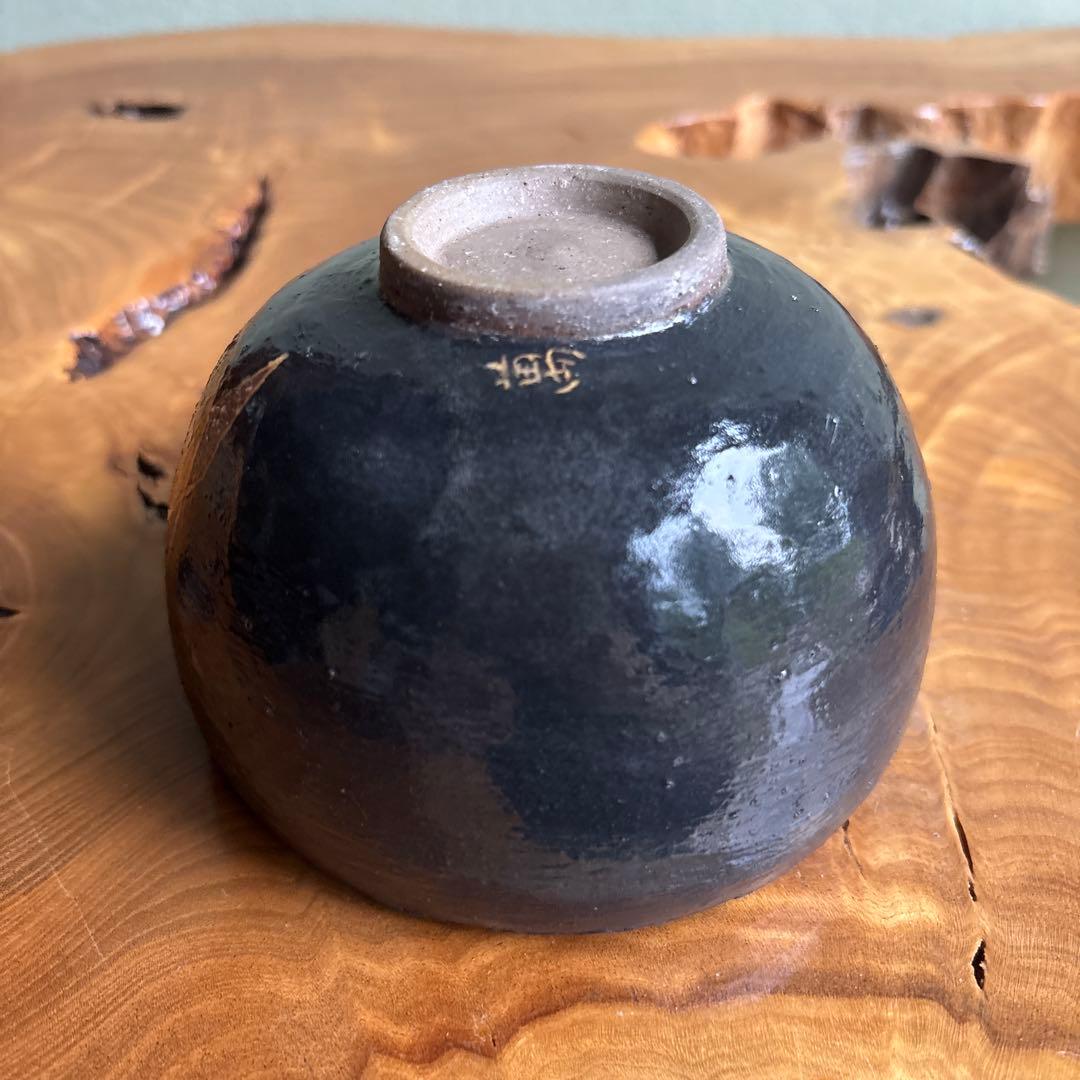
• Artist: Toan (陶葊) — studio potter with signed wooden box
• Technique: Black-glazed stoneware with hand-painted amber iron-pigment decoration
• Era: Late Showa to Heisei period (estimated 1980s–2000s)
• Origin: Japan (studio kiln)
• Dimensions: Diameter approx. 11.2 cm, Height approx. 9.0 cm
• Box: Wooden storage box with artist's brushed calligraphic signature; note — lid not present
• Condition: Excellent — no chips, cracks, or repairs; vivid decoration intact
🔹 [ CULTURAL & ARTISTIC INSIGHT ]
At first glance, the eye is captured by the motif before the bowl itself: a bold, curling design in amber and red-brown iron pigment spiraling across the black surface with the confidence of a family crest or an ancient seal. The design — circular, interlocking, organic — reads as both abstract and deeply rooted in Japanese pictorial tradition. It could be a stylized family mon (crest), an abstracted seasonal motif, or the potter's own visual signature. Whatever its origin, it arrests the gaze in a way few chawan achieve.
The ground it inhabits is a deep, variegated black: not the pure lacquer-black of kuro-raku, but a warmer, earthier darkness — partly matte, partly catching light in subtle waves across the hand-formed surface. The rim undulates gently; the foot is small and rounded, allowing the bowl to be cradled naturally in the palms. The inner bowl carries the same deep black without decoration, drawing the whisked matcha into sharp green contrast.
The reverse side of the bowl presents the plain black ground without decoration — a deliberate front-and-back distinction that gives the tea practitioner a choice: present the landscape toward the guest, or keep it as an interior presence known only to the one holding the bowl. This dual surface is a refined touch, characteristic of ceramicists who understand the theater of tea.
Poetic Line: "The amber spiral turns against the black — neither beginning nor ending, only presence."
🔹 [ DEEP-DIVE COMMENTARY ]
The tradition of painted decoration on dark-ground tea bowls has roots in several Japanese ceramic lineages, most notably certain Oribe and Setoguro ware styles of the Momoyama period, where painting on black-glazed surfaces became a hallmark of expressive individuality. Unlike the more restrained aesthetic of pure wabi ware — which avoids applied ornament in favor of natural kiln variation — painted chawan occupy a separate and equally valued space in tea culture: they make visible the hand of the artist as narrator, not merely as maker.
Toan's decoration technique employs what appears to be an iron-oxide pigment applied before or after the initial black glaze layer and refired, or alternatively applied as an overglaze enamel. The resulting amber-to-red-brown color palette has the quality of heated metal or autumn lacquer against the dark ground — warm, vital, and unmistakably hand-drawn. The line quality is assured: the curved forms neither waver nor over-correct, suggesting a practitioner comfortable with the irreversibility of ceramic painting.
The motif itself — a curling, circular interlocking design — invites interpretation without demanding it. In Japanese visual culture, such forms carry potential references to family crests (kamon), natural spirals (whirlpools, vines, scrolling waves), or Zen calligraphic ensō-adjacent imagery. Its ambiguity is its strength: each viewer brings their own reading, and the bowl accommodates all of them.
The wooden box, signed by the artist in fluid brushwork, provides both provenance and a safe vessel for the bowl's storage and display. Though the box lid is not present, the box itself — with its clear attribution — remains an important element of the piece's identity. For the collector, a signed box from an identified studio potter carries meaningful authentication value even in its partial state.
🔹 [ 日本語解説 ]
■ 基本情報
作家:陶葊(署名入り木箱付)
技法:黒釉ストーンウェア・手描き鉄絵装飾
年代:昭和末期〜平成期(推定1980〜2000年代)
産地:日本(個人工房)
寸法:径 約11.2cm、高さ 約9.0cm
付属:作家書付木箱(蓋なし)
状態:良好(欠け・ニュウ・金継ぎなし、装飾鮮明)
■ 文化・芸術的解説
この茶碗を見たとき、最初に目に飛び込むのは碗そのものよりもその絵付けです。黒い素地に、琥珀色と赤茶色の鉄絵具で描かれた大胆な螺旋状の文様——家紋のような完結した円環、あるいは古い印璽のような力強い渦——が、視線を引き寄せます。抽象的でありながら、日本の絵画的伝統に深く根ざした存在感があります。
その背景となる黒は、純粋な漆黒とは異なる、温かみのある地の黒です。手びねりの表面をそっと流れる光の変化の中で、マットと光沢が混在し、複雑な奥行きを持ちます。口縁はゆるやかに起伏し、高台は小さく丸く、掌に自然にはまる形に整っています。碗の内側には装飾なく深い黒が広がり、点てた抹茶の緑が鮮やかに映えることでしょう。
裏面には文様がなく、茶人は「景色を客に向けるか、自分の内側に秘めるか」を選ぶことができます。この表裏の対比は、茶の場の作法を深く理解した陶工ならではの設計です。
■ 深掘り解説
暗地に絵付けを施す技法は、桃山時代の織部焼や瀬戸黒など複数の日本陶芸の流れに源を持ちます。釉薬の自然変化だけで語る純粋な侘び器とは別の、「作家が語り手として存在する」陶芸のカテゴリーです。陶葊の絵付けは、鉄絵具を黒釉と組み合わせて焼き付けたとみられ、琥珀色から赤茶色への変化は、秋の漆器や熱した金属を想起させる温かな輝きを帯びています。線の運びは確信に満ちており、曲線がよれず、修正も感じさせません。陶芸の絵付けが一筆入魂であることを体現した、熟練の手の跡です。
文様の主題——螺旋する円環の連なり——は、家紋(カモン)、渦巻・蔓草の自然形、あるいは禅の円相を思わせる抽象的な画像性など、複数の解釈を許容します。その曖昧さこそが力です。それぞれの鑑賞者が自分自身の読み取りをこの碗に持ち込むことができます。
作家の書付が入った木箱は、蓋がなくとも真作証明としての意味を保ちます。明確に帰属された工房陶芸家のサイン入り箱は、コレクションにとって重要な来歴の証左です。
🔹 [ SHIPPING & PACKAGING ]
• Dispatch: Within 1-6 business days
• Carrier: Japan Post EMS / UPS (with tracking)
• Packaging: Carefully wrapped with protective materials
🔹 [ BASIC DETAILS ]
• Artist: Toan (陶葊) — studio potter with signed wooden box
• Technique: Black-glazed stoneware with hand-painted amber iron-pigment decoration
• Era: Late Showa to Heisei period (estimated 1980s–2000s)
• Origin: Japan (studio kiln)
• Dimensions: Diameter approx. 11.2 cm, Height approx. 9.0 cm
• Box: Wooden storage box with artist's brushed calligraphic signature; note — lid not present
• Condition: Excellent — no chips, cracks, or repairs; vivid decoration intact
🔹 [ CULTURAL & ARTISTIC INSIGHT ]
At first glance, the eye is captured by the motif before the bowl itself: a bold, curling design in amber and red-brown iron pigment spiraling across the black surface with the confidence of a family crest or an ancient seal. The design — circular, interlocking, organic — reads as both abstract and deeply rooted in Japanese pictorial tradition. It could be a stylized family mon (crest), an abstracted seasonal motif, or the potter's own visual signature. Whatever its origin, it arrests the gaze in a way few chawan achieve.
The ground it inhabits is a deep, variegated black: not the pure lacquer-black of kuro-raku, but a warmer, earthier darkness — partly matte, partly catching light in subtle waves across the hand-formed surface. The rim undulates gently; the foot is small and rounded, allowing the bowl to be cradled naturally in the palms. The inner bowl carries the same deep black without decoration, drawing the whisked matcha into sharp green contrast.
The reverse side of the bowl presents the plain black ground without decoration — a deliberate front-and-back distinction that gives the tea practitioner a choice: present the landscape toward the guest, or keep it as an interior presence known only to the one holding the bowl. This dual surface is a refined touch, characteristic of ceramicists who understand the theater of tea.
Poetic Line: "The amber spiral turns against the black — neither beginning nor ending, only presence."
🔹 [ DEEP-DIVE COMMENTARY ]
The tradition of painted decoration on dark-ground tea bowls has roots in several Japanese ceramic lineages, most notably certain Oribe and Setoguro ware styles of the Momoyama period, where painting on black-glazed surfaces became a hallmark of expressive individuality. Unlike the more restrained aesthetic of pure wabi ware — which avoids applied ornament in favor of natural kiln variation — painted chawan occupy a separate and equally valued space in tea culture: they make visible the hand of the artist as narrator, not merely as maker.
Toan's decoration technique employs what appears to be an iron-oxide pigment applied before or after the initial black glaze layer and refired, or alternatively applied as an overglaze enamel. The resulting amber-to-red-brown color palette has the quality of heated metal or autumn lacquer against the dark ground — warm, vital, and unmistakably hand-drawn. The line quality is assured: the curved forms neither waver nor over-correct, suggesting a practitioner comfortable with the irreversibility of ceramic painting.
The motif itself — a curling, circular interlocking design — invites interpretation without demanding it. In Japanese visual culture, such forms carry potential references to family crests (kamon), natural spirals (whirlpools, vines, scrolling waves), or Zen calligraphic ensō-adjacent imagery. Its ambiguity is its strength: each viewer brings their own reading, and the bowl accommodates all of them.
The wooden box, signed by the artist in fluid brushwork, provides both provenance and a safe vessel for the bowl's storage and display. Though the box lid is not present, the box itself — with its clear attribution — remains an important element of the piece's identity. For the collector, a signed box from an identified studio potter carries meaningful authentication value even in its partial state.
🔹 [ 日本語解説 ]
■ 基本情報
作家:陶葊(署名入り木箱付)
技法:黒釉ストーンウェア・手描き鉄絵装飾
年代:昭和末期〜平成期(推定1980〜2000年代)
産地:日本(個人工房)
寸法:径 約11.2cm、高さ 約9.0cm
付属:作家書付木箱(蓋なし)
状態:良好(欠け・ニュウ・金継ぎなし、装飾鮮明)
■ 文化・芸術的解説
この茶碗を見たとき、最初に目に飛び込むのは碗そのものよりもその絵付けです。黒い素地に、琥珀色と赤茶色の鉄絵具で描かれた大胆な螺旋状の文様——家紋のような完結した円環、あるいは古い印璽のような力強い渦——が、視線を引き寄せます。抽象的でありながら、日本の絵画的伝統に深く根ざした存在感があります。
その背景となる黒は、純粋な漆黒とは異なる、温かみのある地の黒です。手びねりの表面をそっと流れる光の変化の中で、マットと光沢が混在し、複雑な奥行きを持ちます。口縁はゆるやかに起伏し、高台は小さく丸く、掌に自然にはまる形に整っています。碗の内側には装飾なく深い黒が広がり、点てた抹茶の緑が鮮やかに映えることでしょう。
裏面には文様がなく、茶人は「景色を客に向けるか、自分の内側に秘めるか」を選ぶことができます。この表裏の対比は、茶の場の作法を深く理解した陶工ならではの設計です。
■ 深掘り解説
暗地に絵付けを施す技法は、桃山時代の織部焼や瀬戸黒など複数の日本陶芸の流れに源を持ちます。釉薬の自然変化だけで語る純粋な侘び器とは別の、「作家が語り手として存在する」陶芸のカテゴリーです。陶葊の絵付けは、鉄絵具を黒釉と組み合わせて焼き付けたとみられ、琥珀色から赤茶色への変化は、秋の漆器や熱した金属を想起させる温かな輝きを帯びています。線の運びは確信に満ちており、曲線がよれず、修正も感じさせません。陶芸の絵付けが一筆入魂であることを体現した、熟練の手の跡です。
文様の主題——螺旋する円環の連なり——は、家紋(カモン)、渦巻・蔓草の自然形、あるいは禅の円相を思わせる抽象的な画像性など、複数の解釈を許容します。その曖昧さこそが力です。それぞれの鑑賞者が自分自身の読み取りをこの碗に持ち込むことができます。
作家の書付が入った木箱は、蓋がなくとも真作証明としての意味を保ちます。明確に帰属された工房陶芸家のサイン入り箱は、コレクションにとって重要な来歴の証左です。
🔹 [ SHIPPING & PACKAGING ]
• Dispatch: Within 1-6 business days
• Carrier: Japan Post EMS / UPS (with tracking)
• Packaging: Carefully wrapped with protective materials
Quantity
Couldn't load pickup availability
Low stock: 1 left
View full details