1
/
of
14
Black Raku Tea Bowl Zen Inscription by Sasaki Shoraku
Black Raku Tea Bowl Zen Inscription by Sasaki Shoraku
Regular price
Dhs. 1,163.00 AED
Regular price
Sale price
Dhs. 1,163.00 AED
Taxes included.
Shipping calculated at checkout.
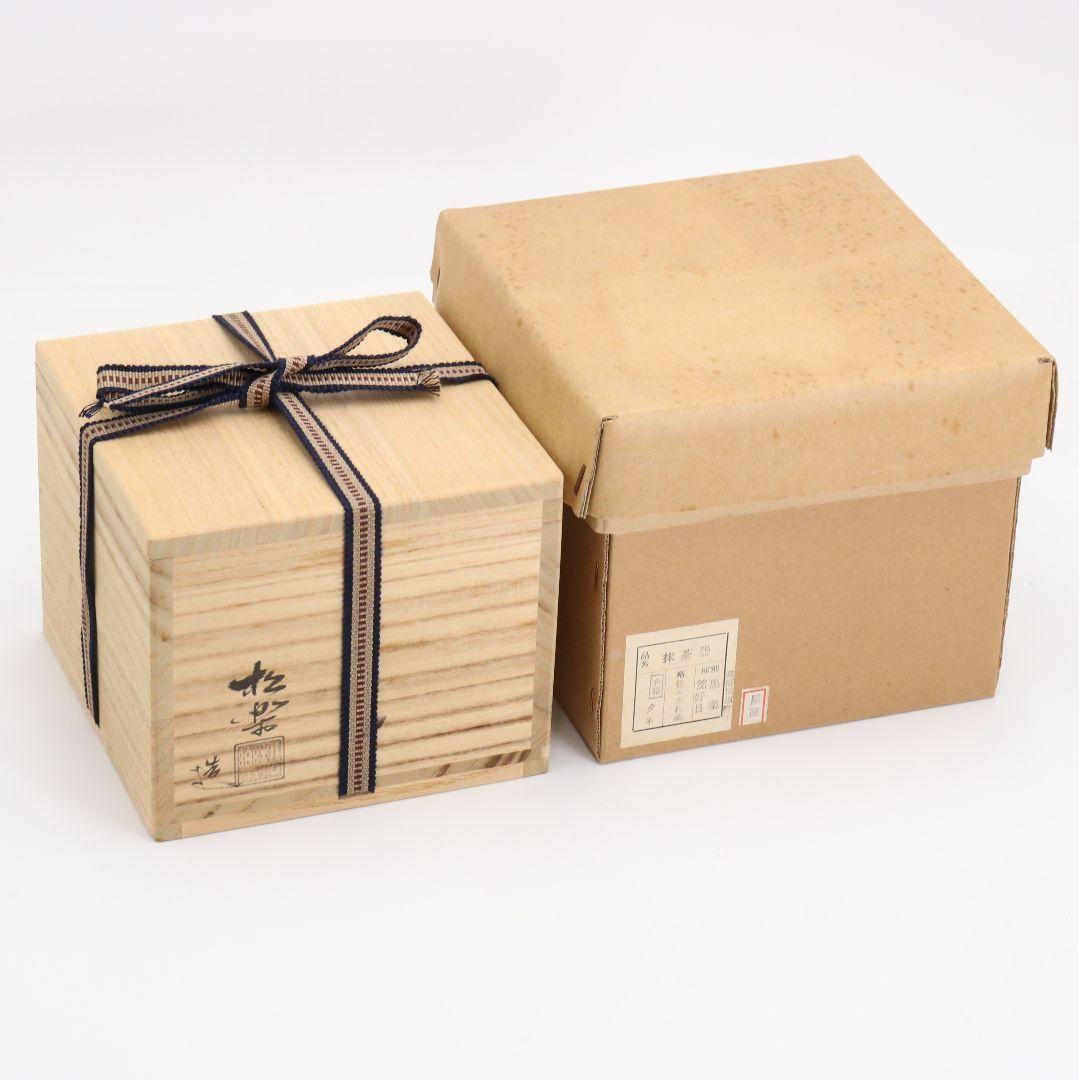
Experience Authentic Japan Art with this Black Raku Tea Bowl. This Kuro Raku Matcha Bowl serves as a Japanese Tea Ceremony Chawan and Zen Master Calligraphy Bowl, featuring Deep Black Raku Kiln Variations and Zen Priest Kakitsuke Inscription—a must-have for any Wabi Tea Collector. This Signed Sasaki Shoraku Chawan with Takahashi Etsudo inscription represents the highest form of Japanese Art Gift where ceramic authorship and Zen text converge.
🔹 [ Basic Details ]
• Artist: Sasaki Shōraku (佐々木松楽) — Kyoto raku potter
• Calligraphy Inscription: Takahashi Etsudō (高橋悦道), Zen Buddhist priest (前大徳 / Former Daitokuji rank)
• Technique: Black raku (kuro raku) hand-building; single low-temperature kiln firing; natural kiln variation at mid-body and base
• Era: 20th–21st century
• Origin: Kyoto, Japan
• Dimensions: Height approx. 8.4 cm, Diameter approx. 12 cm
• Box: Shared wooden box (共箱) inscribed by the artist (松楽造)
• Condition: No chips or cracks; kiln variations are natural and desirable
🔹 [ Cultural & Artistic Insight ]
The kakitsuke (書付) — a calligraphic inscription on the box by a tea master or Zen priest — is among the highest forms of authentication in Japanese tea ceramics. When Zen priest Takahashi Etsudō, bearing the honorary rank of Zendaitoku (前大徳) from Daitokuji temple, chose to inscribe the box of this bowl, he did not merely authenticate — he participated. His brushwork becomes part of the object's identity.
The bowl itself carries the characteristic visual language of kuro raku: deep, almost absorptive black at the rim and upper body, breaking into warm golden-brown where kiln atmosphere shifted during firing. These are not imperfections. They are the record of fire — the moment when clay, glaze, and heat reached a resolution that no plan could fully predict.
"What fire left behind, the hand lifts to the mouth."
🔹 [ Deep-Dive Commentary ]
Raku ware was defined by the tea master Sen no Rikyū in the 16th century as the ideal ceramic expression of wabi — the aesthetic of finding beauty in impermanence, material honesty, and the absence of pretension. Black raku (kuro raku) is fired at approximately 750–800°C, far below conventional stoneware temperatures, in a direct-flame kiln where the potter can observe the transformation in real time.
Sasaki Shōraku works within the Kyoto raku tradition — distinct from the Raku family line but drawing on the same foundational principles. The wide, slightly constricted form with a pronounced lip visible in this bowl is characteristic of the Ido-influenced shapes that raku potters have returned to repeatedly — forms that cup the hands and present the tea at the correct drinking angle.
The golden-brown kiln variations at the bowl's equator — where the glaze thinned or the kiln atmosphere changed — are categorized in Japanese ceramic criticism as "keshiki" (景色, scenery). They transform the bowl's surface into a landscape, a record of a singular firing event that cannot be replicated. Every subsequent handling of the bowl is a re-encounter with that original moment.
Zen priest Takahashi Etsudō's association with Daitokuji — the Kyoto Zen temple most closely linked to the history of the Japanese tea ceremony since the Muromachi period — places this bowl in the highest cultural register. A kakitsuke by a Daitokuji-affiliated priest is a mark of discernment in the most traditional sense: not commercial endorsement, but the recognition of a vessel worthy of the tea.
【日本語解説】
🔹 [ 基本情報 ]
• 作家:佐々木松楽(京都楽焼作家)
• 書付:高橋悦道老師(前大徳)
• 技法:黒楽手捏ね・低温一焼成・自然窯変
• 年代:20〜21世紀
• 産地:京都
• 寸法:高さ約8.4cm、直径約12cm
• 箱:共箱(「松楽造」識書)
• 状態:ヒビ・欠けなし。窯変は景色として鑑賞される
🔹 [ 文化・芸術的解説 ]
書付とは茶人・禅僧が箱蓋裏などに墨書して茶碗の格を認定する行為です。前大徳の称号を持つ高橋悦道老師が書付を施したことは、この茶碗が「茶に相応しい器」として禅の眼に認められたことを意味します。器の格を証する書付は、単なる認証書ではなく、作品の物語の一部となります。
🔹 [ 深掘り解説 ]
黒楽は750〜800°Cという低温で焼成され、直火の炎の変化が釉薬に直接記録されます。佐々木松楽は京都楽焼の系譜に属し、手捏ねの造形から生まれる微妙な歪みと、焼成時の景色が作品の個性を決定します。胴部に現れる金褐色の窯変は「景色」と呼ばれ、繰り返しできない焼成の一瞬の記録です。大徳寺ゆかりの禅僧による書付は、桃山時代に確立された茶と禅の精神的系譜に本作を位置づけるものであり、真剣な茶人コレクターにとって格別の証となります。
🔹 [ SHIPPING & PACKAGING ]
• Dispatch: Within 1-6 business days
• Carrier: Japan Post EMS / UPS (with tracking)
• Packaging: Carefully wrapped with protective materials
🔹 [ Basic Details ]
• Artist: Sasaki Shōraku (佐々木松楽) — Kyoto raku potter
• Calligraphy Inscription: Takahashi Etsudō (高橋悦道), Zen Buddhist priest (前大徳 / Former Daitokuji rank)
• Technique: Black raku (kuro raku) hand-building; single low-temperature kiln firing; natural kiln variation at mid-body and base
• Era: 20th–21st century
• Origin: Kyoto, Japan
• Dimensions: Height approx. 8.4 cm, Diameter approx. 12 cm
• Box: Shared wooden box (共箱) inscribed by the artist (松楽造)
• Condition: No chips or cracks; kiln variations are natural and desirable
🔹 [ Cultural & Artistic Insight ]
The kakitsuke (書付) — a calligraphic inscription on the box by a tea master or Zen priest — is among the highest forms of authentication in Japanese tea ceramics. When Zen priest Takahashi Etsudō, bearing the honorary rank of Zendaitoku (前大徳) from Daitokuji temple, chose to inscribe the box of this bowl, he did not merely authenticate — he participated. His brushwork becomes part of the object's identity.
The bowl itself carries the characteristic visual language of kuro raku: deep, almost absorptive black at the rim and upper body, breaking into warm golden-brown where kiln atmosphere shifted during firing. These are not imperfections. They are the record of fire — the moment when clay, glaze, and heat reached a resolution that no plan could fully predict.
"What fire left behind, the hand lifts to the mouth."
🔹 [ Deep-Dive Commentary ]
Raku ware was defined by the tea master Sen no Rikyū in the 16th century as the ideal ceramic expression of wabi — the aesthetic of finding beauty in impermanence, material honesty, and the absence of pretension. Black raku (kuro raku) is fired at approximately 750–800°C, far below conventional stoneware temperatures, in a direct-flame kiln where the potter can observe the transformation in real time.
Sasaki Shōraku works within the Kyoto raku tradition — distinct from the Raku family line but drawing on the same foundational principles. The wide, slightly constricted form with a pronounced lip visible in this bowl is characteristic of the Ido-influenced shapes that raku potters have returned to repeatedly — forms that cup the hands and present the tea at the correct drinking angle.
The golden-brown kiln variations at the bowl's equator — where the glaze thinned or the kiln atmosphere changed — are categorized in Japanese ceramic criticism as "keshiki" (景色, scenery). They transform the bowl's surface into a landscape, a record of a singular firing event that cannot be replicated. Every subsequent handling of the bowl is a re-encounter with that original moment.
Zen priest Takahashi Etsudō's association with Daitokuji — the Kyoto Zen temple most closely linked to the history of the Japanese tea ceremony since the Muromachi period — places this bowl in the highest cultural register. A kakitsuke by a Daitokuji-affiliated priest is a mark of discernment in the most traditional sense: not commercial endorsement, but the recognition of a vessel worthy of the tea.
【日本語解説】
🔹 [ 基本情報 ]
• 作家:佐々木松楽(京都楽焼作家)
• 書付:高橋悦道老師(前大徳)
• 技法:黒楽手捏ね・低温一焼成・自然窯変
• 年代:20〜21世紀
• 産地:京都
• 寸法:高さ約8.4cm、直径約12cm
• 箱:共箱(「松楽造」識書)
• 状態:ヒビ・欠けなし。窯変は景色として鑑賞される
🔹 [ 文化・芸術的解説 ]
書付とは茶人・禅僧が箱蓋裏などに墨書して茶碗の格を認定する行為です。前大徳の称号を持つ高橋悦道老師が書付を施したことは、この茶碗が「茶に相応しい器」として禅の眼に認められたことを意味します。器の格を証する書付は、単なる認証書ではなく、作品の物語の一部となります。
🔹 [ 深掘り解説 ]
黒楽は750〜800°Cという低温で焼成され、直火の炎の変化が釉薬に直接記録されます。佐々木松楽は京都楽焼の系譜に属し、手捏ねの造形から生まれる微妙な歪みと、焼成時の景色が作品の個性を決定します。胴部に現れる金褐色の窯変は「景色」と呼ばれ、繰り返しできない焼成の一瞬の記録です。大徳寺ゆかりの禅僧による書付は、桃山時代に確立された茶と禅の精神的系譜に本作を位置づけるものであり、真剣な茶人コレクターにとって格別の証となります。
🔹 [ SHIPPING & PACKAGING ]
• Dispatch: Within 1-6 business days
• Carrier: Japan Post EMS / UPS (with tracking)
• Packaging: Carefully wrapped with protective materials
Quantity
Couldn't load pickup availability
Low stock: 1 left
View full details