1
/
of
10
Black Raku Chawan 'Muji' by Sasaki Soraku — Daitokuji Authentication, Signed Tomobako
Black Raku Chawan 'Muji' by Sasaki Soraku — Daitokuji Authentication, Signed Tomobako
Regular price
Dhs. 1,278.00 AED
Regular price
Sale price
Dhs. 1,278.00 AED
Taxes included.
Shipping calculated at checkout.
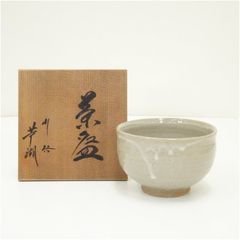
Experience Authentic Japan Art with this Black Raku Chawan Muji. This Daitokuji Certified Tea Bowl serves as a Wabi Sabi Matcha Bowl and Sasaki Soraku Pottery, featuring Signed Tomobako Box and Named Raku Chawan—a must-have for any Art Collector.
🔹 [ BASIC DETAILS ]
• Artist: Sasaki Soraku (佐々木松楽), with tomobako inscription by Tsuji Jokan (辻常閑), Daitokuji school
• Name (銘): Muji (無事) — "all is well; tranquility; nothing amiss"
• Technique: Kuro-raku (Black Raku) — hand-formed with low-temperature kiln firing
• Era: Late Showa to Heisei period (1980s–2000s)
• Origin: Kyoto Raku tradition
• Dimensions: Mouth diameter approx. 11.6 cm, Foot diameter approx. 5.2 cm, Height approx. 8.0 cm
• Box: Original tomobako (共箱) brushed and sealed by the artist; inner lid inscribed and authenticated by Tsuji Jokan, Daitokuji school (大徳寺派 辻常閑書付)
• Condition: Excellent — no chips, cracks, or repairs
🔹 [ CULTURAL & ARTISTIC INSIGHT ]
The name inscribed on this bowl — Muji (無事) — is among the most resonant terms in Zen Buddhism and the philosophy of the Japanese tea ceremony. Often translated as "all is well" or "nothing is amiss," Muji does not mean the absence of events, but rather a quality of awareness undisturbed by craving or resistance. In tea, to enter the tea room with Muji in mind is to meet the moment exactly as it is: neither grasping nor fleeing. The bowl, named for this state, becomes an object that teaches before a drop of matcha is whisked.
Sasaki Soraku's bowl commands immediate attention with its extraordinary glaze landscape. The upper body carries a deep, lacquer-black glaze that pools in the recessed pinch marks and settles into a near-mirror sheen along the rim. Below, the glaze breaks and withdraws — revealing patches of golden amber and ochre mineral deposits nestled in the raw, dark clay body. These warm islands of exposed mineral glitter against the black like embers seen through smoke, or autumn leaves settled on dark water. The effect is entirely natural: kiln chance given form by a skilled hand.
The tomobako lid authentication by Tsuji Jokan of the Daitokuji school (大徳寺派) elevates this piece from a studio object to a tea-ceremony document. Daitokuji — the great Kyoto Zen temple complex most closely associated with the cultural development of the Japanese tea ceremony — has for centuries supplied high priests whose calligraphic inscriptions on tea utensils represent the highest form of spiritual authentication in the art of tea.
Poetic Line: "Between the black glaze and the golden mineral, the bowl holds exactly what it always held — the silence between breaths."
🔹 [ DEEP-DIVE COMMENTARY ]
Kuro-raku (黒楽) is the most philosophically charged ceramic tradition in Japan. Its origins trace to the Raku family of Kyoto, whose founding patron relationship with Sen no Rikyu in the 16th century defined the aesthetic parameters of wabi-cha: tea as spiritual practice, utensils as meditative partners. Black Raku was Rikyu's declared preference over imported Chinese blue-and-white wares — a deliberate rejection of foreign prestige in favor of indigenous, hand-made plainness.
The technique proceeds entirely through hand-forming (tezukuri) without the wheel, giving each bowl its unique compressed, asymmetrical silhouette. The black glaze — a lead-free iron-saturated or copper-based formulation depending on the lineage — is applied and the piece fired at low temperature (800–1000°C) in a small, wood-fueled kiln. The short, intense firing followed by rapid air-cooling arrests the glaze in a state of volcanic fluidity: never fully relaxed, always carrying the memory of fire.
Sasaki Soraku's bowl bears the golden patches that collectors particularly prize: areas where the glaze has pulled back or where natural mineral inclusions in the clay body have bloomed to the surface under heat. These patches — sometimes called kinka (金花, gold flower) by enthusiasts — are entirely unpredictable and cannot be reproduced. Their presence is evidence of firing mastery combined with serendipitous kiln chemistry.
The Daitokuji authentication deserves its own consideration. Tsuji Jokan is a titled priest of the Daitokuji school whose brushed inscriptions on tea utensil boxes carry the spiritual weight of a temple's accumulated relationship with tea culture. Such a kakitsuke (書付 — inscription with authentication) is not a mere signature but a statement that this utensil has been seen, recognized, and spiritually approved by a Zen teacher within the living lineage of the tea ceremony. For collectors and tea practitioners alike, this inscription transforms the box — and by extension the bowl — into a document of transmitted taste.
🔹 [ 日本語解説 ]
■ 基本情報
作家:佐々木松楽造、箱書:大徳寺派 辻常閑
銘:無事
技法:黒楽焼(手びねり成形・低温焼成)
年代:昭和末期〜平成期(1980〜2000年代)
寸法:口径11.6cm、高台径5.2cm、高さ8.0cm
付属:共箱(作家箱書・辻常閑書付)
状態:良好(欠け・ニュウ・金継ぎなし)
■ 文化・芸術的解説
銘「無事」は、禅の精神と日本茶道の美学において、最も深い意味を持つ言葉のひとつです。「すべては在るがままであり、何も滞ることはない」——無事とは、出来事の不在ではなく、あらゆる状況をありのまま受け取る心の質を指します。この碗を銘として受け取る茶人は、お茶を一服点てる前に、すでにその茶碗から何かを学んでいます。
松楽の黒楽茶碗は、見る者を即座に引き込む景色を持っています。上部の釉薬は深い漆黒で、口縁付近ではほとんど鏡のような光沢を帯びながら、指の跡が刻む凹みに静かに溜まっています。そして胴の中程から下にかけて、釉薬が退き——黄金色と黄土色の鉱物の斑が、黒い素地に浮かび上がります。煙越しに見る残り火のような、あるいは暗い水面に沈んだ秋の葉のような、その温かな輝きは計算によってではなく、窯の偶然が手の技と出会ってかたちになったものです。
大徳寺派・辻常閑の書付は、この茶碗を単なる陶芸作品から茶道の「証書」へと転化させます。大徳寺は日本の茶道文化と最も深く結びついた禅刹として知られ、その住持による箱書は、精神的な真正性の最高の表現とされています。
■ 深掘り解説
黒楽は、日本陶芸史において最も哲学的な重みを持つ様式です。16世紀、千利休と楽家の結びつきによって確立された黒楽は、中国渡来の青磁や染付を意識的に退けた「わびの選択」として生まれました。装飾よりも手の痕跡を、華やかさよりも沈黙を——その判断の結晶が、黒楽茶碗です。
技法は完全な手びねりによる成形。ロクロを使わないため、一碗として同じ形は生まれません。黒釉は鉄分または銅分を含む低温釉で、800〜1000℃の急速焼成の後、炎中から取り出し空気で急冷されます。この熱と時間のドラマが、釉薬の表面に「いつまでも溶けきらない火の記憶」を刻み込みます。
松楽の碗に見られる黄金の鉱物斑——「金花」と呼ぶコレクターもいます——は、素地の鉱物成分が高温で表面に花開いたもので、再現不可能な窯の偶然です。これを持つ碗は、同じ作家の手によっても二度と生まれません。
辻常閑の書付は「署名」以上のものです。大徳寺という生きた禅の流れの中で、この茶碗が「見られ、認められ、承認された」という事実の記録です。箱書付きの茶道具は、茶の世界では学術的・市場的価値を大きく高めるとともに、持ち主にとっての精神的な来歴を与えてくれます。
🔹 [ SHIPPING & PACKAGING ]
• Dispatch: Within 1-6 business days
• Carrier: Japan Post EMS / UPS (with tracking)
• Packaging: Carefully wrapped with protective materials
🔹 [ BASIC DETAILS ]
• Artist: Sasaki Soraku (佐々木松楽), with tomobako inscription by Tsuji Jokan (辻常閑), Daitokuji school
• Name (銘): Muji (無事) — "all is well; tranquility; nothing amiss"
• Technique: Kuro-raku (Black Raku) — hand-formed with low-temperature kiln firing
• Era: Late Showa to Heisei period (1980s–2000s)
• Origin: Kyoto Raku tradition
• Dimensions: Mouth diameter approx. 11.6 cm, Foot diameter approx. 5.2 cm, Height approx. 8.0 cm
• Box: Original tomobako (共箱) brushed and sealed by the artist; inner lid inscribed and authenticated by Tsuji Jokan, Daitokuji school (大徳寺派 辻常閑書付)
• Condition: Excellent — no chips, cracks, or repairs
🔹 [ CULTURAL & ARTISTIC INSIGHT ]
The name inscribed on this bowl — Muji (無事) — is among the most resonant terms in Zen Buddhism and the philosophy of the Japanese tea ceremony. Often translated as "all is well" or "nothing is amiss," Muji does not mean the absence of events, but rather a quality of awareness undisturbed by craving or resistance. In tea, to enter the tea room with Muji in mind is to meet the moment exactly as it is: neither grasping nor fleeing. The bowl, named for this state, becomes an object that teaches before a drop of matcha is whisked.
Sasaki Soraku's bowl commands immediate attention with its extraordinary glaze landscape. The upper body carries a deep, lacquer-black glaze that pools in the recessed pinch marks and settles into a near-mirror sheen along the rim. Below, the glaze breaks and withdraws — revealing patches of golden amber and ochre mineral deposits nestled in the raw, dark clay body. These warm islands of exposed mineral glitter against the black like embers seen through smoke, or autumn leaves settled on dark water. The effect is entirely natural: kiln chance given form by a skilled hand.
The tomobako lid authentication by Tsuji Jokan of the Daitokuji school (大徳寺派) elevates this piece from a studio object to a tea-ceremony document. Daitokuji — the great Kyoto Zen temple complex most closely associated with the cultural development of the Japanese tea ceremony — has for centuries supplied high priests whose calligraphic inscriptions on tea utensils represent the highest form of spiritual authentication in the art of tea.
Poetic Line: "Between the black glaze and the golden mineral, the bowl holds exactly what it always held — the silence between breaths."
🔹 [ DEEP-DIVE COMMENTARY ]
Kuro-raku (黒楽) is the most philosophically charged ceramic tradition in Japan. Its origins trace to the Raku family of Kyoto, whose founding patron relationship with Sen no Rikyu in the 16th century defined the aesthetic parameters of wabi-cha: tea as spiritual practice, utensils as meditative partners. Black Raku was Rikyu's declared preference over imported Chinese blue-and-white wares — a deliberate rejection of foreign prestige in favor of indigenous, hand-made plainness.
The technique proceeds entirely through hand-forming (tezukuri) without the wheel, giving each bowl its unique compressed, asymmetrical silhouette. The black glaze — a lead-free iron-saturated or copper-based formulation depending on the lineage — is applied and the piece fired at low temperature (800–1000°C) in a small, wood-fueled kiln. The short, intense firing followed by rapid air-cooling arrests the glaze in a state of volcanic fluidity: never fully relaxed, always carrying the memory of fire.
Sasaki Soraku's bowl bears the golden patches that collectors particularly prize: areas where the glaze has pulled back or where natural mineral inclusions in the clay body have bloomed to the surface under heat. These patches — sometimes called kinka (金花, gold flower) by enthusiasts — are entirely unpredictable and cannot be reproduced. Their presence is evidence of firing mastery combined with serendipitous kiln chemistry.
The Daitokuji authentication deserves its own consideration. Tsuji Jokan is a titled priest of the Daitokuji school whose brushed inscriptions on tea utensil boxes carry the spiritual weight of a temple's accumulated relationship with tea culture. Such a kakitsuke (書付 — inscription with authentication) is not a mere signature but a statement that this utensil has been seen, recognized, and spiritually approved by a Zen teacher within the living lineage of the tea ceremony. For collectors and tea practitioners alike, this inscription transforms the box — and by extension the bowl — into a document of transmitted taste.
🔹 [ 日本語解説 ]
■ 基本情報
作家:佐々木松楽造、箱書:大徳寺派 辻常閑
銘:無事
技法:黒楽焼(手びねり成形・低温焼成)
年代:昭和末期〜平成期(1980〜2000年代)
寸法:口径11.6cm、高台径5.2cm、高さ8.0cm
付属:共箱(作家箱書・辻常閑書付)
状態:良好(欠け・ニュウ・金継ぎなし)
■ 文化・芸術的解説
銘「無事」は、禅の精神と日本茶道の美学において、最も深い意味を持つ言葉のひとつです。「すべては在るがままであり、何も滞ることはない」——無事とは、出来事の不在ではなく、あらゆる状況をありのまま受け取る心の質を指します。この碗を銘として受け取る茶人は、お茶を一服点てる前に、すでにその茶碗から何かを学んでいます。
松楽の黒楽茶碗は、見る者を即座に引き込む景色を持っています。上部の釉薬は深い漆黒で、口縁付近ではほとんど鏡のような光沢を帯びながら、指の跡が刻む凹みに静かに溜まっています。そして胴の中程から下にかけて、釉薬が退き——黄金色と黄土色の鉱物の斑が、黒い素地に浮かび上がります。煙越しに見る残り火のような、あるいは暗い水面に沈んだ秋の葉のような、その温かな輝きは計算によってではなく、窯の偶然が手の技と出会ってかたちになったものです。
大徳寺派・辻常閑の書付は、この茶碗を単なる陶芸作品から茶道の「証書」へと転化させます。大徳寺は日本の茶道文化と最も深く結びついた禅刹として知られ、その住持による箱書は、精神的な真正性の最高の表現とされています。
■ 深掘り解説
黒楽は、日本陶芸史において最も哲学的な重みを持つ様式です。16世紀、千利休と楽家の結びつきによって確立された黒楽は、中国渡来の青磁や染付を意識的に退けた「わびの選択」として生まれました。装飾よりも手の痕跡を、華やかさよりも沈黙を——その判断の結晶が、黒楽茶碗です。
技法は完全な手びねりによる成形。ロクロを使わないため、一碗として同じ形は生まれません。黒釉は鉄分または銅分を含む低温釉で、800〜1000℃の急速焼成の後、炎中から取り出し空気で急冷されます。この熱と時間のドラマが、釉薬の表面に「いつまでも溶けきらない火の記憶」を刻み込みます。
松楽の碗に見られる黄金の鉱物斑——「金花」と呼ぶコレクターもいます——は、素地の鉱物成分が高温で表面に花開いたもので、再現不可能な窯の偶然です。これを持つ碗は、同じ作家の手によっても二度と生まれません。
辻常閑の書付は「署名」以上のものです。大徳寺という生きた禅の流れの中で、この茶碗が「見られ、認められ、承認された」という事実の記録です。箱書付きの茶道具は、茶の世界では学術的・市場的価値を大きく高めるとともに、持ち主にとっての精神的な来歴を与えてくれます。
🔹 [ SHIPPING & PACKAGING ]
• Dispatch: Within 1-6 business days
• Carrier: Japan Post EMS / UPS (with tracking)
• Packaging: Carefully wrapped with protective materials
Quantity
Couldn't load pickup availability
Low stock: 1 left
View full details