1
/
of
20
Bizen Yohen Kiln-Transformation Chawan by Suzuki Atsuo — Tomobako
Bizen Yohen Kiln-Transformation Chawan by Suzuki Atsuo — Tomobako
Regular price
Dhs. 3,529.00 AED
Regular price
Sale price
Dhs. 3,529.00 AED
Taxes included.
Shipping calculated at checkout.
The surface holds a whole atmosphere. Charcoal-grey clay erupts with ash constellations — silver-white specks that settled in the kiln's breath and fused into the body as it cooled. On one flank, a terracotta hidasuki flash cuts warm against the darker field, the ghost of a straw cord that burned away a thousand degrees ago. This is yohen: kiln transformation, where the potter's intention ends and fire's authorship begins.
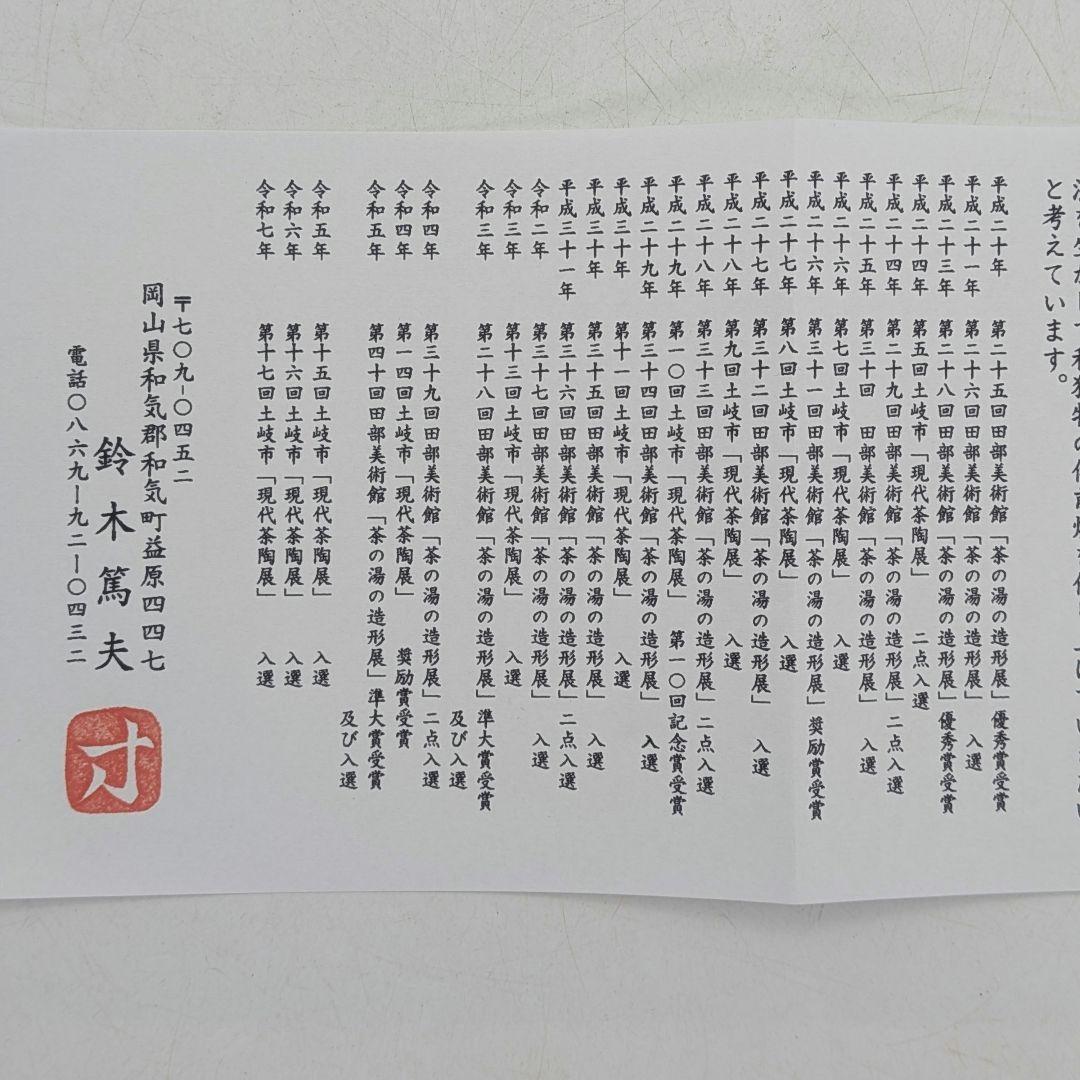
Suzuki Atsuo graduated from Okayama University in 1969, returning to the craft's home soil. He began firing ceramics in 1985 using an oil-fired kiln — a deliberate departure from conventional wood-firing that allowed him to pursue kiln-transformation effects with greater control over atmospheric conditions. His sustained research into kin-sai Bizen, gold-decorated stoneware, earned him multiple award recognitions. This chawan represents a parallel thread in his practice: the yohen bowl, stripped of added ornament, dependent entirely on what fire decides.
🔹 [ BASIC DETAILS ]
The bowl sits with the quiet authority of something that grew rather than was made. Its profile is full and rounded at the shoulder, tapering to a foot that meets the hand with solidity — 496 grams of Bizen clay, weight that registers as presence rather than mass. The rim traces an organic undulation, not perfectly level but deliberately alive, the kind of irregularity that tea practitioners call *te no ato* — the trace of hands.
Across the exterior, the texture is dense and volcanic: coarse grog particles press through the surface, creating a micro-relief that catches light differently at every angle. In one photograph the surface reads almost lunar; in another, the ash deposits catch a silver sheen and the whole bowl seems to breathe. The interior resolves to a smooth, darkened grey-brown where whisked matcha will sit in concentrated shadow.
The hidasuki mark — that warm amber-to-terracotta passage on one face — is the fire's signature. In traditional Bizen firing, straw rope was bound around pieces before they entered the kiln; the cord's potassium-rich ash created a chemical reaction with the clay body, leaving this characteristic flame-colored trace. Suzuki's oil-kiln interpretation produces the same phenomenon through atmospheric manipulation rather than physical straw, demonstrating that the effect belongs to the material's nature as much as to the method.
🔹 [ CULTURAL & ARTISTIC INSIGHT ]
Bizen-yaki occupies a singular position in Japanese ceramic history. Fired without glaze since at least the Heian period, Bizen pieces depend entirely on the clay's iron content, the kiln's atmosphere, and the duration of firing for their final appearance. No two pieces are identical. The tradition was elevated to national cultural status precisely because it made legible what most ceramic traditions obscure: the direct conversation between maker, clay, and fire.
The yohen effect — literally "kiln change" — was historically prized and unpredictable. Contemporary artists like Suzuki approach it with refined technical understanding, but the unpredictability remains constitutive. He can create the conditions; he cannot dictate the outcome. Each bowl that carries this surface marks a specific atmospheric event in a specific kiln on a specific day.
For tea ceremony use, a yohen Bizen chawan carries a particular presence. The dark, textured exterior grounds the ceremony in silence. Matcha's vivid green against the charcoal interior creates a chromatic tension that is itself part of the ritual framing — the bowl as witness to the tea, not competitor with it.
🔹 [ DEEP-DIVE COMMENTARY ]
Offered with complete original tomobako (signed paulownia wood box) with the artist's hand-brushed inscription and red seal, tomobuno (orange silk wrapping cloth), and shori-fuda (artist's certificate card bearing biographical text and red seal). The tomobako lid inscription reads 備前 窯変茶盌 — Bizen Yohen Chawan — in the artist's own hand.
Condition is excellent throughout. No chips, cracks, repairs, or restoration. The surface reads exactly as fired.
━━ DIMENSIONS ━━
• Diameter: 15.2 cm
• Height: 10.6 cm
• Weight: 496 g
━━ PROVENANCE DOCUMENTS ━━
• Tomobako (signed original paulownia box)
• Tomobuno (original silk wrapping cloth)
• Shori-fuda (artist's certificate)
🔹 [ 日本語解説 ]
備前の土が炎と交わった痕跡が、そのまま器の表面に宿っています。炭灰色の肌に広がる白い火灰の星座、温かみのある緋襷の赤み——これは釉薬ではなく、窯の中の気流と時間が刻んだ筆跡です。鈴木篤夫氏は岡山大学卒業後、灯油窯を用いて窯変の研究を重ね、金彩備前でも受賞歴を持つ陶芸家です。この茶盌は、装飾を一切排し、炎だけを語らせた一碗です。
🔹 [ 日本語解説 ]
備前の土が炎と交わった痕跡が、そのまま器の表面に宿っています。炭灰色の肌に広がる白い火灰の星座、温かみのある緋襷の赤み——これは釉薬ではなく、窯の中の気流と時間が刻んだ筆跡です。鈴木篤夫氏は岡山大学卒業後、灯油窯を用いて窯変の研究を重ね、金彩備前でも受賞歴を持つ陶芸家です。この茶盌は、装飾を一切排し、炎だけを語らせた一碗です。
🔹 [ 日本語解説 ]
備前の土が炎と交わった痕跡が、そのまま器の表面に宿っています。炭灰色の肌に広がる白い火灰の星座、温かみのある緋襷の赤み——これは釉薬ではなく、窯の中の気流と時間が刻んだ筆跡です。鈴木篤夫氏は岡山大学卒業後、灯油窯を用いて窯変の研究を重ね、金彩備前でも受賞歴を持つ陶芸家です。この茶盌は、装飾を一切排し、炎だけを語らせた一碗です。
🔹 [ SHIPPING & PACKAGING ]
• Dispatch: Within 1-6 business days
• Carrier: Japan Post EMS / UPS (with tracking)
• Packaging: Carefully wrapped with protective materials
Suzuki Atsuo graduated from Okayama University in 1969, returning to the craft's home soil. He began firing ceramics in 1985 using an oil-fired kiln — a deliberate departure from conventional wood-firing that allowed him to pursue kiln-transformation effects with greater control over atmospheric conditions. His sustained research into kin-sai Bizen, gold-decorated stoneware, earned him multiple award recognitions. This chawan represents a parallel thread in his practice: the yohen bowl, stripped of added ornament, dependent entirely on what fire decides.
🔹 [ BASIC DETAILS ]
The bowl sits with the quiet authority of something that grew rather than was made. Its profile is full and rounded at the shoulder, tapering to a foot that meets the hand with solidity — 496 grams of Bizen clay, weight that registers as presence rather than mass. The rim traces an organic undulation, not perfectly level but deliberately alive, the kind of irregularity that tea practitioners call *te no ato* — the trace of hands.
Across the exterior, the texture is dense and volcanic: coarse grog particles press through the surface, creating a micro-relief that catches light differently at every angle. In one photograph the surface reads almost lunar; in another, the ash deposits catch a silver sheen and the whole bowl seems to breathe. The interior resolves to a smooth, darkened grey-brown where whisked matcha will sit in concentrated shadow.
The hidasuki mark — that warm amber-to-terracotta passage on one face — is the fire's signature. In traditional Bizen firing, straw rope was bound around pieces before they entered the kiln; the cord's potassium-rich ash created a chemical reaction with the clay body, leaving this characteristic flame-colored trace. Suzuki's oil-kiln interpretation produces the same phenomenon through atmospheric manipulation rather than physical straw, demonstrating that the effect belongs to the material's nature as much as to the method.
🔹 [ CULTURAL & ARTISTIC INSIGHT ]
Bizen-yaki occupies a singular position in Japanese ceramic history. Fired without glaze since at least the Heian period, Bizen pieces depend entirely on the clay's iron content, the kiln's atmosphere, and the duration of firing for their final appearance. No two pieces are identical. The tradition was elevated to national cultural status precisely because it made legible what most ceramic traditions obscure: the direct conversation between maker, clay, and fire.
The yohen effect — literally "kiln change" — was historically prized and unpredictable. Contemporary artists like Suzuki approach it with refined technical understanding, but the unpredictability remains constitutive. He can create the conditions; he cannot dictate the outcome. Each bowl that carries this surface marks a specific atmospheric event in a specific kiln on a specific day.
For tea ceremony use, a yohen Bizen chawan carries a particular presence. The dark, textured exterior grounds the ceremony in silence. Matcha's vivid green against the charcoal interior creates a chromatic tension that is itself part of the ritual framing — the bowl as witness to the tea, not competitor with it.
🔹 [ DEEP-DIVE COMMENTARY ]
Offered with complete original tomobako (signed paulownia wood box) with the artist's hand-brushed inscription and red seal, tomobuno (orange silk wrapping cloth), and shori-fuda (artist's certificate card bearing biographical text and red seal). The tomobako lid inscription reads 備前 窯変茶盌 — Bizen Yohen Chawan — in the artist's own hand.
Condition is excellent throughout. No chips, cracks, repairs, or restoration. The surface reads exactly as fired.
━━ DIMENSIONS ━━
• Diameter: 15.2 cm
• Height: 10.6 cm
• Weight: 496 g
━━ PROVENANCE DOCUMENTS ━━
• Tomobako (signed original paulownia box)
• Tomobuno (original silk wrapping cloth)
• Shori-fuda (artist's certificate)
🔹 [ 日本語解説 ]
備前の土が炎と交わった痕跡が、そのまま器の表面に宿っています。炭灰色の肌に広がる白い火灰の星座、温かみのある緋襷の赤み——これは釉薬ではなく、窯の中の気流と時間が刻んだ筆跡です。鈴木篤夫氏は岡山大学卒業後、灯油窯を用いて窯変の研究を重ね、金彩備前でも受賞歴を持つ陶芸家です。この茶盌は、装飾を一切排し、炎だけを語らせた一碗です。
🔹 [ 日本語解説 ]
備前の土が炎と交わった痕跡が、そのまま器の表面に宿っています。炭灰色の肌に広がる白い火灰の星座、温かみのある緋襷の赤み——これは釉薬ではなく、窯の中の気流と時間が刻んだ筆跡です。鈴木篤夫氏は岡山大学卒業後、灯油窯を用いて窯変の研究を重ね、金彩備前でも受賞歴を持つ陶芸家です。この茶盌は、装飾を一切排し、炎だけを語らせた一碗です。
🔹 [ 日本語解説 ]
備前の土が炎と交わった痕跡が、そのまま器の表面に宿っています。炭灰色の肌に広がる白い火灰の星座、温かみのある緋襷の赤み——これは釉薬ではなく、窯の中の気流と時間が刻んだ筆跡です。鈴木篤夫氏は岡山大学卒業後、灯油窯を用いて窯変の研究を重ね、金彩備前でも受賞歴を持つ陶芸家です。この茶盌は、装飾を一切排し、炎だけを語らせた一碗です。
🔹 [ SHIPPING & PACKAGING ]
• Dispatch: Within 1-6 business days
• Carrier: Japan Post EMS / UPS (with tracking)
• Packaging: Carefully wrapped with protective materials
Quantity
Couldn't load pickup availability
Low stock: 1 left
View full details