1
/
of
8
Bizen Yaki Guinomi by Yamashita Joji — Hidasuki Sake Cup with Signed Box
Bizen Yaki Guinomi by Yamashita Joji — Hidasuki Sake Cup with Signed Box
Regular price
Dhs. 469.00 AED
Regular price
Sale price
Dhs. 469.00 AED
Taxes included.
Shipping calculated at checkout.
A guinomi by Yamashita Joji, fired unglazed in the Bizen tradition of Okayama. No pigment, no glaze — the surface is written entirely by flame, ash, and clay left to answer the kiln directly. Bands of burnt orange hidasuki run the length of the wall against warm grey-tan stoneware, marking where rice straw once bound the piece before the fire took hold. It arrives in its original tomobako, inscribed and sealed by the maker's own hand.
🔹 [ BASIC DETAILS ]
Artist: Yamashita Joji (山下譲治)
Technique: Unglazed stoneware (yakishime), hidasuki fire-cord marking
Era: Contemporary
Origin: Bizen, Okayama, Japan
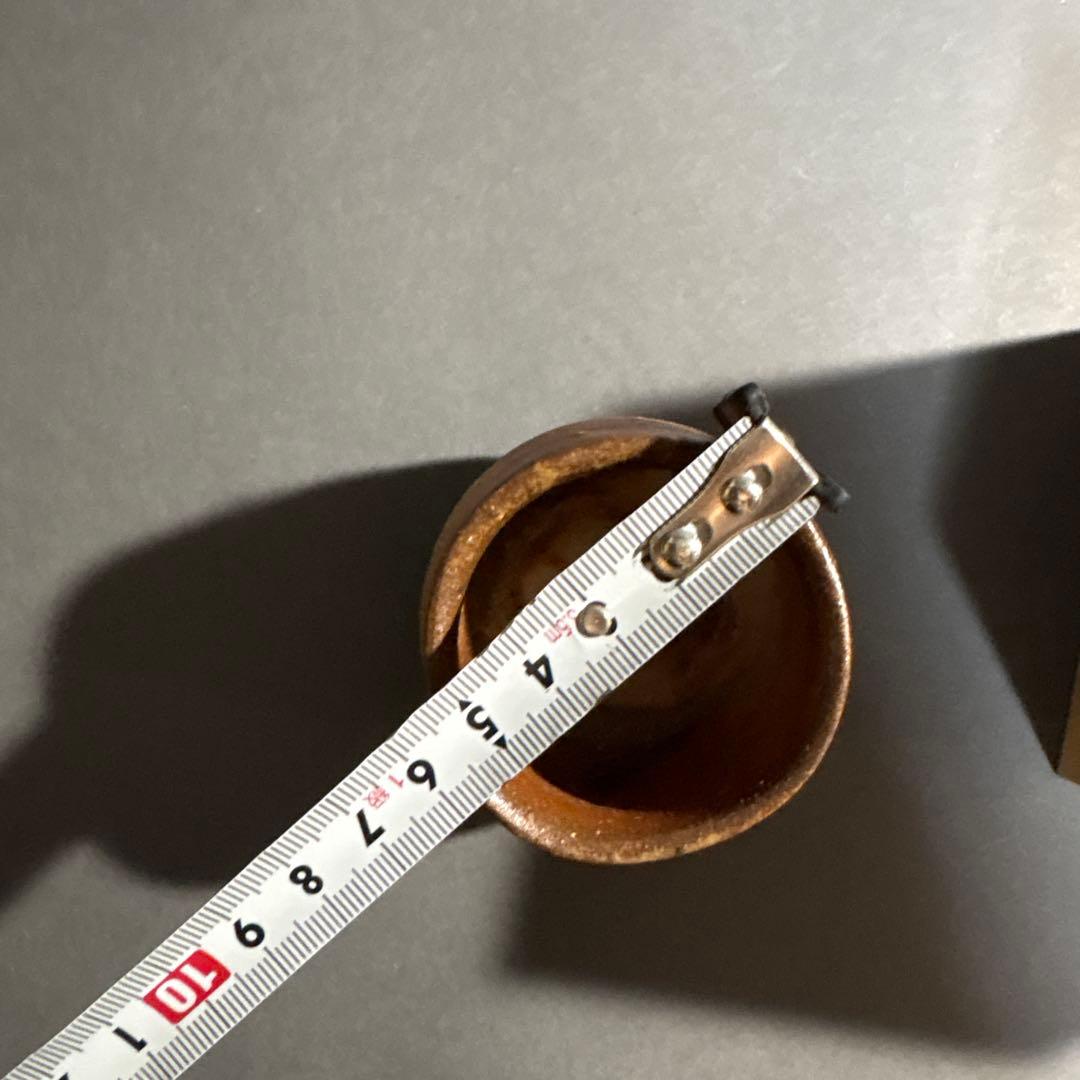
Dimensions: Height approx. 4.5 cm / Width approx. 6.5 cm
Box: Original signed tomobako (共箱), inscribed "備前ぐい呑" with the artist's cursive signature and red seal
Condition: Good. No chips, cracks, or repairs. Surface pitting, sand particles fused into the clay, and the uneven rim are results of the anagama firing process, not flaws — each is a record of the piece's time in the kiln.
🔹 [ CULTURAL & ARTISTIC INSIGHT ]
Historical Context: Bizen is counted among Japan's Six Ancient Kilns (六古窯), its production tracing back to the Heian and Kamakura periods without interruption. Unlike most Japanese ceramic traditions, Bizen ware wears no glaze. Its identity was set almost a thousand years ago and has changed remarkably little: iron-rich clay, dug locally and aged for years, fired for days in a wood-burning kiln until the flame itself becomes the decoration.
Technique & Aesthetic: The hidasuki seen here — literally "fire cord" — forms where rice straw is wrapped around the piece before firing. The straw's alkali content reacts with the iron in the clay body at high temperature, drawing out these streaks of scarlet and burnt orange against the surrounding grey stoneware. No two bands are alike; the pattern is negotiated between potter, straw, and kiln atmosphere, never fully controlled by any one of the three.
Philosophical Reflection: A vessel with nothing to hide behind — no glaze to soften what the fire decided.
🔹 [ DEEP-DIVE COMMENTARY ]
Bizen ware occupies a particular place in Japanese ceramics because it refuses the glaze-based vocabulary that defines most other regional kilns. Where Kutani or Imari lean on painted decoration and Hagi or Karatsu rely on ash and feldspathic glazes, Bizen presents the clay body itself as the finished surface. What the eye reads as decoration — hidasuki, goma (ash deposits), sangiri (charcoal-blackened patches) — is in fact residue of a physical event: days of continuous wood firing inside an anagama or noborigama kiln, with temperature, oxygen, and ash fall shifting constantly along the chamber.
Achieving unglazed firing at this level demands a potter's full submission to variables outside direct control. Clay selection determines iron content and thus the intensity of hidasuki color. Placement within the kiln determines how much ash falls and pools. Firing duration — often five to fourteen days — determines how deeply the flame penetrates the clay body. Yamashita Joji's guinomi shows a controlled hand within this uncertainty: the hidasuki bands are evenly distributed, the grey stoneware ground is clean, and the rim retains a crisp, functional profile suited to daily use as a sake cup.
For collectors, Bizen guinomi occupy a distinct category. They are small enough to use, substantial enough to display, and legible enough in their firing marks to reward close looking. A signed tomobako — as included here — anchors the piece to its maker and to a specific working period, a detail that matters increasingly as unglazed ceramics gain attention outside Japan.
In contemporary use, this guinomi asks nothing more than to be held and filled. Its texture rewards the hand as much as the eye — the sanded, slightly gritty clay body a direct tactile record of Bizen's uncompromising material honesty.
[ 日本語解説 ]
山下譲治作、備前焼のぐい呑。釉薬を一切使わず、炎と灰、そして土そのものが表情を決める備前の技法で焼き上げられている。器の胴には緋色から橙色へと変化する緋襷が縦に走り、温かみのある灰褐色の土肌と対比をなす。共箱には作者自身の手による「備前ぐい呑」の墨書と落款が残されている。
🔹 [ BASIC DETAILS ]
作家: 山下譲治
技法: 無釉焼締、緋襷
時代: 現代
産地: 岡山県備前市
サイズ: 高さ約4.5cm・幅約6.5cm
箱: 共箱(「備前ぐい呑」墨書・落款あり)
状態: 良好。欠け・ヒビ・修理なし。土肌の斑点や口縁のわずかな歪みは、焼成過程で生じる備前焼特有の景色であり、欠陥ではない。
🔹 [ CULTURAL & ARTISTIC INSIGHT ]
歴史的背景: 備前焼は日本六古窯のひとつに数えられ、平安・鎌倉期から現在まで途切れることなく続く陶芸産地である。多くの日本の焼き物と異なり、備前焼は釉薬を用いない。鉄分を多く含む地元の土を長期間寝かせ、登窯や穴窯で数日間かけて焼き締める、千年近く大きく変わらない技法である。
技法と美意識: 緋襷は、焼成前に藁を器に巻き付けることで生まれる。高温下で藁のアルカリ成分が土中の鉄分と反応し、緋色から橙色の帯を器面に刻む。同じ緋襷はふたつと生まれず、その景色は陶工・藁・窯の炎、三者の間で決まる偶然の産物である。
哲学的省察: 隠すもののない器——釉薬という覆いを持たず、炎が決めたものをそのまま受け入れる。
🔹 [ DEEP-DIVE COMMENTARY ]
備前焼は、釉薬による装飾を前提としない点で、日本の陶芸の中でも独自の位置を占める。九谷や伊万里が絵付けに重きを置き、萩や唐津が灰釉・長石釉に頼るのに対し、備前焼は土そのものを完成された表面として提示する。緋襷、胡麻(灰かぶり)、桟切り(炭化による黒変)といった景色は装飾ではなく、数日間にわたる薪窯焼成という物理的出来事の痕跡である。
この水準の焼締めを実現するには、陶工が制御しきれない多くの変数を受け入れる必要がある。土の性質は緋襷の発色を左右し、窯内での位置は灰の降りかかり方を、焼成期間(時に五日から十四日)は炎が土に浸透する深さを決定する。山下譲治のこのぐい呑は、その不確実性の中で確かな手仕事を示している——緋襷の帯は均等に配され、灰褐色の地肌は清潔感を保ち、口縁は酒器としての実用性を備えた端正な形を保っている。
コレクターにとって、備前ぐい呑は特別な位置を占める。日常使いできる大きさでありながら、鑑賞に堪える存在感を持ち、焼成の景色を読み解く楽しみを与えてくれる。本作に付属する共箱は、作者と制作時期を明確に結びつける資料的価値を持ち、海外での焼締め陶への関心が高まる中でその意味はさらに増している。
現代の暮らしの中で、このぐい呑が求めるのはただ手に取られ、満たされることだけである。ざらりとした土の質感は目だけでなく手にも記憶を残し、備前焼という様式が持つ妥協のない素材への誠実さを、そのまま伝えている。
🔹 [ SHIPPING & PACKAGING ]
• Dispatch: Within 1-6 business days
• Carrier: Japan Post EMS / UPS / FedEx (with tracking)
• Packaging: Carefully wrapped with protective materials
🔹 [ BASIC DETAILS ]
Artist: Yamashita Joji (山下譲治)
Technique: Unglazed stoneware (yakishime), hidasuki fire-cord marking
Era: Contemporary
Origin: Bizen, Okayama, Japan
Dimensions: Height approx. 4.5 cm / Width approx. 6.5 cm
Box: Original signed tomobako (共箱), inscribed "備前ぐい呑" with the artist's cursive signature and red seal
Condition: Good. No chips, cracks, or repairs. Surface pitting, sand particles fused into the clay, and the uneven rim are results of the anagama firing process, not flaws — each is a record of the piece's time in the kiln.
🔹 [ CULTURAL & ARTISTIC INSIGHT ]
Historical Context: Bizen is counted among Japan's Six Ancient Kilns (六古窯), its production tracing back to the Heian and Kamakura periods without interruption. Unlike most Japanese ceramic traditions, Bizen ware wears no glaze. Its identity was set almost a thousand years ago and has changed remarkably little: iron-rich clay, dug locally and aged for years, fired for days in a wood-burning kiln until the flame itself becomes the decoration.
Technique & Aesthetic: The hidasuki seen here — literally "fire cord" — forms where rice straw is wrapped around the piece before firing. The straw's alkali content reacts with the iron in the clay body at high temperature, drawing out these streaks of scarlet and burnt orange against the surrounding grey stoneware. No two bands are alike; the pattern is negotiated between potter, straw, and kiln atmosphere, never fully controlled by any one of the three.
Philosophical Reflection: A vessel with nothing to hide behind — no glaze to soften what the fire decided.
🔹 [ DEEP-DIVE COMMENTARY ]
Bizen ware occupies a particular place in Japanese ceramics because it refuses the glaze-based vocabulary that defines most other regional kilns. Where Kutani or Imari lean on painted decoration and Hagi or Karatsu rely on ash and feldspathic glazes, Bizen presents the clay body itself as the finished surface. What the eye reads as decoration — hidasuki, goma (ash deposits), sangiri (charcoal-blackened patches) — is in fact residue of a physical event: days of continuous wood firing inside an anagama or noborigama kiln, with temperature, oxygen, and ash fall shifting constantly along the chamber.
Achieving unglazed firing at this level demands a potter's full submission to variables outside direct control. Clay selection determines iron content and thus the intensity of hidasuki color. Placement within the kiln determines how much ash falls and pools. Firing duration — often five to fourteen days — determines how deeply the flame penetrates the clay body. Yamashita Joji's guinomi shows a controlled hand within this uncertainty: the hidasuki bands are evenly distributed, the grey stoneware ground is clean, and the rim retains a crisp, functional profile suited to daily use as a sake cup.
For collectors, Bizen guinomi occupy a distinct category. They are small enough to use, substantial enough to display, and legible enough in their firing marks to reward close looking. A signed tomobako — as included here — anchors the piece to its maker and to a specific working period, a detail that matters increasingly as unglazed ceramics gain attention outside Japan.
In contemporary use, this guinomi asks nothing more than to be held and filled. Its texture rewards the hand as much as the eye — the sanded, slightly gritty clay body a direct tactile record of Bizen's uncompromising material honesty.
[ 日本語解説 ]
山下譲治作、備前焼のぐい呑。釉薬を一切使わず、炎と灰、そして土そのものが表情を決める備前の技法で焼き上げられている。器の胴には緋色から橙色へと変化する緋襷が縦に走り、温かみのある灰褐色の土肌と対比をなす。共箱には作者自身の手による「備前ぐい呑」の墨書と落款が残されている。
🔹 [ BASIC DETAILS ]
作家: 山下譲治
技法: 無釉焼締、緋襷
時代: 現代
産地: 岡山県備前市
サイズ: 高さ約4.5cm・幅約6.5cm
箱: 共箱(「備前ぐい呑」墨書・落款あり)
状態: 良好。欠け・ヒビ・修理なし。土肌の斑点や口縁のわずかな歪みは、焼成過程で生じる備前焼特有の景色であり、欠陥ではない。
🔹 [ CULTURAL & ARTISTIC INSIGHT ]
歴史的背景: 備前焼は日本六古窯のひとつに数えられ、平安・鎌倉期から現在まで途切れることなく続く陶芸産地である。多くの日本の焼き物と異なり、備前焼は釉薬を用いない。鉄分を多く含む地元の土を長期間寝かせ、登窯や穴窯で数日間かけて焼き締める、千年近く大きく変わらない技法である。
技法と美意識: 緋襷は、焼成前に藁を器に巻き付けることで生まれる。高温下で藁のアルカリ成分が土中の鉄分と反応し、緋色から橙色の帯を器面に刻む。同じ緋襷はふたつと生まれず、その景色は陶工・藁・窯の炎、三者の間で決まる偶然の産物である。
哲学的省察: 隠すもののない器——釉薬という覆いを持たず、炎が決めたものをそのまま受け入れる。
🔹 [ DEEP-DIVE COMMENTARY ]
備前焼は、釉薬による装飾を前提としない点で、日本の陶芸の中でも独自の位置を占める。九谷や伊万里が絵付けに重きを置き、萩や唐津が灰釉・長石釉に頼るのに対し、備前焼は土そのものを完成された表面として提示する。緋襷、胡麻(灰かぶり)、桟切り(炭化による黒変)といった景色は装飾ではなく、数日間にわたる薪窯焼成という物理的出来事の痕跡である。
この水準の焼締めを実現するには、陶工が制御しきれない多くの変数を受け入れる必要がある。土の性質は緋襷の発色を左右し、窯内での位置は灰の降りかかり方を、焼成期間(時に五日から十四日)は炎が土に浸透する深さを決定する。山下譲治のこのぐい呑は、その不確実性の中で確かな手仕事を示している——緋襷の帯は均等に配され、灰褐色の地肌は清潔感を保ち、口縁は酒器としての実用性を備えた端正な形を保っている。
コレクターにとって、備前ぐい呑は特別な位置を占める。日常使いできる大きさでありながら、鑑賞に堪える存在感を持ち、焼成の景色を読み解く楽しみを与えてくれる。本作に付属する共箱は、作者と制作時期を明確に結びつける資料的価値を持ち、海外での焼締め陶への関心が高まる中でその意味はさらに増している。
現代の暮らしの中で、このぐい呑が求めるのはただ手に取られ、満たされることだけである。ざらりとした土の質感は目だけでなく手にも記憶を残し、備前焼という様式が持つ妥協のない素材への誠実さを、そのまま伝えている。
🔹 [ SHIPPING & PACKAGING ]
• Dispatch: Within 1-6 business days
• Carrier: Japan Post EMS / UPS / FedEx (with tracking)
• Packaging: Carefully wrapped with protective materials
Quantity
Couldn't load pickup availability
Low stock: 1 left
View full details