1
/
of
13
Bizen Yaki Black Chawan by Sato Taisuke — Kuroyu Kiln-Fired Tea Bowl with Signed Box
Bizen Yaki Black Chawan by Sato Taisuke — Kuroyu Kiln-Fired Tea Bowl with Signed Box
Regular price
Dhs. 888.00 AED
Regular price
Sale price
Dhs. 888.00 AED
Taxes included.
Shipping calculated at checkout.
Experience Authentic Japanese Tea Ceremony Art with this Bizen Yaki Tea Bowl. This Kuroyu Chawan serves as a Japanese Matcha Bowl and Signed Ceramic Tea Bowl, featuring Kiln-Fired Black Glaze and Pine Motif Carved Relief—a must-have for any Wabi Sabi Art Collector.
🔹 [ BASIC DETAILS ]
• Artist: Sato Taisuke (佐藤苔助), active mid-to-late Showa era, Bizen ceramic tradition
• Technique: Kuroyu (black glaze) firing with hand-carved pine needle (matsu-e) relief; the glaze pools and breaks across the surface in organic kiln transformation
• Mei (銘 / Named piece): "Bishō-matsu-e Kuro Chawan" (美松絵黒茶碗) — "Tea Bowl of Beautiful Pine Drawing"
• Era: 1970s–1990s
• Origin: Bizen, Okayama Prefecture, Japan
• Dimensions: Width approx. 11.5 cm, Height approx. 9 cm
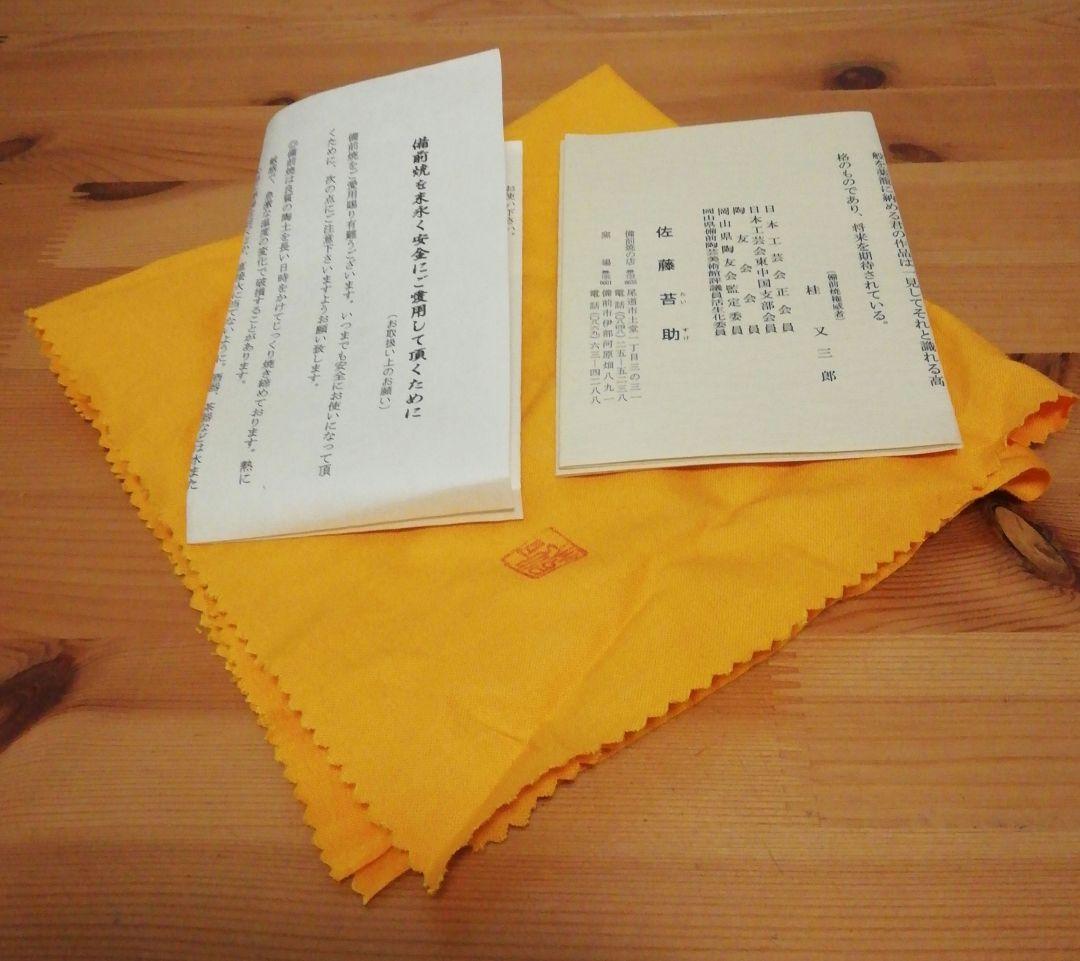
• Box: Artist-signed tomobako (共箱) with brushed inscription and personal seal; tomobono (共布 / original cloth) included; artist biography (略歴) included
• Condition: Excellent — no chips, cracks, or repairs; glaze surface intact with rich natural sheen
🔹 [ CULTURAL & ARTISTIC INSIGHT ]
Bizen ware stands among Japan's Six Ancient Kilns, prized for centuries precisely because it refuses ornamentation. Its power arises from fire itself — the unpredictable dialogue between clay, ash, and heat that no artist can fully control. Within this tradition, certain masters explored the intersection of Bizen's stoneware spirit with applied glaze techniques, creating a rare subcategory sometimes called "Bizen kuroyu" — black-glazed Bizen. Sato Taisuke worked in this vein: the clay body retains the density and texture characteristic of Bizen earth, while the kuroyu glaze transforms in the kiln into a surface that is simultaneously lacquer-dark and alive with subtle shifts in reflectivity.
The carved pine motifs — matsu-e (松絵) — emerge from beneath the glaze like shadows through ice. Pine in Japanese aesthetics carries deep symbolic weight: longevity, steadfastness through adversity, and the quiet endurance of winter. The box inscription names this bowl "Bishōmatsu-e," meaning "beautiful pine picture," a poetic naming tradition (mei) that connects the object to a moment of aesthetic contemplation.
Poetic Line: "Black deeper than midnight — pine needles pressed into clay as though the forest itself reached into the kiln."
🔹 [ DEEP-DIVE COMMENTARY ]
Bizen ceramics are fundamentally defined by the absence of glaze. The traditional aesthetic relies entirely on the interaction between the Bizen clay — rich in iron, famously resistant — and the pine wood ash that accumulates during long, high-temperature anagama firings lasting up to two weeks. In this orthodox form, each piece is wholly unique: ash deposits create goma (sesame-seed) texture, or the distinctive hidasuki (fire cord) patterns formed by the combustion of rice straw. No two pieces are identical. This unpredictability is the philosophy.
Sato Taisuke, operating within Bizen's lineage while extending its vocabulary, applied kuroyu — a black iron-rich glaze — to his chawan. The result is a deliberate tension: the glaze partially subdues the clay's natural drama while introducing its own transformation. In firing, the kuroyu breaks at high edges, recedes in thick pools at the bowl's waist, and catches light differently at every angle. The carved pine design, executed before glazing, holds the glaze differently than the surrounding surface — glaze gathers in the grooves and thins on the ridges, making the motif emerge as a topographical map of intention within spontaneity.
For the tea ceremony, this bowl's dark interior creates a vivid visual contrast with the bright green of whisked matcha — an effect prized in chado aesthetics since Sen no Rikyu codified the Way of Tea in the sixteenth century. Rikyu himself favored dark, irregular, asymmetrical bowls over the formally perfect Chinese imports of his day. A black chawan of this character carries that spirit forward.
The tomobako (signed wooden box) is an essential component: the artist's brushed inscription confirms authenticity, names the piece, and bestows a provenance that significantly elevates the work's standing among serious collectors. The included biography (略歴) further contextualizes Sato Taisuke's position within the Bizen ceramic world. These documents travel with the bowl as its identity — inseparable from the object itself.
Collectors seeking a technically accomplished, philosophically grounded chawan for either use in tea practice or display will find this bowl occupies a meaningful position: it is not a production piece, not a student's exercise, but the deliberate statement of an artist working within a great tradition while speaking in his own voice.
🔹 [ JAPANESE DESCRIPTION / 日本語解説 ]
🔹 [ 詳細スペック ]
• 作家: 佐藤苔助(昭和中期〜後期、備前焼)
• 技法: 黒釉(鉄釉)焼成、手彫り松絵文様。釉薬が胴に溜まり、高温焼成で窯変景色を形成
• 銘: 「美松絵 黒茶碗」— 松葉を描いた黒茶碗
• 年代: 1970〜90年代
• 産地: 岡山県備前
• 寸法: 幅約11.5cm、高さ約9cm
• 付属品: 作家直筆・落款入り共箱、共布、略歴
• 状態: 良好。欠け・ひび・金継ぎなし
🔹 [ 文化・芸術的考察 ]
備前焼は日本六古窯のひとつとして、釉薬を用いない焼締め陶の代表として知られています。佐藤苔助は備前の土と精神を受け継ぎながら、黒釉という表現を加えた独自の作風で茶碗を制作しました。共箱の銘「美松絵」は、松葉の彫り文様を詩的に命名した作家の眼差しを伝えており、茶の湯の道具として深い格調を持ちます。
松は日本の美意識において、長寿・不屈・冬の静けさを象徴します。黒釉の深みの中に松葉が浮かび上がる景色は、まるで夜の森が土の中に宿ったかのような幽玄な佇まいです。
🔹 [ 専門的解説 ]
備前焼の本来の姿は無釉焼締めにありますが、苔助はその根底にある「土と火の対話」という精神を保ちつつ、黒鉄釉を用いることで独自の景色を生み出しています。釉薬は高温の焼成でゆっくりと流れ、松葉の彫り込み部分で溜まり、稜線では薄く引き、立体的な陰影を形成します。この「意図の中の偶然」こそが、備前黒釉茶碗の醍醐味です。
茶の湯においては、黒い茶碗の内側と抹茶の鮮やかな緑が視覚的な対比を生み出し、一服の茶に深みを与えます。この美意識は、千利休が好んだ侘び茶の精神に通じるものです。作家署名と落款入りの共箱、略歴が揃っていることで、コレクション・茶道具としての格と信頼性を高めています。
🔹 [ SHIPPING & PACKAGING ]
• Dispatch: Within 1-6 business days
• Carrier: Japan Post EMS / UPS (with tracking)
• Packaging: Carefully wrapped with protective materials
🔹 [ BASIC DETAILS ]
• Artist: Sato Taisuke (佐藤苔助), active mid-to-late Showa era, Bizen ceramic tradition
• Technique: Kuroyu (black glaze) firing with hand-carved pine needle (matsu-e) relief; the glaze pools and breaks across the surface in organic kiln transformation
• Mei (銘 / Named piece): "Bishō-matsu-e Kuro Chawan" (美松絵黒茶碗) — "Tea Bowl of Beautiful Pine Drawing"
• Era: 1970s–1990s
• Origin: Bizen, Okayama Prefecture, Japan
• Dimensions: Width approx. 11.5 cm, Height approx. 9 cm
• Box: Artist-signed tomobako (共箱) with brushed inscription and personal seal; tomobono (共布 / original cloth) included; artist biography (略歴) included
• Condition: Excellent — no chips, cracks, or repairs; glaze surface intact with rich natural sheen
🔹 [ CULTURAL & ARTISTIC INSIGHT ]
Bizen ware stands among Japan's Six Ancient Kilns, prized for centuries precisely because it refuses ornamentation. Its power arises from fire itself — the unpredictable dialogue between clay, ash, and heat that no artist can fully control. Within this tradition, certain masters explored the intersection of Bizen's stoneware spirit with applied glaze techniques, creating a rare subcategory sometimes called "Bizen kuroyu" — black-glazed Bizen. Sato Taisuke worked in this vein: the clay body retains the density and texture characteristic of Bizen earth, while the kuroyu glaze transforms in the kiln into a surface that is simultaneously lacquer-dark and alive with subtle shifts in reflectivity.
The carved pine motifs — matsu-e (松絵) — emerge from beneath the glaze like shadows through ice. Pine in Japanese aesthetics carries deep symbolic weight: longevity, steadfastness through adversity, and the quiet endurance of winter. The box inscription names this bowl "Bishōmatsu-e," meaning "beautiful pine picture," a poetic naming tradition (mei) that connects the object to a moment of aesthetic contemplation.
Poetic Line: "Black deeper than midnight — pine needles pressed into clay as though the forest itself reached into the kiln."
🔹 [ DEEP-DIVE COMMENTARY ]
Bizen ceramics are fundamentally defined by the absence of glaze. The traditional aesthetic relies entirely on the interaction between the Bizen clay — rich in iron, famously resistant — and the pine wood ash that accumulates during long, high-temperature anagama firings lasting up to two weeks. In this orthodox form, each piece is wholly unique: ash deposits create goma (sesame-seed) texture, or the distinctive hidasuki (fire cord) patterns formed by the combustion of rice straw. No two pieces are identical. This unpredictability is the philosophy.
Sato Taisuke, operating within Bizen's lineage while extending its vocabulary, applied kuroyu — a black iron-rich glaze — to his chawan. The result is a deliberate tension: the glaze partially subdues the clay's natural drama while introducing its own transformation. In firing, the kuroyu breaks at high edges, recedes in thick pools at the bowl's waist, and catches light differently at every angle. The carved pine design, executed before glazing, holds the glaze differently than the surrounding surface — glaze gathers in the grooves and thins on the ridges, making the motif emerge as a topographical map of intention within spontaneity.
For the tea ceremony, this bowl's dark interior creates a vivid visual contrast with the bright green of whisked matcha — an effect prized in chado aesthetics since Sen no Rikyu codified the Way of Tea in the sixteenth century. Rikyu himself favored dark, irregular, asymmetrical bowls over the formally perfect Chinese imports of his day. A black chawan of this character carries that spirit forward.
The tomobako (signed wooden box) is an essential component: the artist's brushed inscription confirms authenticity, names the piece, and bestows a provenance that significantly elevates the work's standing among serious collectors. The included biography (略歴) further contextualizes Sato Taisuke's position within the Bizen ceramic world. These documents travel with the bowl as its identity — inseparable from the object itself.
Collectors seeking a technically accomplished, philosophically grounded chawan for either use in tea practice or display will find this bowl occupies a meaningful position: it is not a production piece, not a student's exercise, but the deliberate statement of an artist working within a great tradition while speaking in his own voice.
🔹 [ JAPANESE DESCRIPTION / 日本語解説 ]
🔹 [ 詳細スペック ]
• 作家: 佐藤苔助(昭和中期〜後期、備前焼)
• 技法: 黒釉(鉄釉)焼成、手彫り松絵文様。釉薬が胴に溜まり、高温焼成で窯変景色を形成
• 銘: 「美松絵 黒茶碗」— 松葉を描いた黒茶碗
• 年代: 1970〜90年代
• 産地: 岡山県備前
• 寸法: 幅約11.5cm、高さ約9cm
• 付属品: 作家直筆・落款入り共箱、共布、略歴
• 状態: 良好。欠け・ひび・金継ぎなし
🔹 [ 文化・芸術的考察 ]
備前焼は日本六古窯のひとつとして、釉薬を用いない焼締め陶の代表として知られています。佐藤苔助は備前の土と精神を受け継ぎながら、黒釉という表現を加えた独自の作風で茶碗を制作しました。共箱の銘「美松絵」は、松葉の彫り文様を詩的に命名した作家の眼差しを伝えており、茶の湯の道具として深い格調を持ちます。
松は日本の美意識において、長寿・不屈・冬の静けさを象徴します。黒釉の深みの中に松葉が浮かび上がる景色は、まるで夜の森が土の中に宿ったかのような幽玄な佇まいです。
🔹 [ 専門的解説 ]
備前焼の本来の姿は無釉焼締めにありますが、苔助はその根底にある「土と火の対話」という精神を保ちつつ、黒鉄釉を用いることで独自の景色を生み出しています。釉薬は高温の焼成でゆっくりと流れ、松葉の彫り込み部分で溜まり、稜線では薄く引き、立体的な陰影を形成します。この「意図の中の偶然」こそが、備前黒釉茶碗の醍醐味です。
茶の湯においては、黒い茶碗の内側と抹茶の鮮やかな緑が視覚的な対比を生み出し、一服の茶に深みを与えます。この美意識は、千利休が好んだ侘び茶の精神に通じるものです。作家署名と落款入りの共箱、略歴が揃っていることで、コレクション・茶道具としての格と信頼性を高めています。
🔹 [ SHIPPING & PACKAGING ]
• Dispatch: Within 1-6 business days
• Carrier: Japan Post EMS / UPS (with tracking)
• Packaging: Carefully wrapped with protective materials
Quantity
Couldn't load pickup availability
Low stock: 1 left
View full details