1
/
of
9
Bizen Ware Matcha Bowl by Tojo — Goma & Sangiri景色 with Signed Tomobako
Bizen Ware Matcha Bowl by Tojo — Goma & Sangiri景色 with Signed Tomobako
Regular price
Dhs. 593.00 AED
Regular price
Sale price
Dhs. 593.00 AED
Taxes included.
Shipping calculated at checkout.
Experience authentic Japan art with this Bizen ware matcha bowl. This Japanese tea ceremony bowl serves as a Bizen chawan for wabi sabi tea practice and Japanese pottery gift, featuring goma ash glaze surface and sangiri kiln firing effect—a must-have for any Japanese antique collector, ceramic art enthusiast, or Bizen pottery collector seeking signed artist chawan.
🔹 [ BASIC DETAILS ]
• Artist: Tojo (陶浄) — signed on tomobako lid
• Technique: Bizen yaki (備前焼) — unglazed high-fire stoneware with natural goma (sesame ash) deposits and sangiri (kiln separation) reduction passages
• Era: Before 2007 (estimated mid–late Showa period, based on form and firing characteristics)
• Origin: Bizen, Okayama Prefecture, Japan
• Dimensions: Height approx. 8 cm, Diameter approx. 12 cm
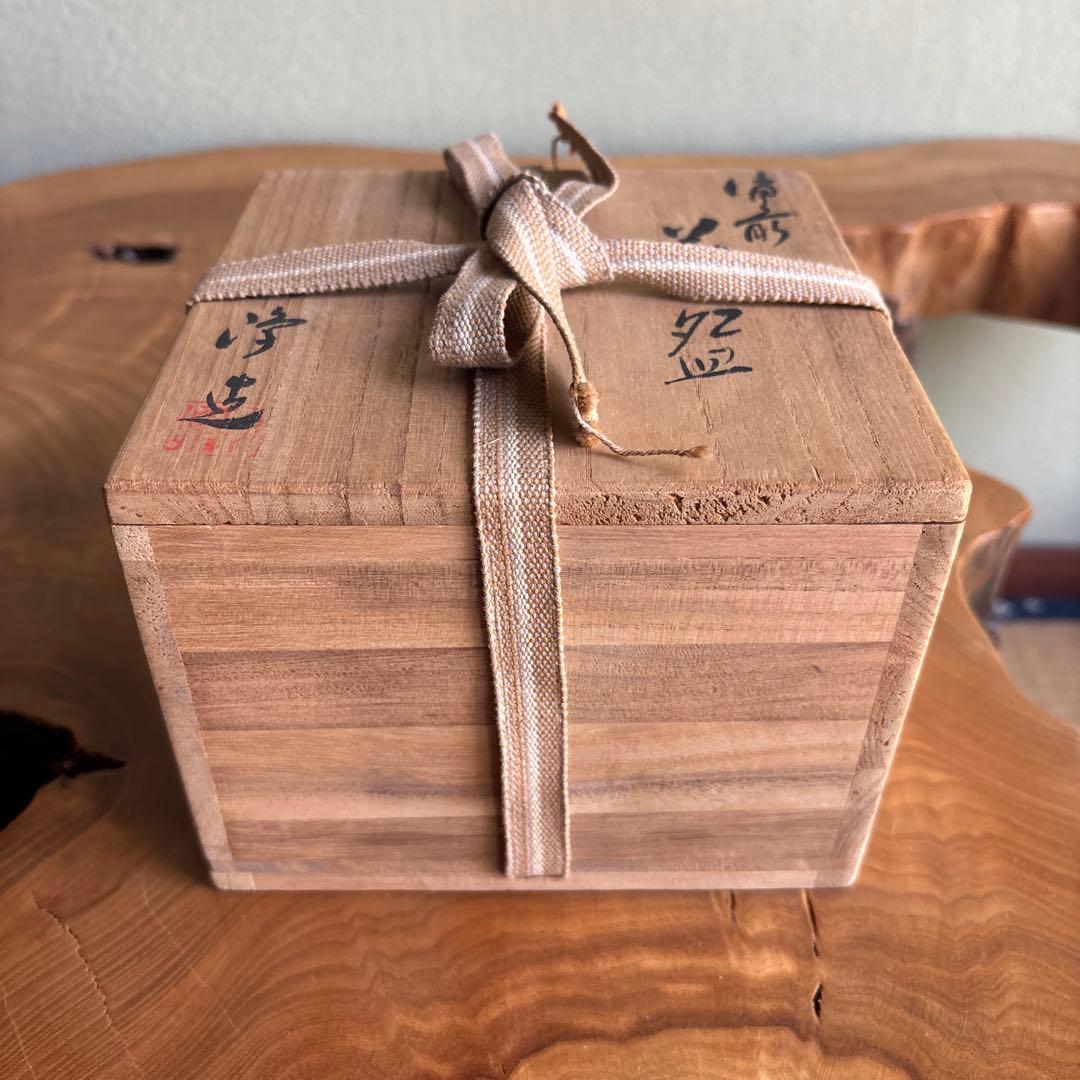
• Box: Tomobako (artist's own wooden box) with hand-brushed inscription 備前 茶碗 陶浄造 and red seal
• Condition: Excellent — no chips, cracks, or repairs
🔹 [ CULTURAL & ARTISTIC INSIGHT ]
Bizen ware occupies a singular position in the Japanese ceramic tradition. Fired without glaze in anagama kilns at temperatures exceeding 1,200°C for up to two weeks, each piece receives its surface character entirely from the kiln's atmosphere — ash that falls from the pine wood settles on the clay body and melts into the distinctive goma (胡麻) texture visible across this bowl's exterior. The result is never predictable and never repeatable.
This chawan carries two of Bizen's most prized natural phenomena in concentrated form. The goma deposits — dense, pitted, slightly raised clusters of amber and grey ash glass — cover the exterior with a texture that reads almost geological, like the surface of ancient stone worn by centuries of weather. Against this, passages of sangiri (桟切) reduction create cooler blue-grey and violet tones where the bowl rested against kiln furniture during firing, cutting through the warmth of the natural clay with a quiet counterpoint.
The interior presents a deep red-brown tone — a quality Bizen potters call hiiro (火色, fire color) — that glows when matcha is whisked within it. The rim transitions from this inner warmth to the cooler, ash-laden exterior with natural authority.
Poetic line: The bowl holds the memory of fire — ash settled, time passed, and what remains is entirely itself.
🔹 [ DEEP-DIVE COMMENTARY ]
Bizen (備前焼) is one of Japan's Six Ancient Kilns (Nihon Rokkoyo), with continuous production traceable to the Heian period. Unlike most ceramics traditions, Bizen work is defined by what it refuses: no glaze, no colorants, no surface intervention beyond the physical placement within the kiln. The clay — a refractory iron-rich stoneware sourced from rice paddy subsoil in the Bizen region — does the work, along with the fire.
The goma effect occurs when ash from the kiln's pine fuel travels on the draft and lands on the piece's surface. At sufficient temperature, the alkaline ash reacts with the silica in the clay to form a natural glass. Density varies with placement in the kiln — pieces near the firebox accumulate heavier deposits; those further back receive lighter, more diffuse coverage. This bowl shows heavy, well-clustered goma, indicating a position of significant heat exposure.
Sangiri is produced when pieces are stacked in contact with or near kiln furniture (棚板, shelving slabs) during cooling. Restricted airflow in those zones creates a reduction atmosphere that transforms the iron in the clay from red-firing ferric to blue-grey ferrous oxide. The result is the characteristic cooler passages visible along portions of this bowl's mid-body — a natural painting written in the chemistry of iron.
Tojo's tomobako confirms attribution and preserves the chain of custody essential to serious collecting. The hand-brushed inscription and red seal on the box lid are consistent with established practice among Bizen studio potters. For the tea practitioner, this bowl functions beautifully in both thin tea (usucha) and thick tea (koicha) presentation — its proportions, the tactile engagement of the goma surface in hand, and the hiiro interior all contribute to a fully realized tea experience.
Collectors of Bizen ware understand that the absence of glaze is not an absence of statement — it is the statement. What the kiln decides is not negotiable, and what it produces here is a surface of genuine depth and presence.
🔹 [ 日本語解説 ]
【基本情報】
・作家:陶浄(共箱蓋裏に署名・落款)
・技法:備前焼 — 無釉の高火度焼成。自然の胡麻(灰釉)と桟切の景色が表れた逸品
・年代:昭和中〜後期頃(推定)
・産地:岡山県備前市
・寸法:高さ 約8cm、直径 約12cm
・箱:共箱(作家自筆「備前 茶碗 陶浄造」の墨書と朱印)
・状態:良好。ヒビ・カケ・修復なし
【文化的・芸術的な解説】
備前焼は、日本六古窯のひとつとして平安時代から連綿と続く、日本陶芸の根幹をなす伝統です。釉薬を一切用いず、備前特有の鉄分を豊富に含む田土(たたに)を成形し、松割木を燃料とする穴窯で1,200℃以上の高温にて長期間焼成します。その間、窯内を漂う灰が素地に降り積もり、自然の釉薬として融着したものが「胡麻(ごま)」の景色です。
この茶碗の外面には、粒立ちの細かい胡麻が全体に厚く降りかかり、土の褐色と灰のグレーが交錯する複雑な景色を形成しています。さらに桟切(さんぎり)による青灰色と紫みを帯びた還元の色調が胡麻の暖色に対比し、窯変の深みを一段と引き立てています。見込みには赤褐色の火色(ひいろ)が広がり、抹茶を点てた際には碗全体が静かに呼応するような温もりをたたえています。
【詳細解説】
備前焼の要諦は、人の手が加えられないところにあります。釉薬なし、絵付けなし——素地と炎と灰だけが景色を決定します。胡麻は松灰が炎に乗って素地に降り積もり、高温でシリカと反応して自然のガラス質を形成したものです。窯内での配置が濃淡を左右し、火前(かまえ)に近いほど厚い堆積が生まれます。この碗に見られる厚く凝集した胡麻は、高熱にさらされた位置にあったことを示しています。
桟切は、焼成中に棚板や他の器物との接触部分で空気の流れが制限され、還元雰囲気が局所的に生まれることで発生します。鉄分が赤褐色の酸化鉄から青灰色の還元鉄へと変化し、冷えた後に特有の青灰〜紫の色調として現れます。この碗の側面に走る冷えた色の筋は、まさにその痕跡です。
共箱の存在は作家の帰属を確かなものとし、作品の来歴を保全する重要な要素です。コレクターにとって、共箱付きの備前茶碗は作品の文化的・経済的な価値を端的に示します。茶席においては、薄茶・濃茶いずれにも対応できる形と、手に収まる胡麻肌の感触が、使う者に静かな茶の時間をもたらします。
🔹 [ SHIPPING & PACKAGING ]
• Dispatch: Within 1-6 business days
• Carrier: Japan Post EMS / UPS (with tracking)
• Packaging: Carefully wrapped with protective materials
🔹 [ BASIC DETAILS ]
• Artist: Tojo (陶浄) — signed on tomobako lid
• Technique: Bizen yaki (備前焼) — unglazed high-fire stoneware with natural goma (sesame ash) deposits and sangiri (kiln separation) reduction passages
• Era: Before 2007 (estimated mid–late Showa period, based on form and firing characteristics)
• Origin: Bizen, Okayama Prefecture, Japan
• Dimensions: Height approx. 8 cm, Diameter approx. 12 cm
• Box: Tomobako (artist's own wooden box) with hand-brushed inscription 備前 茶碗 陶浄造 and red seal
• Condition: Excellent — no chips, cracks, or repairs
🔹 [ CULTURAL & ARTISTIC INSIGHT ]
Bizen ware occupies a singular position in the Japanese ceramic tradition. Fired without glaze in anagama kilns at temperatures exceeding 1,200°C for up to two weeks, each piece receives its surface character entirely from the kiln's atmosphere — ash that falls from the pine wood settles on the clay body and melts into the distinctive goma (胡麻) texture visible across this bowl's exterior. The result is never predictable and never repeatable.
This chawan carries two of Bizen's most prized natural phenomena in concentrated form. The goma deposits — dense, pitted, slightly raised clusters of amber and grey ash glass — cover the exterior with a texture that reads almost geological, like the surface of ancient stone worn by centuries of weather. Against this, passages of sangiri (桟切) reduction create cooler blue-grey and violet tones where the bowl rested against kiln furniture during firing, cutting through the warmth of the natural clay with a quiet counterpoint.
The interior presents a deep red-brown tone — a quality Bizen potters call hiiro (火色, fire color) — that glows when matcha is whisked within it. The rim transitions from this inner warmth to the cooler, ash-laden exterior with natural authority.
Poetic line: The bowl holds the memory of fire — ash settled, time passed, and what remains is entirely itself.
🔹 [ DEEP-DIVE COMMENTARY ]
Bizen (備前焼) is one of Japan's Six Ancient Kilns (Nihon Rokkoyo), with continuous production traceable to the Heian period. Unlike most ceramics traditions, Bizen work is defined by what it refuses: no glaze, no colorants, no surface intervention beyond the physical placement within the kiln. The clay — a refractory iron-rich stoneware sourced from rice paddy subsoil in the Bizen region — does the work, along with the fire.
The goma effect occurs when ash from the kiln's pine fuel travels on the draft and lands on the piece's surface. At sufficient temperature, the alkaline ash reacts with the silica in the clay to form a natural glass. Density varies with placement in the kiln — pieces near the firebox accumulate heavier deposits; those further back receive lighter, more diffuse coverage. This bowl shows heavy, well-clustered goma, indicating a position of significant heat exposure.
Sangiri is produced when pieces are stacked in contact with or near kiln furniture (棚板, shelving slabs) during cooling. Restricted airflow in those zones creates a reduction atmosphere that transforms the iron in the clay from red-firing ferric to blue-grey ferrous oxide. The result is the characteristic cooler passages visible along portions of this bowl's mid-body — a natural painting written in the chemistry of iron.
Tojo's tomobako confirms attribution and preserves the chain of custody essential to serious collecting. The hand-brushed inscription and red seal on the box lid are consistent with established practice among Bizen studio potters. For the tea practitioner, this bowl functions beautifully in both thin tea (usucha) and thick tea (koicha) presentation — its proportions, the tactile engagement of the goma surface in hand, and the hiiro interior all contribute to a fully realized tea experience.
Collectors of Bizen ware understand that the absence of glaze is not an absence of statement — it is the statement. What the kiln decides is not negotiable, and what it produces here is a surface of genuine depth and presence.
🔹 [ 日本語解説 ]
【基本情報】
・作家:陶浄(共箱蓋裏に署名・落款)
・技法:備前焼 — 無釉の高火度焼成。自然の胡麻(灰釉)と桟切の景色が表れた逸品
・年代:昭和中〜後期頃(推定)
・産地:岡山県備前市
・寸法:高さ 約8cm、直径 約12cm
・箱:共箱(作家自筆「備前 茶碗 陶浄造」の墨書と朱印)
・状態:良好。ヒビ・カケ・修復なし
【文化的・芸術的な解説】
備前焼は、日本六古窯のひとつとして平安時代から連綿と続く、日本陶芸の根幹をなす伝統です。釉薬を一切用いず、備前特有の鉄分を豊富に含む田土(たたに)を成形し、松割木を燃料とする穴窯で1,200℃以上の高温にて長期間焼成します。その間、窯内を漂う灰が素地に降り積もり、自然の釉薬として融着したものが「胡麻(ごま)」の景色です。
この茶碗の外面には、粒立ちの細かい胡麻が全体に厚く降りかかり、土の褐色と灰のグレーが交錯する複雑な景色を形成しています。さらに桟切(さんぎり)による青灰色と紫みを帯びた還元の色調が胡麻の暖色に対比し、窯変の深みを一段と引き立てています。見込みには赤褐色の火色(ひいろ)が広がり、抹茶を点てた際には碗全体が静かに呼応するような温もりをたたえています。
【詳細解説】
備前焼の要諦は、人の手が加えられないところにあります。釉薬なし、絵付けなし——素地と炎と灰だけが景色を決定します。胡麻は松灰が炎に乗って素地に降り積もり、高温でシリカと反応して自然のガラス質を形成したものです。窯内での配置が濃淡を左右し、火前(かまえ)に近いほど厚い堆積が生まれます。この碗に見られる厚く凝集した胡麻は、高熱にさらされた位置にあったことを示しています。
桟切は、焼成中に棚板や他の器物との接触部分で空気の流れが制限され、還元雰囲気が局所的に生まれることで発生します。鉄分が赤褐色の酸化鉄から青灰色の還元鉄へと変化し、冷えた後に特有の青灰〜紫の色調として現れます。この碗の側面に走る冷えた色の筋は、まさにその痕跡です。
共箱の存在は作家の帰属を確かなものとし、作品の来歴を保全する重要な要素です。コレクターにとって、共箱付きの備前茶碗は作品の文化的・経済的な価値を端的に示します。茶席においては、薄茶・濃茶いずれにも対応できる形と、手に収まる胡麻肌の感触が、使う者に静かな茶の時間をもたらします。
🔹 [ SHIPPING & PACKAGING ]
• Dispatch: Within 1-6 business days
• Carrier: Japan Post EMS / UPS (with tracking)
• Packaging: Carefully wrapped with protective materials
Quantity
Couldn't load pickup availability
Low stock: 1 left
View full details