1
/
of
20
Bizen Ware Chawan Tea Bowl with Goma Hidasuki Natural Fire Markings
Regular price
Dhs. 604.00 AED
Regular price
Sale price
Dhs. 604.00 AED
Taxes included.
Shipping calculated at checkout.
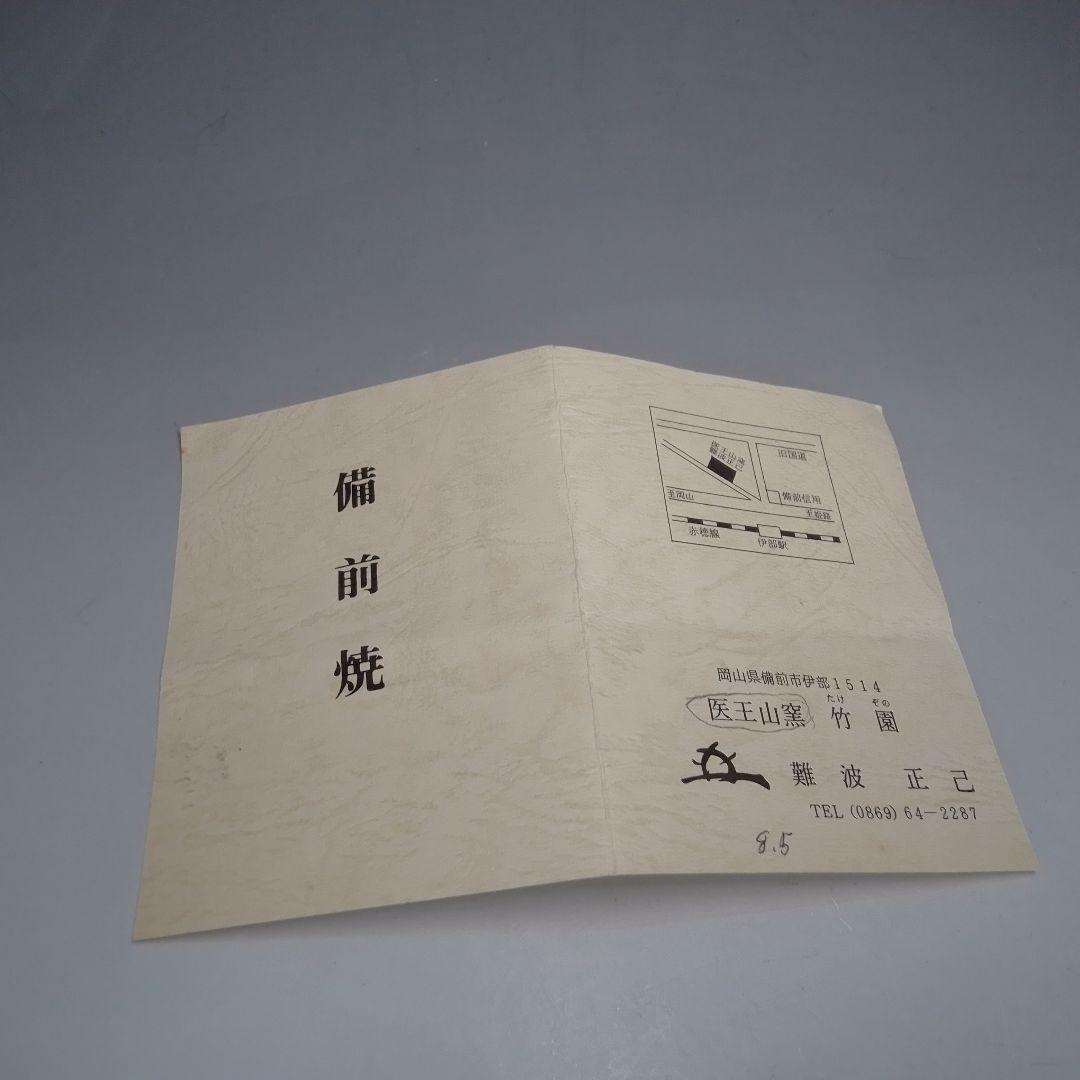
A Bizen stoneware chawan where fire speaks. This unglazed Japanese tea bowl carries the full vocabulary of Bizen ware: goma ash deposits scattered across the shoulder, hidasuki flame-straw markings tracing copper-red paths across a quietly luminous clay body, and a form so assured in its roundness it seems to have always existed. Comes with original tomobako and signed booklet.
🔹 [ BASIC DETAILS ]
• Artist: Unidentified Bizen master (signature on tomobako, partially legible)
• Technique: Bizen yaki, anagama wood-fired, unglazed natural ash glazing
• Era: Contemporary
• Origin: Bizen, Okayama Prefecture, Japan
• Dimensions: Height approx. 8 cm, Diameter approx. 12 cm
• Box: Original tomobako (signed wooden box) + signed paper booklet (栞)
• Condition: Excellent. No chips, cracks, or repairs.
🔹 [ CULTURAL & ARTISTIC INSIGHT ]
Bizen ware holds a singular place in the hierarchy of Japanese ceramics — it is one of the Six Ancient Kilns of Japan, a tradition unbroken for over a thousand years. Unlike most ceramics, Bizen clay contains iron-rich earth that transforms entirely in the anagama kiln: temperatures reaching 1200°C, wood ash landing on surfaces to create goma (sesame seed) deposits, and rice straw wrapped during firing to produce the hidasuki red-orange lines. No two bowls emerge the same. The Bizen tradition was elevated by tea masters such as Sen no Rikyu, who saw in its rough, purposeful surface the very embodiment of wabi aesthetics.
The goma pattern visible on this bowl — a constellation of pale ash deposits against the warm iron-red body — was not painted; it arrived through sustained encounter between clay, flame, and time.
🔹 [ DEEP-DIVE COMMENTARY ]
This chawan presents a generous, slightly widened form with a low, stable profile. The clay color shifts between deep red-brown and muted purple depending on the viewing angle, catching light in the ash-matte areas and releasing it from the smoother shoulder zone. The interior reveals a warm, slightly reddened surface — the color that tea masters call "the blush of the kiln."
The hidasuki markings — produced by wrapping rice straw around the vessel before anagama firing — create a record of combustion. They are neither decoration nor accident: they are the direct trace of process, making each Bizen bowl its own document.
The tomobako lid bears brush calligraphy reading 備前焼 (Bizen ware) with the artist's seal. The accompanying booklet provides provenance context. The base shows the characteristic rough unglazed foot ring typical of authentic Bizen production.
For collectors drawn to functional ceramics with deep historical lineage, this bowl bridges daily use and contemplative display. It performs equally well as a matcha vessel for temae practice or as a standalone object in a tokonoma alcove.
---
[ JAPANESE DESCRIPTION / 日本語解説 ]
🔹 [ 基本情報 ]
• 作家:備前焼作家(共箱に落款あり、判読難)
• 技法:備前焼、穴窯焼成、無釉自然釉
• 年代:現代
• 産地:岡山県備前市
• サイズ:高さ約8cm、径約12cm
• 付属品:共箱・栞付き
• 状態:良好。欠け・ひび・補修なし。
🔹 [ 文化・芸術解説 ]
備前焼は日本六古窯の一つ。無釉のまま1200℃前後の穴窯で長時間焼成することで、胡麻(灰の降り積もり)・緋襷(藁を巻いて焼いた赤い線)・桟切(窯変の焦げた肌)など、炎の景色が生まれる。千利休が愛した土の焼き物として、侘び茶の精神と深く結びついている。
🔹 [ 詳細解説 ]
この茶碗は丸みを帯びた堂々たる造形で、低くどっしりとした安定感がある。釉薬のない素地は深みのある鉄赤から紫みを帯びた茶褐色へと変化し、胡麻の降りかかった肩の部分では灰白色のテクスチャが生まれている。緋襷の銅赤の線は、藁を巻いて焼いた証であり、炎との対話の跡そのものだ。共箱には「備前焼」の文字と作家印が捺されており、栞(解説冊子)も付属する。
🔹 [ SHIPPING & PACKAGING ]
• Dispatch: Within 1-6 business days
• Carrier: Japan Post EMS / UPS (with tracking)
• Packaging: Carefully wrapped with protective materials
🔹 [ BASIC DETAILS ]
• Artist: Unidentified Bizen master (signature on tomobako, partially legible)
• Technique: Bizen yaki, anagama wood-fired, unglazed natural ash glazing
• Era: Contemporary
• Origin: Bizen, Okayama Prefecture, Japan
• Dimensions: Height approx. 8 cm, Diameter approx. 12 cm
• Box: Original tomobako (signed wooden box) + signed paper booklet (栞)
• Condition: Excellent. No chips, cracks, or repairs.
🔹 [ CULTURAL & ARTISTIC INSIGHT ]
Bizen ware holds a singular place in the hierarchy of Japanese ceramics — it is one of the Six Ancient Kilns of Japan, a tradition unbroken for over a thousand years. Unlike most ceramics, Bizen clay contains iron-rich earth that transforms entirely in the anagama kiln: temperatures reaching 1200°C, wood ash landing on surfaces to create goma (sesame seed) deposits, and rice straw wrapped during firing to produce the hidasuki red-orange lines. No two bowls emerge the same. The Bizen tradition was elevated by tea masters such as Sen no Rikyu, who saw in its rough, purposeful surface the very embodiment of wabi aesthetics.
The goma pattern visible on this bowl — a constellation of pale ash deposits against the warm iron-red body — was not painted; it arrived through sustained encounter between clay, flame, and time.
🔹 [ DEEP-DIVE COMMENTARY ]
This chawan presents a generous, slightly widened form with a low, stable profile. The clay color shifts between deep red-brown and muted purple depending on the viewing angle, catching light in the ash-matte areas and releasing it from the smoother shoulder zone. The interior reveals a warm, slightly reddened surface — the color that tea masters call "the blush of the kiln."
The hidasuki markings — produced by wrapping rice straw around the vessel before anagama firing — create a record of combustion. They are neither decoration nor accident: they are the direct trace of process, making each Bizen bowl its own document.
The tomobako lid bears brush calligraphy reading 備前焼 (Bizen ware) with the artist's seal. The accompanying booklet provides provenance context. The base shows the characteristic rough unglazed foot ring typical of authentic Bizen production.
For collectors drawn to functional ceramics with deep historical lineage, this bowl bridges daily use and contemplative display. It performs equally well as a matcha vessel for temae practice or as a standalone object in a tokonoma alcove.
---
[ JAPANESE DESCRIPTION / 日本語解説 ]
🔹 [ 基本情報 ]
• 作家:備前焼作家(共箱に落款あり、判読難)
• 技法:備前焼、穴窯焼成、無釉自然釉
• 年代:現代
• 産地:岡山県備前市
• サイズ:高さ約8cm、径約12cm
• 付属品:共箱・栞付き
• 状態:良好。欠け・ひび・補修なし。
🔹 [ 文化・芸術解説 ]
備前焼は日本六古窯の一つ。無釉のまま1200℃前後の穴窯で長時間焼成することで、胡麻(灰の降り積もり)・緋襷(藁を巻いて焼いた赤い線)・桟切(窯変の焦げた肌)など、炎の景色が生まれる。千利休が愛した土の焼き物として、侘び茶の精神と深く結びついている。
🔹 [ 詳細解説 ]
この茶碗は丸みを帯びた堂々たる造形で、低くどっしりとした安定感がある。釉薬のない素地は深みのある鉄赤から紫みを帯びた茶褐色へと変化し、胡麻の降りかかった肩の部分では灰白色のテクスチャが生まれている。緋襷の銅赤の線は、藁を巻いて焼いた証であり、炎との対話の跡そのものだ。共箱には「備前焼」の文字と作家印が捺されており、栞(解説冊子)も付属する。
🔹 [ SHIPPING & PACKAGING ]
• Dispatch: Within 1-6 business days
• Carrier: Japan Post EMS / UPS (with tracking)
• Packaging: Carefully wrapped with protective materials
Quantity
Couldn't load pickup availability
Low stock: 1 left
View full details