1
/
of
13
Bernard Leach Slipware-Inspired Stoneware Tea Bowl Chawan with Signed Tomobako c.1963 St Ives Pottery
Bernard Leach Slipware-Inspired Stoneware Tea Bowl Chawan with Signed Tomobako c.1963 St Ives Pottery
Regular price
Dhs. 3,440.00 AED
Regular price
Sale price
Dhs. 3,440.00 AED
Taxes included.
Shipping calculated at checkout.
Experience Authentic Japan Art with this Bernard Leach Pottery. This Japanese Tea Bowl serves as a Mingei Chawan and Studio Pottery Bowl, featuring Ash Glaze Stoneware and Slip Decoration Bowl—a must-have for any Art Collector seeking a Vintage Leach Chawan with Signed Tomobako Box and Hand Painted Stoneware from the St Ives Pottery tradition.
🔹 [ BASIC DETAILS ]
• Artist: Bernard Howell Leach (1887–1979)
• Object: Tea bowl (chawan)
• Technique: Slip-painted decoration over ash-glazed stoneware
• Era: c. 1963 (per box inscription "63")
• Origin: St Ives, Cornwall, England — Leach Pottery
• Dimensions: Diameter approx. 13 cm × Height approx. 7.5 cm
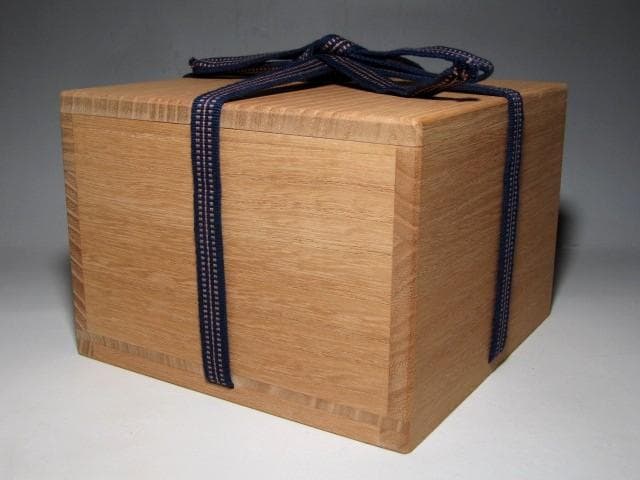
• Box: Signed wooden tomobako, brushed initials "BL" and the year "63"
• Condition: Good — no visible chips or repairs; age-appropriate light surface wear
• Mark: Signed on the underside
🔹 [ CULTURAL & ARTISTIC INSIGHT ]
Bernard Leach is the figure who carried the language of the Japanese chawan into the English studio pottery tradition, and brought English slipware vocabulary back into dialogue with Mashiko and Kyoto. After founding the Leach Pottery at St Ives in 1920 with Hamada Shōji, he spent the rest of his life translating between two ceramic worlds, and this bowl sits at the meeting point. The exterior carries a single quietly rendered animal — a deer, or perhaps a long-bodied bird — drawn in iron slip across the matte ash glaze, the brushwork loose, confident, unrepeatable. Inside, the glaze pools to a soft pale grey that holds tea light beautifully.
The authorship is unmistakable: the foot ring shows the warm exposed clay Leach favoured, the silhouette is firmly chawan rather than English bowl, and the painted figure shares the spirit of his Tree of Life slipware while speaking in tea-room restraint. There is an emotional silence to the piece — a presence that does not demand attention but rewards it.
🔹 [ DEEP-DIVE COMMENTARY ]
The Mingei movement, articulated by Yanagi Sōetsu in the 1920s, proposed that beauty resides most fully in objects made by anonymous hands for daily use. Leach was the only Western potter Yanagi accepted as a peer, and his work — including this bowl — was made under that philosophical weight: density of intention without ornament, cultural weight without performance.
Founded in 1920, the Leach Pottery at St Ives became the first studio pottery in the West to fire a traditional climbing kiln (noborigama). The pottery trained generations of British and international ceramicists, including Michael Cardew, William Marshall, and Warren MacKenzie, and it remains active today as a working pottery and museum.
Slip decoration — the technique seen on the exterior of this bowl — was Leach's enduring conversation with seventeenth-century English country potters such as Thomas Toft. The slip is a clay-and-water suspension brushed onto the leather-hard body before glazing; under the ash glaze the iron slip oxidises to the soft, smoky grey-black visible here. The line cannot be redrawn; the gesture must be right the first time.
Collectors prize Leach chawan above his plates, jars, or jugs because he made comparatively few of them, and because each one carries his lifelong study of Japanese tea aesthetics in a single object. A signed and dated tomobako adds a further layer of authorship: the box itself is part of the work, recording the maker's hand twice — once on the vessel, once on the wood.
Leach's writings — A Potter's Book (1940) chief among them — remain in continuous print and continue to shape contemporary studio ceramics scholarship from London to Kyoto. To hold one of his tea bowls is to hold a living document of that cross-cultural lineage.
[ JAPANESE DESCRIPTION / 日本語解説 ]
🔹 [ 基本情報 ]
• 作家: バーナード・ハウエル・リーチ (Bernard Leach, 1887–1979)
• 品目: 茶碗
• 技法: 灰釉地に鉄絵スリップによる絵付け
• 時代: 1963年頃(共箱の「63」記載による)
• 産地: イギリス・コーンウォール州セント・アイヴス、リーチ・ポタリー
• 寸法: 直径 約13cm × 高さ 約7.5cm
• 箱: 共箱(桐箱)に「BL」のサインと「63」の年記
• 状態: 良好。目立つ疵・直しなし。経年相応のスレあり
• 銘: 底部に銘あり
🔹 [ 文化的・芸術的考察 ]
バーナード・リーチは、日本の茶碗の言語を英国スタジオ・ポタリーに持ち込み、同時に英国スリップウェアの語彙を益子・京焼との対話の中に持ち帰った人物です。1920年、濱田庄司とともにセント・アイヴスにリーチ・ポタリーを設立して以降、彼は生涯を通じて二つの陶芸世界の間を翻訳し続けました。本碗はその交差点に立つ作です。胴には鹿、あるいは長い首の鳥のような姿が、鉄絵スリップで一筆に描かれています。マットな灰釉の地にのる筆致はゆるやかで、確信に満ちており、二度と再現されない一回性を持ちます。内側の釉薬は淡い灰色に溜まり、抹茶の緑をやわらかく受けとめます。
作家性は明確です。高台周りに残る暖色の素地、英国の鉢ではなく確かに茶碗である立ち姿、そしてリーチ得意の "Tree of Life" スリップウェアの精神を、茶室の静けさのなかで語り直すような絵付け。誇張のない、しかし確かな存在感(presence)が宿っています。
🔹 [ 深層的考察 ]
柳宗悦が1920年代に提唱した民藝運動は、無名の手による日用の中にこそ美が宿るという思想でした。リーチは柳が西洋人の陶工として唯一同志と認めた存在であり、本碗もその思想的重みのもとで生まれています — 装飾を排した意図の密度、誇示のない文化的重量。
1920年に開窯したリーチ・ポタリーは、登り窯を導入した西洋初のスタジオ・ポタリーであり、マイケル・カーデュー、ウィリアム・マーシャル、ウォーレン・マッケンジーら多くの陶工を育てました。現在も工房と博物館として活動を続けています。
スリップウェア技法は、リーチが17世紀英国の田舎陶工、トマス・トフトらと生涯にわたり交わし続けた対話の形でした。革のように半乾きの素地に、泥漿状のスリップを刷毛で描き、その上に灰釉をかけて焼成すると、鉄分を含むスリップは煙ったような黒灰に発色します。線は引き直せず、最初のひと筆で全てが決まる技法です。
茶碗は、リーチの皿・壺・水注に比べて作例が少なく、また日本茶道美学への生涯の研究が一椀の中に凝縮されているため、コレクターから特に高く評価されてきました。署名・年記入りの共箱は、もう一層の作家性を加えます。箱そのものが作品の一部となり、作家の手跡を碗と木の両方に二重に刻みます。
リーチの著作『A Potter's Book』(1940) をはじめとする文献は、ロンドンから京都に至るまで現代陶芸研究の中で読み継がれています。彼の茶碗を手に取ることは、その文化を越えた系譜の生きた記録に触れることに他なりません。
🔹 [ SHIPPING & PACKAGING ]
• Dispatch: Within 1-6 business days
• Carrier: Japan Post EMS / UPS (with tracking)
• Packaging: Carefully wrapped with protective materials
🔹 [ BASIC DETAILS ]
• Artist: Bernard Howell Leach (1887–1979)
• Object: Tea bowl (chawan)
• Technique: Slip-painted decoration over ash-glazed stoneware
• Era: c. 1963 (per box inscription "63")
• Origin: St Ives, Cornwall, England — Leach Pottery
• Dimensions: Diameter approx. 13 cm × Height approx. 7.5 cm
• Box: Signed wooden tomobako, brushed initials "BL" and the year "63"
• Condition: Good — no visible chips or repairs; age-appropriate light surface wear
• Mark: Signed on the underside
🔹 [ CULTURAL & ARTISTIC INSIGHT ]
Bernard Leach is the figure who carried the language of the Japanese chawan into the English studio pottery tradition, and brought English slipware vocabulary back into dialogue with Mashiko and Kyoto. After founding the Leach Pottery at St Ives in 1920 with Hamada Shōji, he spent the rest of his life translating between two ceramic worlds, and this bowl sits at the meeting point. The exterior carries a single quietly rendered animal — a deer, or perhaps a long-bodied bird — drawn in iron slip across the matte ash glaze, the brushwork loose, confident, unrepeatable. Inside, the glaze pools to a soft pale grey that holds tea light beautifully.
The authorship is unmistakable: the foot ring shows the warm exposed clay Leach favoured, the silhouette is firmly chawan rather than English bowl, and the painted figure shares the spirit of his Tree of Life slipware while speaking in tea-room restraint. There is an emotional silence to the piece — a presence that does not demand attention but rewards it.
🔹 [ DEEP-DIVE COMMENTARY ]
The Mingei movement, articulated by Yanagi Sōetsu in the 1920s, proposed that beauty resides most fully in objects made by anonymous hands for daily use. Leach was the only Western potter Yanagi accepted as a peer, and his work — including this bowl — was made under that philosophical weight: density of intention without ornament, cultural weight without performance.
Founded in 1920, the Leach Pottery at St Ives became the first studio pottery in the West to fire a traditional climbing kiln (noborigama). The pottery trained generations of British and international ceramicists, including Michael Cardew, William Marshall, and Warren MacKenzie, and it remains active today as a working pottery and museum.
Slip decoration — the technique seen on the exterior of this bowl — was Leach's enduring conversation with seventeenth-century English country potters such as Thomas Toft. The slip is a clay-and-water suspension brushed onto the leather-hard body before glazing; under the ash glaze the iron slip oxidises to the soft, smoky grey-black visible here. The line cannot be redrawn; the gesture must be right the first time.
Collectors prize Leach chawan above his plates, jars, or jugs because he made comparatively few of them, and because each one carries his lifelong study of Japanese tea aesthetics in a single object. A signed and dated tomobako adds a further layer of authorship: the box itself is part of the work, recording the maker's hand twice — once on the vessel, once on the wood.
Leach's writings — A Potter's Book (1940) chief among them — remain in continuous print and continue to shape contemporary studio ceramics scholarship from London to Kyoto. To hold one of his tea bowls is to hold a living document of that cross-cultural lineage.
[ JAPANESE DESCRIPTION / 日本語解説 ]
🔹 [ 基本情報 ]
• 作家: バーナード・ハウエル・リーチ (Bernard Leach, 1887–1979)
• 品目: 茶碗
• 技法: 灰釉地に鉄絵スリップによる絵付け
• 時代: 1963年頃(共箱の「63」記載による)
• 産地: イギリス・コーンウォール州セント・アイヴス、リーチ・ポタリー
• 寸法: 直径 約13cm × 高さ 約7.5cm
• 箱: 共箱(桐箱)に「BL」のサインと「63」の年記
• 状態: 良好。目立つ疵・直しなし。経年相応のスレあり
• 銘: 底部に銘あり
🔹 [ 文化的・芸術的考察 ]
バーナード・リーチは、日本の茶碗の言語を英国スタジオ・ポタリーに持ち込み、同時に英国スリップウェアの語彙を益子・京焼との対話の中に持ち帰った人物です。1920年、濱田庄司とともにセント・アイヴスにリーチ・ポタリーを設立して以降、彼は生涯を通じて二つの陶芸世界の間を翻訳し続けました。本碗はその交差点に立つ作です。胴には鹿、あるいは長い首の鳥のような姿が、鉄絵スリップで一筆に描かれています。マットな灰釉の地にのる筆致はゆるやかで、確信に満ちており、二度と再現されない一回性を持ちます。内側の釉薬は淡い灰色に溜まり、抹茶の緑をやわらかく受けとめます。
作家性は明確です。高台周りに残る暖色の素地、英国の鉢ではなく確かに茶碗である立ち姿、そしてリーチ得意の "Tree of Life" スリップウェアの精神を、茶室の静けさのなかで語り直すような絵付け。誇張のない、しかし確かな存在感(presence)が宿っています。
🔹 [ 深層的考察 ]
柳宗悦が1920年代に提唱した民藝運動は、無名の手による日用の中にこそ美が宿るという思想でした。リーチは柳が西洋人の陶工として唯一同志と認めた存在であり、本碗もその思想的重みのもとで生まれています — 装飾を排した意図の密度、誇示のない文化的重量。
1920年に開窯したリーチ・ポタリーは、登り窯を導入した西洋初のスタジオ・ポタリーであり、マイケル・カーデュー、ウィリアム・マーシャル、ウォーレン・マッケンジーら多くの陶工を育てました。現在も工房と博物館として活動を続けています。
スリップウェア技法は、リーチが17世紀英国の田舎陶工、トマス・トフトらと生涯にわたり交わし続けた対話の形でした。革のように半乾きの素地に、泥漿状のスリップを刷毛で描き、その上に灰釉をかけて焼成すると、鉄分を含むスリップは煙ったような黒灰に発色します。線は引き直せず、最初のひと筆で全てが決まる技法です。
茶碗は、リーチの皿・壺・水注に比べて作例が少なく、また日本茶道美学への生涯の研究が一椀の中に凝縮されているため、コレクターから特に高く評価されてきました。署名・年記入りの共箱は、もう一層の作家性を加えます。箱そのものが作品の一部となり、作家の手跡を碗と木の両方に二重に刻みます。
リーチの著作『A Potter's Book』(1940) をはじめとする文献は、ロンドンから京都に至るまで現代陶芸研究の中で読み継がれています。彼の茶碗を手に取ることは、その文化を越えた系譜の生きた記録に触れることに他なりません。
🔹 [ SHIPPING & PACKAGING ]
• Dispatch: Within 1-6 business days
• Carrier: Japan Post EMS / UPS (with tracking)
• Packaging: Carefully wrapped with protective materials
Quantity
Couldn't load pickup availability
Low stock: 1 left
View full details