1
/
of
20
Beni-Shino Red Shino Tea Bowl Chawan by Hayashi Shotaro, Mino Ware Matcha Chawan with Signed Tomobako Box
Beni-Shino Red Shino Tea Bowl Chawan by Hayashi Shotaro, Mino Ware Matcha Chawan with Signed Tomobako Box
Regular price
Dhs. 4,947.00 AED
Regular price
Sale price
Dhs. 4,947.00 AED
Taxes included.
Shipping calculated at checkout.
Experience Authentic Japan Art with this Beni Shino Tea Bowl. This Hayashi Shotaro Chawan serves as a Japanese Matcha Bowl and Mino Ware Pottery, featuring Red Shino Glaze and Hi-iro Fire Color—a Handmade Tea Ceremony Bowl and a must-have for any Japanese Art Collector. A vivid Vintage Japanese Chawan with original Signed Tomobako Box, this Shino Ware Tea Bowl carries deep Wabi Sabi Aesthetic and the warmth of a Master Potter Ceramic.
🔹 [ BASIC DETAILS ]
• Artist: Hayashi Shotaro (林正太郎), Gifu Prefecture Important Intangible Cultural Property holder, a leading master of Mino Shino ware
• Technique: Beni-Shino (Red Shino) — thick feldspathic Shino glaze fired to produce brilliant scarlet hi-iro (fire color), charcoal-dark koge scorching, and natural pinholing (yuzu-hada)
• Era: Contemporary (Heisei–Reiwa period), 2010–2019
• Origin: Mino, Gifu Prefecture, Japan
• Dimensions: Height approx. 9.5 cm, Diameter approx. 12.5 cm
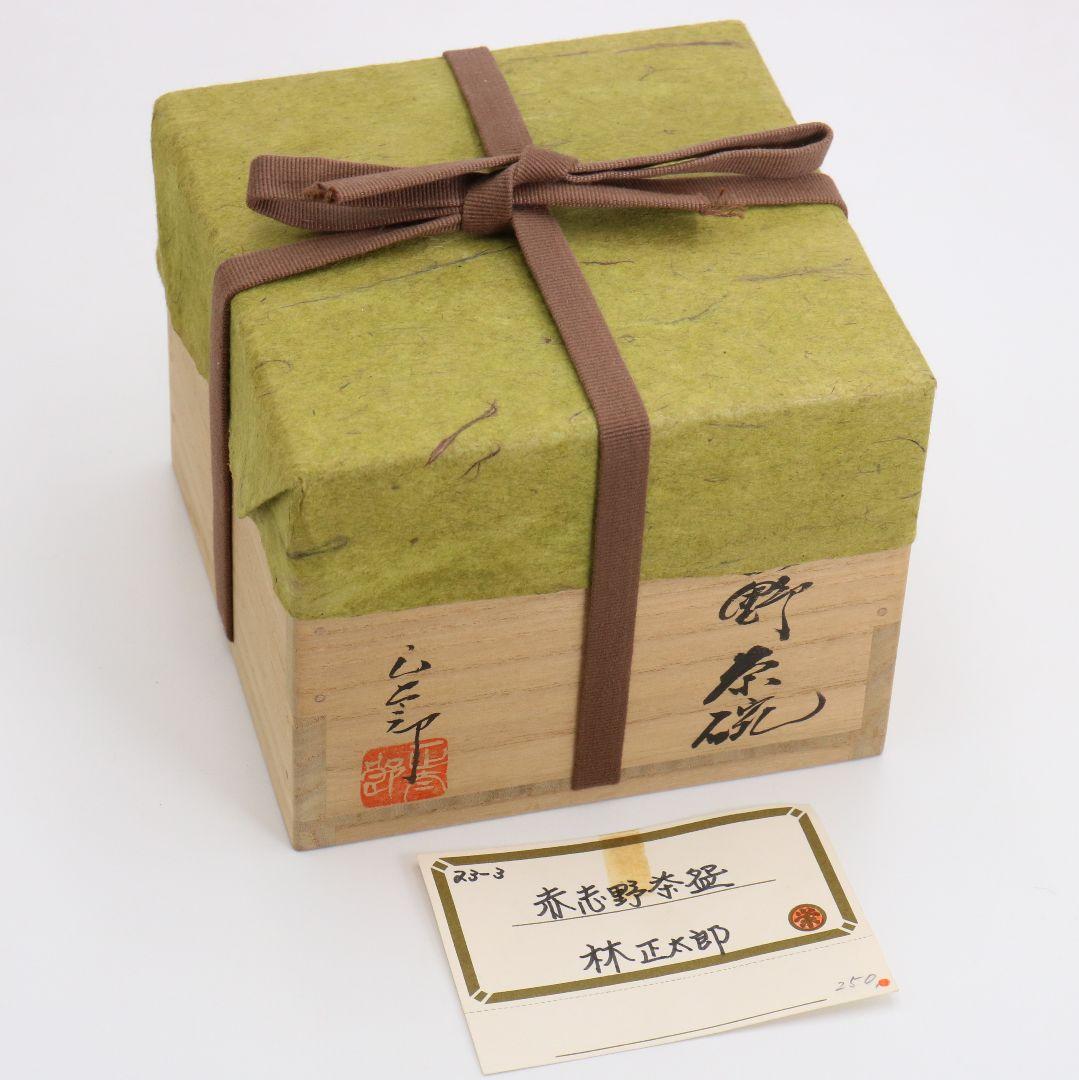
• Box: Original signed paulownia (kiri) tomobako with the title 赤志野茶碗, artist signature, and red cinnabar seal; includes tomonuno cloth
• Condition: Excellent. Authenticity guaranteed (真作保証). No chips, cracks, or restoration observed. Natural Shino pinholing and fire variation are intrinsic to the technique.
🔹 [ CULTURAL & ARTISTIC INSIGHT ]
Shino ware (志野焼) was born in the Mino kilns of Gifu Prefecture during the Momoyama period of the late sixteenth century, and it holds a singular place in Japanese ceramic history as the first domestic glaze to render a warm, opaque white. Tea masters of the age, schooled in the austere ideals of wabi, prized Shino for its soft, snow-like surface and the unpredictable scarlet blushes that emerged where the thick feldspar glaze thinned over iron-bearing clay. This bowl belongs to the Beni-Shino, or red Shino, lineage—the most coveted expression of the tradition, in which the kiln's atmosphere coaxes the glaze toward flaming orange and crimson rather than the cooler grey-white of plain Shino.
In the hand of Hayashi Shotaro, a designated holder of Gifu Prefecture's Important Intangible Cultural Property, the technique reaches a contemporary summit. The surface here is a living landscape: milky white fields crawl and pool against vivid hi-iro fire-color, dark koge scorch marks gather like shadows, and a constellation of iron speckles drifts across the interior tea pool. The thick glaze breaks into the characteristic yuzu-hada, or citron-skin, pinholing that connoisseurs read as a signature of authentic Shino firing.
The white snow of Shino still carries the warmth of the kiln's fire—silence and flame held in a single bowl.
🔹 [ DEEP-DIVE COMMENTARY ]
Shino is defined by a single thick application of feldspathic glaze (long-stone glaze) over a soft, iron-flecked Mogusa-type clay body. Unlike the translucent glazes of porcelain traditions, Shino sits heavily on the surface, trapping minute air bubbles that burst during firing to leave the prized pinholes and the soft, matte luminosity that distinguishes the ware.
The red of Beni-Shino is not a pigment but an event of fire. Where the glaze runs thin at rims, ridges, and the foot, the iron in the underlying clay oxidizes and flares into scarlet and orange hi-iro; where it pools thickly, it remains creamy white. The artist controls this through the rhythm of his glazing, the placement of the bowl in the chamber, and the long, patient single-chamber firing that allows the kiln's flame to paint each piece differently. No two Beni-Shino bowls are ever alike.
For the collector, value lies in lineage and intention. Hayashi Shotaro descends from the Mino Shino revival that followed the rediscovery of Momoyama techniques in the twentieth century, and his official cultural designation marks him among the custodians of that heritage. A bowl like this is not a reproduction of old Shino but a continuation of it—made for the actual practice of chanoyu, the way of tea, where it is meant to be cradled, warmed by matcha, and slowly aged by use.
The generous, slightly irregular form invites the hand and the eye to wander. Turned and viewed from every angle, the bowl reveals new passages of color and texture, embodying the wabi-sabi reverence for the imperfect, the impermanent, and the quietly profound. It is at once a functional vessel and a meditation on fire, clay, and time.
Within chanoyu, such a chawan is the heart of the gathering—the single object every guest holds in turn. To own one by a recognized master is to hold a thread that runs unbroken from the Momoyama tea room to the present day.
🔹 [ SHIPPING & PACKAGING ]
• Dispatch: Within 1-6 business days
• Carrier: Japan Post EMS / UPS (with tracking)
• Packaging: Carefully wrapped with protective materials
🔹 [ 日本語解説 ]
🔹 [ 基本情報 ]
• 作家: 林正太郎(はやし しょうたろう)。岐阜県重要無形文化財保持者であり、美濃志野を代表する重鎮。
• 技法: 紅志野(べにしの)。長石釉を厚く施し、緋色(ひいろ)の鮮やかな赤、焦げ(こげ)の濃い景色、そして柚子肌の自然な貫入・ピンホールを生み出す。
• 時代: 現代(平成〜令和)、2010–2019年頃。
• 産地: 岐阜県美濃。
• 寸法: 高さ約9.5cm、直径約12.5cm。
• 共箱: 「赤志野茶碗」と書付された桐の共箱。作家署名・朱の落款入り。共布付き。
• 状態: 良好。真作保証。欠け・ひび・直しは見られず。志野特有のピンホールや火色の景色は技法本来の見どころ。
🔹 [ 文化的・芸術的考察 ]
志野焼は、桃山時代後期の十六世紀末、岐阜県美濃の窯で誕生しました。日本で初めて温かく不透明な白を実現した釉として、陶磁史に特別な位置を占めます。侘びの理想を学んだ当時の茶人たちは、雪のように柔らかな肌と、長石釉が薄くかかった部分から鉄分が緋に発色する予測不能な景色を何より愛しました。本碗は、その伝統の中でも最も尊ばれる紅志野の系譜に連なります。窯の炎が釉を冷たい灰白ではなく燃えるような橙・緋へと導いた、希少な表情です。
岐阜県重要無形文化財保持者である林正太郎の手により、この技法は現代の頂へと達します。乳白の釉が流れ溜まり、鮮烈な緋色の火色と拮抗し、焦げが影のように集まり、見込みの茶溜まりには鉄の斑点が星座のように散る——まさに生きた景色です。厚い釉が割れて生まれる柚子肌のピンホールは、真正な志野の証として鑑賞されます。
志野の白い雪は、なお窯の炎の温もりを宿す——沈黙と焔が、ひとつの碗に収められている。
🔹 [ 深掘り解説 ]
志野は、鉄を含む柔らかな素地(もぐさ土系)に長石釉を一層厚く掛けることで定義されます。磁器の透明釉とは異なり、志野釉は肌に重く留まり、焼成中に弾ける微細な気泡が、珍重されるピンホールと柔らかなマットの艶を残します。
紅志野の赤は顔料ではなく、炎が生んだ出来事です。口縁・稜・高台で釉が薄くなった箇所では、下の土の鉄分が酸化して緋・橙の火色へと燃え立ち、厚く溜まった箇所は乳白のまま残ります。作家は施釉の呼吸、窯詰めの位置、そして炎が一碗ごとに異なる絵を描く長く忍耐強い焼成によって、これを統御します。同じ紅志野は二つとありません。
コレクターにとっての価値は、系譜と志にあります。林正太郎は、二十世紀に桃山技法が再発見されて以降の美濃志野復興の流れを受け継ぎ、その公的な文化財指定は、伝統の継承者であることを示します。本碗は古志野の模倣ではなく、その continuation(継続)——実際の茶の湯のために作られ、掌に包まれ、抹茶に温められ、使われることで静かに育ってゆきます。
豊かでやや不均整な姿は、手と眼を遊ばせます。あらゆる角度から眺めれば、色と質感の新たな一節が現れ、不完全・無常・幽玄を尊ぶ侘び寂びの美を体現します。それは実用の器であると同時に、炎と土と時への瞑想でもあります。
茶の湯において、このような茶碗は一座の心——客が順に手に取る唯一の品です。名工の手になる一碗を所有することは、桃山の茶室から現代へと途切れず続く一筋の糸を、その手に握ることに他なりません。
🔹 [ BASIC DETAILS ]
• Artist: Hayashi Shotaro (林正太郎), Gifu Prefecture Important Intangible Cultural Property holder, a leading master of Mino Shino ware
• Technique: Beni-Shino (Red Shino) — thick feldspathic Shino glaze fired to produce brilliant scarlet hi-iro (fire color), charcoal-dark koge scorching, and natural pinholing (yuzu-hada)
• Era: Contemporary (Heisei–Reiwa period), 2010–2019
• Origin: Mino, Gifu Prefecture, Japan
• Dimensions: Height approx. 9.5 cm, Diameter approx. 12.5 cm
• Box: Original signed paulownia (kiri) tomobako with the title 赤志野茶碗, artist signature, and red cinnabar seal; includes tomonuno cloth
• Condition: Excellent. Authenticity guaranteed (真作保証). No chips, cracks, or restoration observed. Natural Shino pinholing and fire variation are intrinsic to the technique.
🔹 [ CULTURAL & ARTISTIC INSIGHT ]
Shino ware (志野焼) was born in the Mino kilns of Gifu Prefecture during the Momoyama period of the late sixteenth century, and it holds a singular place in Japanese ceramic history as the first domestic glaze to render a warm, opaque white. Tea masters of the age, schooled in the austere ideals of wabi, prized Shino for its soft, snow-like surface and the unpredictable scarlet blushes that emerged where the thick feldspar glaze thinned over iron-bearing clay. This bowl belongs to the Beni-Shino, or red Shino, lineage—the most coveted expression of the tradition, in which the kiln's atmosphere coaxes the glaze toward flaming orange and crimson rather than the cooler grey-white of plain Shino.
In the hand of Hayashi Shotaro, a designated holder of Gifu Prefecture's Important Intangible Cultural Property, the technique reaches a contemporary summit. The surface here is a living landscape: milky white fields crawl and pool against vivid hi-iro fire-color, dark koge scorch marks gather like shadows, and a constellation of iron speckles drifts across the interior tea pool. The thick glaze breaks into the characteristic yuzu-hada, or citron-skin, pinholing that connoisseurs read as a signature of authentic Shino firing.
The white snow of Shino still carries the warmth of the kiln's fire—silence and flame held in a single bowl.
🔹 [ DEEP-DIVE COMMENTARY ]
Shino is defined by a single thick application of feldspathic glaze (long-stone glaze) over a soft, iron-flecked Mogusa-type clay body. Unlike the translucent glazes of porcelain traditions, Shino sits heavily on the surface, trapping minute air bubbles that burst during firing to leave the prized pinholes and the soft, matte luminosity that distinguishes the ware.
The red of Beni-Shino is not a pigment but an event of fire. Where the glaze runs thin at rims, ridges, and the foot, the iron in the underlying clay oxidizes and flares into scarlet and orange hi-iro; where it pools thickly, it remains creamy white. The artist controls this through the rhythm of his glazing, the placement of the bowl in the chamber, and the long, patient single-chamber firing that allows the kiln's flame to paint each piece differently. No two Beni-Shino bowls are ever alike.
For the collector, value lies in lineage and intention. Hayashi Shotaro descends from the Mino Shino revival that followed the rediscovery of Momoyama techniques in the twentieth century, and his official cultural designation marks him among the custodians of that heritage. A bowl like this is not a reproduction of old Shino but a continuation of it—made for the actual practice of chanoyu, the way of tea, where it is meant to be cradled, warmed by matcha, and slowly aged by use.
The generous, slightly irregular form invites the hand and the eye to wander. Turned and viewed from every angle, the bowl reveals new passages of color and texture, embodying the wabi-sabi reverence for the imperfect, the impermanent, and the quietly profound. It is at once a functional vessel and a meditation on fire, clay, and time.
Within chanoyu, such a chawan is the heart of the gathering—the single object every guest holds in turn. To own one by a recognized master is to hold a thread that runs unbroken from the Momoyama tea room to the present day.
🔹 [ SHIPPING & PACKAGING ]
• Dispatch: Within 1-6 business days
• Carrier: Japan Post EMS / UPS (with tracking)
• Packaging: Carefully wrapped with protective materials
🔹 [ 日本語解説 ]
🔹 [ 基本情報 ]
• 作家: 林正太郎(はやし しょうたろう)。岐阜県重要無形文化財保持者であり、美濃志野を代表する重鎮。
• 技法: 紅志野(べにしの)。長石釉を厚く施し、緋色(ひいろ)の鮮やかな赤、焦げ(こげ)の濃い景色、そして柚子肌の自然な貫入・ピンホールを生み出す。
• 時代: 現代(平成〜令和)、2010–2019年頃。
• 産地: 岐阜県美濃。
• 寸法: 高さ約9.5cm、直径約12.5cm。
• 共箱: 「赤志野茶碗」と書付された桐の共箱。作家署名・朱の落款入り。共布付き。
• 状態: 良好。真作保証。欠け・ひび・直しは見られず。志野特有のピンホールや火色の景色は技法本来の見どころ。
🔹 [ 文化的・芸術的考察 ]
志野焼は、桃山時代後期の十六世紀末、岐阜県美濃の窯で誕生しました。日本で初めて温かく不透明な白を実現した釉として、陶磁史に特別な位置を占めます。侘びの理想を学んだ当時の茶人たちは、雪のように柔らかな肌と、長石釉が薄くかかった部分から鉄分が緋に発色する予測不能な景色を何より愛しました。本碗は、その伝統の中でも最も尊ばれる紅志野の系譜に連なります。窯の炎が釉を冷たい灰白ではなく燃えるような橙・緋へと導いた、希少な表情です。
岐阜県重要無形文化財保持者である林正太郎の手により、この技法は現代の頂へと達します。乳白の釉が流れ溜まり、鮮烈な緋色の火色と拮抗し、焦げが影のように集まり、見込みの茶溜まりには鉄の斑点が星座のように散る——まさに生きた景色です。厚い釉が割れて生まれる柚子肌のピンホールは、真正な志野の証として鑑賞されます。
志野の白い雪は、なお窯の炎の温もりを宿す——沈黙と焔が、ひとつの碗に収められている。
🔹 [ 深掘り解説 ]
志野は、鉄を含む柔らかな素地(もぐさ土系)に長石釉を一層厚く掛けることで定義されます。磁器の透明釉とは異なり、志野釉は肌に重く留まり、焼成中に弾ける微細な気泡が、珍重されるピンホールと柔らかなマットの艶を残します。
紅志野の赤は顔料ではなく、炎が生んだ出来事です。口縁・稜・高台で釉が薄くなった箇所では、下の土の鉄分が酸化して緋・橙の火色へと燃え立ち、厚く溜まった箇所は乳白のまま残ります。作家は施釉の呼吸、窯詰めの位置、そして炎が一碗ごとに異なる絵を描く長く忍耐強い焼成によって、これを統御します。同じ紅志野は二つとありません。
コレクターにとっての価値は、系譜と志にあります。林正太郎は、二十世紀に桃山技法が再発見されて以降の美濃志野復興の流れを受け継ぎ、その公的な文化財指定は、伝統の継承者であることを示します。本碗は古志野の模倣ではなく、その continuation(継続)——実際の茶の湯のために作られ、掌に包まれ、抹茶に温められ、使われることで静かに育ってゆきます。
豊かでやや不均整な姿は、手と眼を遊ばせます。あらゆる角度から眺めれば、色と質感の新たな一節が現れ、不完全・無常・幽玄を尊ぶ侘び寂びの美を体現します。それは実用の器であると同時に、炎と土と時への瞑想でもあります。
茶の湯において、このような茶碗は一座の心——客が順に手に取る唯一の品です。名工の手になる一碗を所有することは、桃山の茶室から現代へと途切れず続く一筋の糸を、その手に握ることに他なりません。
Quantity
Couldn't load pickup availability
Low stock: 1 left
View full details