1
/
of
8
Bell Cricket Maki-e Kinrinji Tea Container by Nakamura Soetsu — Autumn Lacquerware
Bell Cricket Maki-e Kinrinji Tea Container by Nakamura Soetsu — Autumn Lacquerware
Regular price
Dhs. 1,371.00 AED
Regular price
Sale price
Dhs. 1,371.00 AED
Taxes included.
Shipping calculated at checkout.
A Kinrinji tea container in tame-nuri lacquer, decorated with bell cricket maki-e and mother-of-pearl raden inlay amid autumn grasses. Nakamura Soetsu renders the suzumushi in gold with iridescent shell wings — a Japanese tea caddy carrying the entire atmosphere of an autumn evening in lacquerware.
🔹 [ Basic Details ]
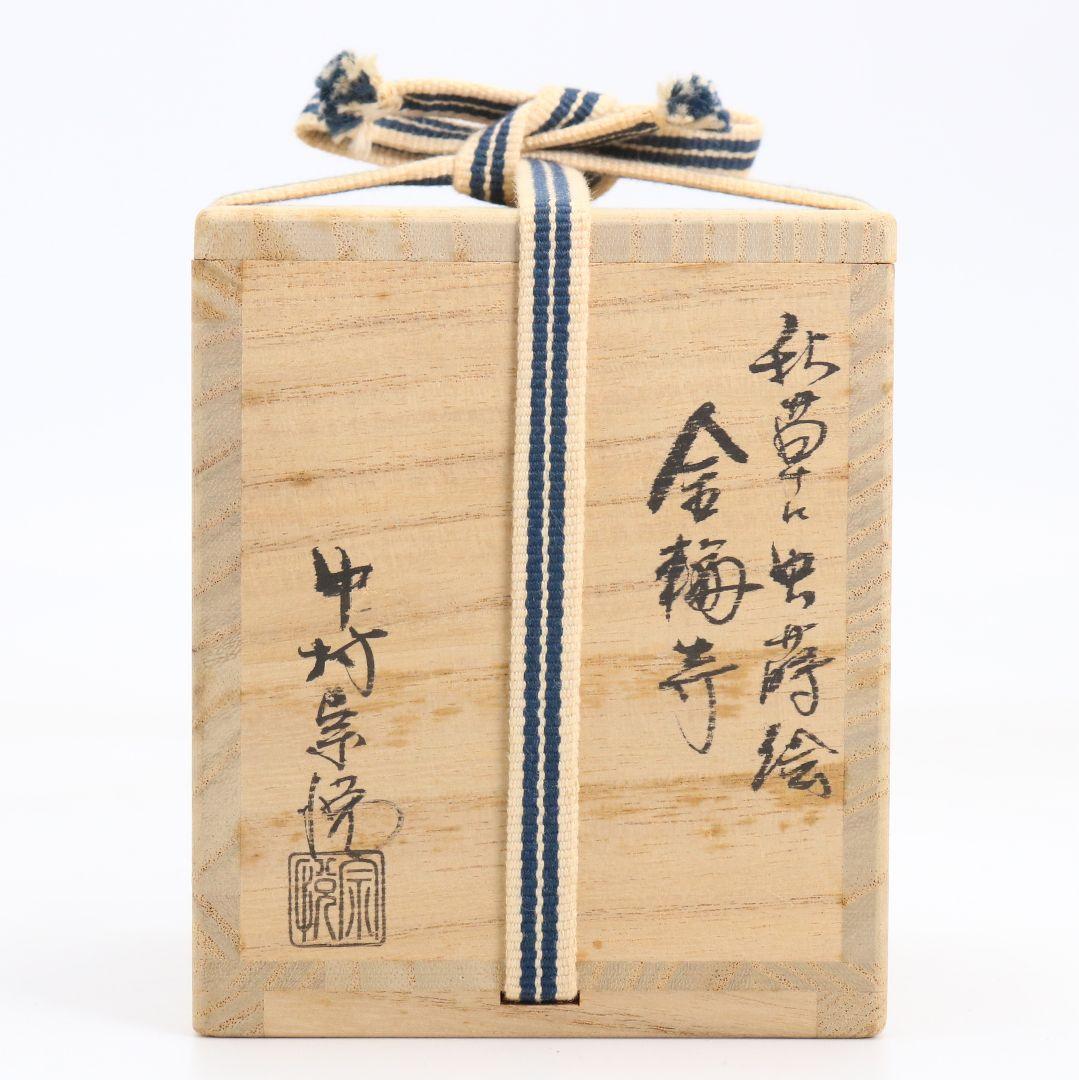
• Artist: Nakamura Soetsu (中村宗悦)
• Technique: Tame-nuri (溜塗) lacquer with gold maki-e and raden (mother-of-pearl inlay)
• Motif: Akikusa ni suzumushi (秋草に鈴虫) — Autumn grasses with bell cricket
• Form: Kinrinji (金輪寺) — cylindrical tea container
• Era: Contemporary (Shōwa–Heisei)
• Origin: Japan
• Dimensions: Height approx. 7.5 cm, Diameter approx. 7.2 cm
• Box: Tomobako with artist signature and seal
• Condition: Excellent — tame-nuri with full depth and clarity, maki-e and raden intact
🔹 [ Cultural & Artistic Insight ]
The suzumushi — bell cricket — carries a singular place in Japanese aesthetic memory. Its voice is not heard as noise but as season itself: the sound of autumn deepening, of evenings growing longer, of something ending beautifully. To place this creature on a tea container is to encode an entire temporal world into an object small enough to rest in both palms.
Akikusa, the autumn grasses, trace one of the oldest decorative lineages in Japanese art, reaching back through Heian-period poetry screens into the foundational grammar of seasonal expression. Lespedeza, pampas grass, bellflower — each carries its own literary weight. Here, Soetsu selects hagi (lespedeza) as the bell cricket's landscape, painting the slender stems and leaves in dark, restrained tones against the warm tame-nuri ground.
The Kinrinji form itself bears a temple's name. Unlike the rounded natsume, the Kinrinji stands upright with a domed lid — a shape associated with specific occasions in chanoyu where the host selects utensils to quietly signal the character of the gathering.
Tame-nuri is lacquer that withholds and then reveals. Transparent urushi layered over a colored ground creates a depth that shifts with light and, over decades, grows warmer and more luminous. It is a finish that rewards patience — the opposite of immediate spectacle.
Where the cricket's song meets the evening air — that threshold is where this object lives.
🔹 [ Deep-Dive Commentary ]
The Kinrinji tea container occupies a distinct position within the hierarchy of usucha-ki (thin tea containers). Where the natsume — named for its jujube-fruit shape — serves as the most common form, the Kinrinji's cylindrical body and rounded lid signal a different register. In traditional temae, the choice between natsume, Kinrinji, and other forms communicates something about season, formality, and the host's intention. The Kinrinji, with its temple-name provenance, often appears in gatherings with a certain gravitas.
Soetsu's decorative program here employs a sophisticated mixed-media technique that lacquer scholars call maki-e raden — the combination of sprinkled gold powder and inlaid mother-of-pearl within a single composition. The bell cricket's body is built in gold maki-e with fine brushwork delineating legs, antennae, and thorax. But the wings — the most expressive element — are rendered in raden: thin slices of iridescent shell that catch light with an almost living translucence. This juxtaposition of warm gold against cool, shifting pearl creates a visual tension that mirrors the creature itself — grounded body, ethereal song.
The bell cricket's place in Japanese poetry and art extends across centuries. From Man'yōshū verses onward, the suzumushi appears not as mere insect but as embodiment of mono no aware — the bittersweet awareness of transience. Its chirping marks the precise moment when summer yields to autumn, when warmth begins its slow withdrawal. To hold this container during tea is to hold that moment.
The tame-nuri ground deserves attention in its own right. Unlike the opaque black of roiro-nuri or the solid vermillion of shu-nuri, tame-nuri operates through translucency. The lacquer itself is tinted but clear, allowing the substrate — here producing a warm reddish-brown — to breathe through. Over years and decades, this finish deepens. Collectors of tame-nuri pieces speak of the lacquer "opening" with age, each decade adding warmth and complexity. A tame-nuri container forty years old looks fundamentally different from one made yesterday, and more beautiful for it.
The seasonal programming of tea utensils is one of chanoyu's most refined expressions. A host preparing an autumn gathering selects each object — bowl, tea scoop, container, scroll — to create a coherent seasonal world within the tea room. This Kinrinji, with its bell cricket and autumn grasses, speaks directly into that practice. It does not merely depict autumn; it becomes autumn within the temae.
🔹 [ 日本語解説 ]
◆ 基本情報
• 作家:中村宗悦
• 技法:溜塗地に金蒔絵・螺鈿(鈴虫部分に貝殻象嵌)
• 意匠:秋草に鈴虫蒔絵
• 器形:金輪寺(円筒形薄茶器)
• 時代:現代(昭和〜平成)
• 産地:日本
• 寸法:高さ約7.5cm、径約7.2cm
• 付属:共箱(作家署名・落款あり)
• 状態:優良 — 溜塗の透明感・奥行き健在、蒔絵・螺鈿ともに完好
◆ 文化的背景と芸術性
鈴虫は日本の美意識において特別な位置を占める。その音色は単なる虫の声ではなく、秋そのものの到来を告げる季節の声である。この小さな茶器に鈴虫を配することは、掌に収まる器の中に一つの時空を封じ込めることに他ならない。
秋草文様は平安時代の屏風絵にまで遡る日本装飾の最も古い系譜の一つである。宗悦はここで萩を選び、溜塗の温かな茶褐色の地に抑制された色調で細い茉と葉を描く。華やかさではなく、静けさの中の豊かさを志向する筆である。
金輪寺という器形は寺院の名を負う。棗の丸みとは異なる直立した円筒と丸蓋は、茶事において亭主の意図を静かに伝える道具立ての一つである。
溜塗は時間とともに深みを増す塗りである。透明な漆の層を通して下地が呼吸し、年月を経るごとに温もりと複雑さを加えてゆく。即効的な華やかさとは対極にある、忍耐に報いる仕上げである。
◆ 詳細解説
金輪寺は薄茶器の中で独自の位置を占める。棗が最も一般的な形であるのに対し、金輪寺の円筒形と丸蓋はより特定の席を示唆する。伝統的な点前において、棗・金輪寺・その他の形を選ぶこと自体が、季節・格式・亭主の心を伝える無言の所作となる。
宗悦の装飾は蒔絵と螺鈿を一つの構図の中で併用する高度な複合技法である。鈴虫の胴体は金蒔絵で細密に描かれ、脚・触角の一本一本まで筆が通る。しかし翼——最も表現的な要素——には螺鈿が用いられる。光の角度によって青緑に輝く貝殻の薄片が、あたかも生きているかのような透明感を翼に与える。温かな金と冷たく揺らめく貝の対比は、鈴虫という存在そのもの——地に脚をつけた身体と、空に放たれる声——の二重性を映している。
溜塗の経年変化もまた特筆に値する。黒漆の呂色塗や朱塗とは異なり、溜塗は透明度によって成立する。漆層を通して下地が呼吸し、十年、二十年と時を経るごとに塗膜が「開いて」ゆく。四十年を経た溜塗は新品とはまったく異なる表情を見せ、そしてより美しい。
🔹 [ SHIPPING & PACKAGING ]
• Dispatch: Within 1-6 business days
• Carrier: Japan Post EMS / UPS (with tracking)
• Packaging: Carefully wrapped with protective materials
🔹 [ Basic Details ]
• Artist: Nakamura Soetsu (中村宗悦)
• Technique: Tame-nuri (溜塗) lacquer with gold maki-e and raden (mother-of-pearl inlay)
• Motif: Akikusa ni suzumushi (秋草に鈴虫) — Autumn grasses with bell cricket
• Form: Kinrinji (金輪寺) — cylindrical tea container
• Era: Contemporary (Shōwa–Heisei)
• Origin: Japan
• Dimensions: Height approx. 7.5 cm, Diameter approx. 7.2 cm
• Box: Tomobako with artist signature and seal
• Condition: Excellent — tame-nuri with full depth and clarity, maki-e and raden intact
🔹 [ Cultural & Artistic Insight ]
The suzumushi — bell cricket — carries a singular place in Japanese aesthetic memory. Its voice is not heard as noise but as season itself: the sound of autumn deepening, of evenings growing longer, of something ending beautifully. To place this creature on a tea container is to encode an entire temporal world into an object small enough to rest in both palms.
Akikusa, the autumn grasses, trace one of the oldest decorative lineages in Japanese art, reaching back through Heian-period poetry screens into the foundational grammar of seasonal expression. Lespedeza, pampas grass, bellflower — each carries its own literary weight. Here, Soetsu selects hagi (lespedeza) as the bell cricket's landscape, painting the slender stems and leaves in dark, restrained tones against the warm tame-nuri ground.
The Kinrinji form itself bears a temple's name. Unlike the rounded natsume, the Kinrinji stands upright with a domed lid — a shape associated with specific occasions in chanoyu where the host selects utensils to quietly signal the character of the gathering.
Tame-nuri is lacquer that withholds and then reveals. Transparent urushi layered over a colored ground creates a depth that shifts with light and, over decades, grows warmer and more luminous. It is a finish that rewards patience — the opposite of immediate spectacle.
Where the cricket's song meets the evening air — that threshold is where this object lives.
🔹 [ Deep-Dive Commentary ]
The Kinrinji tea container occupies a distinct position within the hierarchy of usucha-ki (thin tea containers). Where the natsume — named for its jujube-fruit shape — serves as the most common form, the Kinrinji's cylindrical body and rounded lid signal a different register. In traditional temae, the choice between natsume, Kinrinji, and other forms communicates something about season, formality, and the host's intention. The Kinrinji, with its temple-name provenance, often appears in gatherings with a certain gravitas.
Soetsu's decorative program here employs a sophisticated mixed-media technique that lacquer scholars call maki-e raden — the combination of sprinkled gold powder and inlaid mother-of-pearl within a single composition. The bell cricket's body is built in gold maki-e with fine brushwork delineating legs, antennae, and thorax. But the wings — the most expressive element — are rendered in raden: thin slices of iridescent shell that catch light with an almost living translucence. This juxtaposition of warm gold against cool, shifting pearl creates a visual tension that mirrors the creature itself — grounded body, ethereal song.
The bell cricket's place in Japanese poetry and art extends across centuries. From Man'yōshū verses onward, the suzumushi appears not as mere insect but as embodiment of mono no aware — the bittersweet awareness of transience. Its chirping marks the precise moment when summer yields to autumn, when warmth begins its slow withdrawal. To hold this container during tea is to hold that moment.
The tame-nuri ground deserves attention in its own right. Unlike the opaque black of roiro-nuri or the solid vermillion of shu-nuri, tame-nuri operates through translucency. The lacquer itself is tinted but clear, allowing the substrate — here producing a warm reddish-brown — to breathe through. Over years and decades, this finish deepens. Collectors of tame-nuri pieces speak of the lacquer "opening" with age, each decade adding warmth and complexity. A tame-nuri container forty years old looks fundamentally different from one made yesterday, and more beautiful for it.
The seasonal programming of tea utensils is one of chanoyu's most refined expressions. A host preparing an autumn gathering selects each object — bowl, tea scoop, container, scroll — to create a coherent seasonal world within the tea room. This Kinrinji, with its bell cricket and autumn grasses, speaks directly into that practice. It does not merely depict autumn; it becomes autumn within the temae.
🔹 [ 日本語解説 ]
◆ 基本情報
• 作家:中村宗悦
• 技法:溜塗地に金蒔絵・螺鈿(鈴虫部分に貝殻象嵌)
• 意匠:秋草に鈴虫蒔絵
• 器形:金輪寺(円筒形薄茶器)
• 時代:現代(昭和〜平成)
• 産地:日本
• 寸法:高さ約7.5cm、径約7.2cm
• 付属:共箱(作家署名・落款あり)
• 状態:優良 — 溜塗の透明感・奥行き健在、蒔絵・螺鈿ともに完好
◆ 文化的背景と芸術性
鈴虫は日本の美意識において特別な位置を占める。その音色は単なる虫の声ではなく、秋そのものの到来を告げる季節の声である。この小さな茶器に鈴虫を配することは、掌に収まる器の中に一つの時空を封じ込めることに他ならない。
秋草文様は平安時代の屏風絵にまで遡る日本装飾の最も古い系譜の一つである。宗悦はここで萩を選び、溜塗の温かな茶褐色の地に抑制された色調で細い茉と葉を描く。華やかさではなく、静けさの中の豊かさを志向する筆である。
金輪寺という器形は寺院の名を負う。棗の丸みとは異なる直立した円筒と丸蓋は、茶事において亭主の意図を静かに伝える道具立ての一つである。
溜塗は時間とともに深みを増す塗りである。透明な漆の層を通して下地が呼吸し、年月を経るごとに温もりと複雑さを加えてゆく。即効的な華やかさとは対極にある、忍耐に報いる仕上げである。
◆ 詳細解説
金輪寺は薄茶器の中で独自の位置を占める。棗が最も一般的な形であるのに対し、金輪寺の円筒形と丸蓋はより特定の席を示唆する。伝統的な点前において、棗・金輪寺・その他の形を選ぶこと自体が、季節・格式・亭主の心を伝える無言の所作となる。
宗悦の装飾は蒔絵と螺鈿を一つの構図の中で併用する高度な複合技法である。鈴虫の胴体は金蒔絵で細密に描かれ、脚・触角の一本一本まで筆が通る。しかし翼——最も表現的な要素——には螺鈿が用いられる。光の角度によって青緑に輝く貝殻の薄片が、あたかも生きているかのような透明感を翼に与える。温かな金と冷たく揺らめく貝の対比は、鈴虫という存在そのもの——地に脚をつけた身体と、空に放たれる声——の二重性を映している。
溜塗の経年変化もまた特筆に値する。黒漆の呂色塗や朱塗とは異なり、溜塗は透明度によって成立する。漆層を通して下地が呼吸し、十年、二十年と時を経るごとに塗膜が「開いて」ゆく。四十年を経た溜塗は新品とはまったく異なる表情を見せ、そしてより美しい。
🔹 [ SHIPPING & PACKAGING ]
• Dispatch: Within 1-6 business days
• Carrier: Japan Post EMS / UPS (with tracking)
• Packaging: Carefully wrapped with protective materials
Quantity
Couldn't load pickup availability
Low stock: 1 left
View full details