1
/
of
12
Bamboo Maki-e Lacquer Natsume Tea Caddy by Arai Shihou, Japanese Chanoyu Urushi Chaki with Signed Tomobako
Bamboo Maki-e Lacquer Natsume Tea Caddy by Arai Shihou, Japanese Chanoyu Urushi Chaki with Signed Tomobako
Regular price
Dhs. 874.00 AED
Regular price
Sale price
Dhs. 874.00 AED
Taxes included.
Shipping calculated at checkout.
Experience Authentic Japan Art with this Bamboo Maki-e Natsume Tea Caddy. This Arai Shihou Lacquer Chaki serves as a Japanese Tea Ceremony Vessel and Urushi Matcha Container, featuring Chikurin Bamboo Grove Motif and Gold Maki-e Decoration on Black Lacquer—a must-have for any Art Collector seeking Museum Quality Chanoyu Ware and Signed Tomobako Craft.
🔹 [ BASIC DETAILS ]
• Artist: Arai Shihou (新井司峰), Kyoto maki-e lacquer master
• Technique: Hira maki-e gold lacquer on kuro-urushi (black lacquer) ground
• Form: Natsume (棗) — jujube-shaped matcha tea caddy for chanoyu
• Era: Late Showa to Heisei period, circa 1980–2010
• Origin: Kyoto, Japan
• Dimensions: Height approx. 7 cm (2.76 in) × Diameter approx. 6.8 cm (2.68 in)
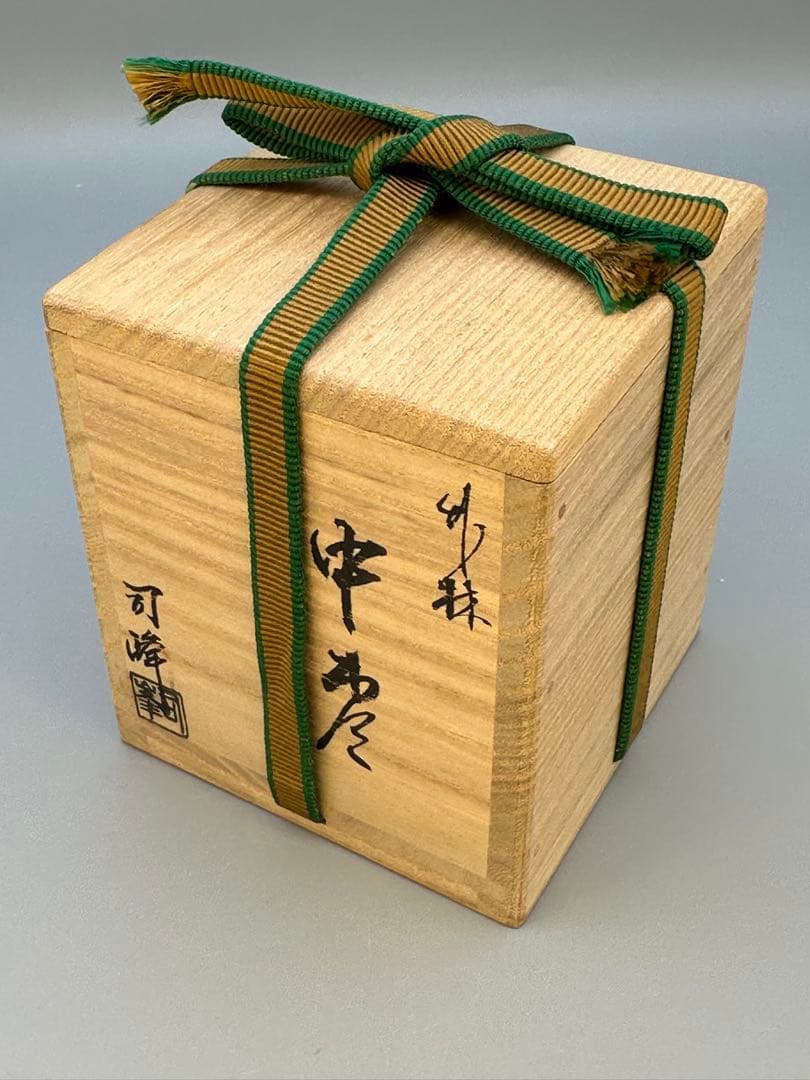
• Box: Original signed kiri-wood tomobako, inscribed "Chikurin" (Bamboo Grove) with artist's seal
• Condition: Excellent. No visible scratches, chips, or wear. Lacquer lustrous, gold maki-e crisp and intact.
🔹 [ Cultural & Artistic Insight ]
Historical Context — The natsume, named for its resemblance to the jujube fruit, is the most intimate vessel in the tea master's arsenal. Within the quiet choreography of chanoyu, it holds the finely milled matcha until the moment the host lifts the lid and awakens the green powder with a bamboo chashaku. Maki-e — literally "sprinkled picture" — is a refined lacquer technique in which fine gold and silver powders are laid onto wet urushi surfaces, then burnished and sealed beneath successive translucent layers. It is among Japan's oldest decorative arts, perfected in Kyoto workshops since the Heian court.
Technique & Aesthetic — Arai Shihou belongs to the Kyoto lineage of maki-e artisans who treat the natsume not as ornament but as a field for restrained narrative. Here, culms of bamboo (take) rise in burnished gold against the deepest kuro-urushi, their leaves scattered in layered clusters, catching light differently with each rotation of the caddy in the hand. The composition honors the wabi principle: the gold is disciplined, never boastful; the black ground holds more silence than image.
Philosophical Reflection — In the tea room, bamboo is the emblem of the unbending spirit that bends gracefully with the wind. To cradle this natsume is to hold a miniature chikurin — a bamboo grove — in the palm.
🔹 [ Deep-Dive Commentary ]
The chikurin (竹林), or bamboo grove, is one of the most enduring motifs in East Asian art, drawn originally from the Chinese literati ideal of the Seven Sages of the Bamboo Grove — scholars who retreated from political noise into the quiet of tall bamboo. In Japanese tea culture, the motif travels across scrolls, ceramics, and lacquerware, always pointing to the same virtues: uprightness, resilience, humility, and an elegant refusal of ostentation.
The hira maki-e technique seen here is deceptively simple. A brush loaded with wet urushi draws the bamboo design onto the finished lacquer ground. Before the resin hardens, fine gold powder is sprinkled through a bamboo tube; once cured, the surface is burnished and sealed with further urushi coats and polished repeatedly with charcoal. Every gesture is irreversible — one hesitation, one tremor, and the line is lost. The discipline of maki-e is closer to calligraphy than to painting.
For the collector, a signed Kyoto natsume with tomobako and healthy condition occupies a specific tier of desirability. The tomobako (共箱) is the artist's own paulownia-wood box, brushed with title and seal: it is both provenance and a continuation of the work's silence. A natsume without its tomobako has lost half its voice; this one still speaks clearly.
In contemporary interiors — whether a Kyoto machiya tea room or a minimalist apartment in Berlin — this chaki functions on multiple levels. It is a fully usable tea vessel for the practicing chajin. It is a contemplative still-life for the shelf, a black moon touched with gold. And it is an heirloom — the kind of object that is not purchased so much as inherited forward, carried from one quiet life into the next.
[ JAPANESE DESCRIPTION / 日本語解説 ]
🔹 [ 基本情報 ]
• 作家:新井司峰(あらい しほう)— 京都蒔絵師
• 技法:黒漆地に平蒔絵(ひらまきえ)— 金粉を用いた伝統漆芸
• 品目:棗(なつめ)— 茶の湯で抹茶を納める茶器
• 時代:昭和後期〜平成期(1980–2010年頃)
• 産地:京都
• 寸法:高さ約7cm × 径約6.8cm
• 付属:共箱(桐)あり、「竹林」と箱書、作家印あり
• 状態:良好。目立つ傷・汚れなし、漆面の艶・金蒔絵ともに美しく保たれております。
🔹 [ 文化的・芸術的背景 ]
棗は、茶の湯における最も親密な道具のひとつです。黒漆の深い闇に金の竹林がすっと立ちあがるこの一碗は、京蒔絵の確かな系譜を感じさせる作品です。蒔絵とは、湿した漆の上に金銀の粉を蒔き、さらに漆で封じて磨き上げる日本独自の装飾技法であり、平安時代の宮廷工芸以来、京都を中心に洗練を重ねてまいりました。
本作において、新井司峰の筆は過剰を慎み、竹の節理・葉の重なり・余白の黒を見事に調和させております。金は驕らず、黒は語らず、しかし持つ手の中で確かに光を返してまいります。まさに侘びの美学 — 削ぎ落とされた景色の中に、静かな威厳を宿す作品です。
🔹 [ 技法解説と鑑賞の愉しみ ]
竹林は、古来「竹林の七賢」の故事に遡る東洋の君子の象徴であり、茶席においては不撓不屈・謙虚・清廉の徳を語る意匠として繰り返し用いられてまいりました。この棗を掌に収めるとき、そこにはひとつの小さな竹林が宿っているのです。
平蒔絵は、湿した漆の線描に金粉を蒔き、硬化後に磨き上げる繊細な工程を幾度も重ねる技法です。筆の迷いは許されず、書に近い一回性の緊張を持ちます。共箱に箱書と印が添えられ、保存状態も良好な本作は、茶人・蒐集家いずれの眼にも応える一品です。
現代の住まいにおいても、棚に置けば静物として、茶席では道具として、その沈黙と光を楽しんでいただけます。
🔹 [ SHIPPING & PACKAGING ]
• Dispatch: Within 1-6 business days
• Carrier: Japan Post EMS / UPS (with tracking)
• Packaging: Carefully wrapped with protective materials
🔹 [ BASIC DETAILS ]
• Artist: Arai Shihou (新井司峰), Kyoto maki-e lacquer master
• Technique: Hira maki-e gold lacquer on kuro-urushi (black lacquer) ground
• Form: Natsume (棗) — jujube-shaped matcha tea caddy for chanoyu
• Era: Late Showa to Heisei period, circa 1980–2010
• Origin: Kyoto, Japan
• Dimensions: Height approx. 7 cm (2.76 in) × Diameter approx. 6.8 cm (2.68 in)
• Box: Original signed kiri-wood tomobako, inscribed "Chikurin" (Bamboo Grove) with artist's seal
• Condition: Excellent. No visible scratches, chips, or wear. Lacquer lustrous, gold maki-e crisp and intact.
🔹 [ Cultural & Artistic Insight ]
Historical Context — The natsume, named for its resemblance to the jujube fruit, is the most intimate vessel in the tea master's arsenal. Within the quiet choreography of chanoyu, it holds the finely milled matcha until the moment the host lifts the lid and awakens the green powder with a bamboo chashaku. Maki-e — literally "sprinkled picture" — is a refined lacquer technique in which fine gold and silver powders are laid onto wet urushi surfaces, then burnished and sealed beneath successive translucent layers. It is among Japan's oldest decorative arts, perfected in Kyoto workshops since the Heian court.
Technique & Aesthetic — Arai Shihou belongs to the Kyoto lineage of maki-e artisans who treat the natsume not as ornament but as a field for restrained narrative. Here, culms of bamboo (take) rise in burnished gold against the deepest kuro-urushi, their leaves scattered in layered clusters, catching light differently with each rotation of the caddy in the hand. The composition honors the wabi principle: the gold is disciplined, never boastful; the black ground holds more silence than image.
Philosophical Reflection — In the tea room, bamboo is the emblem of the unbending spirit that bends gracefully with the wind. To cradle this natsume is to hold a miniature chikurin — a bamboo grove — in the palm.
🔹 [ Deep-Dive Commentary ]
The chikurin (竹林), or bamboo grove, is one of the most enduring motifs in East Asian art, drawn originally from the Chinese literati ideal of the Seven Sages of the Bamboo Grove — scholars who retreated from political noise into the quiet of tall bamboo. In Japanese tea culture, the motif travels across scrolls, ceramics, and lacquerware, always pointing to the same virtues: uprightness, resilience, humility, and an elegant refusal of ostentation.
The hira maki-e technique seen here is deceptively simple. A brush loaded with wet urushi draws the bamboo design onto the finished lacquer ground. Before the resin hardens, fine gold powder is sprinkled through a bamboo tube; once cured, the surface is burnished and sealed with further urushi coats and polished repeatedly with charcoal. Every gesture is irreversible — one hesitation, one tremor, and the line is lost. The discipline of maki-e is closer to calligraphy than to painting.
For the collector, a signed Kyoto natsume with tomobako and healthy condition occupies a specific tier of desirability. The tomobako (共箱) is the artist's own paulownia-wood box, brushed with title and seal: it is both provenance and a continuation of the work's silence. A natsume without its tomobako has lost half its voice; this one still speaks clearly.
In contemporary interiors — whether a Kyoto machiya tea room or a minimalist apartment in Berlin — this chaki functions on multiple levels. It is a fully usable tea vessel for the practicing chajin. It is a contemplative still-life for the shelf, a black moon touched with gold. And it is an heirloom — the kind of object that is not purchased so much as inherited forward, carried from one quiet life into the next.
[ JAPANESE DESCRIPTION / 日本語解説 ]
🔹 [ 基本情報 ]
• 作家:新井司峰(あらい しほう)— 京都蒔絵師
• 技法:黒漆地に平蒔絵(ひらまきえ)— 金粉を用いた伝統漆芸
• 品目:棗(なつめ)— 茶の湯で抹茶を納める茶器
• 時代:昭和後期〜平成期(1980–2010年頃)
• 産地:京都
• 寸法:高さ約7cm × 径約6.8cm
• 付属:共箱(桐)あり、「竹林」と箱書、作家印あり
• 状態:良好。目立つ傷・汚れなし、漆面の艶・金蒔絵ともに美しく保たれております。
🔹 [ 文化的・芸術的背景 ]
棗は、茶の湯における最も親密な道具のひとつです。黒漆の深い闇に金の竹林がすっと立ちあがるこの一碗は、京蒔絵の確かな系譜を感じさせる作品です。蒔絵とは、湿した漆の上に金銀の粉を蒔き、さらに漆で封じて磨き上げる日本独自の装飾技法であり、平安時代の宮廷工芸以来、京都を中心に洗練を重ねてまいりました。
本作において、新井司峰の筆は過剰を慎み、竹の節理・葉の重なり・余白の黒を見事に調和させております。金は驕らず、黒は語らず、しかし持つ手の中で確かに光を返してまいります。まさに侘びの美学 — 削ぎ落とされた景色の中に、静かな威厳を宿す作品です。
🔹 [ 技法解説と鑑賞の愉しみ ]
竹林は、古来「竹林の七賢」の故事に遡る東洋の君子の象徴であり、茶席においては不撓不屈・謙虚・清廉の徳を語る意匠として繰り返し用いられてまいりました。この棗を掌に収めるとき、そこにはひとつの小さな竹林が宿っているのです。
平蒔絵は、湿した漆の線描に金粉を蒔き、硬化後に磨き上げる繊細な工程を幾度も重ねる技法です。筆の迷いは許されず、書に近い一回性の緊張を持ちます。共箱に箱書と印が添えられ、保存状態も良好な本作は、茶人・蒐集家いずれの眼にも応える一品です。
現代の住まいにおいても、棚に置けば静物として、茶席では道具として、その沈黙と光を楽しんでいただけます。
🔹 [ SHIPPING & PACKAGING ]
• Dispatch: Within 1-6 business days
• Carrier: Japan Post EMS / UPS (with tracking)
• Packaging: Carefully wrapped with protective materials
Quantity
Couldn't load pickup availability
Low stock: 1 left
View full details