1
/
of
11
Bamboo Maki-e Lacquer Nakatsugi by Oie Yoshio — Tea Caddy
Bamboo Maki-e Lacquer Nakatsugi by Oie Yoshio — Tea Caddy
Regular price
Dhs. 820.00 AED
Regular price
Sale price
Dhs. 820.00 AED
Taxes included.
Shipping calculated at checkout.
Experience authentic bamboo makie caddy artistry in this nakatsugi tea caddy. This black urushi caddy features gold makie lacquer and a bamboo motif lacquer design—a signed lacquer art and lacquerware tea box from the japan tea ceremony tradition, a tea caddy collector treasure of enduring presence.
🔹 [ Basic Details ]
• Artist: Oie Yoshio (大家芳男)
• Technique: Gold maki-e (蒔絵) on black urushi lacquer
• Era: Contemporary (Heisei–Reiwa period)
• Origin: Japan
• Dimensions: Height approx. 6.7 cm, Diameter approx. 6.8 cm
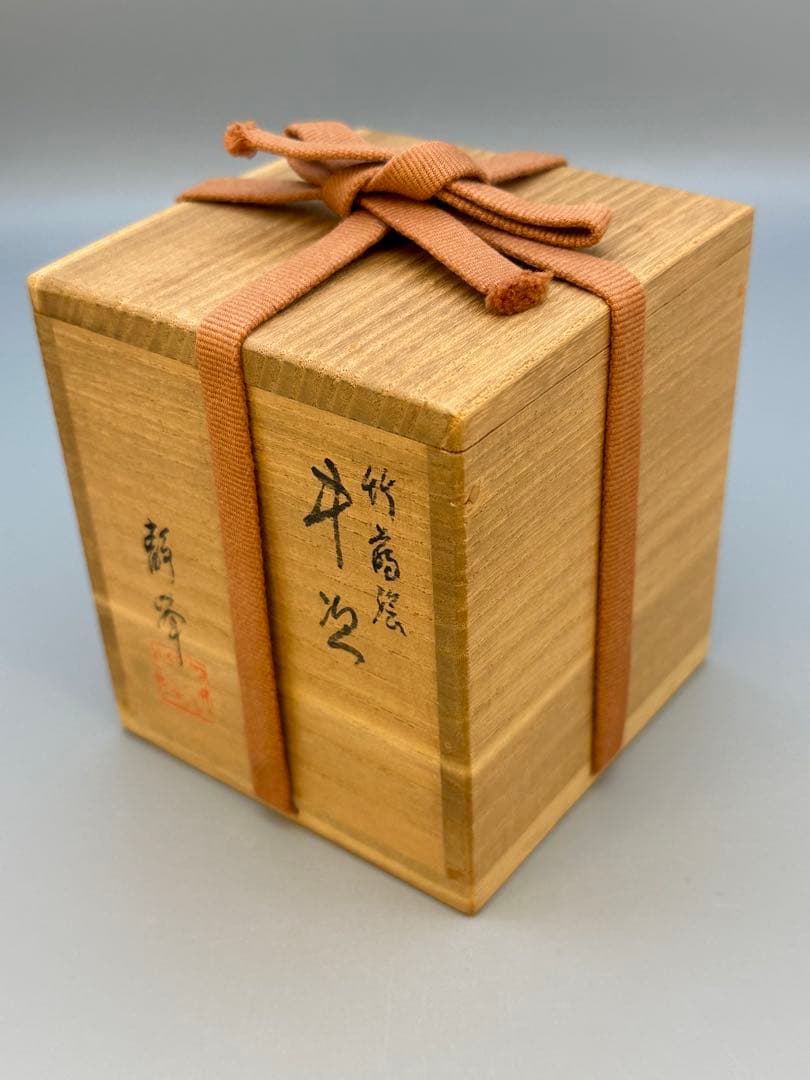
• Box: Signed tomobako (共箱) inscribed "竹蒔絵 中次" (Bamboo Maki-e Nakatsugi)
• Condition: Excellent — no notable scratches, chips, or repairs. Clean condition throughout.
🔹 [ Cultural & Artistic Insight ]
Bamboo (竹, take) stands among the most philosophically charged motifs in Japanese art. One of the Three Friends of Winter (松竹梅, sho-chiku-bai) alongside pine and plum, bamboo symbolizes resilience, integrity, and the capacity to bend without breaking. In tea culture, bamboo-themed utensils are appropriate across all seasons, though they carry particular resonance in winter and New Year gatherings.
Oie Yoshio renders bamboo stalks in confident gold maki-e against deep black lacquer. The composition is vertical and structural—culms rise from the base through the joint line and onto the lid, creating visual continuity between the two halves. Leaves fan outward in natural clusters, their gold catching light at different angles to reveal subtle tonal variations.
The nakatsugi form—with its mid-body seam—echoes bamboo's own segmented structure, creating a harmonious relationship between vessel and motif.
"Bamboo grows through darkness into light. It does not explain why."
🔹 [ Deep-Dive Commentary ]
The nakatsugi (中次) is a distinctive tea caddy form where the lid meets the body at the midpoint, creating a clean horizontal division. Unlike the rounded natsume, the nakatsugi has straight, cylindrical walls that lend it architectural clarity. The form is traditionally associated with wabi-style tea and is favored for its structural simplicity.
Bamboo in maki-e presents specific technical challenges. The straight culms require precise, unwavering lines, while the nodes and leaves demand variation in gold tone and powder density. The artist must balance geometric regularity with organic spontaneity—the bamboo must look grown, not drawn.
The gold band visible at the joint where lid meets body serves both functional and aesthetic purposes. It conceals the seam while creating a visual register line that grounds the bamboo composition, suggesting the horizon from which the stalks emerge.
【日本語解説】
🔹 [ 基本情報 ]
・作家:大家芳男
・技法:金蒔絵、黒漆塗
・時代:現代(平成・令和期)
・産地:日本
・寸法:高さ約6.7cm、径約6.8cm
・箱:共箱(「竹蒔絵 中次」と墨書)
・状態:良好 — 目立つ傷や汚れなし。
🔹 [ 文化的・美術的解説 ]
竹は日本美術において最も哲学的な含意を持つ意匠の一つである。松竹梅の歳寒三友として、しなやかさ・節操・折れずに撓む力を象徴する。茶の湯では竹の意匠は通年使用可能だが、冬や正月の席に格別の意味を持つ。
大家芳男は深い黒漆の上に確信に満ちた金蒔絵で竹を描く。構図は垂直的・構造的であり、竹稈が胴から継ぎ目を越えて蓋へと貫通し、二つの半体の視覚的連続性を生む。中次という形式そのものが竹の節ある構造と呼応する。
🔹 [ 深掘り解説 ]
中次は蓋と身が中程で合わさる独特の茶器形式であり、棗の丸みとは異なる直線的な円筒壁が建築的な明瞭さを与える。侘び茶の精神に通じ、構造的単純さが好まれる。
蒔絵における竹は特有の技術的課題を提示する。真直ぐな稈には揺るぎない精密な線を、節と葉には金粉の濃淡変化を要する。幾何的規則性と有機的自発性の均衡—竹は描かれたのではなく、生えたように見えなければならない。
🔹 [ SHIPPING & PACKAGING ]
• Dispatch: Within 1-6 business days
• Carrier: Japan Post EMS / UPS (with tracking)
• Packaging: Carefully wrapped with protective materials
🔹 [ Basic Details ]
• Artist: Oie Yoshio (大家芳男)
• Technique: Gold maki-e (蒔絵) on black urushi lacquer
• Era: Contemporary (Heisei–Reiwa period)
• Origin: Japan
• Dimensions: Height approx. 6.7 cm, Diameter approx. 6.8 cm
• Box: Signed tomobako (共箱) inscribed "竹蒔絵 中次" (Bamboo Maki-e Nakatsugi)
• Condition: Excellent — no notable scratches, chips, or repairs. Clean condition throughout.
🔹 [ Cultural & Artistic Insight ]
Bamboo (竹, take) stands among the most philosophically charged motifs in Japanese art. One of the Three Friends of Winter (松竹梅, sho-chiku-bai) alongside pine and plum, bamboo symbolizes resilience, integrity, and the capacity to bend without breaking. In tea culture, bamboo-themed utensils are appropriate across all seasons, though they carry particular resonance in winter and New Year gatherings.
Oie Yoshio renders bamboo stalks in confident gold maki-e against deep black lacquer. The composition is vertical and structural—culms rise from the base through the joint line and onto the lid, creating visual continuity between the two halves. Leaves fan outward in natural clusters, their gold catching light at different angles to reveal subtle tonal variations.
The nakatsugi form—with its mid-body seam—echoes bamboo's own segmented structure, creating a harmonious relationship between vessel and motif.
"Bamboo grows through darkness into light. It does not explain why."
🔹 [ Deep-Dive Commentary ]
The nakatsugi (中次) is a distinctive tea caddy form where the lid meets the body at the midpoint, creating a clean horizontal division. Unlike the rounded natsume, the nakatsugi has straight, cylindrical walls that lend it architectural clarity. The form is traditionally associated with wabi-style tea and is favored for its structural simplicity.
Bamboo in maki-e presents specific technical challenges. The straight culms require precise, unwavering lines, while the nodes and leaves demand variation in gold tone and powder density. The artist must balance geometric regularity with organic spontaneity—the bamboo must look grown, not drawn.
The gold band visible at the joint where lid meets body serves both functional and aesthetic purposes. It conceals the seam while creating a visual register line that grounds the bamboo composition, suggesting the horizon from which the stalks emerge.
【日本語解説】
🔹 [ 基本情報 ]
・作家:大家芳男
・技法:金蒔絵、黒漆塗
・時代:現代(平成・令和期)
・産地:日本
・寸法:高さ約6.7cm、径約6.8cm
・箱:共箱(「竹蒔絵 中次」と墨書)
・状態:良好 — 目立つ傷や汚れなし。
🔹 [ 文化的・美術的解説 ]
竹は日本美術において最も哲学的な含意を持つ意匠の一つである。松竹梅の歳寒三友として、しなやかさ・節操・折れずに撓む力を象徴する。茶の湯では竹の意匠は通年使用可能だが、冬や正月の席に格別の意味を持つ。
大家芳男は深い黒漆の上に確信に満ちた金蒔絵で竹を描く。構図は垂直的・構造的であり、竹稈が胴から継ぎ目を越えて蓋へと貫通し、二つの半体の視覚的連続性を生む。中次という形式そのものが竹の節ある構造と呼応する。
🔹 [ 深掘り解説 ]
中次は蓋と身が中程で合わさる独特の茶器形式であり、棗の丸みとは異なる直線的な円筒壁が建築的な明瞭さを与える。侘び茶の精神に通じ、構造的単純さが好まれる。
蒔絵における竹は特有の技術的課題を提示する。真直ぐな稈には揺るぎない精密な線を、節と葉には金粉の濃淡変化を要する。幾何的規則性と有機的自発性の均衡—竹は描かれたのではなく、生えたように見えなければならない。
🔹 [ SHIPPING & PACKAGING ]
• Dispatch: Within 1-6 business days
• Carrier: Japan Post EMS / UPS (with tracking)
• Packaging: Carefully wrapped with protective materials
Quantity
Couldn't load pickup availability
Low stock: 1 left
View full details