1
/
of
11
Bamboo Futaoki Lid Rest by Makuzu Kosai — Kyoto Kinrande Porcelain Tea Ceremony Utensil
Bamboo Futaoki Lid Rest by Makuzu Kosai — Kyoto Kinrande Porcelain Tea Ceremony Utensil
Regular price
Dhs. 867.00 AED
Regular price
Sale price
Dhs. 867.00 AED
Taxes included.
Shipping calculated at checkout.
Experience Authentic Japan Art with this Kyoto Kinrande Porcelain Futaoki. This Japanese Tea Ceremony Utensil serves as a Bamboo Motif Lid Rest and Chado Ceramic Accessory, featuring Gold Kinrande Overglaze and Makuzu Kosai Pottery—a must-have for any Art Collector seeking Kyo-yaki Signed Antique and Traditional Chanoyu Equipment.
🔹 [ BASIC DETAILS ]
• Artist: Makuzu Kosai (真葛香斎), Kyoto — signed tomobako
• Technique: Kyoto-yaki (Kyo-yaki) porcelain; kinrande (gold brocade overglaze) with green enamel and ink painting
• Motif: Bamboo (take) — continuous painted landscape wrapping the full circumference
• Era: Post-war Showa period (mid-to-late 20th century)
• Origin: Kyoto, Japan
• Dimensions: Height approx. 5.2 cm, Diameter approx. 6 cm
• Form: Barrel-shaped futaoki with single square foot (kakuashi), classic 竹透し style
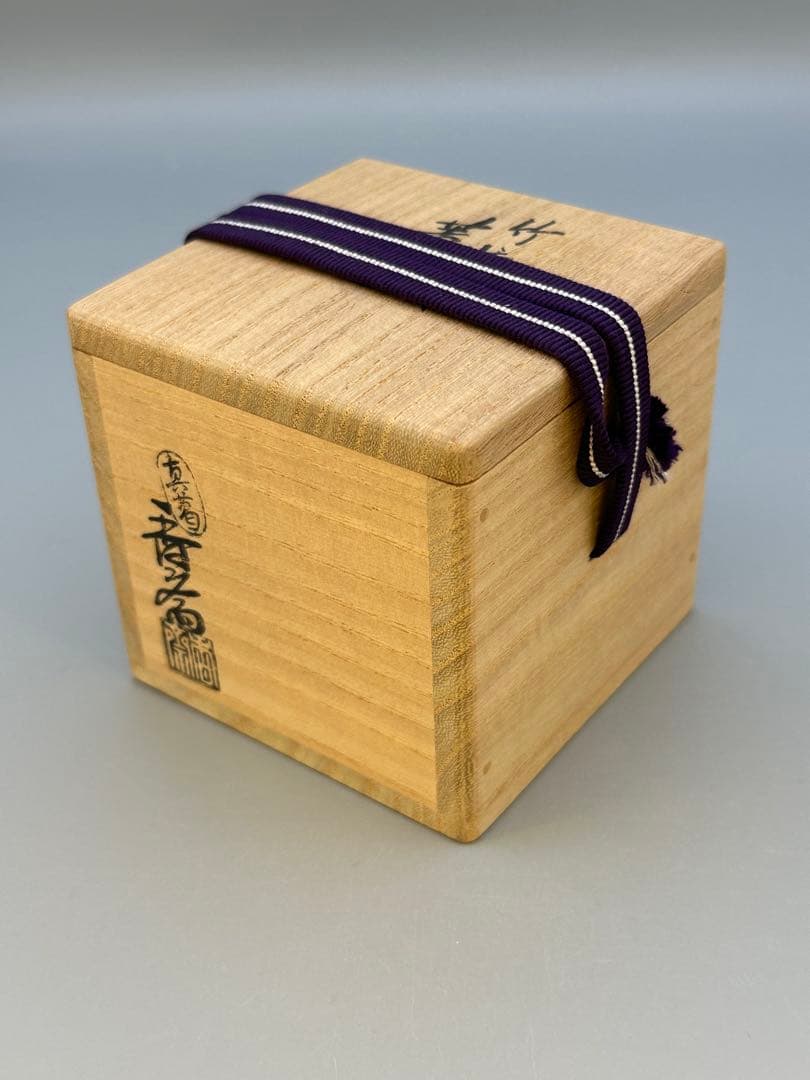
• Box: Original signed wooden tomobako (共箱) included; box shows minor age-toning (slight yellowing), otherwise sound
• Condition: Excellent — no chips, cracks, or significant staining on the piece itself; surface painting intact and vivid
🔹 [ CULTURAL & ARTISTIC INSIGHT ]
The futaoki — literally "lid resting place" — is among the most intimate utensils in the Way of Tea (chado). It cradles the iron kettle's lid while the host ladles hot water, serving as both a practical resting place and a moment of composed beauty witnessed by every guest in the tearoom. Its small scale belies its gravity: in the world of chanoyu, the futaoki is chosen with as much deliberation as the tea bowl itself.
This example by Makuzu Kosai renders the bamboo (take) motif with the sumptuous vocabulary of Kyoto kinrande ware — a technique that layers vivid green overglaze enamels and liquid gold onto a warm cream-white porcelain body. Bamboo has been a cardinal symbol in Japanese culture for centuries: its hollow interior represents an open mind receptive to teaching, its unwavering verticality speaks of integrity, and its perennial green announces vitality in every season. Chosen as the decorative subject of a tea utensil, bamboo is not mere ornament but a silent philosophical declaration carried into the tearoom.
The single square foot (kakuashi) beneath the barrel body is an elegant structural signature of the 竹透し (take-sukashi) futaoki form — the small protrusion stabilizing the kettle lid and preventing it from slipping, while giving the piece its characteristic silhouette when displayed on the tatami.
POETIC LINE: "The gold bamboo shimmers in the steam — neither burning nor bending, the same as it has always been."
🔹 [ DEEP-DIVE COMMENTARY ]
Kyoto-yaki (Kyo-yaki) is the collective term for ceramics produced within the cultural sphere of Kyoto, the imperial capital and cradle of Japanese chado for more than four centuries. Unlike the salt-glazed stoneware of Bizen or the iron-spotted wares of Tamba, Kyo-yaki is characteristically refined: pale, even bodies; meticulous overglaze painting; and a sensibility attuned to the court and the tea master rather than the farmer or fisherman. Its audience has always been the educated elite, and its aesthetic vocabulary borrows freely from Chinese export porcelain, classical Japanese painting, and the poetic seasonal imagery of waka verse.
Kinrande (金襴手) is one of Kyo-yaki's most distinguished techniques, descended from Chinese export wares of the Ming and early Qing dynasties that dazzled Japanese tea masters in the sixteenth century. The process involves first firing the porcelain body and underglaze decoration, then applying overglaze enamels — here the vivid celadon and sage greens that bring the bamboo leaves to life — and finally painting liquid gold over areas of the design before a third, lower-temperature firing locks the gold into place. The result is an irreducibly luxurious surface: warm, light-catching, and paradoxically humble when placed on a rough tatami mat beside a rough iron kettle.
The Makuzu Kosai lineage is associated with the succession of kiln masters working in the Makuzu tradition of Kyoto ceramics. The tomobako signed by the artist confirms attribution and is itself a document of provenance — a sealed letter from the maker to all future custodians of the piece. In the tea world, a signed box of this kind elevates a utensil from anonymous craft to named art, making it suitable for formal use in recognized tea schools.
For the advanced collector, this futaoki presents an ideal entry into signed Kyo-yaki tea wares. Its scale and function make it easy to display, use, or exhibit; its kinrande bamboo motif is seasonally versatile (bamboo is an auspicious "evergreen" motif appropriate at any time of year, unlike cherry blossoms or autumn maples); and the crisp condition of the painting surface — with no wear to the gold or enamel — speaks to careful storage, likely in its original box since acquisition.
In the context of contemporary collecting, signed Kyo-yaki futaoki by named artists represent a category that remains undervalued relative to tea bowls and tea caddies of equivalent artistic merit. The futaoki's small scale has historically made it "invisible" to generalist collectors, yet for the chado practitioner or the specialist in miniature Japanese ceramics, a kinrande bamboo futaoki with full box provenance by a recognized Kyoto hand is an exceptional find.
🔹 [ 日本語解説 ]
【基本情報】
• 作家:真葛香斎(京都)― 共箱落款・押印あり
• 技法:京焼(清水焼)磁器地、金襴手(上絵金彩)+緑彩絵付
• 文様:竹(全周に連続する竹林図)
• 年代:昭和中〜後期(戦後)
• 産地:京都
• 寸法:高さ約5.2cm、径約6cm
• 形状:胴張り形・角足付き(竹透し蓋置)
• 箱:共箱付き。箱蓋に僅かなヤケが見られますが、状態は良好です
• 状態:本体に目立つ傷・汚れはなく、絵付けは鮮明で金彩も良好に保たれています
【文化的・美術的解説】
蓋置は茶道具のなかでも特に凝縮された美を湛える器のひとつです。炉や風炉の釜の蓋を休める刹那、亭主の手元に寄り添うこの小さな道具は、茶事全体の静謐を支える縁の下の柱とも言えます。その小ささのゆえに目立たず、しかし選ばれた一客の目には確かに届く——これが蓋置の存在の意味です。
本作は京焼の金襴手技法によって、竹の文様を清澄かつ華やかに表現しています。温かみのある象牙白磁の胴に、生き生きとした緑彩の竹葉が描かれ、その輪郭と節を金彩が引き締める。竹は日本において古来より「虚心」「剛直」「常緑」の象徴として詩歌に詠まれ、茶道具の意匠としては年間を通じて用いることのできる瑞祥の文様です。
竹透しと呼ばれるこの形の特徴は、胴下部に設けられた一本の角足です。この突起が畳の上で蓋を安定させ、独特のシルエットを生み出しています。形の機能と美が一致するところに、京焼の職人的知性が宿っています。
詩的な一行:「金の竹は湯気の中で光る――燃えることも曲がることもなく、いつもと変わらず。」
【深度解説】
京焼は、日本の茶道を四百年以上にわたって支えてきた京都の焼き物の総称です。その特質は、均質な白い素地、精緻な上絵付け、そして公家・茶人という教養ある受け手への奉仕にあります。備前の自然な窯変や丹波の土の力強さとは対照的に、京焼は常に「知」と「雅」を体現する焼き物として位置づけられてきました。
金襴手は京焼を代表する技法のひとつで、明・清時代の中国輸出磁器が十六世紀の茶人たちを魅了したことに端を発します。本体の素焼きと下絵の焼成ののち、緑彩などの上絵の具を施し、さらに液体金を描き加えて低火度で再度焼き付ける——この三段階の工程によって、光を宿した金の輝きと柔らかな彩色が一体となった特有の艶やかさが生まれます。
真葛香斎の名を記した共箱は、単なる収納以上の意味を持ちます。箱書きは作家本人の肉筆証明であり、この蓋置が無名の量産品でなく、名のある京都の陶芸家によって手がけられた一点であることを後世に伝えます。茶の湯の世界では、共箱付きの道具は正式な茶事でも堂々と使用できる格を持ちます。
上級コレクターの視点から見ると、著名な作家による銘入り京焼の蓋置は、茶碗や棗と比べて市場での評価がまだ低い分野です。しかし茶道の実践者や日本陶芸の専門家にとって、金襴手・竹文・共箱付きという三拍子が揃った蓋置は、稀少な逸品です。竹の文様は季節を選ばず、年間を通じた茶事で活躍します。状態も優れており、金彩・緑彩ともに摩耗がなく、長年共箱で大切に保管されてきたことが窺われます。
🔹 [ SHIPPING & PACKAGING ]
• Dispatch: Within 1-6 business days
• Carrier: Japan Post EMS / UPS (with tracking)
• Packaging: Carefully wrapped with protective materials
🔹 [ BASIC DETAILS ]
• Artist: Makuzu Kosai (真葛香斎), Kyoto — signed tomobako
• Technique: Kyoto-yaki (Kyo-yaki) porcelain; kinrande (gold brocade overglaze) with green enamel and ink painting
• Motif: Bamboo (take) — continuous painted landscape wrapping the full circumference
• Era: Post-war Showa period (mid-to-late 20th century)
• Origin: Kyoto, Japan
• Dimensions: Height approx. 5.2 cm, Diameter approx. 6 cm
• Form: Barrel-shaped futaoki with single square foot (kakuashi), classic 竹透し style
• Box: Original signed wooden tomobako (共箱) included; box shows minor age-toning (slight yellowing), otherwise sound
• Condition: Excellent — no chips, cracks, or significant staining on the piece itself; surface painting intact and vivid
🔹 [ CULTURAL & ARTISTIC INSIGHT ]
The futaoki — literally "lid resting place" — is among the most intimate utensils in the Way of Tea (chado). It cradles the iron kettle's lid while the host ladles hot water, serving as both a practical resting place and a moment of composed beauty witnessed by every guest in the tearoom. Its small scale belies its gravity: in the world of chanoyu, the futaoki is chosen with as much deliberation as the tea bowl itself.
This example by Makuzu Kosai renders the bamboo (take) motif with the sumptuous vocabulary of Kyoto kinrande ware — a technique that layers vivid green overglaze enamels and liquid gold onto a warm cream-white porcelain body. Bamboo has been a cardinal symbol in Japanese culture for centuries: its hollow interior represents an open mind receptive to teaching, its unwavering verticality speaks of integrity, and its perennial green announces vitality in every season. Chosen as the decorative subject of a tea utensil, bamboo is not mere ornament but a silent philosophical declaration carried into the tearoom.
The single square foot (kakuashi) beneath the barrel body is an elegant structural signature of the 竹透し (take-sukashi) futaoki form — the small protrusion stabilizing the kettle lid and preventing it from slipping, while giving the piece its characteristic silhouette when displayed on the tatami.
POETIC LINE: "The gold bamboo shimmers in the steam — neither burning nor bending, the same as it has always been."
🔹 [ DEEP-DIVE COMMENTARY ]
Kyoto-yaki (Kyo-yaki) is the collective term for ceramics produced within the cultural sphere of Kyoto, the imperial capital and cradle of Japanese chado for more than four centuries. Unlike the salt-glazed stoneware of Bizen or the iron-spotted wares of Tamba, Kyo-yaki is characteristically refined: pale, even bodies; meticulous overglaze painting; and a sensibility attuned to the court and the tea master rather than the farmer or fisherman. Its audience has always been the educated elite, and its aesthetic vocabulary borrows freely from Chinese export porcelain, classical Japanese painting, and the poetic seasonal imagery of waka verse.
Kinrande (金襴手) is one of Kyo-yaki's most distinguished techniques, descended from Chinese export wares of the Ming and early Qing dynasties that dazzled Japanese tea masters in the sixteenth century. The process involves first firing the porcelain body and underglaze decoration, then applying overglaze enamels — here the vivid celadon and sage greens that bring the bamboo leaves to life — and finally painting liquid gold over areas of the design before a third, lower-temperature firing locks the gold into place. The result is an irreducibly luxurious surface: warm, light-catching, and paradoxically humble when placed on a rough tatami mat beside a rough iron kettle.
The Makuzu Kosai lineage is associated with the succession of kiln masters working in the Makuzu tradition of Kyoto ceramics. The tomobako signed by the artist confirms attribution and is itself a document of provenance — a sealed letter from the maker to all future custodians of the piece. In the tea world, a signed box of this kind elevates a utensil from anonymous craft to named art, making it suitable for formal use in recognized tea schools.
For the advanced collector, this futaoki presents an ideal entry into signed Kyo-yaki tea wares. Its scale and function make it easy to display, use, or exhibit; its kinrande bamboo motif is seasonally versatile (bamboo is an auspicious "evergreen" motif appropriate at any time of year, unlike cherry blossoms or autumn maples); and the crisp condition of the painting surface — with no wear to the gold or enamel — speaks to careful storage, likely in its original box since acquisition.
In the context of contemporary collecting, signed Kyo-yaki futaoki by named artists represent a category that remains undervalued relative to tea bowls and tea caddies of equivalent artistic merit. The futaoki's small scale has historically made it "invisible" to generalist collectors, yet for the chado practitioner or the specialist in miniature Japanese ceramics, a kinrande bamboo futaoki with full box provenance by a recognized Kyoto hand is an exceptional find.
🔹 [ 日本語解説 ]
【基本情報】
• 作家:真葛香斎(京都)― 共箱落款・押印あり
• 技法:京焼(清水焼)磁器地、金襴手(上絵金彩)+緑彩絵付
• 文様:竹(全周に連続する竹林図)
• 年代:昭和中〜後期(戦後)
• 産地:京都
• 寸法:高さ約5.2cm、径約6cm
• 形状:胴張り形・角足付き(竹透し蓋置)
• 箱:共箱付き。箱蓋に僅かなヤケが見られますが、状態は良好です
• 状態:本体に目立つ傷・汚れはなく、絵付けは鮮明で金彩も良好に保たれています
【文化的・美術的解説】
蓋置は茶道具のなかでも特に凝縮された美を湛える器のひとつです。炉や風炉の釜の蓋を休める刹那、亭主の手元に寄り添うこの小さな道具は、茶事全体の静謐を支える縁の下の柱とも言えます。その小ささのゆえに目立たず、しかし選ばれた一客の目には確かに届く——これが蓋置の存在の意味です。
本作は京焼の金襴手技法によって、竹の文様を清澄かつ華やかに表現しています。温かみのある象牙白磁の胴に、生き生きとした緑彩の竹葉が描かれ、その輪郭と節を金彩が引き締める。竹は日本において古来より「虚心」「剛直」「常緑」の象徴として詩歌に詠まれ、茶道具の意匠としては年間を通じて用いることのできる瑞祥の文様です。
竹透しと呼ばれるこの形の特徴は、胴下部に設けられた一本の角足です。この突起が畳の上で蓋を安定させ、独特のシルエットを生み出しています。形の機能と美が一致するところに、京焼の職人的知性が宿っています。
詩的な一行:「金の竹は湯気の中で光る――燃えることも曲がることもなく、いつもと変わらず。」
【深度解説】
京焼は、日本の茶道を四百年以上にわたって支えてきた京都の焼き物の総称です。その特質は、均質な白い素地、精緻な上絵付け、そして公家・茶人という教養ある受け手への奉仕にあります。備前の自然な窯変や丹波の土の力強さとは対照的に、京焼は常に「知」と「雅」を体現する焼き物として位置づけられてきました。
金襴手は京焼を代表する技法のひとつで、明・清時代の中国輸出磁器が十六世紀の茶人たちを魅了したことに端を発します。本体の素焼きと下絵の焼成ののち、緑彩などの上絵の具を施し、さらに液体金を描き加えて低火度で再度焼き付ける——この三段階の工程によって、光を宿した金の輝きと柔らかな彩色が一体となった特有の艶やかさが生まれます。
真葛香斎の名を記した共箱は、単なる収納以上の意味を持ちます。箱書きは作家本人の肉筆証明であり、この蓋置が無名の量産品でなく、名のある京都の陶芸家によって手がけられた一点であることを後世に伝えます。茶の湯の世界では、共箱付きの道具は正式な茶事でも堂々と使用できる格を持ちます。
上級コレクターの視点から見ると、著名な作家による銘入り京焼の蓋置は、茶碗や棗と比べて市場での評価がまだ低い分野です。しかし茶道の実践者や日本陶芸の専門家にとって、金襴手・竹文・共箱付きという三拍子が揃った蓋置は、稀少な逸品です。竹の文様は季節を選ばず、年間を通じた茶事で活躍します。状態も優れており、金彩・緑彩ともに摩耗がなく、長年共箱で大切に保管されてきたことが窺われます。
🔹 [ SHIPPING & PACKAGING ]
• Dispatch: Within 1-6 business days
• Carrier: Japan Post EMS / UPS (with tracking)
• Packaging: Carefully wrapped with protective materials
Quantity
Couldn't load pickup availability
Low stock: 1 left
View full details