1
/
of
10
Bamboo Chashaku Tea Scoop Matsukaze — Nagaya Sotan Inscription Nishikawa Baigen
Bamboo Chashaku Tea Scoop Matsukaze — Nagaya Sotan Inscription Nishikawa Baigen
Regular price
Dhs. 1,278.00 AED
Regular price
Sale price
Dhs. 1,278.00 AED
Taxes included.
Shipping calculated at checkout.
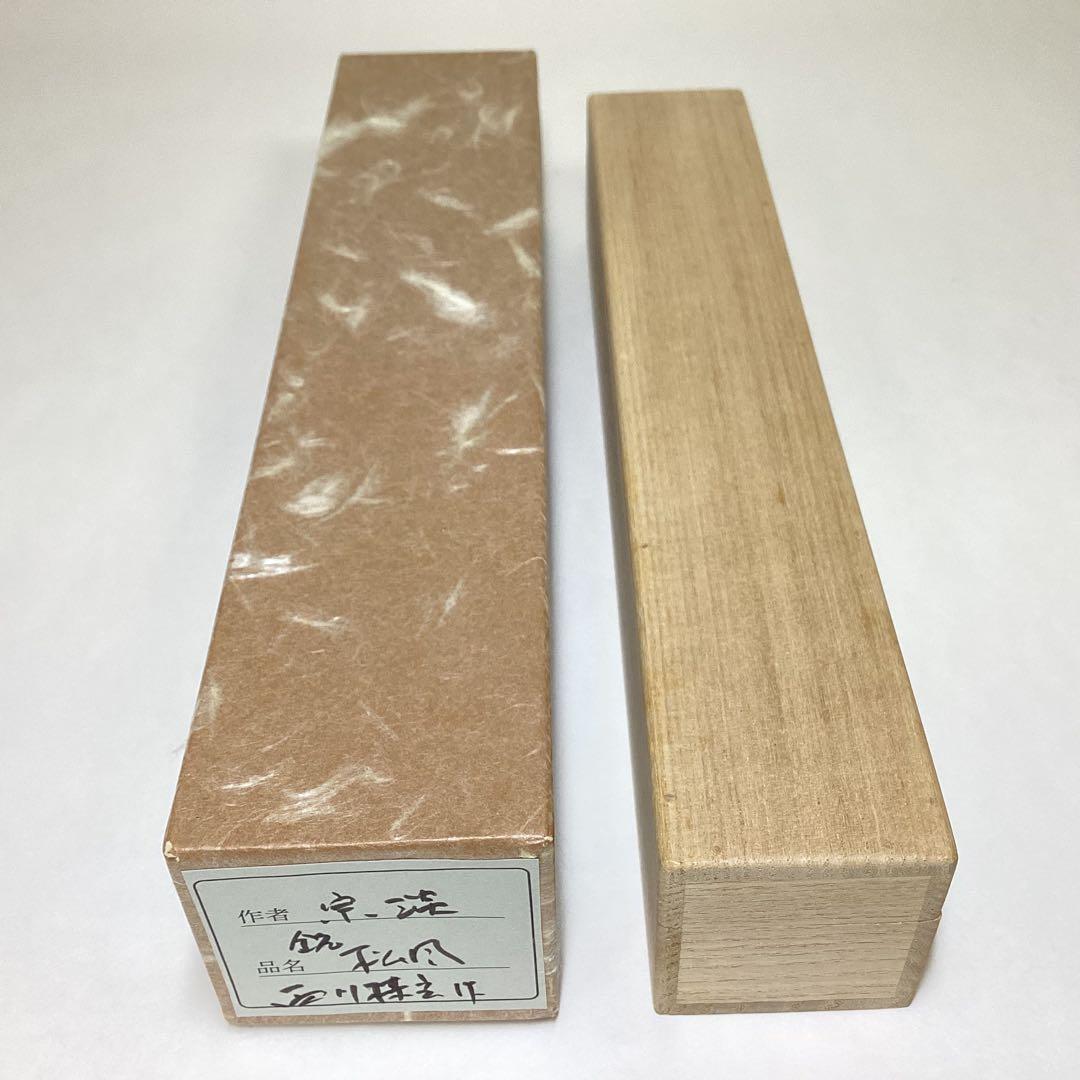
A bamboo chashaku tea scoop named Matsukaze — Wind through the Pines — bearing a Daitokuji Rinzai Zen priest inscription by Nagaya Sotan, carved by Kyoto bamboo craftsman Nishikawa Baigen. The shita-kezuri bamboo carving reveals the node at mid-shaft, a mark of formal Kyoto tea ceremony chashaku tradition. Complete with signed paulownia wood box and outer protective case, this is a named Japanese tea ceremony utensil carrying the full weight of Zen tea authorship.
🔹 [ BASIC DETAILS ]
• Inscription (銘): 松風 / Matsukaze — Wind through the Pines
• Calligraphy / Box-writing: 納屋宗淡 (Nagaya Sotan), Daitoku-ji affiliated Rinzai Zen priest
• Carving (下削り / Shita-kezuri): 西川楳玄 (Nishikawa Baigen), Kyoto bamboo craftsman
• Material: Shinchiku (natural light bamboo), single node at mid-shaft
• Dimensions: Length approx. 18.5 cm
• Storage: Inner paulownia wood box with ink calligraphy lid inscription + outer cardboard transport box
• Box inscription reads: 自作 松風 納屋 (Self-named, Matsukaze, Nagaya)
• Condition: Excellent — no cracks, no warping, clean scoop tip. Light natural patina consistent with age.
• Origin: Kyoto, Japan
• Era: Estimated post-2000 (contemporary Sotan period)
🔹 [ CULTURAL & ARTISTIC INSIGHT ]
In Japanese tea ceremony, the chashaku is the most intimate of all utensils — held in the hand at the moment matcha meets bowl. A named chashaku (銘入り茶杓) carries something beyond function: a poetic act compressed into bamboo. The name 松風 (Matsukaze) evokes the classical tea aesthetic of wind passing through pine branches, which Sen no Rikyu famously equated with the sound of water just beginning to boil in the iron kettle — that threshold moment before tea is born. When a Zen priest of the Daitoku-ji tradition writes a chashaku's name in his own hand, the bamboo ceases to be a tool. It becomes a vessel of transmission.
The sound of wind through pines does not announce itself. It is simply there — and then it has passed.
🔹 [ DEEP-DIVE COMMENTARY ]
The chashaku holds a singular place in the Zen aesthetic of tea. Unlike the tea bowl, which speaks through form and glaze, the chashaku speaks through restraint — a single piece of bamboo, shaped by hand, carrying a name chosen by a person of authority within the tea world. The tradition of Zen priests inscribing chashaku with poetic names (銘 / mei) originates in the Daitoku-ji temple complex in Kyoto, the spiritual center of Rinzai Zen and the school of tea that shaped Rikyu himself. A priest's inscription is not merely decorative — it is a transfer of cultural weight, a certification that this object has passed through a mind trained to perceive quality in silence.
納屋宗淡 (Nagaya Sotan) carries a name within a lineage that connects directly to the Daitoku-ji world. The title 宗淡 is a formal tea name, and its association with the Daitoku-ji tradition places this chashaku within a specific geography of authority: Kyoto, Rinzai, the sub-temples that have housed tea masters for five centuries. The box inscription 「自作 松風 納屋」— "self-named, Matsukaze, Nagaya" — follows the precise convention of authenticated named chashaku: the creator of the name declares it as their own poetic act.
The carving was entrusted to 西川楳玄 (Nishikawa Baigen), a Kyoto craftsman known for the discipline of 下削り (shita-kezuri) — the technique of carving from beneath the bamboo's surface, thinning the wall while preserving its natural outer skin. The result is a chashaku of structural honesty: nothing is hidden, nothing added. The node (fushi) sits at the mid-shaft in the formal Kyoto style — a deliberate compositional choice that gives the piece its characteristic angular silhouette and allows the scoop end to rise with quiet precision.
The bamboo is shinchiku — natural, unhardened, pale gold. It has not been smoked or stained. Against the warm ink of Sotan's calligraphy on the paulownia box, this paleness reads as deliberate restraint: the object does not seek attention. It holds it.
Matsukaze as a tea name has traveled centuries. It appears in the Noh drama, in renga poetry, in the wabi tea writings of Rikyu's disciples. Its use here is not nostalgic — it is a precise act of placement. The priest knew exactly what he was naming, and why.
🔹 [ JAPANESE DESCRIPTION / 日本語解説 ]
大徳寺派に連なる臨済宗の茶人・納屋宗淡が銘を揮毫し、京都の竹細工師・西川楳玄が下削りを施した茶杓「松風」。竹のしなやかさと禅の眼が交わる一品です。
銘「松風」は、松の梢を渡る風の音——茶の湯においては、釜の湯が沸き立つ直前のあの閾値の音に重ねられてきた、古典的な茶美の言葉です。利休もまた松風を愛でた。その名を自ら記した宗淡の書は、箱蓋に「自作 松風 納屋」と力強く刻まれており、命名の主体性と茶人としての矜持が滲み出ています。
西川楳玄による下削りは、竹の肌を残しながら内側から丁寧に肉を削り出す技法。節(節)は軸の中央に置かれ、京都式正式茶杓の様式美を体現しています。先端の掬い部は静かに持ち上がり、余分な主張を一切持たない。
桐木地の内箱には墨書の銘が記され、外側には保護用の台紙箱が付属。保存状態は良好で、割れや反りは見られません。自然な経年による風合いが、この茶杓の時間的な深みを静かに示しています。
茶道具として現役で使用できる水準であり、また飾り道具・床の間の添え物としても格のある一品です。
🔹 [ SHIPPING & PACKAGING ]
• Dispatch: Within 1-6 business days
• Carrier: Japan Post EMS / UPS (with tracking)
• Packaging: Carefully wrapped with protective materials
🔹 [ BASIC DETAILS ]
• Inscription (銘): 松風 / Matsukaze — Wind through the Pines
• Calligraphy / Box-writing: 納屋宗淡 (Nagaya Sotan), Daitoku-ji affiliated Rinzai Zen priest
• Carving (下削り / Shita-kezuri): 西川楳玄 (Nishikawa Baigen), Kyoto bamboo craftsman
• Material: Shinchiku (natural light bamboo), single node at mid-shaft
• Dimensions: Length approx. 18.5 cm
• Storage: Inner paulownia wood box with ink calligraphy lid inscription + outer cardboard transport box
• Box inscription reads: 自作 松風 納屋 (Self-named, Matsukaze, Nagaya)
• Condition: Excellent — no cracks, no warping, clean scoop tip. Light natural patina consistent with age.
• Origin: Kyoto, Japan
• Era: Estimated post-2000 (contemporary Sotan period)
🔹 [ CULTURAL & ARTISTIC INSIGHT ]
In Japanese tea ceremony, the chashaku is the most intimate of all utensils — held in the hand at the moment matcha meets bowl. A named chashaku (銘入り茶杓) carries something beyond function: a poetic act compressed into bamboo. The name 松風 (Matsukaze) evokes the classical tea aesthetic of wind passing through pine branches, which Sen no Rikyu famously equated with the sound of water just beginning to boil in the iron kettle — that threshold moment before tea is born. When a Zen priest of the Daitoku-ji tradition writes a chashaku's name in his own hand, the bamboo ceases to be a tool. It becomes a vessel of transmission.
The sound of wind through pines does not announce itself. It is simply there — and then it has passed.
🔹 [ DEEP-DIVE COMMENTARY ]
The chashaku holds a singular place in the Zen aesthetic of tea. Unlike the tea bowl, which speaks through form and glaze, the chashaku speaks through restraint — a single piece of bamboo, shaped by hand, carrying a name chosen by a person of authority within the tea world. The tradition of Zen priests inscribing chashaku with poetic names (銘 / mei) originates in the Daitoku-ji temple complex in Kyoto, the spiritual center of Rinzai Zen and the school of tea that shaped Rikyu himself. A priest's inscription is not merely decorative — it is a transfer of cultural weight, a certification that this object has passed through a mind trained to perceive quality in silence.
納屋宗淡 (Nagaya Sotan) carries a name within a lineage that connects directly to the Daitoku-ji world. The title 宗淡 is a formal tea name, and its association with the Daitoku-ji tradition places this chashaku within a specific geography of authority: Kyoto, Rinzai, the sub-temples that have housed tea masters for five centuries. The box inscription 「自作 松風 納屋」— "self-named, Matsukaze, Nagaya" — follows the precise convention of authenticated named chashaku: the creator of the name declares it as their own poetic act.
The carving was entrusted to 西川楳玄 (Nishikawa Baigen), a Kyoto craftsman known for the discipline of 下削り (shita-kezuri) — the technique of carving from beneath the bamboo's surface, thinning the wall while preserving its natural outer skin. The result is a chashaku of structural honesty: nothing is hidden, nothing added. The node (fushi) sits at the mid-shaft in the formal Kyoto style — a deliberate compositional choice that gives the piece its characteristic angular silhouette and allows the scoop end to rise with quiet precision.
The bamboo is shinchiku — natural, unhardened, pale gold. It has not been smoked or stained. Against the warm ink of Sotan's calligraphy on the paulownia box, this paleness reads as deliberate restraint: the object does not seek attention. It holds it.
Matsukaze as a tea name has traveled centuries. It appears in the Noh drama, in renga poetry, in the wabi tea writings of Rikyu's disciples. Its use here is not nostalgic — it is a precise act of placement. The priest knew exactly what he was naming, and why.
🔹 [ JAPANESE DESCRIPTION / 日本語解説 ]
大徳寺派に連なる臨済宗の茶人・納屋宗淡が銘を揮毫し、京都の竹細工師・西川楳玄が下削りを施した茶杓「松風」。竹のしなやかさと禅の眼が交わる一品です。
銘「松風」は、松の梢を渡る風の音——茶の湯においては、釜の湯が沸き立つ直前のあの閾値の音に重ねられてきた、古典的な茶美の言葉です。利休もまた松風を愛でた。その名を自ら記した宗淡の書は、箱蓋に「自作 松風 納屋」と力強く刻まれており、命名の主体性と茶人としての矜持が滲み出ています。
西川楳玄による下削りは、竹の肌を残しながら内側から丁寧に肉を削り出す技法。節(節)は軸の中央に置かれ、京都式正式茶杓の様式美を体現しています。先端の掬い部は静かに持ち上がり、余分な主張を一切持たない。
桐木地の内箱には墨書の銘が記され、外側には保護用の台紙箱が付属。保存状態は良好で、割れや反りは見られません。自然な経年による風合いが、この茶杓の時間的な深みを静かに示しています。
茶道具として現役で使用できる水準であり、また飾り道具・床の間の添え物としても格のある一品です。
🔹 [ SHIPPING & PACKAGING ]
• Dispatch: Within 1-6 business days
• Carrier: Japan Post EMS / UPS (with tracking)
• Packaging: Carefully wrapped with protective materials
Quantity
Couldn't load pickup availability
Low stock: 1 left
View full details