1
/
of
9
Bamboo Chashaku Tea Scoop Matsukaze — Fujii Kaido 515th Abbot Daitoku-ji
Bamboo Chashaku Tea Scoop Matsukaze — Fujii Kaido 515th Abbot Daitoku-ji
Regular price
Dhs. 871.00 AED
Regular price
Sale price
Dhs. 871.00 AED
Taxes included.
Shipping calculated at checkout.
A bamboo tea scoop bearing the inscription of Fujii Kaido, 515th abbot of Daitoku-ji — the Rinzai Zen monastery that shaped Japanese tea ceremony from Sen no Rikyu onward. The name "Matsukaze" (wind through the pines) was carved by the abbot's own hand. The bamboo form itself was shitazukuri-finished by Kyoto craftsman Nishikawa Baigen, whose signature appears on the base of the tomobako. This is a chashaku with two named authors: a lineage and a hand.
🔹 [ BASIC DETAILS ]
• Artist / Calligrapher: Fujii Kaido (藤井誡堂), 515th Abbot of Daitoku-ji Zen Monastery, Kyoto
• Bamboo Craftsman: Nishikawa Baigen (西川楳玄), Kyoto — responsible for shitazukuri (下削り, lower-body shaping and finishing)
• Mei (銘 / Poetic Name): 松風 (Matsukaze — Wind Through the Pines)
• Technique: Hand-carved bamboo; abbot's calligraphic inscription on scoop and inner box lid
• Dimensions: Length approx. 18.5 cm
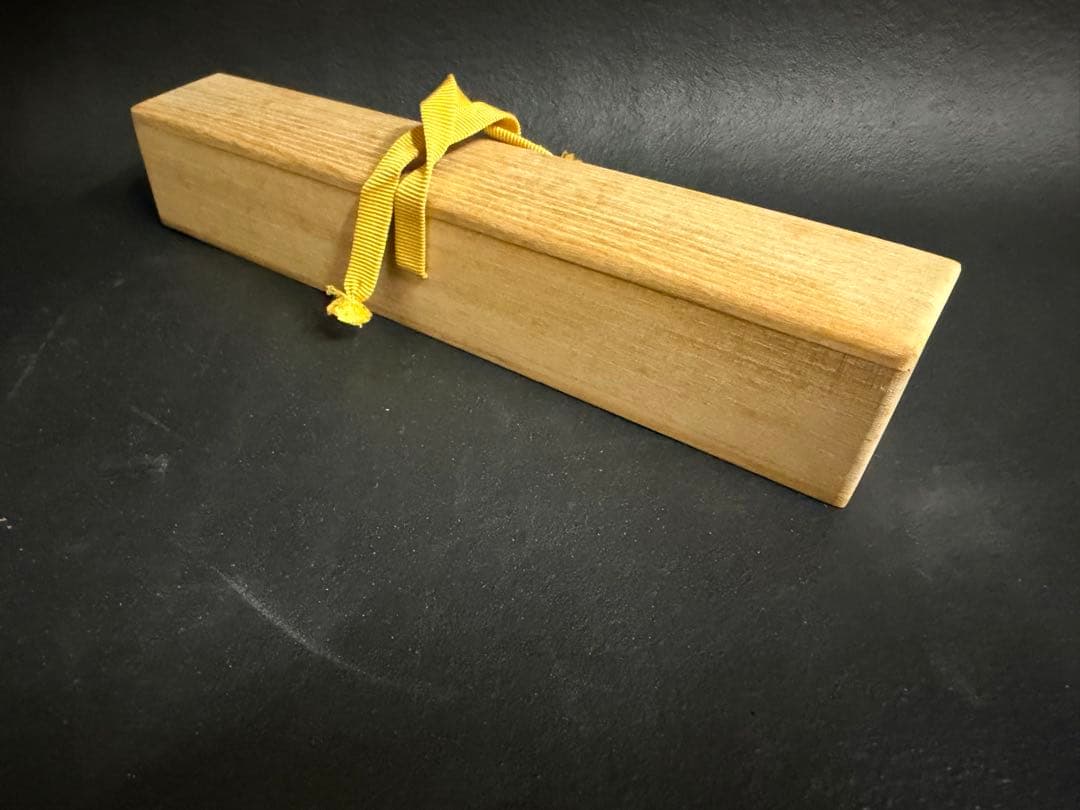
• Box: Tomobako (共箱) — paulownia wood, with calligraphy by Fujii Kaido on lid and inner lid; Nishikawa Baigen's signature and seal on box base
• Condition: Excellent. Bamboo is clean with no cracks, splits, or discoloration. Box is intact and sturdy. Minor age-appropriate patination consistent with careful storage.
• Era: Estimated 1990s–2006 (within Fujii Kaido's tenure as abbot)
🔹 [ CULTURAL & ARTISTIC INSIGHT ]
Daitoku-ji (大徳寺) in northern Kyoto is not merely a Zen monastery — it is the institution most deeply entwined with the history of Japanese tea. Sen no Rikyu served as its patron; Toyotomi Hideyoshi severed ties with it over a statue; generations of the greatest chajin are buried within its sub-temples. The 515th abbot's inscription on a chashaku is therefore not a decorative gesture but a continuation of a living tradition — a thread running from the 16th century into the present. Matsukaze, the wind through the pines, is among the most enduring poetic images in Japanese aesthetics: it is sound without source, presence without form. To give this name to a tea scoop is to suggest that the act of scooping matcha carries the same quality — a movement that leaves no trace except in the bowl.
🔹 [ DEEP-DIVE COMMENTARY ]
The chashaku occupies a singular position among tea utensils. Unlike the tea bowl, which receives and displays, or the chakin, which serves and disappears, the chashaku acts — it moves. And because it moves in the most intimate moment of tea preparation, the energy inscribed in it matters. A chashaku with a mei is not merely named; it is completed. The poetic name functions as the object's inner voice, audible only to those who know to listen.
Fujii Kaido's role as the 515th abbot of Daitoku-ji places him within one of the longest unbroken institutional lineages in Rinzai Zen. Daitoku-ji abbots do not inscribe chashaku casually. When they do, the inscription carries the weight of the lineage behind it — a lineage that includes Ikkyu Sojun, who reformed the monastery in the 15th century, and the entire tradition of Daitoku-ji-style chanoyu that Rikyu helped systematize. The calligraphy visible on this scoop and its box lid is bold, controlled, and unhurried — the brushwork of someone who has written ten thousand characters in zazen.
Nishikawa Baigen's contribution is equally significant, though it operates in a different register. The shitazukuri technique — the careful thinning and shaping of the lower portion of the bamboo shaft — is what gives a chashaku its balance and responsiveness in the hand. A poorly shitazukuri-finished scoop will feel rigid or imprecise; a master's finishing makes the bamboo feel alive. Baigen's signature on the base of the tomobako signals that the physical object meets the standard the inscription deserves. This is a collaboration across disciplines: Zen authority and bamboo craft, inscription and form.
The tomobako itself is documentary evidence of the scoop's authenticity. The paulownia lid carries the mei and the abbot's seal; the inner lid repeats the inscription; the base bears Baigen's mark. Taken together, these constitute what collectors call a fully documented chashaku — one where provenance is built into the object itself rather than appended to it. In the chashaku tradition, this level of documentation is the apex.
For the practitioner of chado, using a chashaku inscribed by a Daitoku-ji abbot is a form of participation in lineage. The act of measuring matcha with Fujii Kaido's Matsukaze connects the tea that is being prepared to every bowl prepared in Daitoku-ji's history. This is not nostalgia. It is the specific gravity that makes tea ceremony distinct from mere tea drinking.
🔹 [ 日本語解説 ]
【大徳寺住職の揮毫と京都職人の技——二つの名が宿る茶杓】
藤井誡堂第515世と西川楳玄による共作。銘「松風」の毅然とした筆跡と、下削りの精緻な仕上げが、茶杓という小さな道具に茶の湯の歴史的深度を与えている。共箱完品。
・長さ約18.5cm。竹は清潔でひび割れなし。桐製共箱の蓋・内蓋に誡堂の筆、箱底に楳玄の落款。大徳寺の法灯と京都竹工の技が一本の茶杓に結実した、茶道コレクターに相応しい逸品。
🔹 [ SHIPPING & PACKAGING ]
• Dispatch: Within 1-6 business days
• Carrier: Japan Post EMS / UPS (with tracking)
• Packaging: Carefully wrapped with protective materials
🔹 [ BASIC DETAILS ]
• Artist / Calligrapher: Fujii Kaido (藤井誡堂), 515th Abbot of Daitoku-ji Zen Monastery, Kyoto
• Bamboo Craftsman: Nishikawa Baigen (西川楳玄), Kyoto — responsible for shitazukuri (下削り, lower-body shaping and finishing)
• Mei (銘 / Poetic Name): 松風 (Matsukaze — Wind Through the Pines)
• Technique: Hand-carved bamboo; abbot's calligraphic inscription on scoop and inner box lid
• Dimensions: Length approx. 18.5 cm
• Box: Tomobako (共箱) — paulownia wood, with calligraphy by Fujii Kaido on lid and inner lid; Nishikawa Baigen's signature and seal on box base
• Condition: Excellent. Bamboo is clean with no cracks, splits, or discoloration. Box is intact and sturdy. Minor age-appropriate patination consistent with careful storage.
• Era: Estimated 1990s–2006 (within Fujii Kaido's tenure as abbot)
🔹 [ CULTURAL & ARTISTIC INSIGHT ]
Daitoku-ji (大徳寺) in northern Kyoto is not merely a Zen monastery — it is the institution most deeply entwined with the history of Japanese tea. Sen no Rikyu served as its patron; Toyotomi Hideyoshi severed ties with it over a statue; generations of the greatest chajin are buried within its sub-temples. The 515th abbot's inscription on a chashaku is therefore not a decorative gesture but a continuation of a living tradition — a thread running from the 16th century into the present. Matsukaze, the wind through the pines, is among the most enduring poetic images in Japanese aesthetics: it is sound without source, presence without form. To give this name to a tea scoop is to suggest that the act of scooping matcha carries the same quality — a movement that leaves no trace except in the bowl.
🔹 [ DEEP-DIVE COMMENTARY ]
The chashaku occupies a singular position among tea utensils. Unlike the tea bowl, which receives and displays, or the chakin, which serves and disappears, the chashaku acts — it moves. And because it moves in the most intimate moment of tea preparation, the energy inscribed in it matters. A chashaku with a mei is not merely named; it is completed. The poetic name functions as the object's inner voice, audible only to those who know to listen.
Fujii Kaido's role as the 515th abbot of Daitoku-ji places him within one of the longest unbroken institutional lineages in Rinzai Zen. Daitoku-ji abbots do not inscribe chashaku casually. When they do, the inscription carries the weight of the lineage behind it — a lineage that includes Ikkyu Sojun, who reformed the monastery in the 15th century, and the entire tradition of Daitoku-ji-style chanoyu that Rikyu helped systematize. The calligraphy visible on this scoop and its box lid is bold, controlled, and unhurried — the brushwork of someone who has written ten thousand characters in zazen.
Nishikawa Baigen's contribution is equally significant, though it operates in a different register. The shitazukuri technique — the careful thinning and shaping of the lower portion of the bamboo shaft — is what gives a chashaku its balance and responsiveness in the hand. A poorly shitazukuri-finished scoop will feel rigid or imprecise; a master's finishing makes the bamboo feel alive. Baigen's signature on the base of the tomobako signals that the physical object meets the standard the inscription deserves. This is a collaboration across disciplines: Zen authority and bamboo craft, inscription and form.
The tomobako itself is documentary evidence of the scoop's authenticity. The paulownia lid carries the mei and the abbot's seal; the inner lid repeats the inscription; the base bears Baigen's mark. Taken together, these constitute what collectors call a fully documented chashaku — one where provenance is built into the object itself rather than appended to it. In the chashaku tradition, this level of documentation is the apex.
For the practitioner of chado, using a chashaku inscribed by a Daitoku-ji abbot is a form of participation in lineage. The act of measuring matcha with Fujii Kaido's Matsukaze connects the tea that is being prepared to every bowl prepared in Daitoku-ji's history. This is not nostalgia. It is the specific gravity that makes tea ceremony distinct from mere tea drinking.
🔹 [ 日本語解説 ]
【大徳寺住職の揮毫と京都職人の技——二つの名が宿る茶杓】
藤井誡堂第515世と西川楳玄による共作。銘「松風」の毅然とした筆跡と、下削りの精緻な仕上げが、茶杓という小さな道具に茶の湯の歴史的深度を与えている。共箱完品。
・長さ約18.5cm。竹は清潔でひび割れなし。桐製共箱の蓋・内蓋に誡堂の筆、箱底に楳玄の落款。大徳寺の法灯と京都竹工の技が一本の茶杓に結実した、茶道コレクターに相応しい逸品。
🔹 [ SHIPPING & PACKAGING ]
• Dispatch: Within 1-6 business days
• Carrier: Japan Post EMS / UPS (with tracking)
• Packaging: Carefully wrapped with protective materials
Quantity
Couldn't load pickup availability
Low stock: 1 left
View full details