1
/
of
9
Bamboo Chashaku Tea Scoop by Daitokuji Zuikōin Sōgen - Mei Shunshō
Bamboo Chashaku Tea Scoop by Daitokuji Zuikōin Sōgen - Mei Shunshō
Regular price
Dhs. 996.00 AED
Regular price
Sale price
Dhs. 996.00 AED
Taxes included.
Shipping calculated at checkout.
Experience Authentic Japan Art with this Japanese Tea Scoop Chashaku. This Zen Priest Carved Bamboo scoop by Sōgen of Daitokuji Zuikōin serves as a Daitokuji Temple Craft of profound cultural weight. A Bamboo Tea Ceremony Tool inscribed with the mei Shunshō — Spring Evening — this Zen Calligraphy Tea Art piece carries the presence of Rinzai Zen tradition. An archive-worthy Kyoto Zen Temple Art object and a meaningful Wabi Sabi Tea Utensil for collectors who recognize authorship. This Spring Evening Tea Scoop embodies the emotional silence of a Zen Master Tea Gift, standing as a Japanese Bamboo Artwork of quiet continuity.
🔹 [ Basic Details ]
• Artist: Sōgen (宗源), Zen Priest of Zuikōin (瑞光院), Daitokuji, Kyoto
• Technique: Hand-carved bamboo (take)
• Mei (Poetic Name): 春宵 — Shunshō (Spring Evening)
• Era: Contemporary (Heisei period)
• Origin: Kyoto, Japan
• Dimensions: Length approx. 18.5 cm
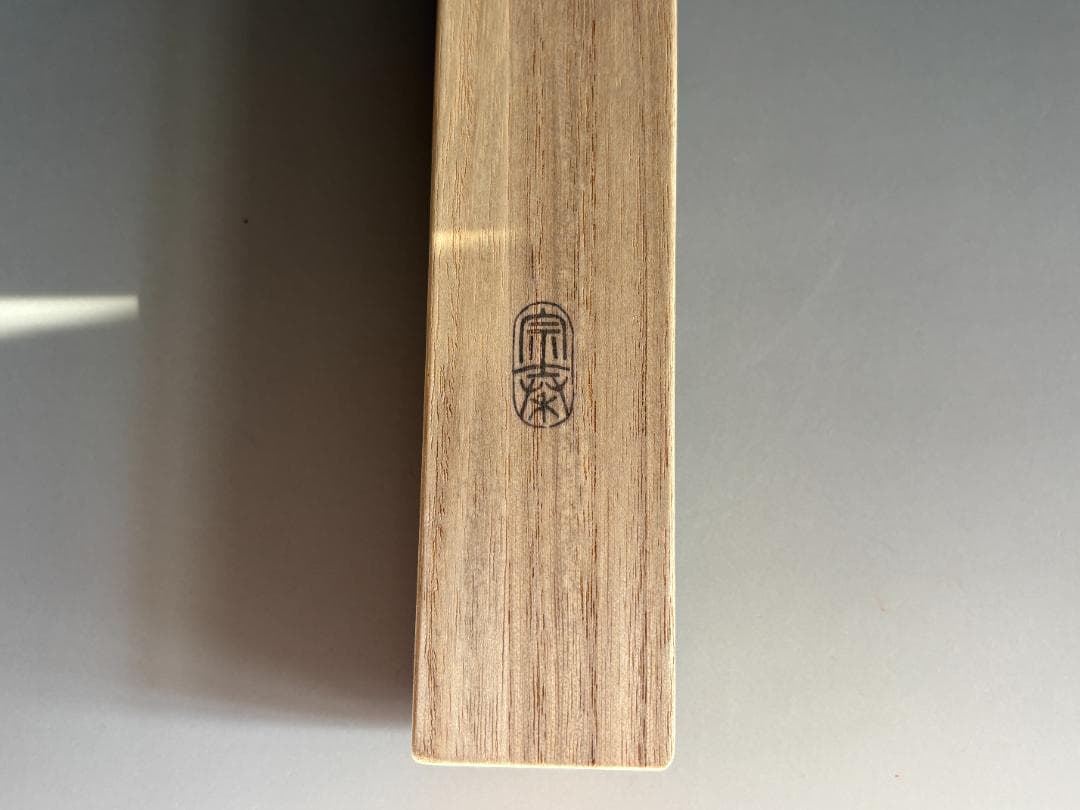
• Box: Paulownia tomobako with bold calligraphy inscription and carved seal
• Tube: Bamboo tomotsutsu inscribed 春宵
• Condition: Pale golden bamboo in clean condition. Smooth kaishaku (scoop tip) with gentle upward curve. Bamboo node (fushi) near center. Complete set.
🔹 [ Cultural & Artistic Insight ]
The chashaku is the most intimate implement in tea. Carved by a single hand, named by a single mind, it carries the maker's breath more directly than any other utensil in the tearoom.
Sōgen is a Zen priest of Zuikōin, a sub-temple within the Daitokuji compound in Kyoto. Daitokuji's relationship with tea culture extends to the era of Murata Jukō and deepened through Ikkyū Sōjun, Sen no Rikyū, and Kobori Enshū. A chashaku from this lineage is not merely a tool. It is a transmission.
The mei Shunshō — Spring Evening — echoes the famous line by Su Shi: "A moment of spring evening is worth a thousand pieces of gold." The name does not describe the scoop. It offers a season, an hour, a quality of light.
Pale bamboo holds time differently. It darkens with use, with years, with the warmth of tea.
🔹 [ Deep-Dive Commentary ]
Among all chanoyu implements, the chashaku holds a singular status: it is the one object a tea practitioner is expected to carve themselves. When a Zen priest carves a chashaku and bestows a mei, the act bridges zazen and tea — two disciplines that share the same root in attention.
Zuikōin (瑞光院) was founded in the Momoyama period and maintains the contemplative character of Daitokuji's north precinct. Priests of this sub-temple inherit a tradition of calligraphy and craft that serves the Zen community's ceremonial life. Sōgen's hand is visible in the confident brushwork on the tomobako — bold strokes that carry the directness cultivated through years of practice.
The scoop itself shows careful material selection. The pale golden bamboo, the placement of the node near the center for structural integrity and visual balance, the gentle curve of the kaishaku — each decision reflects an understanding that simplicity is not the absence of thought but its distillation.
Complete sets — tomobako, tomotsutsu, and chashaku — preserve the full gesture of the maker. The box inscription anchors provenance. The bamboo tube protects the scoop across decades. Together, they form a single statement.
For collectors of Zen-lineage tea utensils, a chashaku from Daitokuji carries a weight that transcends the object. It is a point of contact with a living tradition — one that has shaped Japanese aesthetics for over five centuries.
[ JAPANESE DESCRIPTION / 日本語解説 ]
🔹 [ 基本情報 ]
• 作家: 宗源(大徳寺瑞光院)
• 技法: 竹(手削り)
• 銘: 春宵(しゅんしょう)
• 時代: 現代(平成期)
• 産地: 京都、日本
• 寸法: 長さ約18.5cm
• 箱: 桐共箱(墨書・彫印)
• 筒: 竹共筒(「春宵」刻銘)
• 状態: 淡い金色の竹肌、清浄。櫂先は滑らかで穏やかな反り。節は中央付近。共箱・共筒揃い完品。
🔹 [ 文化的・芸術的背景 ]
茶杓は茶の湯において最も親密な道具です。一人の手で削られ、一人の心で命名される——茶室のいかなる器物よりも直接に、作り手の息吹を伝えます。
宗源師は京都・大徳寺塔頭瑞光院の禅僧。大徳寺と茶の湯の関わりは村田珠光の時代に始まり、一休宗純、千利休、小堀遠州を経て深まりました。この法脈から生まれた茶杓は、単なる道具ではなく、一つの伝承です。
銘「春宵」は蘇軾の名句「春宵一刻値千金」を響かせます。この銘は茶杓を描写するのではなく、季節と時刻と光の質を差し出しています。
淡い竹は、時間を独自の仕方で宿します。使い込むほどに、年を経るほどに、茶の温もりとともに深みを増してゆきます。
🔹 [ 深掘り解説 ]
茶の湯の道具のなかで、茶杓は唯一、茶人が自ら削ることを期待される器物です。禅僧が茶杓を削り銘を授ける行為は、坐禅と茶——注意という同じ根を分かつ二つの修行を架橋します。
瑞光院は桃山期の創建で、大徳寺北域の静謐な性格を今に伝えます。この塔頭の僧侶は、禅林の儀礼生活に資する書と手仕事の伝統を受け継いでいます。宗源師の筆致は共箱に明らかです——長年の修行で培われた直截さが、力強い運筆に表れています。
茶杓本体には、丁寧な素材選びが見て取れます。淡い金竹、構造的強度と視覚的均衡を兼ねた節の配置、櫂先の穏やかな曲線——一つひとつの判断が、簡素とは思考の不在ではなくその蒸留であることを物語っています。
共箱・共筒・茶杓の揃いは、作り手の意志の全体を保存します。箱の墨書が来歴を裏付け、竹筒が茶杓を数十年にわたって守ります。三つ揃って、一つの声明をなしています。
🔹 [ SHIPPING & PACKAGING ]
• Dispatch: Within 1-6 business days
• Carrier: Japan Post EMS / UPS (with tracking)
• Packaging: Carefully wrapped with protective materials
🔹 [ Basic Details ]
• Artist: Sōgen (宗源), Zen Priest of Zuikōin (瑞光院), Daitokuji, Kyoto
• Technique: Hand-carved bamboo (take)
• Mei (Poetic Name): 春宵 — Shunshō (Spring Evening)
• Era: Contemporary (Heisei period)
• Origin: Kyoto, Japan
• Dimensions: Length approx. 18.5 cm
• Box: Paulownia tomobako with bold calligraphy inscription and carved seal
• Tube: Bamboo tomotsutsu inscribed 春宵
• Condition: Pale golden bamboo in clean condition. Smooth kaishaku (scoop tip) with gentle upward curve. Bamboo node (fushi) near center. Complete set.
🔹 [ Cultural & Artistic Insight ]
The chashaku is the most intimate implement in tea. Carved by a single hand, named by a single mind, it carries the maker's breath more directly than any other utensil in the tearoom.
Sōgen is a Zen priest of Zuikōin, a sub-temple within the Daitokuji compound in Kyoto. Daitokuji's relationship with tea culture extends to the era of Murata Jukō and deepened through Ikkyū Sōjun, Sen no Rikyū, and Kobori Enshū. A chashaku from this lineage is not merely a tool. It is a transmission.
The mei Shunshō — Spring Evening — echoes the famous line by Su Shi: "A moment of spring evening is worth a thousand pieces of gold." The name does not describe the scoop. It offers a season, an hour, a quality of light.
Pale bamboo holds time differently. It darkens with use, with years, with the warmth of tea.
🔹 [ Deep-Dive Commentary ]
Among all chanoyu implements, the chashaku holds a singular status: it is the one object a tea practitioner is expected to carve themselves. When a Zen priest carves a chashaku and bestows a mei, the act bridges zazen and tea — two disciplines that share the same root in attention.
Zuikōin (瑞光院) was founded in the Momoyama period and maintains the contemplative character of Daitokuji's north precinct. Priests of this sub-temple inherit a tradition of calligraphy and craft that serves the Zen community's ceremonial life. Sōgen's hand is visible in the confident brushwork on the tomobako — bold strokes that carry the directness cultivated through years of practice.
The scoop itself shows careful material selection. The pale golden bamboo, the placement of the node near the center for structural integrity and visual balance, the gentle curve of the kaishaku — each decision reflects an understanding that simplicity is not the absence of thought but its distillation.
Complete sets — tomobako, tomotsutsu, and chashaku — preserve the full gesture of the maker. The box inscription anchors provenance. The bamboo tube protects the scoop across decades. Together, they form a single statement.
For collectors of Zen-lineage tea utensils, a chashaku from Daitokuji carries a weight that transcends the object. It is a point of contact with a living tradition — one that has shaped Japanese aesthetics for over five centuries.
[ JAPANESE DESCRIPTION / 日本語解説 ]
🔹 [ 基本情報 ]
• 作家: 宗源(大徳寺瑞光院)
• 技法: 竹(手削り)
• 銘: 春宵(しゅんしょう)
• 時代: 現代(平成期)
• 産地: 京都、日本
• 寸法: 長さ約18.5cm
• 箱: 桐共箱(墨書・彫印)
• 筒: 竹共筒(「春宵」刻銘)
• 状態: 淡い金色の竹肌、清浄。櫂先は滑らかで穏やかな反り。節は中央付近。共箱・共筒揃い完品。
🔹 [ 文化的・芸術的背景 ]
茶杓は茶の湯において最も親密な道具です。一人の手で削られ、一人の心で命名される——茶室のいかなる器物よりも直接に、作り手の息吹を伝えます。
宗源師は京都・大徳寺塔頭瑞光院の禅僧。大徳寺と茶の湯の関わりは村田珠光の時代に始まり、一休宗純、千利休、小堀遠州を経て深まりました。この法脈から生まれた茶杓は、単なる道具ではなく、一つの伝承です。
銘「春宵」は蘇軾の名句「春宵一刻値千金」を響かせます。この銘は茶杓を描写するのではなく、季節と時刻と光の質を差し出しています。
淡い竹は、時間を独自の仕方で宿します。使い込むほどに、年を経るほどに、茶の温もりとともに深みを増してゆきます。
🔹 [ 深掘り解説 ]
茶の湯の道具のなかで、茶杓は唯一、茶人が自ら削ることを期待される器物です。禅僧が茶杓を削り銘を授ける行為は、坐禅と茶——注意という同じ根を分かつ二つの修行を架橋します。
瑞光院は桃山期の創建で、大徳寺北域の静謐な性格を今に伝えます。この塔頭の僧侶は、禅林の儀礼生活に資する書と手仕事の伝統を受け継いでいます。宗源師の筆致は共箱に明らかです——長年の修行で培われた直截さが、力強い運筆に表れています。
茶杓本体には、丁寧な素材選びが見て取れます。淡い金竹、構造的強度と視覚的均衡を兼ねた節の配置、櫂先の穏やかな曲線——一つひとつの判断が、簡素とは思考の不在ではなくその蒸留であることを物語っています。
共箱・共筒・茶杓の揃いは、作り手の意志の全体を保存します。箱の墨書が来歴を裏付け、竹筒が茶杓を数十年にわたって守ります。三つ揃って、一つの声明をなしています。
🔹 [ SHIPPING & PACKAGING ]
• Dispatch: Within 1-6 business days
• Carrier: Japan Post EMS / UPS (with tracking)
• Packaging: Carefully wrapped with protective materials
Quantity
Couldn't load pickup availability
Out of stock
View full details