1
/
of
18
Bamboo Chashaku — Mei 'Chiyo no Tomo' by Sōsai, Inscribed by Maeda Shōdō of Daisen-in, Daitoku-ji
Bamboo Chashaku — Mei 'Chiyo no Tomo' by Sōsai, Inscribed by Maeda Shōdō of Daisen-in, Daitoku-ji
Regular price
Dhs. 865.00 AED
Regular price
Sale price
Dhs. 865.00 AED
Taxes included.
Shipping calculated at checkout.
Experience Authentic Japan Art with this Japanese Tea Ceremony Chashaku. This Bamboo Tea Scoop serves as a Daitoku-ji Inscription piece and Chado Utensil, featuring Aged Bamboo Craftsmanship and a Zen Tea Practice object—a natural object for any Art Collector, Tea Ceremony Collector, or student of Wabi Tea Aesthetics drawn to Fushi Node Bamboo and the presence of a Named Mei Chashaku.
🔹 [ BASIC DETAILS ]
• Artist: Sōsai (宗斎); inscription (kakitsuke) by Maeda Shōdō (前田昌道), head priest of Daisen-in, Murasakino, Kyoto
• Technique: Hand-carved aged bamboo chashaku; mei carved into shaft; kakitsuke ink inscription on komatsu-zutsu
• Era: 2000 – 2006 (estimated)
• Origin: Japan; inscribed at Daisen-in, Daitoku-ji (founded 1509)
• Dimensions: Length approx. 18.5 cm
• Box: Komatsu-zutsu (square-section bamboo tube) with bold calligraphic inscription; tomobako (signed wooden box) with shippo-tsunagi patterned cloth wrapping
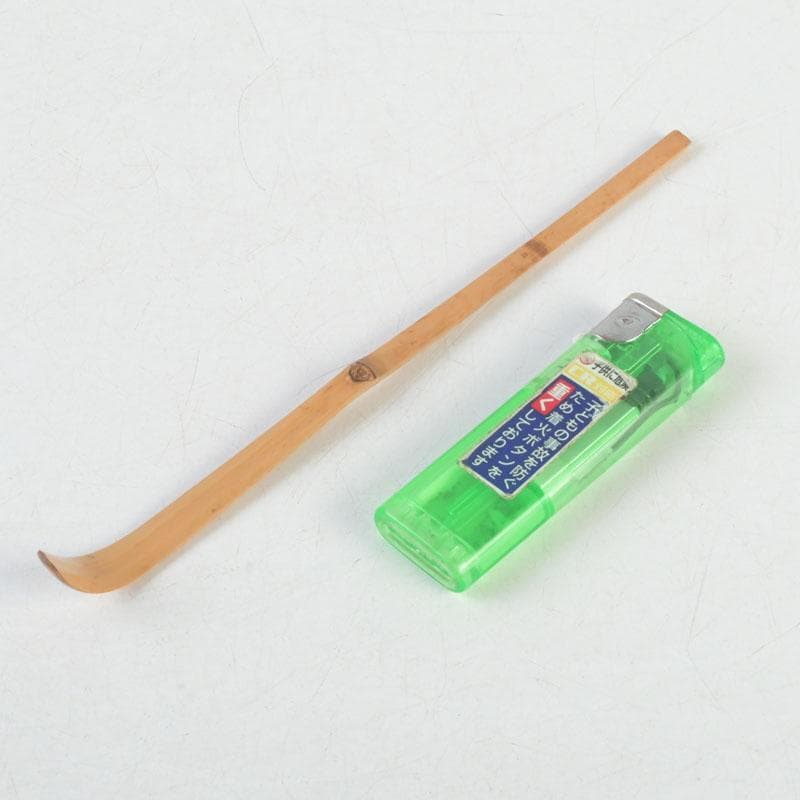
• Condition: Excellent. Warm honey-gold aged patina throughout. Scoop end clean and intact, no chips or cracks. Small natural bamboo marking near the bend — inherent to the material. Mid-shaft fushi (node) prominent and intact.
🔹 [ CULTURAL & ARTISTIC INSIGHT ]
The chashaku is perhaps the most intimate object in chado. Held in one hand while the other grasps the natsume, it moves once — a slow arc into the tea — and is set down. No other utensil carries that brevity with such weight. This example by Sōsai holds a mei, 千代の友 — Chiyo no Tomo, "Companion of a Thousand Years." The phrase draws from classical waka: chiyo, an image of endless duration borrowed from the pine and the crane, paired with tomo, a friend who persists beyond season and circumstance. It is not a romantic sentiment. It is a declaration about what endures.
The kakitsuke inscription on the komatsu-zutsu is by Maeda Shōdō, head priest of Daisen-in — a sub-temple of Daitoku-ji in Murasakino, Kyoto, founded in 1509. Daisen-in has been a site of chajin formation for five centuries. Its garden, a masterwork of dry landscape composition, embodies the same economy of means that governs chado: maximum presence from minimum material. For a priest of Daisen-in to inscribe a chashaku is not decoration. It is a certification of intent — that this object has been received into a lineage of attention.
A scoop with this provenance does not speak loudly. It has no need to.
🔹 [ DEEP-DIVE COMMENTARY ]
The chashaku (茶杓) is a bamboo tea scoop used in the Japanese tea ceremony to measure matcha powder from the natsume or chaire into the tea bowl. Unlike thrown ceramics or lacquered wares, the chashaku is carved from a single piece of bamboo — its form entirely determined by the material's natural grain, the position of the node (fushi), and the carver's reading of both.
This piece is a fushi-ari (node-present) chashaku, with the fushi positioned at mid-shaft. The node interrupts the taper with a subtle visual weight — a pause in the line — and practitioners who study utensils read its placement as a deliberate choice in how the carver understood proportion and rest.
The komatsu-zutsu (角筒, square bamboo tube) is the traditional storage and display vessel for named chashaku. Its very shape — a square section from a naturally round material — announces craft. Sōsai's bold ink characters run across two faces of the tube: the mei on one register, the maker's identification on another. Maeda Shōdō's kakitsuke (書付, written inscription endorsement) elevates the piece to certified status within the chado tradition: a temple seal of reception.
For collectors of chado utensils, the combination of mei, komatsu-zutsu, tomobako, and temple kakitsuke represents a complete provenance chain — the object, its name, its vessel, and its witness, all present. Such complete sets are increasingly uncommon in the secondary market as boxes and tubes become separated from their chashaku over decades of use and transfer.
The honey-gold patina visible across the shaft is the natural result of bamboo aging under repeated handling and careful storage. It is not surface treatment. It is time made visible.
[ JAPANESE DESCRIPTION / 日本語解説 ]
宗斎作の茶杓「千代の友」。銘は古典和歌の世界から引かれた言葉——千年の友、時を超えて在り続けるものへの讃辞である。単なる銘では終わらない。この茶杓が語るのは、物の寿命ではなく、人と器のあいだに生まれる関係の質だ。
筒は角筒(こまつづつ)。竹の丸みを角に整えた手仕事そのものが、すでに静かな緊張を持っている。宗斎の筆による銘と落款が二面にわたって記され、紫野・大仙院住職・前田昌道師の書付がある。大仙院は大徳寺の塔頭として1509年に創建され、茶人形成の地として五百年の歴史を持つ。住職の書付は、この茶杓がひとつの系譜のなかに受け取られたことの証しである。
竹は中節(ふし)あり。節の位置は柄の中ほど——作者が材の呼吸を読んで決めた一点である。掬い部分は平先、傷なし。全体に蜜色の経年の艶が乗り、長い年月のなかで丁寧に扱われてきたことが見て取れる。
共箱(仕覆:七宝繋ぎ)を伴う完全な状態での伝世。銘・角筒・共箱・書付の四点が揃う茶杓は、流通市場では次第に稀になりつつある。単体の美しさと、そこに連なる文脈の重さを、静かに受け取っていただきたい。
🔹 [ SHIPPING & PACKAGING ]
• Dispatch: Within 1-6 business days
• Carrier: Japan Post EMS / UPS (with tracking)
• Packaging: Carefully wrapped with protective materials
🔹 [ BASIC DETAILS ]
• Artist: Sōsai (宗斎); inscription (kakitsuke) by Maeda Shōdō (前田昌道), head priest of Daisen-in, Murasakino, Kyoto
• Technique: Hand-carved aged bamboo chashaku; mei carved into shaft; kakitsuke ink inscription on komatsu-zutsu
• Era: 2000 – 2006 (estimated)
• Origin: Japan; inscribed at Daisen-in, Daitoku-ji (founded 1509)
• Dimensions: Length approx. 18.5 cm
• Box: Komatsu-zutsu (square-section bamboo tube) with bold calligraphic inscription; tomobako (signed wooden box) with shippo-tsunagi patterned cloth wrapping
• Condition: Excellent. Warm honey-gold aged patina throughout. Scoop end clean and intact, no chips or cracks. Small natural bamboo marking near the bend — inherent to the material. Mid-shaft fushi (node) prominent and intact.
🔹 [ CULTURAL & ARTISTIC INSIGHT ]
The chashaku is perhaps the most intimate object in chado. Held in one hand while the other grasps the natsume, it moves once — a slow arc into the tea — and is set down. No other utensil carries that brevity with such weight. This example by Sōsai holds a mei, 千代の友 — Chiyo no Tomo, "Companion of a Thousand Years." The phrase draws from classical waka: chiyo, an image of endless duration borrowed from the pine and the crane, paired with tomo, a friend who persists beyond season and circumstance. It is not a romantic sentiment. It is a declaration about what endures.
The kakitsuke inscription on the komatsu-zutsu is by Maeda Shōdō, head priest of Daisen-in — a sub-temple of Daitoku-ji in Murasakino, Kyoto, founded in 1509. Daisen-in has been a site of chajin formation for five centuries. Its garden, a masterwork of dry landscape composition, embodies the same economy of means that governs chado: maximum presence from minimum material. For a priest of Daisen-in to inscribe a chashaku is not decoration. It is a certification of intent — that this object has been received into a lineage of attention.
A scoop with this provenance does not speak loudly. It has no need to.
🔹 [ DEEP-DIVE COMMENTARY ]
The chashaku (茶杓) is a bamboo tea scoop used in the Japanese tea ceremony to measure matcha powder from the natsume or chaire into the tea bowl. Unlike thrown ceramics or lacquered wares, the chashaku is carved from a single piece of bamboo — its form entirely determined by the material's natural grain, the position of the node (fushi), and the carver's reading of both.
This piece is a fushi-ari (node-present) chashaku, with the fushi positioned at mid-shaft. The node interrupts the taper with a subtle visual weight — a pause in the line — and practitioners who study utensils read its placement as a deliberate choice in how the carver understood proportion and rest.
The komatsu-zutsu (角筒, square bamboo tube) is the traditional storage and display vessel for named chashaku. Its very shape — a square section from a naturally round material — announces craft. Sōsai's bold ink characters run across two faces of the tube: the mei on one register, the maker's identification on another. Maeda Shōdō's kakitsuke (書付, written inscription endorsement) elevates the piece to certified status within the chado tradition: a temple seal of reception.
For collectors of chado utensils, the combination of mei, komatsu-zutsu, tomobako, and temple kakitsuke represents a complete provenance chain — the object, its name, its vessel, and its witness, all present. Such complete sets are increasingly uncommon in the secondary market as boxes and tubes become separated from their chashaku over decades of use and transfer.
The honey-gold patina visible across the shaft is the natural result of bamboo aging under repeated handling and careful storage. It is not surface treatment. It is time made visible.
[ JAPANESE DESCRIPTION / 日本語解説 ]
宗斎作の茶杓「千代の友」。銘は古典和歌の世界から引かれた言葉——千年の友、時を超えて在り続けるものへの讃辞である。単なる銘では終わらない。この茶杓が語るのは、物の寿命ではなく、人と器のあいだに生まれる関係の質だ。
筒は角筒(こまつづつ)。竹の丸みを角に整えた手仕事そのものが、すでに静かな緊張を持っている。宗斎の筆による銘と落款が二面にわたって記され、紫野・大仙院住職・前田昌道師の書付がある。大仙院は大徳寺の塔頭として1509年に創建され、茶人形成の地として五百年の歴史を持つ。住職の書付は、この茶杓がひとつの系譜のなかに受け取られたことの証しである。
竹は中節(ふし)あり。節の位置は柄の中ほど——作者が材の呼吸を読んで決めた一点である。掬い部分は平先、傷なし。全体に蜜色の経年の艶が乗り、長い年月のなかで丁寧に扱われてきたことが見て取れる。
共箱(仕覆:七宝繋ぎ)を伴う完全な状態での伝世。銘・角筒・共箱・書付の四点が揃う茶杓は、流通市場では次第に稀になりつつある。単体の美しさと、そこに連なる文脈の重さを、静かに受け取っていただきたい。
🔹 [ SHIPPING & PACKAGING ]
• Dispatch: Within 1-6 business days
• Carrier: Japan Post EMS / UPS (with tracking)
• Packaging: Carefully wrapped with protective materials
Quantity
Couldn't load pickup availability
Low stock: 1 left
View full details