1
/
of
7
Arita Celadon Chawan by Kajihara Shigemasa — Turquoise Aqua Glaze Wide Tea Bowl
Arita Celadon Chawan by Kajihara Shigemasa — Turquoise Aqua Glaze Wide Tea Bowl
Regular price
Dhs. 463.00 AED
Regular price
Sale price
Dhs. 463.00 AED
Taxes included.
Shipping calculated at checkout.
Kajihara Shigemasa works in Arita, where the porcelain tradition runs deep and the celadon comes out bright. This chawan is the color of shallow seawater over pale sand — a turquoise that does not cool but clarifies. The form is wide and low, a shape that invites the tea to spread, that holds the bowl stable in the hands, that asks for a kind of attention that is expansive rather than concentrated.
For collectors searching for an Arita celadon chawan, a turquoise glaze tea bowl, a Japanese aqua celadon bowl, Kajihara Shigemasa ceramics, or a wide-form chawan for tea ceremony: this piece arrives in near-new condition, having been used only once. The glaze is smooth, the crackle minimal, the surface coherent. The foot ring reveals the grey unglazed clay beneath — a note of the earth that made the bowl before the kiln changed its surface.
The artist biography leaflet that accompanies this piece is not supplementary. It is part of the work. To know who made a bowl, and why, and where — in Arita, within the porcelain tradition of Hizen Province — is to hold the bowl differently.
[ BASIC DETAILS ]
• Maker: Kajihara Shigemasa (梶原茂正)
• Technique: Arita porcelain, turquoise celadon glaze
• Form: Wide, shallow chawan
• Dimensions: D 15 cm, H 7 cm
• Condition: Near-new (used once)
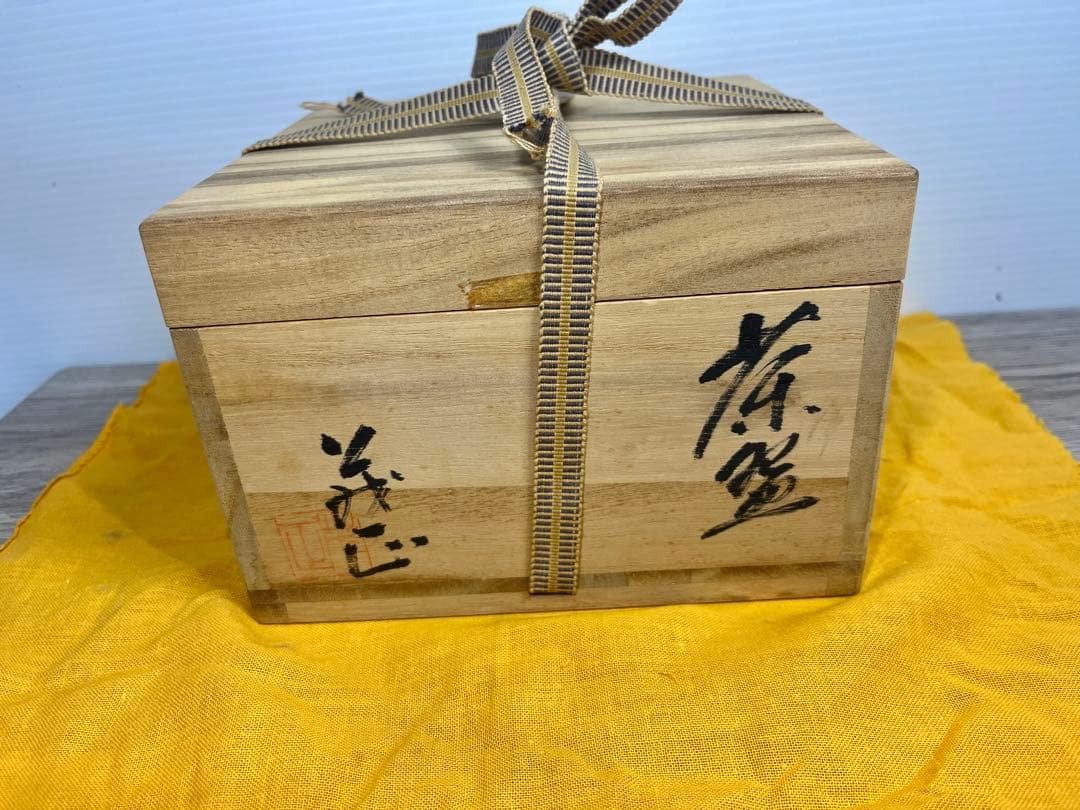
• Includes: Tomobako (artist-signed wooden box), yellow cloth, artist biography leaflet
[ CULTURAL INSIGHT ]
Arita, in Saga Prefecture, is the origin point of Japanese porcelain. When Korean potter Yi Sam-pyeong discovered kaolin clay in the Izumiyama deposit in 1616, he established the technical foundation for what would become the most internationally traded Japanese ceramic of the Edo period: Imari ware, exported through the VOC to courts and collections across Europe and Asia. Contemporary Arita potters work within and against this history simultaneously. Kajihara Shigemasa's turquoise celadon is neither the blue-and-white of the export tradition nor the quiet grey-green of the classical Chinese celadon inheritance. It occupies its own chromatic position — vivid without asserting itself, clear without being obvious.
[ DEEP-DIVE ]
The color of celadon — seiji in Japanese — is produced by iron oxide in the glaze reduced to ferrous form during kiln firing. The specific outcome depends on the iron content, the atmosphere inside the kiln, the firing temperature, and the thickness of the glaze application. Kajihara Shigemasa's turquoise is positioned at the brighter end of the seiji spectrum, closer to the aqua-green celadons of the Longquan tradition than to the grey-blue of Ru ware. For tea practitioners, a wide-form chawan in this glaze creates a particular visual experience: the tea's green surface against the bowl's turquoise interior produces a resonance between the two greens — a quiet conversation about what color means when it is made from the same mineral in different circumstances.
---
【日本語説明】
梶原茂正による有田焼の青磁茶碗。澄んだターコイズブルーの青磁釉が鮮やかで清々しい印象を与える広い浅形の茶碗です。使用は一度のみで、ほぼ新品に近いコンディションを保っています。高台には灰色の素地が見え、有田磁器の土の素直さを感じさせます。共箱・黄色仕服・作家プロフィール付き。
🔹 [ SHIPPING & PACKAGING ]
• Dispatch: Within 1-6 business days
• Carrier: Japan Post EMS / UPS (with tracking)
• Packaging: Carefully wrapped with protective materials
For collectors searching for an Arita celadon chawan, a turquoise glaze tea bowl, a Japanese aqua celadon bowl, Kajihara Shigemasa ceramics, or a wide-form chawan for tea ceremony: this piece arrives in near-new condition, having been used only once. The glaze is smooth, the crackle minimal, the surface coherent. The foot ring reveals the grey unglazed clay beneath — a note of the earth that made the bowl before the kiln changed its surface.
The artist biography leaflet that accompanies this piece is not supplementary. It is part of the work. To know who made a bowl, and why, and where — in Arita, within the porcelain tradition of Hizen Province — is to hold the bowl differently.
[ BASIC DETAILS ]
• Maker: Kajihara Shigemasa (梶原茂正)
• Technique: Arita porcelain, turquoise celadon glaze
• Form: Wide, shallow chawan
• Dimensions: D 15 cm, H 7 cm
• Condition: Near-new (used once)
• Includes: Tomobako (artist-signed wooden box), yellow cloth, artist biography leaflet
[ CULTURAL INSIGHT ]
Arita, in Saga Prefecture, is the origin point of Japanese porcelain. When Korean potter Yi Sam-pyeong discovered kaolin clay in the Izumiyama deposit in 1616, he established the technical foundation for what would become the most internationally traded Japanese ceramic of the Edo period: Imari ware, exported through the VOC to courts and collections across Europe and Asia. Contemporary Arita potters work within and against this history simultaneously. Kajihara Shigemasa's turquoise celadon is neither the blue-and-white of the export tradition nor the quiet grey-green of the classical Chinese celadon inheritance. It occupies its own chromatic position — vivid without asserting itself, clear without being obvious.
[ DEEP-DIVE ]
The color of celadon — seiji in Japanese — is produced by iron oxide in the glaze reduced to ferrous form during kiln firing. The specific outcome depends on the iron content, the atmosphere inside the kiln, the firing temperature, and the thickness of the glaze application. Kajihara Shigemasa's turquoise is positioned at the brighter end of the seiji spectrum, closer to the aqua-green celadons of the Longquan tradition than to the grey-blue of Ru ware. For tea practitioners, a wide-form chawan in this glaze creates a particular visual experience: the tea's green surface against the bowl's turquoise interior produces a resonance between the two greens — a quiet conversation about what color means when it is made from the same mineral in different circumstances.
---
【日本語説明】
梶原茂正による有田焼の青磁茶碗。澄んだターコイズブルーの青磁釉が鮮やかで清々しい印象を与える広い浅形の茶碗です。使用は一度のみで、ほぼ新品に近いコンディションを保っています。高台には灰色の素地が見え、有田磁器の土の素直さを感じさせます。共箱・黄色仕服・作家プロフィール付き。
🔹 [ SHIPPING & PACKAGING ]
• Dispatch: Within 1-6 business days
• Carrier: Japan Post EMS / UPS (with tracking)
• Packaging: Carefully wrapped with protective materials
Quantity
Couldn't load pickup availability
Low stock: 1 left
View full details