1
/
of
10
Antique Ryonyu Aka-Raku Cylindrical Tea Bowl, Signed Tsutsu Chawan Certified by Tannyu X, Edo Period Kyoto Raku Ware with Tomobako
Antique Ryonyu Aka-Raku Cylindrical Tea Bowl, Signed Tsutsu Chawan Certified by Tannyu X, Edo Period Kyoto Raku Ware with Tomobako
Regular price
Dhs. 3,165.00 AED
Regular price
Sale price
Dhs. 3,165.00 AED
Taxes included.
Shipping calculated at checkout.
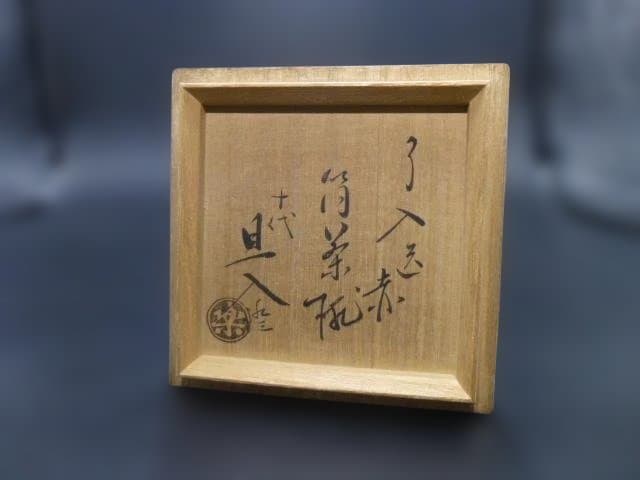
Antique Ryonyu Aka-Raku Cylindrical Tea Bowl, a tsutsu chawan shaped in the quiet hand of Raku Ryonyu IX and sealed beneath the foot with his authentic mark. A signed tsutsu chawan from Edo Period Kyoto Raku ware, accompanied by the original tomobako and a certification box inscribed by Raku Tannyu X, his son and successor. The warm reddish-orange aka-Raku glaze rises from the base into cream and beige firing variations near the rim, breathing like the winter sky over Rakuchu. An Edo period Kyoto Raku chawan carrying the density of intention that defined the ninth generation, entering the archive as a cultural weight rather than an object. Winter tea bowl, low-fired lead-glazed Kyoto ware, preserved in original paulownia wood box.
🔹 [ BASIC DETAILS ]
• Artist: Raku Ryonyu IX (1756-1834), the 9th head of the Raku family lineage
• Technique: Aka-Raku ware, hand-formed and low-fired at approximately 800°C with a lead-flux white glaze over Jurakudai clay
• Era: Late Edo period, early 19th century (circa 1800s)
• Origin: Kyoto, Japan
• Dimensions: Approximately 10.2 cm in width × 9.1 cm in height
• Box: Original tomobako (signed artist box) from Ryonyu IX, accompanied by a kiwame-bako (certification box) inscribed by the 10th head, Raku Tannyu (1795-1854)
• Condition: Intact. No chips, no cracks, no repairs. The vessel retains its original surface, seal, and presence as it left the ninth-generation kiln.
🔹 [ CULTURAL & ARTISTIC INSIGHT ]
Ryonyu IX is counted among the great revivalists of the Raku house, the generation that reawakened the lineage of Chojiro and Koetsu after a long quiet period. Inheriting the seat young, after the early death of his father Tokunyu, he carried the family forward through the late Edo renaissance of Kyoto ceramics, deepening the expression of aka-Raku with a force and assurance that still defines how the ninth generation is read today.
This vessel is a tsutsu chawan, the cylindrical winter tea bowl of the chanoyu tradition. Its tall, narrow form was shaped since the time of Sen no Rikyu to preserve warmth during the coldest months, holding the tea close to its center so that the final sip remains as warm as the first. To hold a tsutsu chawan in winter is to feel the season distilled in the palms.
The surface is aka-Raku, one of the two great glazes of Raku ware alongside kuro-Raku. Formed from Juraku clay gathered within old Kyoto and finished with a lead-flux white glaze, it is fired at a temperature far lower than most ceramics, allowing the earth itself to remain soft, breathing, close to the hand. Long ago, Chojiro shaped the first of these bowls at the request of Rikyu; Ryonyu, two centuries later, continued that quiet conversation between clay and silence.
🔹 [ DEEP-DIVE COMMENTARY ]
The Raku lineage is unlike any other ceramic house in Japan. It does not work in kilns of great fire or in factories of repetition. Each generation shapes each bowl by hand, without the wheel, and fires them one at a time in a small internal kiln, withdrawing each piece at the moment it speaks. From Chojiro in the sixteenth century, through Jokei, Donyu, and onward, the seat of head potter has passed from father to son across more than four hundred years. Ryonyu, the ninth, stands at the point where this tradition meets the refinement of the late Edo era — a moment when Kyoto ceramics reached toward both ancestral spirit and a new quiet confidence.
Jurakudai clay, drawn from the old grounds of Hideyoshi's vanished palace in central Kyoto, gives aka-Raku its particular warmth. It is a soft, porous earth that accepts the low-fire glaze without forcing it, allowing oxidation and reduction to pass through the body rather than be sealed by it. The firing, at roughly 800 degrees, is short — minutes rather than hours — and the bowl is lifted from the kiln glowing, cooled in air. This is why aka-Raku carries such a living surface: no two firings behave alike, and each vessel remembers the exact breath of its making.
In Ryonyu's hand, this process became unmistakable. His forms are grounded, his walls shaped with a quiet architectural clarity, and his glaze surfaces move between warm red, cream, and beige as the fire decides. This cylindrical bowl carries those qualities openly: a tall, unhurried silhouette, a glaze that deepens from orange near the foot to soft cream near the rim, and the subtle traces of firing where heat and air passed across the body.
Beneath the foot, the authentic Raku seal remains. Inside the original paulownia box, Ryonyu himself inscribed and sealed the vessel — a tomobako signed by the maker. Accompanying it is a second box, a kiwame-bako, inscribed by his son Raku Tannyu, the tenth generation. In the Raku house, authentication by the succeeding head carries an authority no outside appraisal can equal: it is the lineage itself confirming the lineage. To own a Ryonyu bowl certified by Tannyu is to hold the direct voice of both father and son, the ninth and tenth generations speaking together through a single winter tea bowl.
The vessel comes to the archive intact. Unbroken, unrepaired, unaltered — carrying two centuries of careful guardianship into its next quiet room.
[ JAPANESE DESCRIPTION / 日本語解説 ]
🔹 [ 基本情報 ]
・作家: 楽 九代 了入 (1756-1834)、楽家九代目当主
・技法: 赤楽、手捏ね成形、聚楽土に鉛白釉、約800°Cの低温焼成
・時代: 江戸後期(19世紀初頭、1800年代)
・産地: 京都
・寸法: 幅約10.2cm × 高さ約9.1cm
・箱: 了入自身による共箱、ならびに十代 旦入(1795-1854)による極め箱
・状態: 無傷。欠け・ひび・直しなし。高台脇に了入印が明瞭に残る。
🔹 [ 文化的・芸術的背景 ]
楽 九代 了入は、長次郎・光悦以来の楽家の伝統を再活性化させた中興の祖の一人として知られる。父・得入の早世により若くして家督を継ぎ、江戸後期の京焼ルネサンスの中で、独自の力強い造形と赤楽表現を深化させた、楽家の歴史における重要な当主である。
本器は筒茶碗。利休以来の茶道伝統の中で、冬季に湯冷めを防ぐために用いられる細長い器形であり、冬の季節感そのものを手の内に宿す形である。両手に包まれるその静かな立ち姿は、冬の侘びを最も深く語る器のひとつといえる。
釉は赤楽。黒楽と並ぶ楽焼の二大様式の一つで、京の聚楽土を用い、鉛白釉をかけ、低温で短時間焼成することによって生まれる。土の呼吸がそのまま器に残る技法であり、長次郎が千利休の依頼で創始した、日本茶陶の原点の一つである。
🔹 [ 深層解説 ]
楽家は、日本陶芸の中でも特異な家系である。ろくろを使わず、大窯を持たず、一つの器を一つずつ手で捏ね、一つずつ内窯で焼き上げる。長次郎から始まり、常慶、道入、そして了入へと、四百余年にわたり父子相伝で当主の座が引き継がれてきた。九代 了入はその長い系譜の中で、江戸後期という時代の静謐と格式を受け止めた世代にあたる。
聚楽土は、かつての聚楽第の地から採られた京都の土であり、低温焼成に適した柔らかな土質を持つ。赤楽が持つ温かみと、手に伝わる柔らかな質感は、この土とこの焼成温度の関係によって生まれる。焼成は数時間ではなく数分、器は窯から引き出されて空気中で冷まされる。二つとして同じ景色が生まれない理由がここにある。
了入の手は、造形の落ち着きと、釉の静かな振る舞いに特徴を持つ。本筒茶碗は、高台近くの深い赤から口縁部のクリーム・ベージュへと流れる釉調、そして揺るぎない筒形の立ち姿によって、九代了入の様式を素直に伝えている。
高台脇には了入の印が明瞭に残り、共箱は了入自身の箱書きを伴う。さらに十代 旦入による極め箱が付属する。楽家において、次代当主による極めは外部鑑定の及ばない最高権威である。これは、血統そのものによる血統そのものの確認である。九代と十代、父と子の声が一つの冬の茶碗の上で重なり合う、希有な一碗である。
無傷のまま、二世紀の静かな守護を経て、archive の次の静かな部屋へ迎えられる。
🔹 [ SHIPPING & PACKAGING ]
• Dispatch: Within 1-6 business days
• Carrier: Japan Post EMS / UPS (with tracking)
• Packaging: Carefully wrapped with protective materials
🔹 [ BASIC DETAILS ]
• Artist: Raku Ryonyu IX (1756-1834), the 9th head of the Raku family lineage
• Technique: Aka-Raku ware, hand-formed and low-fired at approximately 800°C with a lead-flux white glaze over Jurakudai clay
• Era: Late Edo period, early 19th century (circa 1800s)
• Origin: Kyoto, Japan
• Dimensions: Approximately 10.2 cm in width × 9.1 cm in height
• Box: Original tomobako (signed artist box) from Ryonyu IX, accompanied by a kiwame-bako (certification box) inscribed by the 10th head, Raku Tannyu (1795-1854)
• Condition: Intact. No chips, no cracks, no repairs. The vessel retains its original surface, seal, and presence as it left the ninth-generation kiln.
🔹 [ CULTURAL & ARTISTIC INSIGHT ]
Ryonyu IX is counted among the great revivalists of the Raku house, the generation that reawakened the lineage of Chojiro and Koetsu after a long quiet period. Inheriting the seat young, after the early death of his father Tokunyu, he carried the family forward through the late Edo renaissance of Kyoto ceramics, deepening the expression of aka-Raku with a force and assurance that still defines how the ninth generation is read today.
This vessel is a tsutsu chawan, the cylindrical winter tea bowl of the chanoyu tradition. Its tall, narrow form was shaped since the time of Sen no Rikyu to preserve warmth during the coldest months, holding the tea close to its center so that the final sip remains as warm as the first. To hold a tsutsu chawan in winter is to feel the season distilled in the palms.
The surface is aka-Raku, one of the two great glazes of Raku ware alongside kuro-Raku. Formed from Juraku clay gathered within old Kyoto and finished with a lead-flux white glaze, it is fired at a temperature far lower than most ceramics, allowing the earth itself to remain soft, breathing, close to the hand. Long ago, Chojiro shaped the first of these bowls at the request of Rikyu; Ryonyu, two centuries later, continued that quiet conversation between clay and silence.
🔹 [ DEEP-DIVE COMMENTARY ]
The Raku lineage is unlike any other ceramic house in Japan. It does not work in kilns of great fire or in factories of repetition. Each generation shapes each bowl by hand, without the wheel, and fires them one at a time in a small internal kiln, withdrawing each piece at the moment it speaks. From Chojiro in the sixteenth century, through Jokei, Donyu, and onward, the seat of head potter has passed from father to son across more than four hundred years. Ryonyu, the ninth, stands at the point where this tradition meets the refinement of the late Edo era — a moment when Kyoto ceramics reached toward both ancestral spirit and a new quiet confidence.
Jurakudai clay, drawn from the old grounds of Hideyoshi's vanished palace in central Kyoto, gives aka-Raku its particular warmth. It is a soft, porous earth that accepts the low-fire glaze without forcing it, allowing oxidation and reduction to pass through the body rather than be sealed by it. The firing, at roughly 800 degrees, is short — minutes rather than hours — and the bowl is lifted from the kiln glowing, cooled in air. This is why aka-Raku carries such a living surface: no two firings behave alike, and each vessel remembers the exact breath of its making.
In Ryonyu's hand, this process became unmistakable. His forms are grounded, his walls shaped with a quiet architectural clarity, and his glaze surfaces move between warm red, cream, and beige as the fire decides. This cylindrical bowl carries those qualities openly: a tall, unhurried silhouette, a glaze that deepens from orange near the foot to soft cream near the rim, and the subtle traces of firing where heat and air passed across the body.
Beneath the foot, the authentic Raku seal remains. Inside the original paulownia box, Ryonyu himself inscribed and sealed the vessel — a tomobako signed by the maker. Accompanying it is a second box, a kiwame-bako, inscribed by his son Raku Tannyu, the tenth generation. In the Raku house, authentication by the succeeding head carries an authority no outside appraisal can equal: it is the lineage itself confirming the lineage. To own a Ryonyu bowl certified by Tannyu is to hold the direct voice of both father and son, the ninth and tenth generations speaking together through a single winter tea bowl.
The vessel comes to the archive intact. Unbroken, unrepaired, unaltered — carrying two centuries of careful guardianship into its next quiet room.
[ JAPANESE DESCRIPTION / 日本語解説 ]
🔹 [ 基本情報 ]
・作家: 楽 九代 了入 (1756-1834)、楽家九代目当主
・技法: 赤楽、手捏ね成形、聚楽土に鉛白釉、約800°Cの低温焼成
・時代: 江戸後期(19世紀初頭、1800年代)
・産地: 京都
・寸法: 幅約10.2cm × 高さ約9.1cm
・箱: 了入自身による共箱、ならびに十代 旦入(1795-1854)による極め箱
・状態: 無傷。欠け・ひび・直しなし。高台脇に了入印が明瞭に残る。
🔹 [ 文化的・芸術的背景 ]
楽 九代 了入は、長次郎・光悦以来の楽家の伝統を再活性化させた中興の祖の一人として知られる。父・得入の早世により若くして家督を継ぎ、江戸後期の京焼ルネサンスの中で、独自の力強い造形と赤楽表現を深化させた、楽家の歴史における重要な当主である。
本器は筒茶碗。利休以来の茶道伝統の中で、冬季に湯冷めを防ぐために用いられる細長い器形であり、冬の季節感そのものを手の内に宿す形である。両手に包まれるその静かな立ち姿は、冬の侘びを最も深く語る器のひとつといえる。
釉は赤楽。黒楽と並ぶ楽焼の二大様式の一つで、京の聚楽土を用い、鉛白釉をかけ、低温で短時間焼成することによって生まれる。土の呼吸がそのまま器に残る技法であり、長次郎が千利休の依頼で創始した、日本茶陶の原点の一つである。
🔹 [ 深層解説 ]
楽家は、日本陶芸の中でも特異な家系である。ろくろを使わず、大窯を持たず、一つの器を一つずつ手で捏ね、一つずつ内窯で焼き上げる。長次郎から始まり、常慶、道入、そして了入へと、四百余年にわたり父子相伝で当主の座が引き継がれてきた。九代 了入はその長い系譜の中で、江戸後期という時代の静謐と格式を受け止めた世代にあたる。
聚楽土は、かつての聚楽第の地から採られた京都の土であり、低温焼成に適した柔らかな土質を持つ。赤楽が持つ温かみと、手に伝わる柔らかな質感は、この土とこの焼成温度の関係によって生まれる。焼成は数時間ではなく数分、器は窯から引き出されて空気中で冷まされる。二つとして同じ景色が生まれない理由がここにある。
了入の手は、造形の落ち着きと、釉の静かな振る舞いに特徴を持つ。本筒茶碗は、高台近くの深い赤から口縁部のクリーム・ベージュへと流れる釉調、そして揺るぎない筒形の立ち姿によって、九代了入の様式を素直に伝えている。
高台脇には了入の印が明瞭に残り、共箱は了入自身の箱書きを伴う。さらに十代 旦入による極め箱が付属する。楽家において、次代当主による極めは外部鑑定の及ばない最高権威である。これは、血統そのものによる血統そのものの確認である。九代と十代、父と子の声が一つの冬の茶碗の上で重なり合う、希有な一碗である。
無傷のまま、二世紀の静かな守護を経て、archive の次の静かな部屋へ迎えられる。
🔹 [ SHIPPING & PACKAGING ]
• Dispatch: Within 1-6 business days
• Carrier: Japan Post EMS / UPS (with tracking)
• Packaging: Carefully wrapped with protective materials
Quantity
Couldn't load pickup availability
Out of stock
View full details