1
/
of
10
Antique Keinyu Ame-Raku Tea Bowl with Shifuku, Signed by Raku XI Keinyū (1817-1902), Konyū XII Authenticated Box, Meiji Era Kyoto Chawan
Antique Keinyu Ame-Raku Tea Bowl with Shifuku, Signed by Raku XI Keinyū (1817-1902), Konyū XII Authenticated Box, Meiji Era Kyoto Chawan
Regular price
Dhs. 3,165.00 AED
Regular price
Sale price
Dhs. 3,165.00 AED
Taxes included.
Shipping calculated at checkout.
A Keinyu ame-raku tea bowl from 19th century Kyoto — signed by Raku XI Keinyū (1817-1902), authenticated by Raku XII Konyū in a hakogaki certification box, and preserved with its original silk shifuku pouch. An amber glaze chawan bearing the density of intention carried from the Bakumatsu through the Meiji transition, entrusted by the Raku lineage itself. Cultural weight resides here in quiet presence — a wabi sabi Kyoto tea ceremony vessel of authored lineage.
🔹 [ BASIC DETAILS ]
• Artist: Raku XI Keinyū (楽十一代 慶入, 1817-1902)
• Technique: Ame-yu (amber iron-rich glaze), hand-formed Raku ware, low-temperature oxidation firing
• Era: Bakumatsu to Meiji period (mid-to-late 1800s)
• Origin: Raku family kiln, Kyoto, Japan
• Dimensions: Approx. 11.8 cm diameter × 7.5 cm height
• Signature: Raku (楽) seal impressed beside the foot
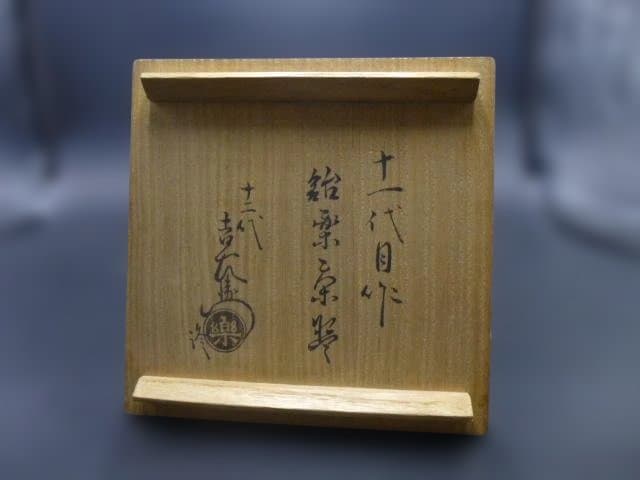
• Box: Original tomobako (common box) — accompanied by a kiwame-bako (authentication box) hand-inscribed by Raku XII Konyū (弘入, 1857-1932), the artist's own son
• Accessories: Shifuku — original silk pouch (blue checked textile) preserved with the bowl, indicating the former keeper regarded this chawan as a treasured meibutsu-class object
• Condition: Excellent antique condition commensurate with age, with the quiet patina of use expected of a Raku tea bowl over 120 years old
🔹 [ CULTURAL & ARTISTIC INSIGHT ]
Keinyū, the eleventh head of the Raku family, inherited the kiln in 1845 and carried the Sen family's tea aesthetic through one of Japan's most violent cultural ruptures — the collapse of the Tokugawa shogunate, the Meiji Restoration, and the sudden modernization that threatened to erase the chanoyu world entirely. He did not merely survive. He worked. Longevity gave him time; conviction gave him direction. The bowls he left are witnesses of a tradition that refused to disappear.
Ame-yu — the amber glaze — is the rarer third voice of Raku ware, standing beside the canonical red (aka-raku) and black (kuro-raku). Iron oxide carried in the glaze, fired in oxidation at low temperature, matures into a deep caramel hue with translucent runs where the glaze thickens and pools. On this bowl the amber pours and gathers along the lip and the lower wall in the manner Raku potters call yōhen — kiln-born transformation that no hand can plan.
The shifuku — a silk pouch normally reserved for treasured chaire (tea caddies) — was tailored for this chawan by a previous custodian. Its presence is not decoration. It is testimony. Someone, at some point in this bowl's long life, recognized it as meibutsu-class and chose to protect it the way one protects a named object.
An amber bowl. A son's authentication of his father's hand. A silk pouch shaped to hold silence.
🔹 [ DEEP-DIVE COMMENTARY ]
The Raku lineage is the oldest continuous pottery dynasty in Japan, founded in the late 16th century by Chōjirō under the direct guidance of Sen no Rikyū. For over four centuries the family has passed the kiln from father to son, each generation bearing the single character seal — 楽 — that Toyotomi Hideyoshi granted them. To hold a Raku bowl is to hold a fragment of the unbroken chanoyu tradition that runs from Rikyū to the present day.
Keinyū, the eleventh head, occupies a singular position in that line. Born in 1817, he became head of the family in 1845 and lived until 1902 — meaning his working life spanned the final decades of the Edo shogunate, the upheaval of the Boshin War, the abolition of the samurai class, the dismantling of daimyo patronage, and the full arrival of Meiji modernization. Most traditional crafts lost their footing in those decades. Keinyū held the kiln steady. He produced prolifically and taught his son Kōnyū with the discipline of a man who understood that tradition is not inherited — it is re-earned, generation by generation.
The ame-yu technique itself deserves attention. Raku glaze is compounded from lead flux and iron oxide, applied thickly, and drawn from the kiln at temperatures around 800°C — far lower than stoneware. The amber coloration arises when iron is fired in a purely oxidizing atmosphere rather than the reduction atmosphere that yields black raku. The result is a warm, translucent caramel tone that shifts under light: honey where the glaze runs thin, deep brown where it pools, occasional darker specks where iron has migrated and concentrated. No two ame-raku bowls are alike. Each is a single event in the kiln.
The kiwame-bako — authentication box — inscribed by Kōnyū (Raku XII, 1857-1932) is the highest possible provenance for a Keinyū work. Kōnyū was Keinyū's son and direct successor. He inherited the kiln, the seals, the techniques, and the visual memory of his father's hand. When the son of a Raku head authenticates a work by his father, no authority in the Japanese tea world stands above it. The hakogaki is not a certificate of opinion. It is a bloodline speaking.
The shifuku closes the object's biography. Silk pouches are traditionally made for chaire — the precious tea caddies used in koicha (thick tea) ceremony. To commission a shifuku for a chawan is an unusual act, one reserved for bowls a collector has come to regard as beyond ordinary use. The blue checked textile of this pouch, softened by time, tells us that somewhere in the last century a keeper of this bowl quietly decided it deserved the protection usually given only to named masterpieces. That decision was theirs. The recognition now falls to you.
[ JAPANESE DESCRIPTION / 日本語解説 ]
【基本情報】
・作家: 楽 十一代 慶入(けいにゅう, 1817-1902)
・技法: 飴釉(鉄分を多く含む釉薬の酸化焼成による琥珀色発色)、手捏ね成形、低温楽焼
・時代: 幕末〜明治期(1800年代中〜後期)
・産地: 京都 楽家窯
・寸法: 幅約11.8cm × 高さ約7.5cm
・銘: 高台脇に「楽」印
・箱: 共箱付き/さらに十二代 弘入(こうにゅう, 1857-1932)による極め箱(箱書き付き)
・付属: 仕覆(青系市松裂地の絹袋)— 前の所持者がこの茶碗を「名物格」として大切に扱ってきた証
・状態: 120年以上の時を経た楽茶碗として良好、使い込まれた静かな景色あり
【文化的・芸術的解説】
慶入は楽家十一代目として幕末から明治維新という文化的激動期を生き抜いた重要な作家である。弘化二年(1845)に家督を継ぎ、明治三十五年(1902)まで長命をもって作陶を続けた。維新前後の混乱の中で千家茶道の美学を支え、楽家の伝統を次代へ繋いだその仕事は単なる継承ではなく、崩壊しかけた文化を再び立て直す行為であった。
飴釉は赤楽・黒楽と並ぶ楽焼第三の様式で、鉄分を含む釉薬を酸化雰囲気で焼成することで深い琥珀色を発する。この茶碗では口縁から胴下部にかけて飴釉が流れ、窯変による釉だまりが景色を成している。人が意図して作れるものではなく、窯が決める。
仕覆は本来、濃茶の茶入を包む絹袋であり、茶碗に仕覆を設えるのは前所持者がこの器を特別なものとして認識していた証となる。青系の市松裂で仕立てられた本作の仕覆は、時を経て柔らかく馴染んでいる。
【深い解説】
楽家は長次郎(初代)が千利休の指導のもと興した、日本で最も古く続く陶芸家系である。豊臣秀吉から下賜されたと伝わる「楽」の一字印を、十六代目の現当主に至るまで四百年以上絶えることなく受け継いできた。茶の湯の世界で楽茶碗を手にするということは、利休から現代まで切れ目なく続く一本の糸に触れるということである。
慶入は文化十四年(1817)生まれ、弘化二年(1845)に十一代を襲名、明治三十五年(1902)に没した。その生涯は幕末・維新・明治という、日本の伝統工芸が最も足元を揺さぶられた時代とほぼ完全に重なっている。大名の庇護を失い、武家社会が解体され、西洋化の波が押し寄せる中で、多くの伝統工芸が衰退した。慶入は楽家の窯を守り抜き、長子 弘入へと技と精神を伝えた。
飴釉の技法そのものも特筆に値する。楽釉は鉛釉に鉄分を加え、厚く掛けて約800度という低温で引き出す。酸化雰囲気で焼くと、鉄分は還元焼成の黒ではなく、温かみのある琥珀色に発色する。釉の薄い部分は蜂蜜色、厚く溜まった部分は濃い茶褐色、鉄分が移動した箇所には黒い斑点が現れる。同じ飴楽は二つとない。一碗一碗が窯の中で起きた一度きりの出来事である。
十二代 弘入による極め箱は、慶入作品に与えられ得る最高の極めである。弘入は慶入の実子であり、直接の後継者として窯・印・技法、そして何より父の手の記憶を受け継いだ人物である。息子が父の作を極めるとき、その権威を上回るものは楽家の血統以外には存在しない。箱書きは意見の証明書ではなく、血脈が語る言葉である。
仕覆がこの器の物語を閉じる。通常、濃茶用の茶入に設える絹袋を茶碗のために仕立てるのは、所持者がその茶碗を日常の器を超えた「名物格」と認めた時の行為である。青の市松裂で仕立てられ、時間を経て柔らかく馴染んだこの仕覆は、過去百年のどこかの時点で、誰かがこの碗を静かに特別なものとして扱った証である。その認識は、今あなたに引き継がれる。
🔹 [ SHIPPING & PACKAGING ]
• Dispatch: Within 1-6 business days
• Carrier: Japan Post EMS / UPS (with tracking)
• Packaging: Carefully wrapped with protective materials
🔹 [ BASIC DETAILS ]
• Artist: Raku XI Keinyū (楽十一代 慶入, 1817-1902)
• Technique: Ame-yu (amber iron-rich glaze), hand-formed Raku ware, low-temperature oxidation firing
• Era: Bakumatsu to Meiji period (mid-to-late 1800s)
• Origin: Raku family kiln, Kyoto, Japan
• Dimensions: Approx. 11.8 cm diameter × 7.5 cm height
• Signature: Raku (楽) seal impressed beside the foot
• Box: Original tomobako (common box) — accompanied by a kiwame-bako (authentication box) hand-inscribed by Raku XII Konyū (弘入, 1857-1932), the artist's own son
• Accessories: Shifuku — original silk pouch (blue checked textile) preserved with the bowl, indicating the former keeper regarded this chawan as a treasured meibutsu-class object
• Condition: Excellent antique condition commensurate with age, with the quiet patina of use expected of a Raku tea bowl over 120 years old
🔹 [ CULTURAL & ARTISTIC INSIGHT ]
Keinyū, the eleventh head of the Raku family, inherited the kiln in 1845 and carried the Sen family's tea aesthetic through one of Japan's most violent cultural ruptures — the collapse of the Tokugawa shogunate, the Meiji Restoration, and the sudden modernization that threatened to erase the chanoyu world entirely. He did not merely survive. He worked. Longevity gave him time; conviction gave him direction. The bowls he left are witnesses of a tradition that refused to disappear.
Ame-yu — the amber glaze — is the rarer third voice of Raku ware, standing beside the canonical red (aka-raku) and black (kuro-raku). Iron oxide carried in the glaze, fired in oxidation at low temperature, matures into a deep caramel hue with translucent runs where the glaze thickens and pools. On this bowl the amber pours and gathers along the lip and the lower wall in the manner Raku potters call yōhen — kiln-born transformation that no hand can plan.
The shifuku — a silk pouch normally reserved for treasured chaire (tea caddies) — was tailored for this chawan by a previous custodian. Its presence is not decoration. It is testimony. Someone, at some point in this bowl's long life, recognized it as meibutsu-class and chose to protect it the way one protects a named object.
An amber bowl. A son's authentication of his father's hand. A silk pouch shaped to hold silence.
🔹 [ DEEP-DIVE COMMENTARY ]
The Raku lineage is the oldest continuous pottery dynasty in Japan, founded in the late 16th century by Chōjirō under the direct guidance of Sen no Rikyū. For over four centuries the family has passed the kiln from father to son, each generation bearing the single character seal — 楽 — that Toyotomi Hideyoshi granted them. To hold a Raku bowl is to hold a fragment of the unbroken chanoyu tradition that runs from Rikyū to the present day.
Keinyū, the eleventh head, occupies a singular position in that line. Born in 1817, he became head of the family in 1845 and lived until 1902 — meaning his working life spanned the final decades of the Edo shogunate, the upheaval of the Boshin War, the abolition of the samurai class, the dismantling of daimyo patronage, and the full arrival of Meiji modernization. Most traditional crafts lost their footing in those decades. Keinyū held the kiln steady. He produced prolifically and taught his son Kōnyū with the discipline of a man who understood that tradition is not inherited — it is re-earned, generation by generation.
The ame-yu technique itself deserves attention. Raku glaze is compounded from lead flux and iron oxide, applied thickly, and drawn from the kiln at temperatures around 800°C — far lower than stoneware. The amber coloration arises when iron is fired in a purely oxidizing atmosphere rather than the reduction atmosphere that yields black raku. The result is a warm, translucent caramel tone that shifts under light: honey where the glaze runs thin, deep brown where it pools, occasional darker specks where iron has migrated and concentrated. No two ame-raku bowls are alike. Each is a single event in the kiln.
The kiwame-bako — authentication box — inscribed by Kōnyū (Raku XII, 1857-1932) is the highest possible provenance for a Keinyū work. Kōnyū was Keinyū's son and direct successor. He inherited the kiln, the seals, the techniques, and the visual memory of his father's hand. When the son of a Raku head authenticates a work by his father, no authority in the Japanese tea world stands above it. The hakogaki is not a certificate of opinion. It is a bloodline speaking.
The shifuku closes the object's biography. Silk pouches are traditionally made for chaire — the precious tea caddies used in koicha (thick tea) ceremony. To commission a shifuku for a chawan is an unusual act, one reserved for bowls a collector has come to regard as beyond ordinary use. The blue checked textile of this pouch, softened by time, tells us that somewhere in the last century a keeper of this bowl quietly decided it deserved the protection usually given only to named masterpieces. That decision was theirs. The recognition now falls to you.
[ JAPANESE DESCRIPTION / 日本語解説 ]
【基本情報】
・作家: 楽 十一代 慶入(けいにゅう, 1817-1902)
・技法: 飴釉(鉄分を多く含む釉薬の酸化焼成による琥珀色発色)、手捏ね成形、低温楽焼
・時代: 幕末〜明治期(1800年代中〜後期)
・産地: 京都 楽家窯
・寸法: 幅約11.8cm × 高さ約7.5cm
・銘: 高台脇に「楽」印
・箱: 共箱付き/さらに十二代 弘入(こうにゅう, 1857-1932)による極め箱(箱書き付き)
・付属: 仕覆(青系市松裂地の絹袋)— 前の所持者がこの茶碗を「名物格」として大切に扱ってきた証
・状態: 120年以上の時を経た楽茶碗として良好、使い込まれた静かな景色あり
【文化的・芸術的解説】
慶入は楽家十一代目として幕末から明治維新という文化的激動期を生き抜いた重要な作家である。弘化二年(1845)に家督を継ぎ、明治三十五年(1902)まで長命をもって作陶を続けた。維新前後の混乱の中で千家茶道の美学を支え、楽家の伝統を次代へ繋いだその仕事は単なる継承ではなく、崩壊しかけた文化を再び立て直す行為であった。
飴釉は赤楽・黒楽と並ぶ楽焼第三の様式で、鉄分を含む釉薬を酸化雰囲気で焼成することで深い琥珀色を発する。この茶碗では口縁から胴下部にかけて飴釉が流れ、窯変による釉だまりが景色を成している。人が意図して作れるものではなく、窯が決める。
仕覆は本来、濃茶の茶入を包む絹袋であり、茶碗に仕覆を設えるのは前所持者がこの器を特別なものとして認識していた証となる。青系の市松裂で仕立てられた本作の仕覆は、時を経て柔らかく馴染んでいる。
【深い解説】
楽家は長次郎(初代)が千利休の指導のもと興した、日本で最も古く続く陶芸家系である。豊臣秀吉から下賜されたと伝わる「楽」の一字印を、十六代目の現当主に至るまで四百年以上絶えることなく受け継いできた。茶の湯の世界で楽茶碗を手にするということは、利休から現代まで切れ目なく続く一本の糸に触れるということである。
慶入は文化十四年(1817)生まれ、弘化二年(1845)に十一代を襲名、明治三十五年(1902)に没した。その生涯は幕末・維新・明治という、日本の伝統工芸が最も足元を揺さぶられた時代とほぼ完全に重なっている。大名の庇護を失い、武家社会が解体され、西洋化の波が押し寄せる中で、多くの伝統工芸が衰退した。慶入は楽家の窯を守り抜き、長子 弘入へと技と精神を伝えた。
飴釉の技法そのものも特筆に値する。楽釉は鉛釉に鉄分を加え、厚く掛けて約800度という低温で引き出す。酸化雰囲気で焼くと、鉄分は還元焼成の黒ではなく、温かみのある琥珀色に発色する。釉の薄い部分は蜂蜜色、厚く溜まった部分は濃い茶褐色、鉄分が移動した箇所には黒い斑点が現れる。同じ飴楽は二つとない。一碗一碗が窯の中で起きた一度きりの出来事である。
十二代 弘入による極め箱は、慶入作品に与えられ得る最高の極めである。弘入は慶入の実子であり、直接の後継者として窯・印・技法、そして何より父の手の記憶を受け継いだ人物である。息子が父の作を極めるとき、その権威を上回るものは楽家の血統以外には存在しない。箱書きは意見の証明書ではなく、血脈が語る言葉である。
仕覆がこの器の物語を閉じる。通常、濃茶用の茶入に設える絹袋を茶碗のために仕立てるのは、所持者がその茶碗を日常の器を超えた「名物格」と認めた時の行為である。青の市松裂で仕立てられ、時間を経て柔らかく馴染んだこの仕覆は、過去百年のどこかの時点で、誰かがこの碗を静かに特別なものとして扱った証である。その認識は、今あなたに引き継がれる。
🔹 [ SHIPPING & PACKAGING ]
• Dispatch: Within 1-6 business days
• Carrier: Japan Post EMS / UPS (with tracking)
• Packaging: Carefully wrapped with protective materials
Quantity
Couldn't load pickup availability
Out of stock
View full details