1
/
of
9
Aka Raku Tea Caddy (Chaire) by Kawasaki Waraku — Red Raku Glaze, Ceramic Lid, Signed Wooden Box
Aka Raku Tea Caddy (Chaire) by Kawasaki Waraku — Red Raku Glaze, Ceramic Lid, Signed Wooden Box
Regular price
Dhs. 1,046.00 AED
Regular price
Sale price
Dhs. 1,046.00 AED
Taxes included.
Shipping calculated at checkout.
Experience Authentic Japan Art with this Aka Raku Tea Caddy by Kawasaki Waraku. This Red Raku Chaire serves as a Japanese Tea Ceremony Caddy and Raku Pottery Chaire, featuring Kyoto Raku Glaze Vessel and Signed Ceramic Tea Container — a must-have for any Wabi Sabi Tea Collector. This Handmade Raku Tea Canister embodies the spirit of Traditional Raku Chawan Maker and stands as a classic Matcha Ceremony Accessory with Tomobako Wooden Box.
🔹 [ BASIC DETAILS ]
• Artist: Kawasaki Waraku (川崎和楽) — Kyoto Waraku Kiln
• Technique: Aka-raku (red raku) — low-temperature lead-free reduction firing; hand-pinched and faceted body with twin loop handles; ceramic fitted lid (tomobuta)
• Era: Post-2007 (contemporary, active Kyoto kiln)
• Origin: Kyoto, Japan — Waraku Kiln tradition
• Dimensions: Height approx. 7.5 cm, Diameter approx. 9 cm (widest point)
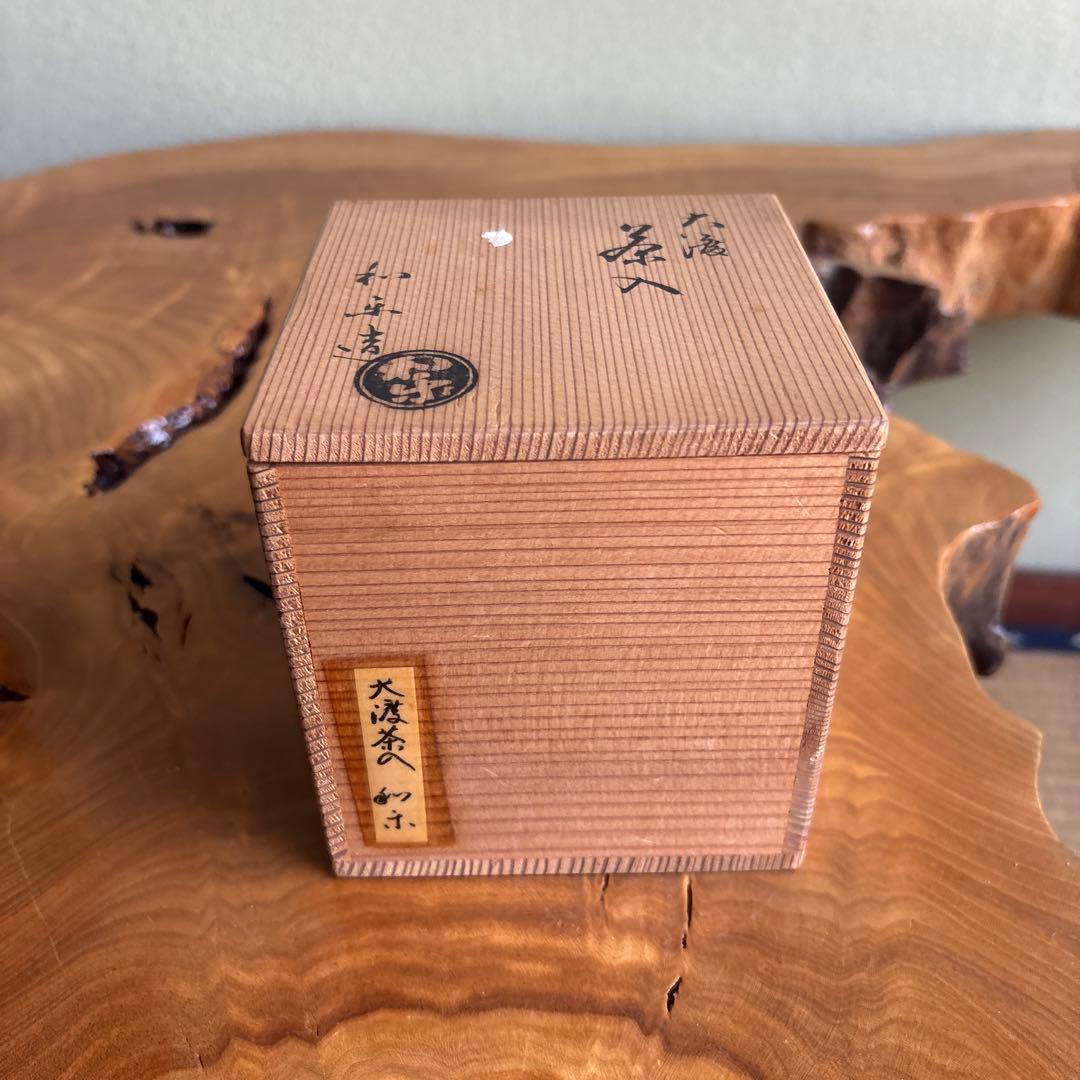
• Box: Tomobako — original signed wooden box inscribed 「和楽造」 with artist seal
• Condition: Excellent — no chips, no cracks; lush surface crazing consistent with authentic raku firing
🔹 [ CULTURAL & ARTISTIC INSIGHT ]
Raku ware emerged in sixteenth-century Kyoto when the tile-maker Chojiro, working under the guidance of tea master Sen no Rikyu, shaped the first hand-modeled tea bowls fired at low temperatures without the use of a potter's wheel. The resulting vessels — spontaneous, tactile, unhurried — became the physical embodiment of wabi, the Japanese aesthetic of beauty found in imperfection and transience. Chaire, the small lidded caddy used to hold powdered tea in the thick-tea (koicha) ceremony, carries within its compact form centuries of concentrated intention.
Kawasaki Waraku works within the Kyoto raku lineage, drawing on that inheritance while imprinting each piece with a distinctly personal hand. The body of this chaire is squat and full — almost gourd-like — with two small loop handles pressed into the shoulders, a form that invites the fingers to settle into it during the ceremonial fukusa-wiping gesture. The surface is covered in a warm coral-red glaze, the characteristic aka-raku tone achieved through iron-bearing clay and oxidative low-temperature firing. Fine crazing networks the entire surface, the lines appearing as the memory of heat itself preserved in the glaze.
The ceramic lid (tomobuta) is where fire has spoken most openly: its flat top bears sweeping areas of charcoal blackening and silver-iridescent flash, the casual calligraphy of flame. Lid and body share the same clay body, fired together, so the raku vocabulary is continuous across the whole vessel.
Poetic Line: The lid holds what fire wrote — each dark passage a letter sent from the kiln, still unread, still warm.
🔹 [ DEEP-DIVE COMMENTARY ]
Raku-yaki (楽焼) is defined by three interlocking qualities that distinguish it from every other Japanese ceramic tradition: the hand-building method (no wheel), the low firing temperature (approximately 750–900°C), and the use of lead-free or low-lead glazes that mature well below stoneware temperatures. The result is a porous, relatively soft body whose surface remains alive with texture — pinch marks, facets, and the subtle topography of a hand that worked without mechanical mediation.
Aka-raku specifically denotes red raku, the counterpart to kuro-raku (black raku). Where black raku is produced by smothering the piece in a reduction chamber immediately after firing, red raku is allowed to cool in open air, permitting the iron in the clay and glaze to remain in its oxidized, ferric state. The warm coral-to-brick tones that result vary from piece to piece based on clay composition, glaze thickness, and the specific temperature curve of the individual firing — no two pieces are identical.
For the chaire form specifically, the ceramic lid (tomobuta) is a notable choice. Most chaire use ivory or antler lids, materials prized for their tactile contrast with ceramic bodies. A ceramic lid from the same firing speaks instead of unity: the vessel as a single statement fired whole. Collectors and tea practitioners recognize the tomobuta form as one that places aesthetic coherence above conventional material hierarchy.
Kawasaki Waraku's work sits within the broader Kyoto raku revival of the late twentieth and early twenty-first centuries, a movement that has returned to the studied immediacy of the Chojiro tradition while allowing contemporary sensibility — in form, in proportion, in glaze behavior — to inflect each piece. The twin loop handles on this chaire, somewhat unusual in the form, extend the vessel's gesture outward, making it feel held even when it rests alone on the shelf.
The tomobako, signed in the artist's hand with the seal of the Waraku Kiln, completes the provenance chain that serious collectors require. In Japanese ceramic culture, the box is understood to be as integral as the piece itself — together they constitute the documented object.
🔹 [ 日本語解説 ]
【基本情報】
• 作家:川崎和楽(川崎和楽窯・京都)
• 技法:赤楽焼——鉛を含まない低温酸化焼成。手びねりによる鎚目状の成形、双耳付き、陶製共蓋(共蓋)
• 年代:現代(2007年以降)、現役の京都窯
• 産地:京都・和楽窯
• 寸法:高さ約7.5cm、直径(最大部)約9cm
• 箱:共箱(「和楽造」銘・作家印あり)
• 状態:優良。ヒビ・カケなし。焼成によるカンニュウ(貫入)は自然発生のもの
【文化的・芸術的背景】
楽焼は十六世紀、千利休の指導のもと、瓦師・長次郎が轆轤を用いずに手びねりで形成した茶碗に始まる。低温で焼かれ、素直で朴訥な形をもつそれらの器は、利休が完成させた侘びの精神そのものを体現していた。茶入は、濃茶に用いる抹茶を収める小さな器であり、その小さな身体の内側に、茶道の長い時間が凝縮されている。
川崎和楽は京都の楽焼の系譜に連なりながら、個の手の跡を隠さない作風で知られる。この茶入の胴は低く丸みを帯び、肩に小さな双耳が据えられ、手のひらにおさまる重さと形をもつ。表面には赤楽特有の珊瑚色から煉瓦色のグラデーションが広がり、全体に細かな貫入が走る。熱の記憶が釉薬の表面に刻まれたかのようだ。
共蓋の平坦な上面には、炭化した黒と銀光沢を帯びた焦げ跡が広がり、炎が書き残した文様となっている。蓋と胴は同じ粘土を同じ窯で焼いており、景色は器全体にわたって一つの物語として連なる。
詩的一文:蓋には炎が書いた文字が残る——いまだ読まれぬまま、けれどもまだ温かい。
【深層解説】
楽焼の定義は三つの要素に収斂する。轆轤を使わない手成形、低温焼成(約750〜900℃)、そして鉛を含まないか少量の釉薬。この三要素が重なることで、機械的な整合性を排した、手の痕跡が残る焼物が生まれる。
赤楽は、焼成後に作品を酸化雰囲気のまま自然冷却させることで生まれる。鉄分が酸化鉄(三価)の状態を保つため、珊瑚色から朱色の発色が現れる。対する黒楽は、焼成直後に密閉容器で還元処理を施すことで漆黒の景色を得る。赤と黒、どちらも楽焼の核心にある技法だが、赤楽の発色は粘土の組成・釉薬の厚さ・焼成曲線によって微妙に異なり、一点として同じものは存在しない。
この茶入において特筆すべきは陶製の共蓋である。通常、茶入の蓋には象牙や鹿角が用いられることが多く、陶製の蓋は「共蓋」として器との素材的な一体性を重視するものだ。同一の粘土・同一の焼成による蓋と胴は、審美的な統一を最上位に置く選択であり、茶人・コレクターの間ではこの一体感が高く評価される。
胴に付いた双耳は、この形式の茶入としてはやや異例の意匠だ。手に持った時の安定感と、飾り台に据えた時の方向性を同時に与えるこの双耳は、川崎和楽の個性的な造形語彙のひとつといえる。
共箱には作家の署名と和楽窯の落款が入り、来歴の明確な文書として機能する。日本の陶磁器文化において、箱は器と不可分の存在——この箱があって初めて、器は完全な「ものがたり」をもつ。
🔹 [ SHIPPING & PACKAGING ]
• Dispatch: Within 1-6 business days
• Carrier: Japan Post EMS / UPS (with tracking)
• Packaging: Carefully wrapped with protective materials
🔹 [ BASIC DETAILS ]
• Artist: Kawasaki Waraku (川崎和楽) — Kyoto Waraku Kiln
• Technique: Aka-raku (red raku) — low-temperature lead-free reduction firing; hand-pinched and faceted body with twin loop handles; ceramic fitted lid (tomobuta)
• Era: Post-2007 (contemporary, active Kyoto kiln)
• Origin: Kyoto, Japan — Waraku Kiln tradition
• Dimensions: Height approx. 7.5 cm, Diameter approx. 9 cm (widest point)
• Box: Tomobako — original signed wooden box inscribed 「和楽造」 with artist seal
• Condition: Excellent — no chips, no cracks; lush surface crazing consistent with authentic raku firing
🔹 [ CULTURAL & ARTISTIC INSIGHT ]
Raku ware emerged in sixteenth-century Kyoto when the tile-maker Chojiro, working under the guidance of tea master Sen no Rikyu, shaped the first hand-modeled tea bowls fired at low temperatures without the use of a potter's wheel. The resulting vessels — spontaneous, tactile, unhurried — became the physical embodiment of wabi, the Japanese aesthetic of beauty found in imperfection and transience. Chaire, the small lidded caddy used to hold powdered tea in the thick-tea (koicha) ceremony, carries within its compact form centuries of concentrated intention.
Kawasaki Waraku works within the Kyoto raku lineage, drawing on that inheritance while imprinting each piece with a distinctly personal hand. The body of this chaire is squat and full — almost gourd-like — with two small loop handles pressed into the shoulders, a form that invites the fingers to settle into it during the ceremonial fukusa-wiping gesture. The surface is covered in a warm coral-red glaze, the characteristic aka-raku tone achieved through iron-bearing clay and oxidative low-temperature firing. Fine crazing networks the entire surface, the lines appearing as the memory of heat itself preserved in the glaze.
The ceramic lid (tomobuta) is where fire has spoken most openly: its flat top bears sweeping areas of charcoal blackening and silver-iridescent flash, the casual calligraphy of flame. Lid and body share the same clay body, fired together, so the raku vocabulary is continuous across the whole vessel.
Poetic Line: The lid holds what fire wrote — each dark passage a letter sent from the kiln, still unread, still warm.
🔹 [ DEEP-DIVE COMMENTARY ]
Raku-yaki (楽焼) is defined by three interlocking qualities that distinguish it from every other Japanese ceramic tradition: the hand-building method (no wheel), the low firing temperature (approximately 750–900°C), and the use of lead-free or low-lead glazes that mature well below stoneware temperatures. The result is a porous, relatively soft body whose surface remains alive with texture — pinch marks, facets, and the subtle topography of a hand that worked without mechanical mediation.
Aka-raku specifically denotes red raku, the counterpart to kuro-raku (black raku). Where black raku is produced by smothering the piece in a reduction chamber immediately after firing, red raku is allowed to cool in open air, permitting the iron in the clay and glaze to remain in its oxidized, ferric state. The warm coral-to-brick tones that result vary from piece to piece based on clay composition, glaze thickness, and the specific temperature curve of the individual firing — no two pieces are identical.
For the chaire form specifically, the ceramic lid (tomobuta) is a notable choice. Most chaire use ivory or antler lids, materials prized for their tactile contrast with ceramic bodies. A ceramic lid from the same firing speaks instead of unity: the vessel as a single statement fired whole. Collectors and tea practitioners recognize the tomobuta form as one that places aesthetic coherence above conventional material hierarchy.
Kawasaki Waraku's work sits within the broader Kyoto raku revival of the late twentieth and early twenty-first centuries, a movement that has returned to the studied immediacy of the Chojiro tradition while allowing contemporary sensibility — in form, in proportion, in glaze behavior — to inflect each piece. The twin loop handles on this chaire, somewhat unusual in the form, extend the vessel's gesture outward, making it feel held even when it rests alone on the shelf.
The tomobako, signed in the artist's hand with the seal of the Waraku Kiln, completes the provenance chain that serious collectors require. In Japanese ceramic culture, the box is understood to be as integral as the piece itself — together they constitute the documented object.
🔹 [ 日本語解説 ]
【基本情報】
• 作家:川崎和楽(川崎和楽窯・京都)
• 技法:赤楽焼——鉛を含まない低温酸化焼成。手びねりによる鎚目状の成形、双耳付き、陶製共蓋(共蓋)
• 年代:現代(2007年以降)、現役の京都窯
• 産地:京都・和楽窯
• 寸法:高さ約7.5cm、直径(最大部)約9cm
• 箱:共箱(「和楽造」銘・作家印あり)
• 状態:優良。ヒビ・カケなし。焼成によるカンニュウ(貫入)は自然発生のもの
【文化的・芸術的背景】
楽焼は十六世紀、千利休の指導のもと、瓦師・長次郎が轆轤を用いずに手びねりで形成した茶碗に始まる。低温で焼かれ、素直で朴訥な形をもつそれらの器は、利休が完成させた侘びの精神そのものを体現していた。茶入は、濃茶に用いる抹茶を収める小さな器であり、その小さな身体の内側に、茶道の長い時間が凝縮されている。
川崎和楽は京都の楽焼の系譜に連なりながら、個の手の跡を隠さない作風で知られる。この茶入の胴は低く丸みを帯び、肩に小さな双耳が据えられ、手のひらにおさまる重さと形をもつ。表面には赤楽特有の珊瑚色から煉瓦色のグラデーションが広がり、全体に細かな貫入が走る。熱の記憶が釉薬の表面に刻まれたかのようだ。
共蓋の平坦な上面には、炭化した黒と銀光沢を帯びた焦げ跡が広がり、炎が書き残した文様となっている。蓋と胴は同じ粘土を同じ窯で焼いており、景色は器全体にわたって一つの物語として連なる。
詩的一文:蓋には炎が書いた文字が残る——いまだ読まれぬまま、けれどもまだ温かい。
【深層解説】
楽焼の定義は三つの要素に収斂する。轆轤を使わない手成形、低温焼成(約750〜900℃)、そして鉛を含まないか少量の釉薬。この三要素が重なることで、機械的な整合性を排した、手の痕跡が残る焼物が生まれる。
赤楽は、焼成後に作品を酸化雰囲気のまま自然冷却させることで生まれる。鉄分が酸化鉄(三価)の状態を保つため、珊瑚色から朱色の発色が現れる。対する黒楽は、焼成直後に密閉容器で還元処理を施すことで漆黒の景色を得る。赤と黒、どちらも楽焼の核心にある技法だが、赤楽の発色は粘土の組成・釉薬の厚さ・焼成曲線によって微妙に異なり、一点として同じものは存在しない。
この茶入において特筆すべきは陶製の共蓋である。通常、茶入の蓋には象牙や鹿角が用いられることが多く、陶製の蓋は「共蓋」として器との素材的な一体性を重視するものだ。同一の粘土・同一の焼成による蓋と胴は、審美的な統一を最上位に置く選択であり、茶人・コレクターの間ではこの一体感が高く評価される。
胴に付いた双耳は、この形式の茶入としてはやや異例の意匠だ。手に持った時の安定感と、飾り台に据えた時の方向性を同時に与えるこの双耳は、川崎和楽の個性的な造形語彙のひとつといえる。
共箱には作家の署名と和楽窯の落款が入り、来歴の明確な文書として機能する。日本の陶磁器文化において、箱は器と不可分の存在——この箱があって初めて、器は完全な「ものがたり」をもつ。
🔹 [ SHIPPING & PACKAGING ]
• Dispatch: Within 1-6 business days
• Carrier: Japan Post EMS / UPS (with tracking)
• Packaging: Carefully wrapped with protective materials
Quantity
Couldn't load pickup availability
Low stock: 1 left
View full details