1
/
of
15
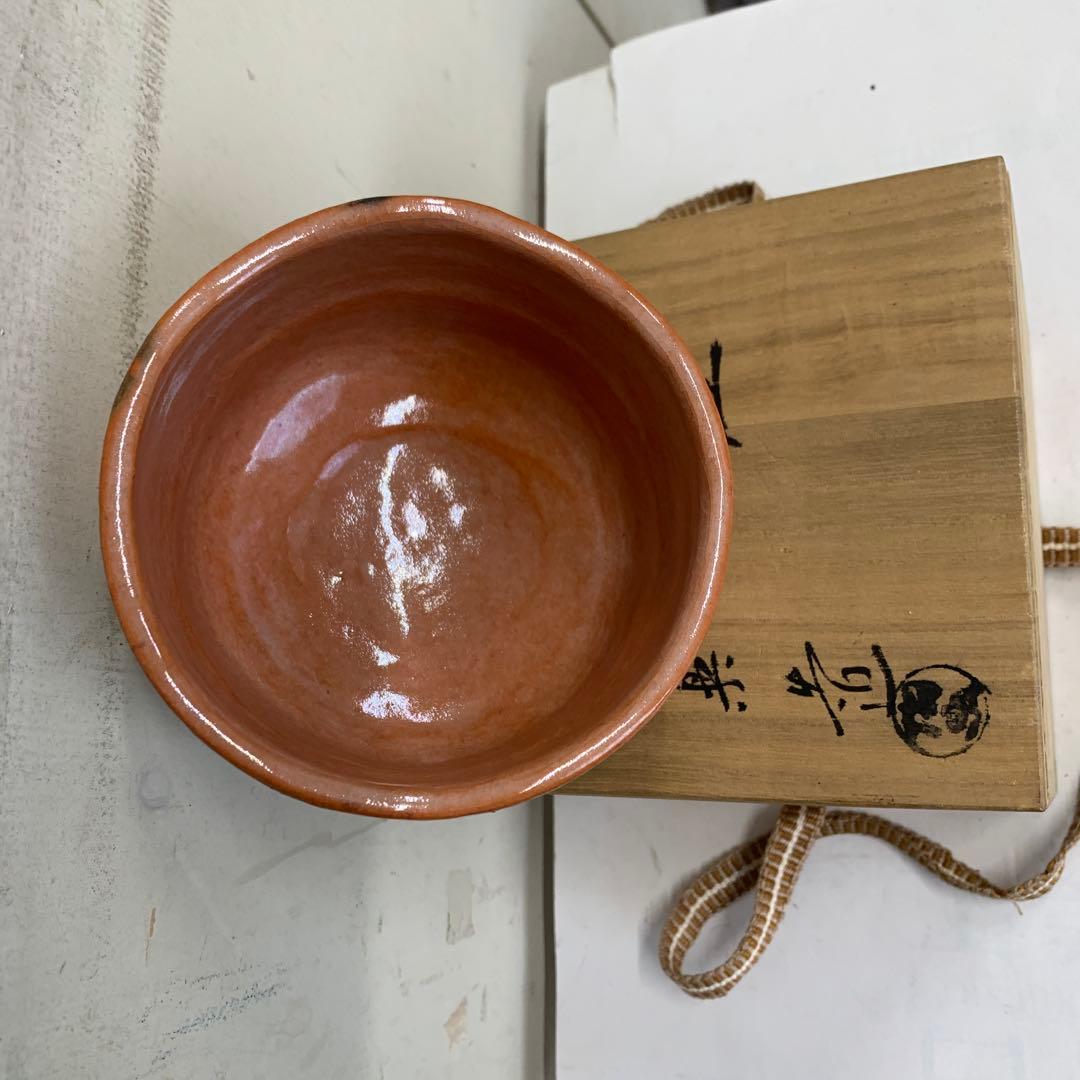
Aka-Raku Matcha Tea Bowl with Signed Tomobako | Japanese Chawan Sakura Wave Rim Keshiki Orange Glaze
Aka-Raku Matcha Tea Bowl with Signed Tomobako | Japanese Chawan Sakura Wave Rim Keshiki Orange Glaze
Regular price
Dhs. 500.00 AED
Regular price
Sale price
Dhs. 500.00 AED
Taxes included.
Shipping calculated at checkout.
Experience Authentic Japan Art with this Aka-Raku Chawan. This Japanese Tea Bowl serves as a Raku Pottery Chawan and Matcha Bowl with Tomobako, featuring Sakura Wave Rim and Keshiki Orange Glaze—a must-have for any Art Collector. This Signed Japanese Pottery piece is a Wabi-Sabi Tea Ceremony Bowl and a Studio Pottery Chawan Gift, offering Vintage Japanese Ceramics character in an Aka Raku Tea Bowl with Crazing Glaze.
🔹 [ BASIC DETAILS ]
• Artist: Unsigned attribution unknown; box lid bears brushwork inscription and impressed seal reading Tōoku Kuseki (陶奥 苦石) — a studio kiln designation with personal seal
• Technique: Aka-Raku (赤楽) — low-temperature lead-free reduction firing; characteristic craze crazing (kan'nyū) throughout; ash-flash keshiki (景色) dark passages from kiln atmosphere
• Era: Before 2007 (storage piece; precise decade undetermined)
• Origin: Japan — Raku tradition; kiln affiliation Tōoku studio
• Dimensions: Height approx. 8.5 cm, Diameter approx. 11.5 cm (estimated from image proportions)
• Box: Tomobako (共箱) — original fitted paulownia wooden box with brush-inscribed lid in the potter's hand and impressed seal; interior washi tissue wrapping intact
• Condition: Unused, storage piece (未使用保管品). No chips, cracks, or use staining. Craze crazing is inherent to the firing technique, not damage.
🔹 [ CULTURAL & ARTISTIC INSIGHT ]
Aka-Raku — the warm red cousin of the better-known black Raku — carries within it the slow intelligence of the kiln. Where kuro-raku (黒楽) absorbs light into silence, aka-raku returns it: the coral-orange glaze catches the room's warmth and radiates it back, so that a bowl of matcha held in two hands seems to breathe with the same heat as the tea itself.
This bowl's exterior landscape is a quiet drama. The base tone — a deep, sun-warmed orange-coral — is interrupted by passages of dark grey and near-charcoal that descended during firing where the atmosphere shifted and cooled against the clay body. These dark keshiki (景色, "scenery") are not applied decoration but unplanned weather: the kiln's own brushwork. Across this surface, an intricate craze pattern (kan'nyū, 貫入) traces itself like frost on glass — fine, even, insistent — evidence of the thermal journey the clay and glaze traveled together in the low-fire Raku kiln.
The rim is one of the bowl's most immediate pleasures. It rises and falls in a gentle undulation — the sakura-wave (桜花形) profile — softening what might otherwise be a too-direct cylinder into something that invites the hands to settle and slow. This shaping requires the potter to work decisively while the clay is still responsive; it cannot be corrected after.
The interior holds a different world entirely: a deep, luminous orange-amber glaze, smooth and pooled, that glows against the warmth of the clay beneath. Against a bowl of vivid green matcha, this interior creates a quiet chromatic conversation that has been one of Raku aesthetics' defining pleasures since the late sixteenth century.
Poetic line: "The grey cloud crosses the orange field — fire remembered, not rehearsed."
🔹 [ DEEP-DIVE COMMENTARY ]
Raku ware (楽焼) originated in Kyoto in the late Muromachi period under the tile-maker Chojiro, working in close collaboration with the tea master Sen no Rikyu. The defining formal instruction was simple and absolute: the bowl must be made entirely by hand, without the potter's wheel. Pulling, pressing, cutting — the hands are the only tools. This gives Raku its characteristic asymmetry and the faint memory of fingers in the clay body.
Aka-Raku (赤楽, "red Raku") designates bowls fired in an oxidizing or lightly reducing atmosphere at relatively low temperatures — typically between 800°C and 1000°C — using a red clay body and transparent or semi-transparent lead-free glazes that allow the clay's natural warmth to saturate upward through the fired surface. The result is the characteristic coral-to-deep-orange palette, which ranges from pale salmon in thinner passages to rich terracotta where the glaze pools. Unlike kuro-raku, where an iron-rich black glaze suppresses all transmission, aka-raku glaze is porous and alive to light.
The keshiki (景色) passages visible on this bowl — the dark grey-charcoal migrations across the upper body and rim — are produced by localized reduction during firing: where combustion gases lingered against the clay surface, the iron compounds in the clay body reduced partially toward magnetite, darkening without fully blackening. This is an uncontrolled event. The potter creates the conditions; the kiln decides the scenery. For this reason, no two aka-raku bowls carry identical keshiki, and collectors who understand this read these passages as the bowl's autobiography.
The kan'nyū (貫入) — the fine craze network across the glaze — is another mark of authentic Raku firing. It occurs because the glaze cools and contracts at a slightly different rate than the clay body beneath. In lesser ceramics this is a defect; in Raku it is intentional, the signature of the thermal event that created the piece. Over years of use with tea, the craze network absorbs faint color from the liquid, deepening in character — a quality prized in Japan as the bowl "growing into" the tea practice.
The tomobako (共箱), the artist's own paulownia wooden box with brushed inscription and impressed seal, is essential provenance. In Japan's secondary ceramics market, a bowl without its original box loses a significant portion of its documentary value. The presence here of both box and washi tissue wrapping in untouched condition indicates the bowl has never been put into tea service — an unusual circumstance for a piece evidently made for that purpose.
Collectors new to Raku sometimes ask whether an unsigned or obscure-attribution bowl diminishes value. The answer requires nuance. The Raku tradition is broad; not every worthy practitioner carries a lineage name. What matters is the object itself: the quality of hand-shaping, the honesty of the glaze response, the coherence of the keshiki, the soundness of the clay body. By these measures, this bowl is a composed and confident piece — worthy of regular tea practice or display as a study in the low-fire tradition.
🔹 [ JAPANESE DESCRIPTION / 日本語解説 ]
🔹 [ 基本詳細 ]
• 作家:箱書きおよびびんに「陶奥 苦石」の印(工房銘・個人印)が確認できる。作家詳細は不明だが、署名入共箱付
• 技法:赤楽焼(低温無鉛還元焼成)、貫入(ひびワレ模様)全面、窯変による景色(暗調部)
• 年代:2007年以前(詳細不明)
• 産地:日本・楽焼の伝統、陶奥工房
• 寸法:高さ約8.5cm、口径約11.5cm(画像推定)
• 箱:共箱(桐製)— 蓋に作家の手による墨書と押印あり。内側の和紙包み未開封
• 状態:未使用保管品。欠け・割れ・使用染みなし。貫入は焼成技法上の特性であり損傷ではない
🔹 [ 文化・芸術的洞察 ]
赤楽は、光を吸収して沈む黒楽と対照的に、光を受け止めて返す。コーラル色のオレンジ地に、窯の気流が記録した濃い灰・炭色の景色が広がる。これは絵付けではなく、焼成という出来事そのものの跡である。器面を覆う貫入は、釉薬と素地が異なる速度で冷えた痕跡であり、楽焼の正統性を示す証明でもある。桜花形の波状口縁は、素材がまだ応答できる一瞬に決断されたかたち。内側には深く澄んだオレンジ琥珀色の釉が満ちており、翠の抹茶との対話は茶道が長年育んできた静かな美学の一形式である。
詩的な一文:「灰色の雲がオレンジの野を渡る——火の記憶、演じられずに。」
🔹 [ 詳細解説 ]
楽焼(らくやき)は室町後期の京都において、瓦師・長次郎が茶人・千利休の指示のもとで生み出した。轆轤を使わず、手のみで成形するという原則がすべての出発点である。この手仕事が楽焼特有の非対称性と、粘土に残る指の記憶を生む。
赤楽は、低温(800〜1000℃程度)の酸化または軽い還元焼成によって焼かれる。赤みがかった素地に透明または半透明の無鉛釉を施すことで、素地の温みが釉を通して表面に染み出す。これがサーモンピンクから深いテラコッタへとグラデーションするあの色調の源である。
景色と呼ばれる暗い部分は、焼成中の局所的な還元によって素地の鉄分が磁鉄鉱方向へ変化した結果である。窯の内部環境が変動した箇所に残る痕跡であり、作家がコントロールできないものだ。だからこそ、同じ景色を持つ赤楽碗は存在しない。
貫入は、釉と素地の熱膨張差から生じる微細なひびである。楽焼においてこれは意図された特性であり、茶を喫するたびに貫入に色が入り込み、碗は時間とともに深みを増す。未使用のまま保管されていたこの碗は、そうした変化をこれから受け取る状態にある。
共箱の存在は、日本の陶磁器市場において作品価値の根拠となる。蓋裏の墨書と押印が作家の手によるものであれば、それは作品の来歴そのものである。和紙包みが開封されていない本品は、出荷状態のまま保管されてきた稀なケースといえる。
🔹 [ SHIPPING & PACKAGING ]
• Dispatch: Within 1-6 business days
• Carrier: Japan Post EMS / UPS (with tracking)
• Packaging: Carefully wrapped with protective materials
🔹 [ BASIC DETAILS ]
• Artist: Unsigned attribution unknown; box lid bears brushwork inscription and impressed seal reading Tōoku Kuseki (陶奥 苦石) — a studio kiln designation with personal seal
• Technique: Aka-Raku (赤楽) — low-temperature lead-free reduction firing; characteristic craze crazing (kan'nyū) throughout; ash-flash keshiki (景色) dark passages from kiln atmosphere
• Era: Before 2007 (storage piece; precise decade undetermined)
• Origin: Japan — Raku tradition; kiln affiliation Tōoku studio
• Dimensions: Height approx. 8.5 cm, Diameter approx. 11.5 cm (estimated from image proportions)
• Box: Tomobako (共箱) — original fitted paulownia wooden box with brush-inscribed lid in the potter's hand and impressed seal; interior washi tissue wrapping intact
• Condition: Unused, storage piece (未使用保管品). No chips, cracks, or use staining. Craze crazing is inherent to the firing technique, not damage.
🔹 [ CULTURAL & ARTISTIC INSIGHT ]
Aka-Raku — the warm red cousin of the better-known black Raku — carries within it the slow intelligence of the kiln. Where kuro-raku (黒楽) absorbs light into silence, aka-raku returns it: the coral-orange glaze catches the room's warmth and radiates it back, so that a bowl of matcha held in two hands seems to breathe with the same heat as the tea itself.
This bowl's exterior landscape is a quiet drama. The base tone — a deep, sun-warmed orange-coral — is interrupted by passages of dark grey and near-charcoal that descended during firing where the atmosphere shifted and cooled against the clay body. These dark keshiki (景色, "scenery") are not applied decoration but unplanned weather: the kiln's own brushwork. Across this surface, an intricate craze pattern (kan'nyū, 貫入) traces itself like frost on glass — fine, even, insistent — evidence of the thermal journey the clay and glaze traveled together in the low-fire Raku kiln.
The rim is one of the bowl's most immediate pleasures. It rises and falls in a gentle undulation — the sakura-wave (桜花形) profile — softening what might otherwise be a too-direct cylinder into something that invites the hands to settle and slow. This shaping requires the potter to work decisively while the clay is still responsive; it cannot be corrected after.
The interior holds a different world entirely: a deep, luminous orange-amber glaze, smooth and pooled, that glows against the warmth of the clay beneath. Against a bowl of vivid green matcha, this interior creates a quiet chromatic conversation that has been one of Raku aesthetics' defining pleasures since the late sixteenth century.
Poetic line: "The grey cloud crosses the orange field — fire remembered, not rehearsed."
🔹 [ DEEP-DIVE COMMENTARY ]
Raku ware (楽焼) originated in Kyoto in the late Muromachi period under the tile-maker Chojiro, working in close collaboration with the tea master Sen no Rikyu. The defining formal instruction was simple and absolute: the bowl must be made entirely by hand, without the potter's wheel. Pulling, pressing, cutting — the hands are the only tools. This gives Raku its characteristic asymmetry and the faint memory of fingers in the clay body.
Aka-Raku (赤楽, "red Raku") designates bowls fired in an oxidizing or lightly reducing atmosphere at relatively low temperatures — typically between 800°C and 1000°C — using a red clay body and transparent or semi-transparent lead-free glazes that allow the clay's natural warmth to saturate upward through the fired surface. The result is the characteristic coral-to-deep-orange palette, which ranges from pale salmon in thinner passages to rich terracotta where the glaze pools. Unlike kuro-raku, where an iron-rich black glaze suppresses all transmission, aka-raku glaze is porous and alive to light.
The keshiki (景色) passages visible on this bowl — the dark grey-charcoal migrations across the upper body and rim — are produced by localized reduction during firing: where combustion gases lingered against the clay surface, the iron compounds in the clay body reduced partially toward magnetite, darkening without fully blackening. This is an uncontrolled event. The potter creates the conditions; the kiln decides the scenery. For this reason, no two aka-raku bowls carry identical keshiki, and collectors who understand this read these passages as the bowl's autobiography.
The kan'nyū (貫入) — the fine craze network across the glaze — is another mark of authentic Raku firing. It occurs because the glaze cools and contracts at a slightly different rate than the clay body beneath. In lesser ceramics this is a defect; in Raku it is intentional, the signature of the thermal event that created the piece. Over years of use with tea, the craze network absorbs faint color from the liquid, deepening in character — a quality prized in Japan as the bowl "growing into" the tea practice.
The tomobako (共箱), the artist's own paulownia wooden box with brushed inscription and impressed seal, is essential provenance. In Japan's secondary ceramics market, a bowl without its original box loses a significant portion of its documentary value. The presence here of both box and washi tissue wrapping in untouched condition indicates the bowl has never been put into tea service — an unusual circumstance for a piece evidently made for that purpose.
Collectors new to Raku sometimes ask whether an unsigned or obscure-attribution bowl diminishes value. The answer requires nuance. The Raku tradition is broad; not every worthy practitioner carries a lineage name. What matters is the object itself: the quality of hand-shaping, the honesty of the glaze response, the coherence of the keshiki, the soundness of the clay body. By these measures, this bowl is a composed and confident piece — worthy of regular tea practice or display as a study in the low-fire tradition.
🔹 [ JAPANESE DESCRIPTION / 日本語解説 ]
🔹 [ 基本詳細 ]
• 作家:箱書きおよびびんに「陶奥 苦石」の印(工房銘・個人印)が確認できる。作家詳細は不明だが、署名入共箱付
• 技法:赤楽焼(低温無鉛還元焼成)、貫入(ひびワレ模様)全面、窯変による景色(暗調部)
• 年代:2007年以前(詳細不明)
• 産地:日本・楽焼の伝統、陶奥工房
• 寸法:高さ約8.5cm、口径約11.5cm(画像推定)
• 箱:共箱(桐製)— 蓋に作家の手による墨書と押印あり。内側の和紙包み未開封
• 状態:未使用保管品。欠け・割れ・使用染みなし。貫入は焼成技法上の特性であり損傷ではない
🔹 [ 文化・芸術的洞察 ]
赤楽は、光を吸収して沈む黒楽と対照的に、光を受け止めて返す。コーラル色のオレンジ地に、窯の気流が記録した濃い灰・炭色の景色が広がる。これは絵付けではなく、焼成という出来事そのものの跡である。器面を覆う貫入は、釉薬と素地が異なる速度で冷えた痕跡であり、楽焼の正統性を示す証明でもある。桜花形の波状口縁は、素材がまだ応答できる一瞬に決断されたかたち。内側には深く澄んだオレンジ琥珀色の釉が満ちており、翠の抹茶との対話は茶道が長年育んできた静かな美学の一形式である。
詩的な一文:「灰色の雲がオレンジの野を渡る——火の記憶、演じられずに。」
🔹 [ 詳細解説 ]
楽焼(らくやき)は室町後期の京都において、瓦師・長次郎が茶人・千利休の指示のもとで生み出した。轆轤を使わず、手のみで成形するという原則がすべての出発点である。この手仕事が楽焼特有の非対称性と、粘土に残る指の記憶を生む。
赤楽は、低温(800〜1000℃程度)の酸化または軽い還元焼成によって焼かれる。赤みがかった素地に透明または半透明の無鉛釉を施すことで、素地の温みが釉を通して表面に染み出す。これがサーモンピンクから深いテラコッタへとグラデーションするあの色調の源である。
景色と呼ばれる暗い部分は、焼成中の局所的な還元によって素地の鉄分が磁鉄鉱方向へ変化した結果である。窯の内部環境が変動した箇所に残る痕跡であり、作家がコントロールできないものだ。だからこそ、同じ景色を持つ赤楽碗は存在しない。
貫入は、釉と素地の熱膨張差から生じる微細なひびである。楽焼においてこれは意図された特性であり、茶を喫するたびに貫入に色が入り込み、碗は時間とともに深みを増す。未使用のまま保管されていたこの碗は、そうした変化をこれから受け取る状態にある。
共箱の存在は、日本の陶磁器市場において作品価値の根拠となる。蓋裏の墨書と押印が作家の手によるものであれば、それは作品の来歴そのものである。和紙包みが開封されていない本品は、出荷状態のまま保管されてきた稀なケースといえる。
🔹 [ SHIPPING & PACKAGING ]
• Dispatch: Within 1-6 business days
• Carrier: Japan Post EMS / UPS (with tracking)
• Packaging: Carefully wrapped with protective materials
Quantity
Couldn't load pickup availability
Out of stock
View full details