1
/
of
10
Aka-Raku Chawan Named 'Zuiun' — Wooden Box Inscribed Sasaki Shōraku, Kyoto Raku Tradition
Aka-Raku Chawan Named 'Zuiun' — Wooden Box Inscribed Sasaki Shōraku, Kyoto Raku Tradition
Regular price
Dhs. 1,055.00 AED
Regular price
Sale price
Dhs. 1,055.00 AED
Taxes included.
Shipping calculated at checkout.
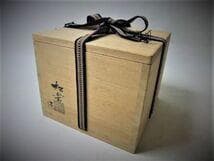
A hand-built chawan in aka-raku ware, its vermillion glaze broken by passages of black iron oxide that gather across the surface like storm cloud over red sky. The rim rises unevenly from a body shaped by the potter's palm rather than a wheel, marked by two shallow ridges near the foot. A red seal reading 松楽 (Shōraku) is pressed into the glaze near the base, and the bowl travels with a wooden box inscribed 松楽造 赤楽茶碗 銘瑞雲, naming the piece 'Zuiun' — auspicious clouds.
🔹 [ BASIC DETAILS ]
• Artist: Box inscription reads 松楽造 ('made by Shōraku') and is attributed by the seller to Sasaki Shōraku, a Kyoto raku-ware maker. Independent authentication of the piece's hand has not been performed.
• Technique: Hand-built (tezukune) aka-raku, a vermillion base glaze carrying iron-oxide overglaze patches, low-fired in the raku method.
• Era: Likely mid-to-late 20th century, based on glaze surface, footring finish, and form. Not independently authenticated.
• Origin: Attributed in the wooden box inscription to the Kyoto raku tradition.
• Dimensions: Diameter approx. 11.5 cm, Height approx. 8 cm.
• Box: Tomobako (共箱) inscribed by the maker, with an additional outer naming inscription attributed to Takahashi Etsudō, described as a former head priest of Daitoku-ji. The relationship between the maker's inscription and the naming inscription has not been independently verified.
• Condition: Seller describes long-term storage, unused, with no damage noted.
🔹 [ CULTURAL & ARTISTIC INSIGHT ]
Historical Context: Raku ware traces to sixteenth-century Kyoto, where Chōjirō began hand-building tea bowls under the guidance of Sen no Rikyū for use in chanoyu. Because each bowl is shaped by hand and fired individually at low temperature, no two share the same surface — a departure from the symmetry of wheel-thrown ware that suited the wabi-cha aesthetic Rikyū was defining. Aka-raku, the red variant, relies on an iron-bearing glaze that turns vermillion in the kiln's atmosphere, often left to interact with darker overglaze passages during firing.
Beyond the main Raku family line in Kyoto, a number of independent workshops have continued hand-built raku work under their own names through the twentieth century, producing bowls in the same idiom without claiming descent from the original lineage. This piece sits within that broader tradition.
Technique & Aesthetic: The black passages across the vermillion ground are not decoration applied afterward — they form in the kiln, where the glaze's chemistry and the speed of cooling determine where the iron darkens and where it stays red. The result reads like weather: a field caught mid-change, no two areas of the surface behaving the same way. The uneven rim and the two shallow ridges near the foot keep the hand of the maker visible in the finished form.
Philosophical Reflection: 瑞雲, 'auspicious clouds' — the name given to this bowl reads as much in the glaze as in the box. Dark shapes drift across a red ground the way clouds cross a clearing sky, neither obscuring it nor leaving it whole.
🔹 [ DEEP-DIVE COMMENTARY ]
Raku ware is defined by its process rather than its region: the clay body is built by hand, bisque-fired, glazed, and then pulled from a small kiln while still glowing — a method that gives the ware its name, raku, meaning ease or enjoyment. The rapid removal and cooling is what produces the characteristic crackle and the unpredictable color breaks seen in aka-raku and kuro-raku alike.
Achieving the aka-raku surface requires controlling both the iron content of the glaze and the timing of the pull from the kiln. Left in a fraction of a second longer, or cooled a fraction faster, the same glaze can shift from vermillion toward near-black. This is part of why raku potters describe the kiln, not the brush, as the true author of the surface.
Collectors value hand-built raku chawan for the way the process ties directly to chanoyu practice — the bowl was conceived to be held, not displayed at a distance, its irregular rim and weight built for the hand rather than the eye. The custom of a tea master or Zen priest bestowing a poetic name (mei) on a finished bowl, as this box records, adds a second layer of authorship: the potter shapes the object, and a separate figure in the tea world gives it its place in language.
Workshops working in the Kyoto raku idiom, distinct from the main Raku family line, remain active into the present, carrying the hand-built, low-fired method forward without claiming the original lineage's name. This bowl's box inscription and seal are the basis for its attribution here; no third-party certificate accompanies the piece, and the attribution should be read as the seller's and the box's, not as an independently authenticated determination.
🔹 [ SHIPPING & PACKAGING ]
• Dispatch: Within 1-6 business days
• Carrier: Japan Post EMS / UPS / FedEx (with tracking)
• Packaging: Carefully wrapped with protective materials
🔹 [ 日本語解説 ]
赤楽の茶碗。朱色の釉薬の上に、黒い鉄分が雲のように広がっている。轆轤ではなく手捏ねで成形された胴には、二段のゆるやかな稜線が残る。高台近くの釉中には「松楽」の朱印が押され、共箱には「松楽造 赤楽茶碗 銘瑞雲」と墨書される——「瑞雲」、めでたい雲を意味する銘である。
🔹 [ 基本情報 ]
・作家:箱書には「松楽造」とあり、出品者はこれを京都の楽焼作家・佐々木松楽の作と伝えている。本作の手による独立した鑑定は行っていない。
・技法:手捏ね(てづくね)による赤楽。朱色の下釉に鉄分を含む釉薬を重ね、楽焼特有の低火度焼成で仕上げている。
・年代:釉調、高台の仕上げ、器形から、昭和中期から後期の作と推定される。独立した鑑定は行っていない。
・産地:箱書により京都の楽焼の系譜に位置づけられる。
・寸法:径 約11.5cm、高さ 約8cm。
・箱:共箱(ともばこ)。作者による墨書に加え、前大徳寺・高橋悦道と伝えられる人物による銘の墨書が別に記される。両者の関係については独立した確認を行っていない。
・状態:出品者によれば長期保管品で未使用、傷みは見当たらないとのこと。
🔹 [ 文化的・美術的考察 ]
楽焼は十六世紀の京都に始まる。千利休の指導のもと、長次郎が轆轤を使わず手で茶碗を成形したことがその起源とされる。一碗ごとに手で形づくり、低い温度で個別に焼成するため、同じ表情を持つ器は二つとない。この不揃いさは、利休が追求した侘び茶の美意識と重なるものだった。赤楽は鉄分を含む釉薬を用いる系統で、窯の雰囲気の中で朱色に発色し、しばしば濃い部分と重なり合いながら表情を作る。
京都の楽家本流とは別に、独自の名で楽焼の系譜を継ぐ窯や作家も昭和期を通じて数多く存在した。本作もその広い系譜の中に位置づけられる。
技法と意匠:朱色の地に浮かぶ黒い部分は、後から施した装飾ではなく、窯の中で釉薬の化学変化と冷却の速度によって生まれたものである。同じ動きを二度繰り返さない、天候のような表情がそこにはある。ゆるやかな稜線と不揃いな口縁が、作り手の手の跡を残している。
詩的な一節:瑞雲——めでたい雲。釉薬の中の暗い部分は、朱色の空を渡る雲のように、覆い尽くすでもなく、消え去るでもなく、そこにとどまっている。
🔹 [ 深掘り解説 ]
楽焼は産地ではなく、その作り方によって定義される焼き物である。手で土を成形し、素焼きの後に施釉し、小型の窯からまだ赤く熱を帯びたまま引き出す——この工程自体が「楽」という名の由来とされる。急激に引き出し、急激に冷ますことで、貫入や、赤楽・黒楽に見られるような予測しがたい発色の変化が生まれる。
赤楽の表情を生むには、釉薬に含まれる鉄分の量と、窯から引き出す瞬間の見極めが必要になる。同じ釉薬でも、引き出す瞬間がわずかに違うだけで、朱色にも、ほとんど黒に近い色にもなる。楽焼の作り手が「筆ではなく窯が表情を作る」と語るのはそのためである。
コレクターが手捏ねの楽茶碗を評価するのは、その工程が茶の湯の実践と直接結びついているからでもある。この茶碗は遠くから眺めるためではなく、手に持たれるために作られており、不揃いな口縁や重みは、目のためではなく手のためのものである。また、完成した茶碗に茶人や僧侶が銘を与える習慣——この箱書が記すような——は、作り手による造形に加えて、茶の湯の世界に生きる別の人物による、言葉としての位置づけを重ねるものである。
楽家本流とは別に、京都の楽焼の様式で制作を続ける窯は現在も存在し、家系の名を名乗ることなく、手捏ね・低火度焼成という方法を受け継いでいる。本作の帰属は、この箱書と印章、そして出品者の説明のみを根拠としており、第三者機関による鑑定書は付属しない。ここでの帰属の記述は、独立した鑑定ではなく、箱と出品者の説明に基づくものとして読んでいただきたい。
🔹 [ BASIC DETAILS ]
• Artist: Box inscription reads 松楽造 ('made by Shōraku') and is attributed by the seller to Sasaki Shōraku, a Kyoto raku-ware maker. Independent authentication of the piece's hand has not been performed.
• Technique: Hand-built (tezukune) aka-raku, a vermillion base glaze carrying iron-oxide overglaze patches, low-fired in the raku method.
• Era: Likely mid-to-late 20th century, based on glaze surface, footring finish, and form. Not independently authenticated.
• Origin: Attributed in the wooden box inscription to the Kyoto raku tradition.
• Dimensions: Diameter approx. 11.5 cm, Height approx. 8 cm.
• Box: Tomobako (共箱) inscribed by the maker, with an additional outer naming inscription attributed to Takahashi Etsudō, described as a former head priest of Daitoku-ji. The relationship between the maker's inscription and the naming inscription has not been independently verified.
• Condition: Seller describes long-term storage, unused, with no damage noted.
🔹 [ CULTURAL & ARTISTIC INSIGHT ]
Historical Context: Raku ware traces to sixteenth-century Kyoto, where Chōjirō began hand-building tea bowls under the guidance of Sen no Rikyū for use in chanoyu. Because each bowl is shaped by hand and fired individually at low temperature, no two share the same surface — a departure from the symmetry of wheel-thrown ware that suited the wabi-cha aesthetic Rikyū was defining. Aka-raku, the red variant, relies on an iron-bearing glaze that turns vermillion in the kiln's atmosphere, often left to interact with darker overglaze passages during firing.
Beyond the main Raku family line in Kyoto, a number of independent workshops have continued hand-built raku work under their own names through the twentieth century, producing bowls in the same idiom without claiming descent from the original lineage. This piece sits within that broader tradition.
Technique & Aesthetic: The black passages across the vermillion ground are not decoration applied afterward — they form in the kiln, where the glaze's chemistry and the speed of cooling determine where the iron darkens and where it stays red. The result reads like weather: a field caught mid-change, no two areas of the surface behaving the same way. The uneven rim and the two shallow ridges near the foot keep the hand of the maker visible in the finished form.
Philosophical Reflection: 瑞雲, 'auspicious clouds' — the name given to this bowl reads as much in the glaze as in the box. Dark shapes drift across a red ground the way clouds cross a clearing sky, neither obscuring it nor leaving it whole.
🔹 [ DEEP-DIVE COMMENTARY ]
Raku ware is defined by its process rather than its region: the clay body is built by hand, bisque-fired, glazed, and then pulled from a small kiln while still glowing — a method that gives the ware its name, raku, meaning ease or enjoyment. The rapid removal and cooling is what produces the characteristic crackle and the unpredictable color breaks seen in aka-raku and kuro-raku alike.
Achieving the aka-raku surface requires controlling both the iron content of the glaze and the timing of the pull from the kiln. Left in a fraction of a second longer, or cooled a fraction faster, the same glaze can shift from vermillion toward near-black. This is part of why raku potters describe the kiln, not the brush, as the true author of the surface.
Collectors value hand-built raku chawan for the way the process ties directly to chanoyu practice — the bowl was conceived to be held, not displayed at a distance, its irregular rim and weight built for the hand rather than the eye. The custom of a tea master or Zen priest bestowing a poetic name (mei) on a finished bowl, as this box records, adds a second layer of authorship: the potter shapes the object, and a separate figure in the tea world gives it its place in language.
Workshops working in the Kyoto raku idiom, distinct from the main Raku family line, remain active into the present, carrying the hand-built, low-fired method forward without claiming the original lineage's name. This bowl's box inscription and seal are the basis for its attribution here; no third-party certificate accompanies the piece, and the attribution should be read as the seller's and the box's, not as an independently authenticated determination.
🔹 [ SHIPPING & PACKAGING ]
• Dispatch: Within 1-6 business days
• Carrier: Japan Post EMS / UPS / FedEx (with tracking)
• Packaging: Carefully wrapped with protective materials
🔹 [ 日本語解説 ]
赤楽の茶碗。朱色の釉薬の上に、黒い鉄分が雲のように広がっている。轆轤ではなく手捏ねで成形された胴には、二段のゆるやかな稜線が残る。高台近くの釉中には「松楽」の朱印が押され、共箱には「松楽造 赤楽茶碗 銘瑞雲」と墨書される——「瑞雲」、めでたい雲を意味する銘である。
🔹 [ 基本情報 ]
・作家:箱書には「松楽造」とあり、出品者はこれを京都の楽焼作家・佐々木松楽の作と伝えている。本作の手による独立した鑑定は行っていない。
・技法:手捏ね(てづくね)による赤楽。朱色の下釉に鉄分を含む釉薬を重ね、楽焼特有の低火度焼成で仕上げている。
・年代:釉調、高台の仕上げ、器形から、昭和中期から後期の作と推定される。独立した鑑定は行っていない。
・産地:箱書により京都の楽焼の系譜に位置づけられる。
・寸法:径 約11.5cm、高さ 約8cm。
・箱:共箱(ともばこ)。作者による墨書に加え、前大徳寺・高橋悦道と伝えられる人物による銘の墨書が別に記される。両者の関係については独立した確認を行っていない。
・状態:出品者によれば長期保管品で未使用、傷みは見当たらないとのこと。
🔹 [ 文化的・美術的考察 ]
楽焼は十六世紀の京都に始まる。千利休の指導のもと、長次郎が轆轤を使わず手で茶碗を成形したことがその起源とされる。一碗ごとに手で形づくり、低い温度で個別に焼成するため、同じ表情を持つ器は二つとない。この不揃いさは、利休が追求した侘び茶の美意識と重なるものだった。赤楽は鉄分を含む釉薬を用いる系統で、窯の雰囲気の中で朱色に発色し、しばしば濃い部分と重なり合いながら表情を作る。
京都の楽家本流とは別に、独自の名で楽焼の系譜を継ぐ窯や作家も昭和期を通じて数多く存在した。本作もその広い系譜の中に位置づけられる。
技法と意匠:朱色の地に浮かぶ黒い部分は、後から施した装飾ではなく、窯の中で釉薬の化学変化と冷却の速度によって生まれたものである。同じ動きを二度繰り返さない、天候のような表情がそこにはある。ゆるやかな稜線と不揃いな口縁が、作り手の手の跡を残している。
詩的な一節:瑞雲——めでたい雲。釉薬の中の暗い部分は、朱色の空を渡る雲のように、覆い尽くすでもなく、消え去るでもなく、そこにとどまっている。
🔹 [ 深掘り解説 ]
楽焼は産地ではなく、その作り方によって定義される焼き物である。手で土を成形し、素焼きの後に施釉し、小型の窯からまだ赤く熱を帯びたまま引き出す——この工程自体が「楽」という名の由来とされる。急激に引き出し、急激に冷ますことで、貫入や、赤楽・黒楽に見られるような予測しがたい発色の変化が生まれる。
赤楽の表情を生むには、釉薬に含まれる鉄分の量と、窯から引き出す瞬間の見極めが必要になる。同じ釉薬でも、引き出す瞬間がわずかに違うだけで、朱色にも、ほとんど黒に近い色にもなる。楽焼の作り手が「筆ではなく窯が表情を作る」と語るのはそのためである。
コレクターが手捏ねの楽茶碗を評価するのは、その工程が茶の湯の実践と直接結びついているからでもある。この茶碗は遠くから眺めるためではなく、手に持たれるために作られており、不揃いな口縁や重みは、目のためではなく手のためのものである。また、完成した茶碗に茶人や僧侶が銘を与える習慣——この箱書が記すような——は、作り手による造形に加えて、茶の湯の世界に生きる別の人物による、言葉としての位置づけを重ねるものである。
楽家本流とは別に、京都の楽焼の様式で制作を続ける窯は現在も存在し、家系の名を名乗ることなく、手捏ね・低火度焼成という方法を受け継いでいる。本作の帰属は、この箱書と印章、そして出品者の説明のみを根拠としており、第三者機関による鑑定書は付属しない。ここでの帰属の記述は、独立した鑑定ではなく、箱と出品者の説明に基づくものとして読んでいただきたい。
Quantity
Couldn't load pickup availability
Low stock: 1 left
View full details