1
/
of
11
Aka Raku Chawan Matsukaze — Sasaki Shouraku, Kyoto Raku Kiln, Signed Box
Aka Raku Chawan Matsukaze — Sasaki Shouraku, Kyoto Raku Kiln, Signed Box
Regular price
Dhs. 1,065.00 AED
Regular price
Sale price
Dhs. 1,065.00 AED
Taxes included.
Shipping calculated at checkout.
A vivid aka raku matcha tea bowl named Matsukaze (松風, Wind Through the Pines) by Sasaki Shouraku — Kyoto raku pottery with brilliant vermilion glaze and bold black landscape markings — signed wooden box, raku tea ceremony chawan from an established kiln. Presence announces itself before the tea is even poured.
🔹 [ BASIC DETAILS ]
• Artist: Sasaki Shouraku (佐々木松楽), Kyoto raku kiln potter
• Name (mei): Matsukaze (松風 — Wind Through the Pines)
• Technique: Aka raku (red raku) low-temperature lead glaze firing, hand-formed
• Era: Contemporary (late 20th–21st century)
• Origin: Kyoto, Japan
• Dimensions: Diameter approx. 11 cm, Height approx. 7.5 cm
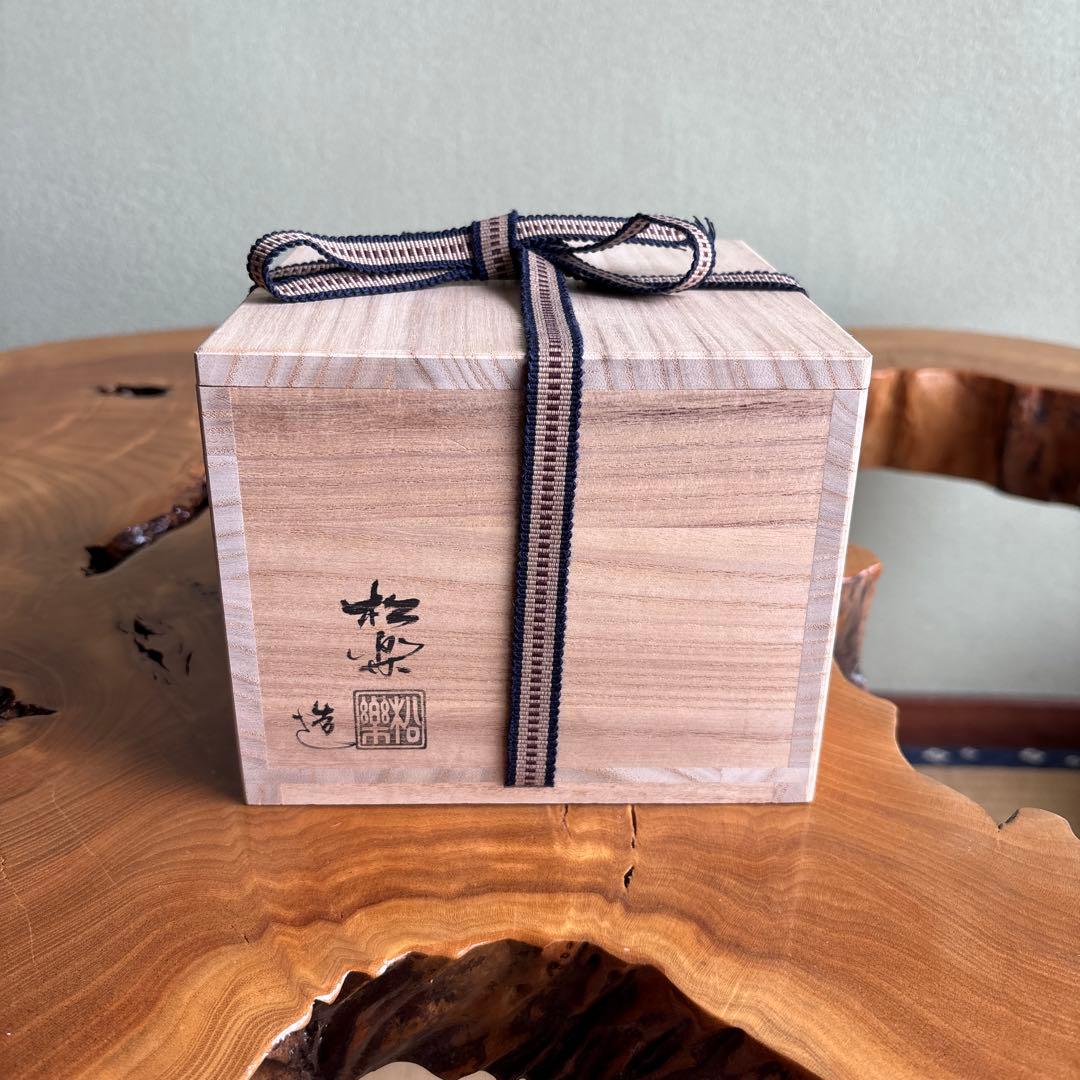
• Box: Signed wooden box (hakogaki) with inscription by the artist
• Condition: Excellent; natural raku crackle glaze is inherent to the technique
🔹 [ CULTURAL & ARTISTIC INSIGHT ]
Aka raku — the red complement to the more widely known black raku — carries its own cultural weight within the tea world. Where black raku recedes, red raku commands. The glaze on this bowl is a deep vermilion-to-coral register, broken by sweeping passages of iron-black that move across the surface like ink wash on silk — or like wind moving through pine branches, as the name Matsukaze instructs us to read it. The crackle network across the entire surface is not damage; it is the record of rapid cooling, the thermal biography of the firing. In Kyoto raku tradition, each firing is a single, unrepeatable event. This bowl holds that event in its glaze.
🔹 [ DEEP-DIVE COMMENTARY ]
The Sasaki lineage in Kyoto occupies a distinct position within the broader raku tradition. While the Raku family itself holds the iemoto (head family) authority of raku ceramics, independent Kyoto kilns working in the raku style have produced work of considerable authority and skill. Shouraku's pieces circulate among tea practitioners as functional tea utensils with genuine aesthetic weight.
The box inscription — written by the artist's own hand — reads: 松楽造 / 赤楽茶碗 / 銘 松風 / 京大原焼成 (Shouraku-made / Aka raku chawan / Named Matsukaze / Fired at Ohara, Kyoto). The character of this inscription grounds the piece geographically and biographically. Ohara, the valley north of Kyoto, has long associations with solitude and contemplation in Japanese cultural memory — an apt birthplace for a bowl named after the sound of wind.
The form is broad-shouldered with a slightly thickened, rolled rim — the classic aka raku profile that cups the hands well during temae (tea procedure). The black passages across the vermilion surface are not painted decoration but rather variations in the glaze itself, areas where reduced iron oxide shifted the color during firing. No two firings produce the same result; this landscape exists only once.
The interior of the bowl — seen in the close-up image — presents an unbroken warm coral, the glaze here particularly lustrous, with the crackle network forming a fine topographic map across the surface. This is where matcha will pool and be whisked; the warmth of the red interior intensifies the green of the tea visually.
[ JAPANESE DESCRIPTION / 日本語解説 ]
🔹 [ 基本情報 ]
• 作者:佐々木松楽(京都楽焼窯元)
• 銘:松風
• 技法:赤楽焼(低温鉛釉・手捻り)
• 時代:現代(20世紀後期〜21世紀)
• 産地:京都
• 寸法:直径約11cm、高さ約7.5cm
• 箱:作者書付の共箱
• 状態:優良。貫入は赤楽焼の特性です。
🔹 [ 文化・芸術的考察 ]
赤楽は、黒楽とは異なる存在感で茶席に臨む。朱赤の地に黒の景色が大らかに流れるこの茶碗は、松風という銘が示すように、松の梢を渡る風の動きそのものを器面に宿している。貫入の網目は急冷の記録であり、一度限りの焼成を茶碗が体に刻んでいる証左だ。
🔹 [ 詳細解説 ]
京都・大原で焼成された赤楽茶碗。書付箱には「松楽造 赤楽茶碗 銘松風 京大原焼成」の文字が確認できる。形は肩が張り、飲み口は緩やかに外反する正統的な赤楽の姿。黒の景色は釉薬中の鉄分が焼成時に変色したもので、染付ではなく焼成の痕跡。内側は鮮やかな珊瑚色を保ち、抹茶の緑色を映えさせる器面として機能する。
🔹 [ SHIPPING & PACKAGING ]
• Dispatch: Within 1-6 business days
• Carrier: Japan Post EMS / UPS (with tracking)
• Packaging: Carefully wrapped with protective materials
🔹 [ BASIC DETAILS ]
• Artist: Sasaki Shouraku (佐々木松楽), Kyoto raku kiln potter
• Name (mei): Matsukaze (松風 — Wind Through the Pines)
• Technique: Aka raku (red raku) low-temperature lead glaze firing, hand-formed
• Era: Contemporary (late 20th–21st century)
• Origin: Kyoto, Japan
• Dimensions: Diameter approx. 11 cm, Height approx. 7.5 cm
• Box: Signed wooden box (hakogaki) with inscription by the artist
• Condition: Excellent; natural raku crackle glaze is inherent to the technique
🔹 [ CULTURAL & ARTISTIC INSIGHT ]
Aka raku — the red complement to the more widely known black raku — carries its own cultural weight within the tea world. Where black raku recedes, red raku commands. The glaze on this bowl is a deep vermilion-to-coral register, broken by sweeping passages of iron-black that move across the surface like ink wash on silk — or like wind moving through pine branches, as the name Matsukaze instructs us to read it. The crackle network across the entire surface is not damage; it is the record of rapid cooling, the thermal biography of the firing. In Kyoto raku tradition, each firing is a single, unrepeatable event. This bowl holds that event in its glaze.
🔹 [ DEEP-DIVE COMMENTARY ]
The Sasaki lineage in Kyoto occupies a distinct position within the broader raku tradition. While the Raku family itself holds the iemoto (head family) authority of raku ceramics, independent Kyoto kilns working in the raku style have produced work of considerable authority and skill. Shouraku's pieces circulate among tea practitioners as functional tea utensils with genuine aesthetic weight.
The box inscription — written by the artist's own hand — reads: 松楽造 / 赤楽茶碗 / 銘 松風 / 京大原焼成 (Shouraku-made / Aka raku chawan / Named Matsukaze / Fired at Ohara, Kyoto). The character of this inscription grounds the piece geographically and biographically. Ohara, the valley north of Kyoto, has long associations with solitude and contemplation in Japanese cultural memory — an apt birthplace for a bowl named after the sound of wind.
The form is broad-shouldered with a slightly thickened, rolled rim — the classic aka raku profile that cups the hands well during temae (tea procedure). The black passages across the vermilion surface are not painted decoration but rather variations in the glaze itself, areas where reduced iron oxide shifted the color during firing. No two firings produce the same result; this landscape exists only once.
The interior of the bowl — seen in the close-up image — presents an unbroken warm coral, the glaze here particularly lustrous, with the crackle network forming a fine topographic map across the surface. This is where matcha will pool and be whisked; the warmth of the red interior intensifies the green of the tea visually.
[ JAPANESE DESCRIPTION / 日本語解説 ]
🔹 [ 基本情報 ]
• 作者:佐々木松楽(京都楽焼窯元)
• 銘:松風
• 技法:赤楽焼(低温鉛釉・手捻り)
• 時代:現代(20世紀後期〜21世紀)
• 産地:京都
• 寸法:直径約11cm、高さ約7.5cm
• 箱:作者書付の共箱
• 状態:優良。貫入は赤楽焼の特性です。
🔹 [ 文化・芸術的考察 ]
赤楽は、黒楽とは異なる存在感で茶席に臨む。朱赤の地に黒の景色が大らかに流れるこの茶碗は、松風という銘が示すように、松の梢を渡る風の動きそのものを器面に宿している。貫入の網目は急冷の記録であり、一度限りの焼成を茶碗が体に刻んでいる証左だ。
🔹 [ 詳細解説 ]
京都・大原で焼成された赤楽茶碗。書付箱には「松楽造 赤楽茶碗 銘松風 京大原焼成」の文字が確認できる。形は肩が張り、飲み口は緩やかに外反する正統的な赤楽の姿。黒の景色は釉薬中の鉄分が焼成時に変色したもので、染付ではなく焼成の痕跡。内側は鮮やかな珊瑚色を保ち、抹茶の緑色を映えさせる器面として機能する。
🔹 [ SHIPPING & PACKAGING ]
• Dispatch: Within 1-6 business days
• Carrier: Japan Post EMS / UPS (with tracking)
• Packaging: Carefully wrapped with protective materials
Quantity
Couldn't load pickup availability
Low stock: 1 left
View full details