1
/
of
9
Aka Raku Bataraichawan by Yoshimura Rakunyu, Kyoto Raku-yaki Summer Matcha Bowl, Horse-Trough Form, Signed Tomobako
Aka Raku Bataraichawan by Yoshimura Rakunyu, Kyoto Raku-yaki Summer Matcha Bowl, Horse-Trough Form, Signed Tomobako
Regular price
Dhs. 1,053.00 AED
Regular price
Sale price
Dhs. 1,053.00 AED
Taxes included.
Shipping calculated at checkout.
Experience Authentic Japan Art with this Yoshimura Rakunyu Aka Raku Chawan. This Kyoto Raku-yaki Matcha Bowl serves as a Japanese Summer Tea Bowl and Horse-Trough Form Chawan, featuring Hand-Molded Red Raku Glaze and Signed Tomobako Box—a must-have for any Art Collector.
🔹 [ BASIC DETAILS ]
• Artist: Yoshimura Rakunyu (吉村楽入), prominent Kyoto Raku ware lineage
• Form: Bataraichawan (馬盥茶碗)—wide, shallow horse-trough form, traditional summer vessel
• Technique: Hand-molded (tezukune) red raku earthenware, low-fired, wood-paddle finished
• Era: Showa to Heisei period, late 20th century
• Origin: Kyoto, Japan
• Dimensions: Diameter approx. 13 cm (5.1 in) / Height approx. 6 cm (2.4 in)
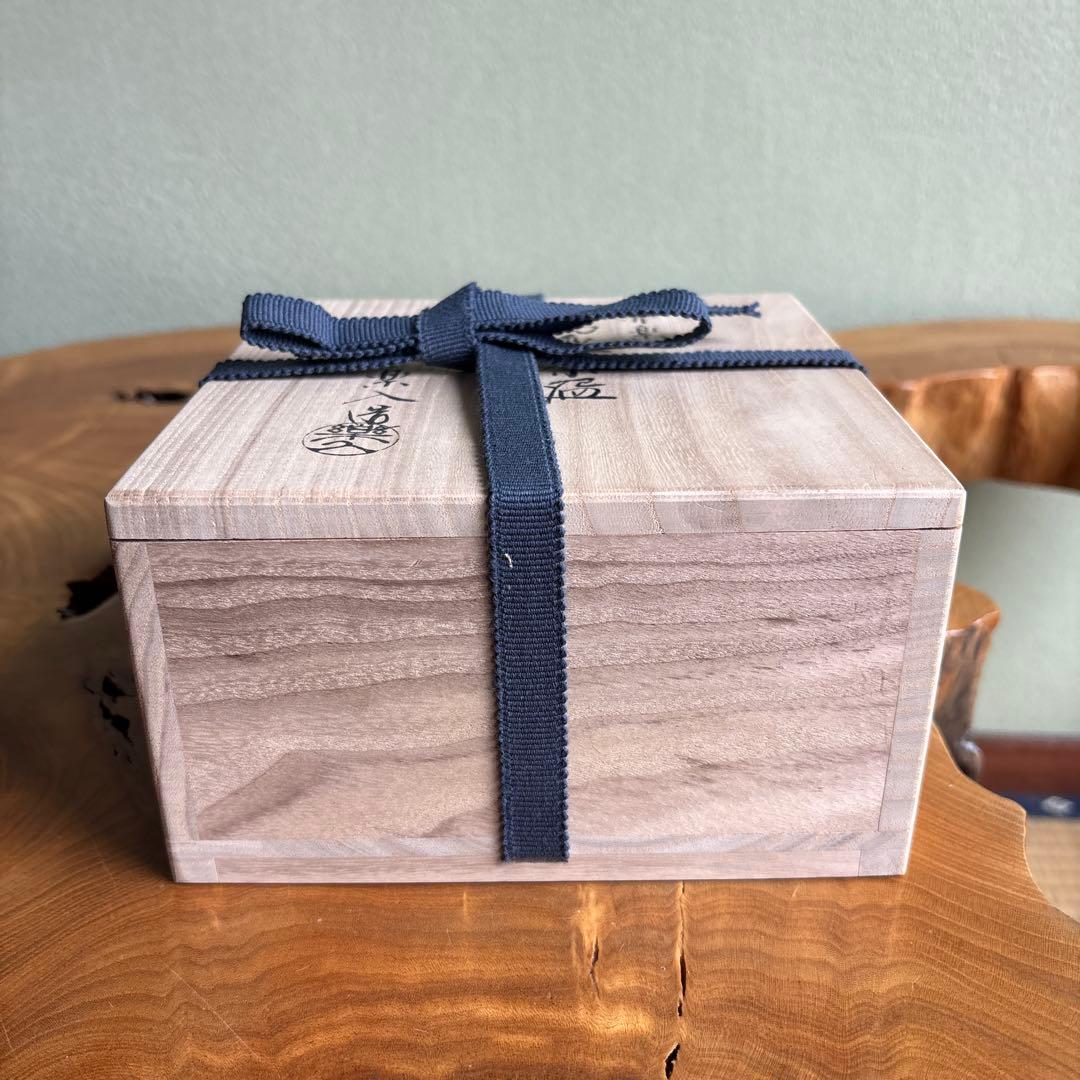
• Box: Signed kiri wood tomobako labeled “Aka Raku Bataraichawan” with artist's seal
• Condition: Excellent preserved condition. No cracks, no chips. Firing variations—soft black scorches across the red glaze—are intentional and highly prized features of raku ware.
🔹 [ Cultural & Artistic Insight ]
Historical Context: Raku ware was born in late sixteenth-century Kyoto specifically for the tea master Sen no Rikyu, who sought a vessel stripped of decorative rhetoric—something made by hand, fired at low temperature, shaped by the tea master's own aesthetic rather than a potter's wheel. For four and a half centuries the Kyoto Raku tradition has continued to produce bowls that embody this radical simplicity, and the Yoshimura Rakunyu workshop stands within that direct lineage of hand-shaped tea ceramics.
Technique & Aesthetic: The bataraichawan, literally “horse-trough tea bowl,” is one of the most poetic forms in the chanoyu repertoire. It is wide, shallow, and deliberately open—allowing the hot matcha to cool quickly, which makes it the canonical bowl of high summer. The shape references actual stone or wooden troughs from rural Japan, bringing a note of rustic countryside quiet into the formal tea room.
Philosophical Reflection: A summer bowl is not a bowl made to be full. It is a bowl made to make the tea cool, the hand relaxed, and the season bearable.
🔹 [ Deep-Dive Commentary ]
Raku ware is defined less by a single glaze recipe than by a total approach to making. Each vessel is formed entirely by hand—tezukune—without the use of a potting wheel, and finished with bamboo and wood tools that leave the subtle tool marks and undulations the Japanese tea aesthetic prizes as evidence of the maker's body. The clay is a coarse, porous, low-firing earthenware, and the bowl is pulled directly from the kiln while still glowing red-hot, producing glaze effects impossible to replicate by any industrial process.
On this piece, the red (aka) raku glaze pools in soft coral tones across the interior and runs down the exterior in streaks that shift between persimmon, umber, and deep charcoal. The so-called kamahen—kiln changes—are unmistakable: dark scorched patches bloom across one side, while the opposite face retains the clear, almost glowing red of a summer sunset reflected on still water. No two raku bowls are ever identical, and this individuality is the entire point.
The bataraichawan form sets this bowl apart from the taller winter-use chawan. Its wide mouth and low wall expose more of the matcha surface to air, cooling the drink rapidly—precisely the desired effect for June, July, and August gatherings, when a tall bowl would feel oppressive. Using this shape is, in itself, a seasonal statement: the host is acknowledging the heat, offering the guest a drink made to be drunk comfortably.
For the serious collector, a signed and boxed aka raku bataraichawan from a named Kyoto lineage is the summer counterpart to the winter black raku bowl—one of the paired foundations of a working chanoyu collection. In contemporary interiors, the piece also functions beautifully as a standalone object: placed on a low wood shelf with a sprig of summer grass, it quietly anchors a room with the atmosphere of a country teahouse at dusk.
[ JAPANESE DESCRIPTION / 日本語解説 ]
🔹 【 基本情報 】
• 作者:吉村楽入(京都楽焼系譜)
• 形:馬盥茶碗(夏茶碗の典型)
• 技法:手捩ね、赤楽釉、低火熱成形
• 時代:昭和~平成期
• 産地:京都
• 寸法:径約13cm、高さ約6cm
• 箱:共箱、箱書「赤楽馬盥茶碗」、楽入花押あり
• 状態:ヒビ・カケなし。窯変りは楽焼の絶景として意図的に残されています。
🔹 【 文化・芸術的洞察 】
歴史的文脈:楽焼は千利休のために京で生まれた手捩ねの土器で、ロクロを使わず、代々の楽家とその系譜が手とヘラで形を起こしてきました。吉村楽入はこの伝統の廁に位置する話題の作家です。
技法と美学:馬盥茶碗は、野に水を引くための馬盥を形容したもので、広く浅い口元が茶を早く冷まします。夏の茶事のためにこそ生まれた茶碗です。
哲学的省察:夏の茶碗とは、満たすための茶碗ではなく、暑さを数デシ軽くするための茶碗です。
🔹 【 深層解説 】
楽焼は釉薬や土の配合よりも、「何をしないか」という姿勢によって定義される焼物です。ろくろを用いず、手と端切りのヘラだけで土を形にし、低火熱で焼き、かまから赤いまま急冷を過ごすこの作り方が、実様の各々を生みます。同じ茶碗は二つと存在しません。
本作は、赤楽釉が枿色から木侾良く、一方には窯変りの軒発した黒い筆触れが深く焦げ、反対側には夕焼けのような透ける朱色が残る。いわゆる「窯変り」が従来の茶碗の見所として整理されています。
馬盥形は夏の茶事のための茶碗として生まれたもので、背の高い冬茶碗とはまったく対極にある性格を持ちます。広い口元と浅い壁が茶の表面積を広げ、風にさらされて温度が途中に害なく下がるため、暑い期の点前に最適です。
茶道具のコレクターにとって、共箱付きの赤楽馬盥茶碗は冬の黒楽と対になる「夏の一本」として配くべき存在です。現代の空間では、低い一枚板に夏草一枝を添えて飾るだけで、夜の茶屋のような静けさが空間を加わります。
🔹 [ SHIPPING & PACKAGING ]
• Dispatch: Within 1-6 business days
• Carrier: Japan Post EMS / UPS (with tracking)
• Packaging: Carefully wrapped with protective materials
🔹 [ BASIC DETAILS ]
• Artist: Yoshimura Rakunyu (吉村楽入), prominent Kyoto Raku ware lineage
• Form: Bataraichawan (馬盥茶碗)—wide, shallow horse-trough form, traditional summer vessel
• Technique: Hand-molded (tezukune) red raku earthenware, low-fired, wood-paddle finished
• Era: Showa to Heisei period, late 20th century
• Origin: Kyoto, Japan
• Dimensions: Diameter approx. 13 cm (5.1 in) / Height approx. 6 cm (2.4 in)
• Box: Signed kiri wood tomobako labeled “Aka Raku Bataraichawan” with artist's seal
• Condition: Excellent preserved condition. No cracks, no chips. Firing variations—soft black scorches across the red glaze—are intentional and highly prized features of raku ware.
🔹 [ Cultural & Artistic Insight ]
Historical Context: Raku ware was born in late sixteenth-century Kyoto specifically for the tea master Sen no Rikyu, who sought a vessel stripped of decorative rhetoric—something made by hand, fired at low temperature, shaped by the tea master's own aesthetic rather than a potter's wheel. For four and a half centuries the Kyoto Raku tradition has continued to produce bowls that embody this radical simplicity, and the Yoshimura Rakunyu workshop stands within that direct lineage of hand-shaped tea ceramics.
Technique & Aesthetic: The bataraichawan, literally “horse-trough tea bowl,” is one of the most poetic forms in the chanoyu repertoire. It is wide, shallow, and deliberately open—allowing the hot matcha to cool quickly, which makes it the canonical bowl of high summer. The shape references actual stone or wooden troughs from rural Japan, bringing a note of rustic countryside quiet into the formal tea room.
Philosophical Reflection: A summer bowl is not a bowl made to be full. It is a bowl made to make the tea cool, the hand relaxed, and the season bearable.
🔹 [ Deep-Dive Commentary ]
Raku ware is defined less by a single glaze recipe than by a total approach to making. Each vessel is formed entirely by hand—tezukune—without the use of a potting wheel, and finished with bamboo and wood tools that leave the subtle tool marks and undulations the Japanese tea aesthetic prizes as evidence of the maker's body. The clay is a coarse, porous, low-firing earthenware, and the bowl is pulled directly from the kiln while still glowing red-hot, producing glaze effects impossible to replicate by any industrial process.
On this piece, the red (aka) raku glaze pools in soft coral tones across the interior and runs down the exterior in streaks that shift between persimmon, umber, and deep charcoal. The so-called kamahen—kiln changes—are unmistakable: dark scorched patches bloom across one side, while the opposite face retains the clear, almost glowing red of a summer sunset reflected on still water. No two raku bowls are ever identical, and this individuality is the entire point.
The bataraichawan form sets this bowl apart from the taller winter-use chawan. Its wide mouth and low wall expose more of the matcha surface to air, cooling the drink rapidly—precisely the desired effect for June, July, and August gatherings, when a tall bowl would feel oppressive. Using this shape is, in itself, a seasonal statement: the host is acknowledging the heat, offering the guest a drink made to be drunk comfortably.
For the serious collector, a signed and boxed aka raku bataraichawan from a named Kyoto lineage is the summer counterpart to the winter black raku bowl—one of the paired foundations of a working chanoyu collection. In contemporary interiors, the piece also functions beautifully as a standalone object: placed on a low wood shelf with a sprig of summer grass, it quietly anchors a room with the atmosphere of a country teahouse at dusk.
[ JAPANESE DESCRIPTION / 日本語解説 ]
🔹 【 基本情報 】
• 作者:吉村楽入(京都楽焼系譜)
• 形:馬盥茶碗(夏茶碗の典型)
• 技法:手捩ね、赤楽釉、低火熱成形
• 時代:昭和~平成期
• 産地:京都
• 寸法:径約13cm、高さ約6cm
• 箱:共箱、箱書「赤楽馬盥茶碗」、楽入花押あり
• 状態:ヒビ・カケなし。窯変りは楽焼の絶景として意図的に残されています。
🔹 【 文化・芸術的洞察 】
歴史的文脈:楽焼は千利休のために京で生まれた手捩ねの土器で、ロクロを使わず、代々の楽家とその系譜が手とヘラで形を起こしてきました。吉村楽入はこの伝統の廁に位置する話題の作家です。
技法と美学:馬盥茶碗は、野に水を引くための馬盥を形容したもので、広く浅い口元が茶を早く冷まします。夏の茶事のためにこそ生まれた茶碗です。
哲学的省察:夏の茶碗とは、満たすための茶碗ではなく、暑さを数デシ軽くするための茶碗です。
🔹 【 深層解説 】
楽焼は釉薬や土の配合よりも、「何をしないか」という姿勢によって定義される焼物です。ろくろを用いず、手と端切りのヘラだけで土を形にし、低火熱で焼き、かまから赤いまま急冷を過ごすこの作り方が、実様の各々を生みます。同じ茶碗は二つと存在しません。
本作は、赤楽釉が枿色から木侾良く、一方には窯変りの軒発した黒い筆触れが深く焦げ、反対側には夕焼けのような透ける朱色が残る。いわゆる「窯変り」が従来の茶碗の見所として整理されています。
馬盥形は夏の茶事のための茶碗として生まれたもので、背の高い冬茶碗とはまったく対極にある性格を持ちます。広い口元と浅い壁が茶の表面積を広げ、風にさらされて温度が途中に害なく下がるため、暑い期の点前に最適です。
茶道具のコレクターにとって、共箱付きの赤楽馬盥茶碗は冬の黒楽と対になる「夏の一本」として配くべき存在です。現代の空間では、低い一枚板に夏草一枝を添えて飾るだけで、夜の茶屋のような静けさが空間を加わります。
🔹 [ SHIPPING & PACKAGING ]
• Dispatch: Within 1-6 business days
• Carrier: Japan Post EMS / UPS (with tracking)
• Packaging: Carefully wrapped with protective materials
Quantity
Couldn't load pickup availability
Low stock: 1 left
View full details