1
/
of
8
Aka-Oribe Tea Bowl by Sato Kazuko / Fuji-gama Kiln
Aka-Oribe Tea Bowl by Sato Kazuko / Fuji-gama Kiln
Regular price
Dhs. 763.00 AED
Regular price
Sale price
Dhs. 763.00 AED
Taxes included.
Shipping calculated at checkout.
A chawan by Sato Kazuko — formed at Fuji-gama kiln, in the Aka-Oribe tradition. The warm reddish-buff iron-slip ground carries bold white calligraphic strokes across the body, while a passage of deep copper-green Oribe glaze gathers at the rim. Hand-formed and sturdy, with an exposed clay foot that keeps the weight of it honest. Comes boxed with a yellow kifukusa and shiori.
🔹 [ BASIC DETAILS ]
• Artist: Sato Kazuko (佐藤和子) / Fuji-gama (不二窯) kiln
• Technique: Aka-Oribe (Red Oribe) — iron-slip ground, copper-green glaze at rim, white slip brushwork
• Era: 1990s
• Origin: Japan (Mino tradition)
• Dimensions: Diameter approx. 12.5 cm / Height approx. 8 cm
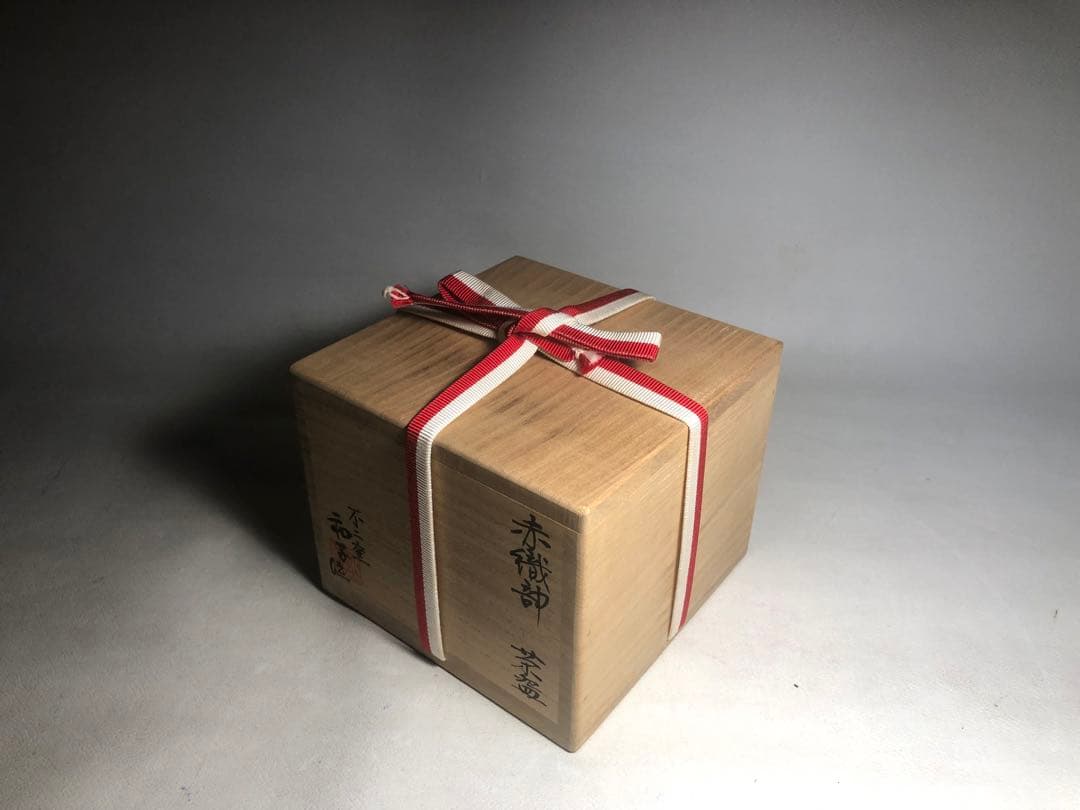
• Box: Signed wooden tomobako with yellow kifukusa (cloth) and shiori (descriptive slip)
• Condition: Sound. No cracks or chips.
🔹 [ CULTURAL & ARTISTIC INSIGHT ]
Oribe ware emerged under the influence of tea master Furuta Oribe in the early Edo period — a conscious departure from the austere quiet of Rikyu-style wabi. The Aka-Oribe variant states its position clearly: iron-slip red ground interrupted by a strike of copper-green glaze, white brushmarks crossing the surface like a signature that refuses explanation. Asymmetry here is not imperfection. It is argument. As Oribe understood: the most interesting tea bowl is the one that does not settle at center.
🔹 [ DEEP-DIVE COMMENTARY ]
Oribe ware takes its name from Furuta Oribe (1544–1615), the tea master who trained under Sen no Rikyu and then deliberately moved away from his teacher's wabi quietude. Where Rikyu sought emptiness, Oribe embraced color, irregularity, and graphic boldness. Aka-Oribe is one of the most visually assertive sub-types: the body is coated in an iron-bearing red slip that fires to a warm reddish-buff ground, then accented with the characteristic copper-green glaze that defines Oribe ware at large.
The iron-slip ground is applied before the first firing; the copper-green Oribe glaze, derived from copper oxide, is layered at the rim and selected areas before the glaze firing. The result is a two-stage event in clay — the iron ground anchoring the piece in warmth, the green glaze arriving like weather over it. White slip marks are brushed freely across the surface, neither programmed nor accidental.
Mino, in present-day Gifu Prefecture, was the production center for Oribe ware through the Momoyama and early Edo periods. The region's kilns had the technical range to experiment: varied clay bodies, layered slips, wide-temperature firings. Under Furuta Oribe's influence, asymmetry, irregular shaping, and bold surface marks were not errors to correct — they were the intended product.
Collectors return to Oribe for this same reason: the work refuses the comfort of symmetry. An Oribe chawan asks something of its handler — the interior for whisking tea, the exterior for reading. This bowl by Sato Kazuko at Fuji-gama continues that conversation without announcement.
Modern makers working in the Oribe tradition are not revivalists. They are participants. Sato Kazuko's signed tomobako — with its yellow kifukusa and explanatory shiori — places this piece within a line of documented, deliberate practice.
---
【日本語解説】
佐藤和子が不二窯で制作した赤織部茶碗。温かみのある赤錆色の鉄化粧下地に、白い刷毛目が大胆に走り、口縁には深みのある緑青色の織部釉がかかる。手びねりで成形され、腰が据わった佇まい。高台の土味は素直で、手に持てばその重さが静かに伝わる。共箱、黄裂、栞付き。
🔹 [ 基本情報 ]
• 作家:佐藤和子 / 不二窯
• 技法:赤織部(鉄化粧下地・緑青色織部釉・白化粧絵付け)
• 時代:1990年代
• 産地:日本(美濃系)
• 寸法:口径 約12.5cm・高さ 約8cm
• 箱:作家共箱(黄裂付、栞入り)
• 状態:良好。ヒビ・カケなし。
🔹 [ 文化・芸術的背景 ]
織部焼は、千利休の高弟・古田織部が江戸初期に確立した様式で、利休の侘びの静けさからの意識的な逸脱として生まれた。赤織部はその中でも主張の強い種類で、鉄化粧の赤みがかった地に、緑青色の織部釉と白化粧の刷毛目が交差する。ここにある歪みや非対称は欠陥ではない。それこそが主張だ。「もっとも面白い茶碗は、中心に落ち着こうとしない」——古田織部はそれを体現した。
🔹 [ 深掘り解説 ]
古田織部(1544〜1615)は、千利休のもとで侘びを学びながら、師の沈黙から離れて色彩と不均衡と大胆な意匠へと向かった茶人だ。その名を冠する織部焼の中でも、赤織部はとりわけ視覚的な主張が強い。鉄分を含む化粧土を素地に施し焼成することで、温かみのある赤錆色の下地が生まれる。そこに銅の酸化物から発色する緑青色の釉薬を部分的にかけ、さらに白化粧の刷毛目を走らせる。
鉄化粧は素焼きの前に施し、緑青色の釉薬は本焼きの前に口縁や要所に掛ける。この段階的な焼成によって、温かい鉄の地と、そこに天気のように差し込む緑青の釉が対話を生む。白い刷毛目は計画でも偶然でもなく、焼成という行為の途中に刻まれた跡だ。
美濃(現在の岐阜県)は桃山から江戸初期にかけて織部焼の中心地だった。多様な土と釉薬を扱える技術的な地盤があり、古田織部の影響のもとで、歪みや不規則な成形、大胆な刷毛目は「修正すべき誤り」でなく「意図された産物」として位置づけられた。
織部に惹かれる収集家は、均整の安心感を求めていない。織部の茶碗は手にした者に何かを要求する——内側はお茶を点てる場所、外側は読む場所。不二窯の佐藤和子によるこの茶碗は、その対話を静かに続けている。
織部の伝統の中で作る現代の作り手は、再現者ではなく参加者だ。共箱、黄裂、栞——佐藤和子の署名が、この茶碗を記録された実践の一端に位置づける。
🔹 [ SHIPPING & PACKAGING ]
• Dispatch: Within 1-6 business days
• Carrier: Japan Post EMS / UPS / FedEx (with tracking)
• Packaging: Carefully wrapped with protective materials
Quantity
Couldn't load pickup availability
Low stock: 1 left
View full details