1
/
of
8
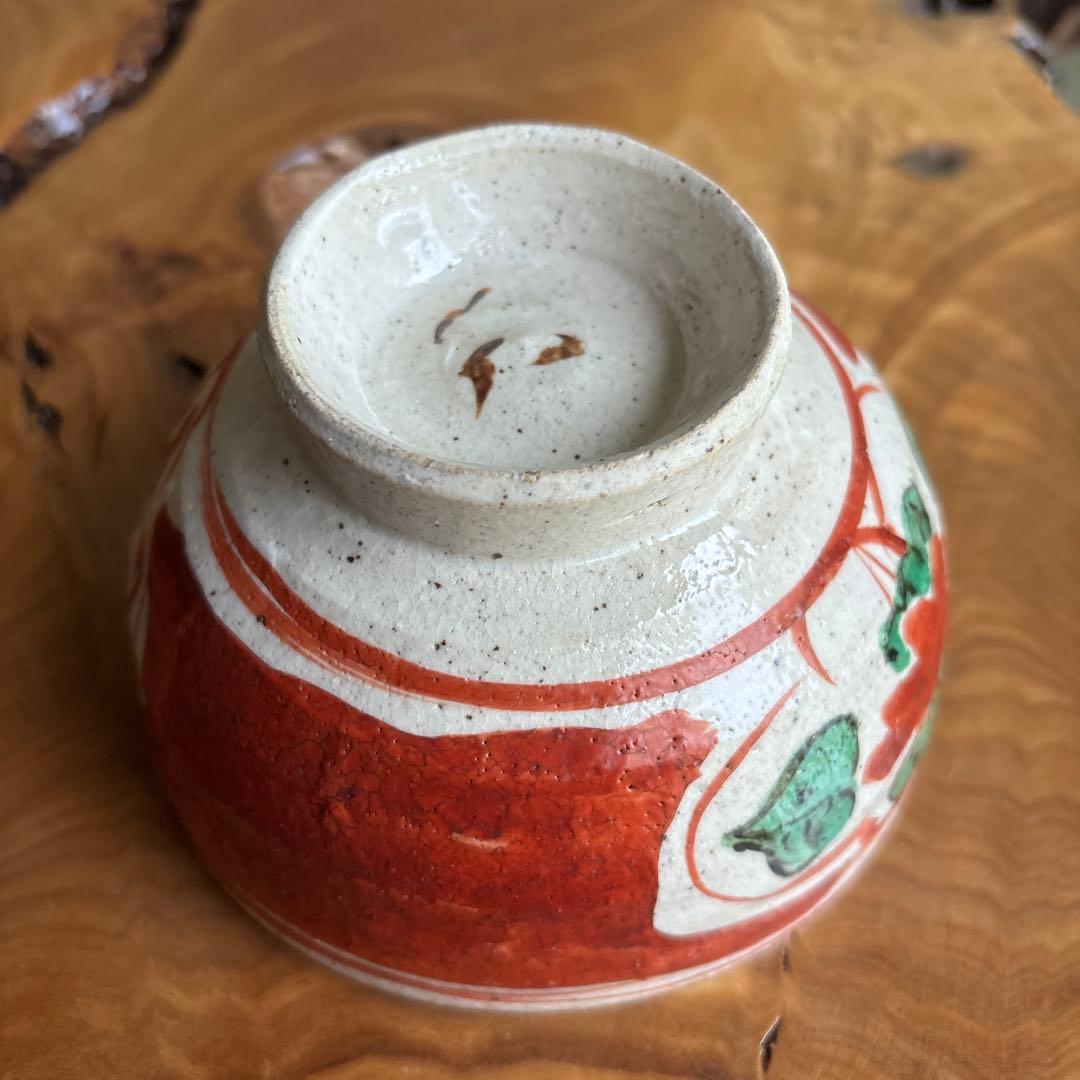
Aka-e Matcha Bowl Japanese Red Overglaze Chawan with Floral Motif — Folk Kiln, Tomobako
Aka-e Matcha Bowl Japanese Red Overglaze Chawan with Floral Motif — Folk Kiln, Tomobako
Regular price
Dhs. 494.00 AED
Regular price
Sale price
Dhs. 494.00 AED
Taxes included.
Shipping calculated at checkout.
Experience Authentic Japan Art with this Aka-e Matcha Bowl. This Japanese Tea Bowl serves as a Red Overglaze Chawan and Floral Motif Teaware, featuring Hand Painted Ceramic Bowl and Japanese Folk Kiln Pottery—a must-have for any Art Collector. A bold Vintage Japanese Chawan with Tomobako Box, this Wabi-Sabi Tea Ceremony Bowl captures the spontaneous spirit of Japanese Floral Pottery Gift.
🔹 [ BASIC DETAILS ]
• Artist: Unknown (attributed to regional folk kiln, likely Mino or related tradition)
• Technique: Aka-e (red overglaze enamel) with green enamel accents on white crackle ground; hand-painted sōsōka (grass-and-flower) motif
• Era: Mid-to-late Showa period (est. 1960s–1980s)
• Origin: Japan — folk kiln tradition, Mino or related regional ceramic center
• Dimensions: Diameter approx. 13 cm, Height approx. 8 cm
• Box: Tomobako (original wooden storage box) included
• Condition: No chips or cracks; crackle (kannyu) is an intentional glaze characteristic
🔹 [ CULTURAL & ARTISTIC INSIGHT ]
Aka-e — literally "red picture" — is one of Japan's most exuberant ceramic traditions. Emerging from the kilns of Arita and later spreading to Mino, Kyoto, and countless regional folk kilns, aka-e refers to the application of iron-red overglaze enamel (sometimes called "bengara") over a white-glazed fired ground, followed by a second lower-temperature firing to set the enamels. In this chawan, the technique is deployed with unusual freedom: bold, sweeping strokes of vermilion red spiral across the surface in sweeping sōsōka arrangements — grasses, leaves, and blooms that seem to grow and move as you turn the bowl in your hands. Touches of copper-green enamel punctuate the composition, their malachite hue softening and grounding the red's intensity. The white ground carries a delicate kannyu — a network of fine crazing lines where the glaze has cooled and fractured gently over centuries of use — lending the surface a quiet topographical beauty. Red horizontal banding at the rim and above the foot ring frames the central pictorial zone with calm authority.
Poetic Line: "Red flowers bloom again each time the bowl is lifted — painted not to last, but to live."
🔹 [ DEEP-DIVE COMMENTARY ]
The aka-e tradition in Japan descends from the Chinese wucai (五彩) polychrome enamels of the Ming dynasty, which Japanese potters first studied and then transformed into something distinctly their own. At the Arita kilns in Hizen Province (present-day Saga Prefecture), potters such as the legendary Sakaida Kakiemon I developed their own iron-red formulas in the early Edo period, producing works that would captivate European courts for three centuries. Yet the spirit of aka-e was never confined to elite porcelain workshops alone.
Regional folk kilns — particularly in Mino (Gifu Prefecture), the great utilitarian ceramic heartland of Japan — absorbed the aka-e vocabulary and reinterpreted it through a folk aesthetic. Where court-commissioned aka-e porcelains were precise and formal, folk-kiln aka-e chawan tend toward spontaneity. The brushwork is looser, the enamel pooling slightly at the edges of strokes, the motifs less botanical diagram than joyful gesture. This chawan exemplifies that spirit: the red sōsōka motif is not a careful study of any single flower species, but rather an evocation of flora in motion — a memory of the garden rather than a record of it.
The stoneware body beneath the glaze is dense and slightly granular, contributing warmth to the hand. The foot ring (kodai) is neatly trimmed and unglazed, showing the clay body's natural color — a useful indicator of firing conditions and clay type for the attentive collector. The tomobako (wooden storage box) is original to the piece, providing both provenance context and proper archival storage, which helps preserve the glaze surface over time.
For the contemporary collector, a folk-kiln aka-e chawan such as this represents an accessible entry point into the red-enamel tradition without the premium attached to signed master-kiln examples. The piece functions equally well as a study object, a daily-use tea bowl, or a display piece in a wabi-sabi interior arrangement. Its bold graphic presence reads confidently against both contemporary minimal settings and traditional tokonoma alcoves.
🔹 [ 日本語解説 ]
【詳細スペック】
・作家:不詳(民窯、美濃系または近縁の地方窯に帰属)
・技法:白地に赤絵(鉄赤上絵具)と緑彩を施した草花文。二度焼きによる上絵付け技法
・時代:昭和中〜後期(1960年代〜1980年代推定)
・産地:日本 — 民窯(美濃系またはその影響下にある地方窯)
・寸法:直径 約13cm、高さ 約8cm
・箱:共箱(木製)付き
・状態:ヒビ・欠けなし。細かな貫入は釉薬の自然な景色
【文化・美術的解説】
赤絵とは、施釉・本焼きを経た白磁または白陶の表面に、鉄分を主成分とする赤色上絵具を用いて文様を描き、さらに低温で二度焼きして定着させる技法です。有田・伊万里の磁器窯から始まり、京焼や美濃の民窯へと広がったこの技法は、日本の陶芸史において「色絵」の代名詞ともなりました。本茶碗では、その赤絵がことさら生き生きとした表情を見せています。奔放な筆致で描かれた草花文は、どこか風になびく野の花を思わせ、ひとつひとつの筆線に命が宿るかのようです。随所に差し込まれた緑彩が、赤の強さを受け止め、画面に落ち着きと奥行きをもたらしています。白地にうっすら走る貫入(かんにゅう)もまた、長い時間を生き抜いた器だけが持てる静かな景色です。
詩的一行:「碗を持ち上げるたびに、赤い花がまた咲く——描かれたのは、残るためではなく、生きるためだった。」
【上級コレクター向け詳解】
赤絵の源流は中国明代の五彩磁器にあります。江戸時代初期、肥前有田の窯人たちがその技法を学び、独自の鉄赤を開発したことで、日本の上絵陶磁の歴史が幕を開けました。やがてその美意識は、量産と実用の拠点であった美濃をはじめ各地の民窯にも波及し、格式張らない自由な赤絵民窯作品が生まれていきました。
本作のように作者不詳の民窯赤絵茶碗は、名工銘入り作品に比べて入手しやすく、それでいて赤絵の美学を純粋に体現した学習・鑑賞の対象として優れています。ざっくりとした土味の陶胎、丁寧に削り出された高台、白濁した釉調——これらすべてが、窯場の技術水準と焼成環境を物語る「読める器」です。共箱は保存性を高めるのみならず、作品の来歴を証言するものとして資料的価値を持ちます。
わび・さびの美を重んじる現代のインテリアにも、床の間の飾り物としても、あるいは実際の茶席での一碗としても、堂々と存在感を放つ一点です。
🔹 [ SHIPPING & PACKAGING ]
• Dispatch: Within 1-6 business days
• Carrier: Japan Post EMS / UPS (with tracking)
• Packaging: Carefully wrapped with protective materials
🔹 [ BASIC DETAILS ]
• Artist: Unknown (attributed to regional folk kiln, likely Mino or related tradition)
• Technique: Aka-e (red overglaze enamel) with green enamel accents on white crackle ground; hand-painted sōsōka (grass-and-flower) motif
• Era: Mid-to-late Showa period (est. 1960s–1980s)
• Origin: Japan — folk kiln tradition, Mino or related regional ceramic center
• Dimensions: Diameter approx. 13 cm, Height approx. 8 cm
• Box: Tomobako (original wooden storage box) included
• Condition: No chips or cracks; crackle (kannyu) is an intentional glaze characteristic
🔹 [ CULTURAL & ARTISTIC INSIGHT ]
Aka-e — literally "red picture" — is one of Japan's most exuberant ceramic traditions. Emerging from the kilns of Arita and later spreading to Mino, Kyoto, and countless regional folk kilns, aka-e refers to the application of iron-red overglaze enamel (sometimes called "bengara") over a white-glazed fired ground, followed by a second lower-temperature firing to set the enamels. In this chawan, the technique is deployed with unusual freedom: bold, sweeping strokes of vermilion red spiral across the surface in sweeping sōsōka arrangements — grasses, leaves, and blooms that seem to grow and move as you turn the bowl in your hands. Touches of copper-green enamel punctuate the composition, their malachite hue softening and grounding the red's intensity. The white ground carries a delicate kannyu — a network of fine crazing lines where the glaze has cooled and fractured gently over centuries of use — lending the surface a quiet topographical beauty. Red horizontal banding at the rim and above the foot ring frames the central pictorial zone with calm authority.
Poetic Line: "Red flowers bloom again each time the bowl is lifted — painted not to last, but to live."
🔹 [ DEEP-DIVE COMMENTARY ]
The aka-e tradition in Japan descends from the Chinese wucai (五彩) polychrome enamels of the Ming dynasty, which Japanese potters first studied and then transformed into something distinctly their own. At the Arita kilns in Hizen Province (present-day Saga Prefecture), potters such as the legendary Sakaida Kakiemon I developed their own iron-red formulas in the early Edo period, producing works that would captivate European courts for three centuries. Yet the spirit of aka-e was never confined to elite porcelain workshops alone.
Regional folk kilns — particularly in Mino (Gifu Prefecture), the great utilitarian ceramic heartland of Japan — absorbed the aka-e vocabulary and reinterpreted it through a folk aesthetic. Where court-commissioned aka-e porcelains were precise and formal, folk-kiln aka-e chawan tend toward spontaneity. The brushwork is looser, the enamel pooling slightly at the edges of strokes, the motifs less botanical diagram than joyful gesture. This chawan exemplifies that spirit: the red sōsōka motif is not a careful study of any single flower species, but rather an evocation of flora in motion — a memory of the garden rather than a record of it.
The stoneware body beneath the glaze is dense and slightly granular, contributing warmth to the hand. The foot ring (kodai) is neatly trimmed and unglazed, showing the clay body's natural color — a useful indicator of firing conditions and clay type for the attentive collector. The tomobako (wooden storage box) is original to the piece, providing both provenance context and proper archival storage, which helps preserve the glaze surface over time.
For the contemporary collector, a folk-kiln aka-e chawan such as this represents an accessible entry point into the red-enamel tradition without the premium attached to signed master-kiln examples. The piece functions equally well as a study object, a daily-use tea bowl, or a display piece in a wabi-sabi interior arrangement. Its bold graphic presence reads confidently against both contemporary minimal settings and traditional tokonoma alcoves.
🔹 [ 日本語解説 ]
【詳細スペック】
・作家:不詳(民窯、美濃系または近縁の地方窯に帰属)
・技法:白地に赤絵(鉄赤上絵具)と緑彩を施した草花文。二度焼きによる上絵付け技法
・時代:昭和中〜後期(1960年代〜1980年代推定)
・産地:日本 — 民窯(美濃系またはその影響下にある地方窯)
・寸法:直径 約13cm、高さ 約8cm
・箱:共箱(木製)付き
・状態:ヒビ・欠けなし。細かな貫入は釉薬の自然な景色
【文化・美術的解説】
赤絵とは、施釉・本焼きを経た白磁または白陶の表面に、鉄分を主成分とする赤色上絵具を用いて文様を描き、さらに低温で二度焼きして定着させる技法です。有田・伊万里の磁器窯から始まり、京焼や美濃の民窯へと広がったこの技法は、日本の陶芸史において「色絵」の代名詞ともなりました。本茶碗では、その赤絵がことさら生き生きとした表情を見せています。奔放な筆致で描かれた草花文は、どこか風になびく野の花を思わせ、ひとつひとつの筆線に命が宿るかのようです。随所に差し込まれた緑彩が、赤の強さを受け止め、画面に落ち着きと奥行きをもたらしています。白地にうっすら走る貫入(かんにゅう)もまた、長い時間を生き抜いた器だけが持てる静かな景色です。
詩的一行:「碗を持ち上げるたびに、赤い花がまた咲く——描かれたのは、残るためではなく、生きるためだった。」
【上級コレクター向け詳解】
赤絵の源流は中国明代の五彩磁器にあります。江戸時代初期、肥前有田の窯人たちがその技法を学び、独自の鉄赤を開発したことで、日本の上絵陶磁の歴史が幕を開けました。やがてその美意識は、量産と実用の拠点であった美濃をはじめ各地の民窯にも波及し、格式張らない自由な赤絵民窯作品が生まれていきました。
本作のように作者不詳の民窯赤絵茶碗は、名工銘入り作品に比べて入手しやすく、それでいて赤絵の美学を純粋に体現した学習・鑑賞の対象として優れています。ざっくりとした土味の陶胎、丁寧に削り出された高台、白濁した釉調——これらすべてが、窯場の技術水準と焼成環境を物語る「読める器」です。共箱は保存性を高めるのみならず、作品の来歴を証言するものとして資料的価値を持ちます。
わび・さびの美を重んじる現代のインテリアにも、床の間の飾り物としても、あるいは実際の茶席での一碗としても、堂々と存在感を放つ一点です。
🔹 [ SHIPPING & PACKAGING ]
• Dispatch: Within 1-6 business days
• Carrier: Japan Post EMS / UPS (with tracking)
• Packaging: Carefully wrapped with protective materials
Quantity
Couldn't load pickup availability
Low stock: 1 left
View full details