1
/
of
10
Aizu-Hongō Feldspar Glaze Chawan — Iron Speckle Matcha Bowl by Tōrakuen (Satō Ryūichi)
Aizu-Hongō Feldspar Glaze Chawan — Iron Speckle Matcha Bowl by Tōrakuen (Satō Ryūichi)
Regular price
Dhs. 509.00 AED
Regular price
Sale price
Dhs. 509.00 AED
Taxes included.
Shipping calculated at checkout.
Experience Authentic Japan Art with this Aizu-Hongō Chawan — a Japanese Tea Ceremony bowl and Matcha Bowl by Tōrakuen Kiln, crafted in the Feldspar Glaze tradition with Iron Speckle texture—a must-have for any Art Collector drawn to Tohoku Ceramics and Wabi Tea Culture.
🔹 [ BASIC DETAILS ]
• Artist: Tōrakuen Kiln — Satō Ryūichi (室元 陶楽園、佐藤龍一作)
• Technique: Feldspar glaze (長石釉) with iron speckle scatter; wheel-thrown with visible horizontal throwing rings
• Era: 1990s – 2000–2006
• Origin: Aizu-Hongō, Fukushima, Japan
• Dimensions: Height approx. 8 cm, Diameter approx. 12 cm
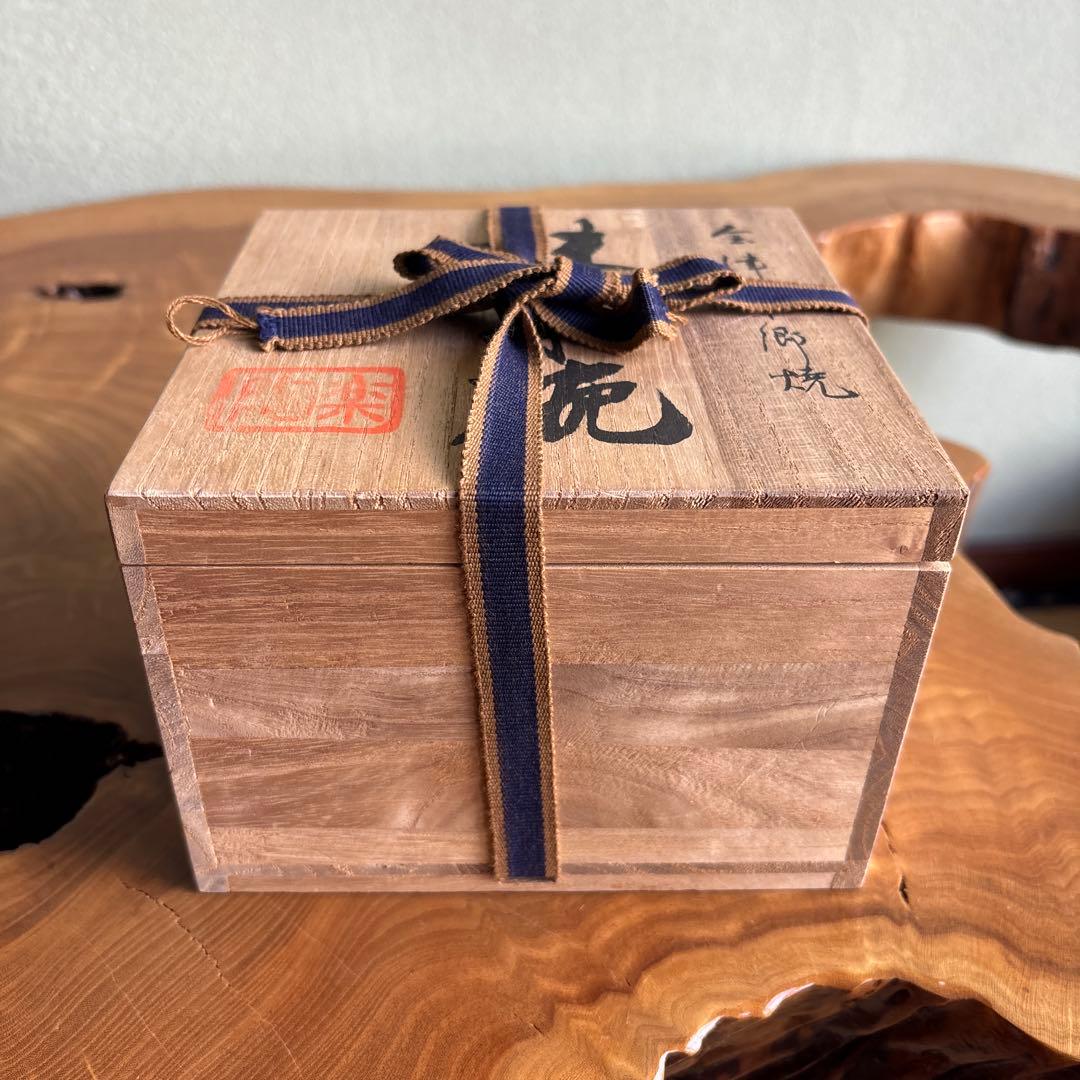
• Box: Tomobako (signed wooden box) — lid inscribed 抹茶碗, red kiln seal; interior signed 室元 陶楽園 / 佐藤龍一作
• Condition: Excellent — no chips, cracks, or repairs; glaze intact throughout
🔹 [ CULTURAL & ARTISTIC INSIGHT ]
Aizu-Hongō is one of Japan's oldest continuous kiln towns, tracing its history to the early Edo period when feudal lord Gamō Ujisato invited potters from Kyushu to establish production in Fukushima's inland basin. Unlike the more celebrated kilns of Kyoto or Bizen, Aizu-Hongō developed quietly under regional patronage, accumulating a distinct identity: bold wheel work, earthy clay bodies drawn from the Ōkawa riverbed, and glazes that carry the cold mineral clarity of the northern Tohoku landscape.
This chawan embodies that character without announcement. The pale ash-blue feldspar glaze — neither showy nor retiring — settles unevenly across the form, allowing iron particles in the clay and glaze slip to surface as warm brown speckles. Where the glaze thins near the horizontal throwing rings, the terracotta body shows through in a quiet dialogue between fire, clay, and intention. The interior deepens to a cool blue-grey that holds the colour of matcha without competing with it. A philosophical reflection: the bowl does not perform. It receives.
🔹 [ DEEP-DIVE COMMENTARY ]
Feldspar glaze (chōseki-yū / 長石釉) is achieved by blending feldspar minerals — typically potassium or sodium feldspars — with small additions of limestone and ash. Fired at high stoneware temperatures (1,230–1,280°C), the melt is viscous and slow, producing surfaces that range from matte to semi-gloss depending on thickness and cooling rate. The pale blue-white tone emerges from feldspathic silica that scatters light at short wavelengths — a structural colour as much as a pigment effect.
Iron speckle in this glaze comes from iron-bearing clay body particles migrating to the surface during the firing, as well as intentional iron additions in the glaze batch. Each speckle is a record of the kiln atmosphere at a specific moment — reduction, oxidation, or the transition between them. No two firings yield identical results, which is the implicit promise of hand-fired stoneware.
For the collector, the tomobako carries significant weight. Signed by Satō Ryūichi and sealed with the 陶楽園 kiln mark, it authenticates both the maker and the object's identity as a named work — not a production piece. The box lid inscription 抹茶碗 in bold brushwork and the red seal signal that this was presented with ceremony, not utility, in mind.
Aizu-Hongō wares remain undervalued relative to their age and craft lineage. Satō Ryūichi's work within the Tōrakuen tradition represents a generation of northern potters who maintained functional rigor alongside aesthetic restraint — pieces that hold up in daily use while accumulating presence over time.
The horizontal throwing rings on the exterior are not incised decoration but the honest residue of hand work — ridges left by the potter's fingertips as the clay rose on the wheel. They give the eye a quiet path around the form and the hand a subtle grip. Authorship written in texture.
[ JAPANESE DESCRIPTION / 日本語解説 ]
会津本郷焼は江戸時代初期に始まり、東北の内陸盆地で静かに息づいてきた窯場です。京都や備前のような華やかさとは一線を画し、地域の土と気候が育てた独自の美学を持ちます。大川の川床から採れる土は鉄分を含み、高温焼成のなかで釉薬と対話しながら、焦げ茶の鉄斑となって器肌に浮かびます。
この抹茶碗は、淡い灰青色の長石釉で覆われています。釉薬は薄くなるところで下地の緋色がのぞき、轆轤成形の跡が横筋として残ります。内側はやや深みのある青灰色で、抹茶の緑を受け止めるのにちょうどよい静けさがあります。主張せず、ただ受け取る。そういう碗です。
共箱の蓋には「抹茶碗」と力強い筆で書かれ、赤い陶楽園の印が押されています。内側には「室元 陶楽園 / 佐藤龍一作」と記されており、個人の作家によって制作された一点ものであることが確認できます。長石釉の鉄斑は焼成時の窯の状態を記録したもので、同じものは二つと生まれません。会津本郷焼の静謐な力を、日常の一服のなかで感じていただける一碗です。
🔹 [ SHIPPING & PACKAGING ]
• Dispatch: Within 1-6 business days
• Carrier: Japan Post EMS / UPS (with tracking)
• Packaging: Carefully wrapped with protective materials
🔹 [ BASIC DETAILS ]
• Artist: Tōrakuen Kiln — Satō Ryūichi (室元 陶楽園、佐藤龍一作)
• Technique: Feldspar glaze (長石釉) with iron speckle scatter; wheel-thrown with visible horizontal throwing rings
• Era: 1990s – 2000–2006
• Origin: Aizu-Hongō, Fukushima, Japan
• Dimensions: Height approx. 8 cm, Diameter approx. 12 cm
• Box: Tomobako (signed wooden box) — lid inscribed 抹茶碗, red kiln seal; interior signed 室元 陶楽園 / 佐藤龍一作
• Condition: Excellent — no chips, cracks, or repairs; glaze intact throughout
🔹 [ CULTURAL & ARTISTIC INSIGHT ]
Aizu-Hongō is one of Japan's oldest continuous kiln towns, tracing its history to the early Edo period when feudal lord Gamō Ujisato invited potters from Kyushu to establish production in Fukushima's inland basin. Unlike the more celebrated kilns of Kyoto or Bizen, Aizu-Hongō developed quietly under regional patronage, accumulating a distinct identity: bold wheel work, earthy clay bodies drawn from the Ōkawa riverbed, and glazes that carry the cold mineral clarity of the northern Tohoku landscape.
This chawan embodies that character without announcement. The pale ash-blue feldspar glaze — neither showy nor retiring — settles unevenly across the form, allowing iron particles in the clay and glaze slip to surface as warm brown speckles. Where the glaze thins near the horizontal throwing rings, the terracotta body shows through in a quiet dialogue between fire, clay, and intention. The interior deepens to a cool blue-grey that holds the colour of matcha without competing with it. A philosophical reflection: the bowl does not perform. It receives.
🔹 [ DEEP-DIVE COMMENTARY ]
Feldspar glaze (chōseki-yū / 長石釉) is achieved by blending feldspar minerals — typically potassium or sodium feldspars — with small additions of limestone and ash. Fired at high stoneware temperatures (1,230–1,280°C), the melt is viscous and slow, producing surfaces that range from matte to semi-gloss depending on thickness and cooling rate. The pale blue-white tone emerges from feldspathic silica that scatters light at short wavelengths — a structural colour as much as a pigment effect.
Iron speckle in this glaze comes from iron-bearing clay body particles migrating to the surface during the firing, as well as intentional iron additions in the glaze batch. Each speckle is a record of the kiln atmosphere at a specific moment — reduction, oxidation, or the transition between them. No two firings yield identical results, which is the implicit promise of hand-fired stoneware.
For the collector, the tomobako carries significant weight. Signed by Satō Ryūichi and sealed with the 陶楽園 kiln mark, it authenticates both the maker and the object's identity as a named work — not a production piece. The box lid inscription 抹茶碗 in bold brushwork and the red seal signal that this was presented with ceremony, not utility, in mind.
Aizu-Hongō wares remain undervalued relative to their age and craft lineage. Satō Ryūichi's work within the Tōrakuen tradition represents a generation of northern potters who maintained functional rigor alongside aesthetic restraint — pieces that hold up in daily use while accumulating presence over time.
The horizontal throwing rings on the exterior are not incised decoration but the honest residue of hand work — ridges left by the potter's fingertips as the clay rose on the wheel. They give the eye a quiet path around the form and the hand a subtle grip. Authorship written in texture.
[ JAPANESE DESCRIPTION / 日本語解説 ]
会津本郷焼は江戸時代初期に始まり、東北の内陸盆地で静かに息づいてきた窯場です。京都や備前のような華やかさとは一線を画し、地域の土と気候が育てた独自の美学を持ちます。大川の川床から採れる土は鉄分を含み、高温焼成のなかで釉薬と対話しながら、焦げ茶の鉄斑となって器肌に浮かびます。
この抹茶碗は、淡い灰青色の長石釉で覆われています。釉薬は薄くなるところで下地の緋色がのぞき、轆轤成形の跡が横筋として残ります。内側はやや深みのある青灰色で、抹茶の緑を受け止めるのにちょうどよい静けさがあります。主張せず、ただ受け取る。そういう碗です。
共箱の蓋には「抹茶碗」と力強い筆で書かれ、赤い陶楽園の印が押されています。内側には「室元 陶楽園 / 佐藤龍一作」と記されており、個人の作家によって制作された一点ものであることが確認できます。長石釉の鉄斑は焼成時の窯の状態を記録したもので、同じものは二つと生まれません。会津本郷焼の静謐な力を、日常の一服のなかで感じていただける一碗です。
🔹 [ SHIPPING & PACKAGING ]
• Dispatch: Within 1-6 business days
• Carrier: Japan Post EMS / UPS (with tracking)
• Packaging: Carefully wrapped with protective materials
Quantity
Couldn't load pickup availability
Low stock: 1 left
View full details