1
/
of
17
13th Gen. Sakata Deika Hagi Ware Tea Bowl – White Glaze Biwa-iro – Japan
13th Gen. Sakata Deika Hagi Ware Tea Bowl – White Glaze Biwa-iro – Japan
Regular price
Dhs. 1,271.00 AED
Regular price
Sale price
Dhs. 1,271.00 AED
Taxes included.
Shipping calculated at checkout.
Experience Authentic Japanese Heritage Ceramics with this Hagi Ware Tea Bowl. This Japanese Hagi Chawan serves as an exceptional Sakata Deika Tea Bowl and White Glaze Hagi Ware piece, featuring Hagi Pottery Tradition artistry and Biwa-iro Hagi Texture beauty—a must-have for any Tea Ceremony Collector. This Heritage Ceramics Japan masterwork by 13th Generation Sakata Deika embodies Wabi-sabi Matcha Bowl philosophy, an iconic Chado Japanese Tea Art vessel from one of Hagi's most storied lineages.
🔹 [ BASIC DETAILS ]
• Artist: 13th Generation Sakata Deika (十三代 坂田泥華)
• Technique: Hagi ware — white/cream glaze with natural biwa-iro (loquat color) undertones
• Era: Showa–Heisei period
• Origin: Hagi, Yamaguchi Prefecture, Japan
• Form: Wide, open chawan — classic Hagi proportions
• Dimensions: Height approx. 7 cm, Diameter approx. 12.8 cm, Kodai (foot ring) approx. 4.8 cm
• Weight: Not specified
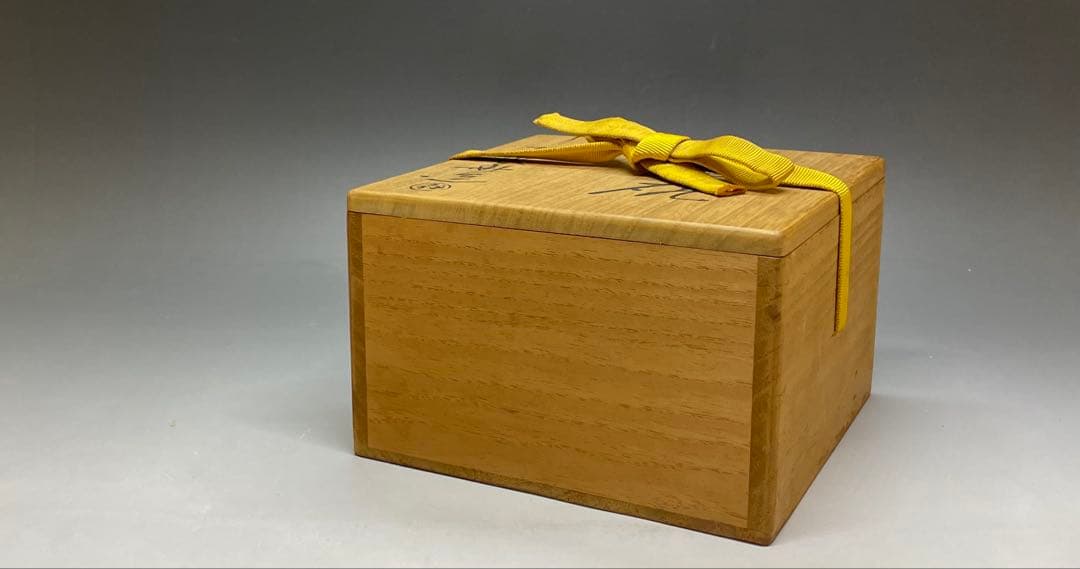
• Box: Signed wooden box (共箱)
• Condition: Excellent — characteristic Hagi texture with subtle biwa-iro development
🔹 [ Cultural & Artistic Insight ]
In the hierarchy of tea bowls, an old saying endures: "Ichi Raku, ni Hagi, san Karatsu" — first Raku, second Hagi, third Karatsu. This ordering, passed down through generations of tea practitioners, places Hagi ware at the very heart of the Japanese tea tradition. The Sakata family has shaped that tradition for over four centuries, their lineage stretching back to the Korean potters brought to Hagi by the Mori clan following Toyotomi Hideyoshi's campaigns in the 1590s. To hold a bowl by a 13th-generation Sakata Deika is to hold a vessel that carries the weight of that unbroken transmission.
What distinguishes Hagi from other tea ceramics is its relationship with time. The porous body and crazed glaze absorb tea over years of use, gradually developing a warm patina known as "nanabake" (七化け) — the seven transformations. A new Hagi bowl is understood to be unfinished; it is the tea practitioner who completes it through decades of use. This philosophy — that a vessel is not made but grown — places Hagi ware in profound alignment with the impermanence at the core of tea.
The biwa-iro (loquat color) visible in this bowl is a natural consequence of the iron content in Hagi clay interacting with the translucent white glaze during firing. It appears as a warm, peachy undertone that emerges through the glaze like blush through skin — unforced and unrepeatable.
*A bowl that waits. Not for tea, but for the years that will give it its final color.*
🔹 [ Deep-Dive Commentary ]
The Sakata Deika lineage is one of the foundational pillars of Hagi pottery. The family traces its origins to the establishment of Hagi ware in the early Edo period, when Korean potters settled in what is now Yamaguchi Prefecture under the patronage of the Mori domain. Over thirteen generations, the Sakata family has maintained and evolved the core techniques of Hagi ware while preserving its essential character — soft, porous clay; translucent, crazed glaze; and forms that privilege the hand's experience over the eye's.
The 13th-generation Sakata Deika is recognized as one of the defining figures of modern Hagi pottery. His work demonstrates a mastery of what might be called controlled surrender — the deliberate creation of conditions in which the kiln's natural processes produce results that no hand could dictate. The white glaze on this bowl is not applied uniformly but with intentional variation in thickness, allowing the clay body to assert itself in places where the glaze runs thin.
The wide, open form of this chawan is quintessential Hagi. Unlike the steep walls of a Raku bowl or the conical precision of an Ido-gata, the Hagi bowl opens generously — an invitation rather than a containment. The kodai (foot ring) at 4.8 cm is characteristically Hagi: broad, often with a notch (kiri-kodai) that serves as a signature element of the tradition. This base is not merely structural; in the ritual of examining a tea bowl, the guest turns it over to inspect the kodai — and in Hagi ware, this underside often reveals the most dramatic surface character.
The crazing (kannyu) in the glaze is not a defect but a defining feature. These fine cracks form during cooling as the glaze contracts at a different rate than the clay body. Over time, tea seeps into these cracks, creating a network of amber-brown lines that map the bowl's history of use. In the world of Hagi, a well-used bowl with deep kannyu staining is considered more beautiful than a new one — a radical inversion of the Western expectation that age diminishes value.
For the serious collector, a bowl by the 13th-generation Sakata Deika represents a convergence of historical lineage, technical mastery, and philosophical depth that few contemporary potters can match. It is not simply a vessel for matcha — it is a participant in a four-hundred-year conversation between clay, fire, tea, and time.
🔹 [ 日本語解説 ]
【基本情報】
• 作家:十三代 坂田泥華
• 技法:萩焼・白釉(枇杷色の景色あり)
• 形状:碗形茶碗・広口
• 寸法:高さ約7cm、口径約12.8cm、高台径約4.8cm
• 付属:共箱
• 状態:良好。萩焼特有の柔らかな肌合いと枇杷色の発色が美しい
【文化的背景と芸術的考察】
「一楽二萩三唐津」——茶碗の格付けを示すこの言葉は、萩焼を日本の茶の湯の核心に位置づけている。坂田家は四百年以上にわたってその伝統を形作ってきた名窯であり、その系譜は豊臣秀吉の朝鮮出兵後に毛利氏が萩に招いた朝鮮陶工にまで遡る。十三代坂田泥華の茶碗を手にすることは、途切れることのない伝承の重みに触れることに他ならない。
萩焼を他の茶陶と隔てるのは、時間との関係である。多孔質の素地と貫入の入った釉薬は、使い込むほどに茶を吸い込み、「七化け」と呼ばれる経年変化を遂げる。新しい萩の茶碗は未完成の状態にある。それを完成させるのは、数十年の使用を通じた茶人自身である。器は作られるのではなく育てられるという、この思想こそが萩焼を茶の湯の無常観と深く結びつけている。
本碗に見られる枇杷色は、萩の土に含まれる鉄分が白釉と焼成中に反応して生まれる自然な発色である。釉の下から肌が透けるように現れるその色合いは、意図して出せるものではなく、二度と同じものは生まれない。
坂田泥華家は萩焼の礎を成す名跡の一つであり、十三代は現代萩焼を代表する作家として広く認められている。制御された委譲——窯の自然な作用に人の手が及ばない結果を生み出す条件を意図的に整えること——に、その作風の本質がある。白釉は厚薄を意図的に変え、薄い箇所では土の表情が釉を透かして主張する。広く開いた碗形は萩の典型であり、楽茶碗の急な立ち上がりや井戸形の円錐的精度とは異なる、包容力のある姿である。高台の切り高台は萩焼の署名的要素であり、茶碗を拝見する際にもっとも劇的な景色を見せることが多い。貫入は欠点ではなく萩焼を定義する特徴であり、使い込むほどに茶が染み込んで琥珀色の線を描き、茶碗の使用履歴を刻む。萩の世界では、深く貫入の入った古碗は新しいものより美しいとされる。
🔹 [ SHIPPING & PACKAGING ]
• Dispatch: Within 1-6 business days
• Carrier: Japan Post EMS / UPS (with tracking)
• Packaging: Carefully wrapped with protective materials
🔹 [ BASIC DETAILS ]
• Artist: 13th Generation Sakata Deika (十三代 坂田泥華)
• Technique: Hagi ware — white/cream glaze with natural biwa-iro (loquat color) undertones
• Era: Showa–Heisei period
• Origin: Hagi, Yamaguchi Prefecture, Japan
• Form: Wide, open chawan — classic Hagi proportions
• Dimensions: Height approx. 7 cm, Diameter approx. 12.8 cm, Kodai (foot ring) approx. 4.8 cm
• Weight: Not specified
• Box: Signed wooden box (共箱)
• Condition: Excellent — characteristic Hagi texture with subtle biwa-iro development
🔹 [ Cultural & Artistic Insight ]
In the hierarchy of tea bowls, an old saying endures: "Ichi Raku, ni Hagi, san Karatsu" — first Raku, second Hagi, third Karatsu. This ordering, passed down through generations of tea practitioners, places Hagi ware at the very heart of the Japanese tea tradition. The Sakata family has shaped that tradition for over four centuries, their lineage stretching back to the Korean potters brought to Hagi by the Mori clan following Toyotomi Hideyoshi's campaigns in the 1590s. To hold a bowl by a 13th-generation Sakata Deika is to hold a vessel that carries the weight of that unbroken transmission.
What distinguishes Hagi from other tea ceramics is its relationship with time. The porous body and crazed glaze absorb tea over years of use, gradually developing a warm patina known as "nanabake" (七化け) — the seven transformations. A new Hagi bowl is understood to be unfinished; it is the tea practitioner who completes it through decades of use. This philosophy — that a vessel is not made but grown — places Hagi ware in profound alignment with the impermanence at the core of tea.
The biwa-iro (loquat color) visible in this bowl is a natural consequence of the iron content in Hagi clay interacting with the translucent white glaze during firing. It appears as a warm, peachy undertone that emerges through the glaze like blush through skin — unforced and unrepeatable.
*A bowl that waits. Not for tea, but for the years that will give it its final color.*
🔹 [ Deep-Dive Commentary ]
The Sakata Deika lineage is one of the foundational pillars of Hagi pottery. The family traces its origins to the establishment of Hagi ware in the early Edo period, when Korean potters settled in what is now Yamaguchi Prefecture under the patronage of the Mori domain. Over thirteen generations, the Sakata family has maintained and evolved the core techniques of Hagi ware while preserving its essential character — soft, porous clay; translucent, crazed glaze; and forms that privilege the hand's experience over the eye's.
The 13th-generation Sakata Deika is recognized as one of the defining figures of modern Hagi pottery. His work demonstrates a mastery of what might be called controlled surrender — the deliberate creation of conditions in which the kiln's natural processes produce results that no hand could dictate. The white glaze on this bowl is not applied uniformly but with intentional variation in thickness, allowing the clay body to assert itself in places where the glaze runs thin.
The wide, open form of this chawan is quintessential Hagi. Unlike the steep walls of a Raku bowl or the conical precision of an Ido-gata, the Hagi bowl opens generously — an invitation rather than a containment. The kodai (foot ring) at 4.8 cm is characteristically Hagi: broad, often with a notch (kiri-kodai) that serves as a signature element of the tradition. This base is not merely structural; in the ritual of examining a tea bowl, the guest turns it over to inspect the kodai — and in Hagi ware, this underside often reveals the most dramatic surface character.
The crazing (kannyu) in the glaze is not a defect but a defining feature. These fine cracks form during cooling as the glaze contracts at a different rate than the clay body. Over time, tea seeps into these cracks, creating a network of amber-brown lines that map the bowl's history of use. In the world of Hagi, a well-used bowl with deep kannyu staining is considered more beautiful than a new one — a radical inversion of the Western expectation that age diminishes value.
For the serious collector, a bowl by the 13th-generation Sakata Deika represents a convergence of historical lineage, technical mastery, and philosophical depth that few contemporary potters can match. It is not simply a vessel for matcha — it is a participant in a four-hundred-year conversation between clay, fire, tea, and time.
🔹 [ 日本語解説 ]
【基本情報】
• 作家:十三代 坂田泥華
• 技法:萩焼・白釉(枇杷色の景色あり)
• 形状:碗形茶碗・広口
• 寸法:高さ約7cm、口径約12.8cm、高台径約4.8cm
• 付属:共箱
• 状態:良好。萩焼特有の柔らかな肌合いと枇杷色の発色が美しい
【文化的背景と芸術的考察】
「一楽二萩三唐津」——茶碗の格付けを示すこの言葉は、萩焼を日本の茶の湯の核心に位置づけている。坂田家は四百年以上にわたってその伝統を形作ってきた名窯であり、その系譜は豊臣秀吉の朝鮮出兵後に毛利氏が萩に招いた朝鮮陶工にまで遡る。十三代坂田泥華の茶碗を手にすることは、途切れることのない伝承の重みに触れることに他ならない。
萩焼を他の茶陶と隔てるのは、時間との関係である。多孔質の素地と貫入の入った釉薬は、使い込むほどに茶を吸い込み、「七化け」と呼ばれる経年変化を遂げる。新しい萩の茶碗は未完成の状態にある。それを完成させるのは、数十年の使用を通じた茶人自身である。器は作られるのではなく育てられるという、この思想こそが萩焼を茶の湯の無常観と深く結びつけている。
本碗に見られる枇杷色は、萩の土に含まれる鉄分が白釉と焼成中に反応して生まれる自然な発色である。釉の下から肌が透けるように現れるその色合いは、意図して出せるものではなく、二度と同じものは生まれない。
坂田泥華家は萩焼の礎を成す名跡の一つであり、十三代は現代萩焼を代表する作家として広く認められている。制御された委譲——窯の自然な作用に人の手が及ばない結果を生み出す条件を意図的に整えること——に、その作風の本質がある。白釉は厚薄を意図的に変え、薄い箇所では土の表情が釉を透かして主張する。広く開いた碗形は萩の典型であり、楽茶碗の急な立ち上がりや井戸形の円錐的精度とは異なる、包容力のある姿である。高台の切り高台は萩焼の署名的要素であり、茶碗を拝見する際にもっとも劇的な景色を見せることが多い。貫入は欠点ではなく萩焼を定義する特徴であり、使い込むほどに茶が染み込んで琥珀色の線を描き、茶碗の使用履歴を刻む。萩の世界では、深く貫入の入った古碗は新しいものより美しいとされる。
🔹 [ SHIPPING & PACKAGING ]
• Dispatch: Within 1-6 business days
• Carrier: Japan Post EMS / UPS (with tracking)
• Packaging: Carefully wrapped with protective materials
Quantity
Couldn't load pickup availability
Out of stock
View full details