1
/
of
9
11th-Gen Raku Kichizaemon Keinyuu Black Raku Tea Bowl | Edo Period Chawan
11th-Gen Raku Kichizaemon Keinyuu Black Raku Tea Bowl | Edo Period Chawan
Regular price
Dhs. 2,815.00 AED
Regular price
Sale price
Dhs. 2,815.00 AED
Taxes included.
Shipping calculated at checkout.
There are tea bowls made to be admired. Then there are tea bowls made to be held. The black Raku chawan of Keinyuu belongs entirely to the second category — and after a century and a half, it still insists on it.
This chawan was made by the eleventh-generation Raku Kichizaemon, known posthumously as Keinyuu (1817–1902). The Raku lineage is the oldest unbroken pottery tradition dedicated exclusively to the tea ceremony, founded in the late sixteenth century by Chojiro under Rikyu's guidance. Each generation inherits not only technique but a philosophy of form: that a tea bowl must meet the hand before it meets the eye.
🔹 [ BASIC DETAILS ]
▸ Type: Black Raku chawan (kuro-chawan)
▸ Artist: 11th-generation Raku Kichizaemon, Keinyuu (楽吉左衛門 慶入, 1817–1902)
▸ Dimensions: H approx. 7.7 cm × D approx. 11.2 cm
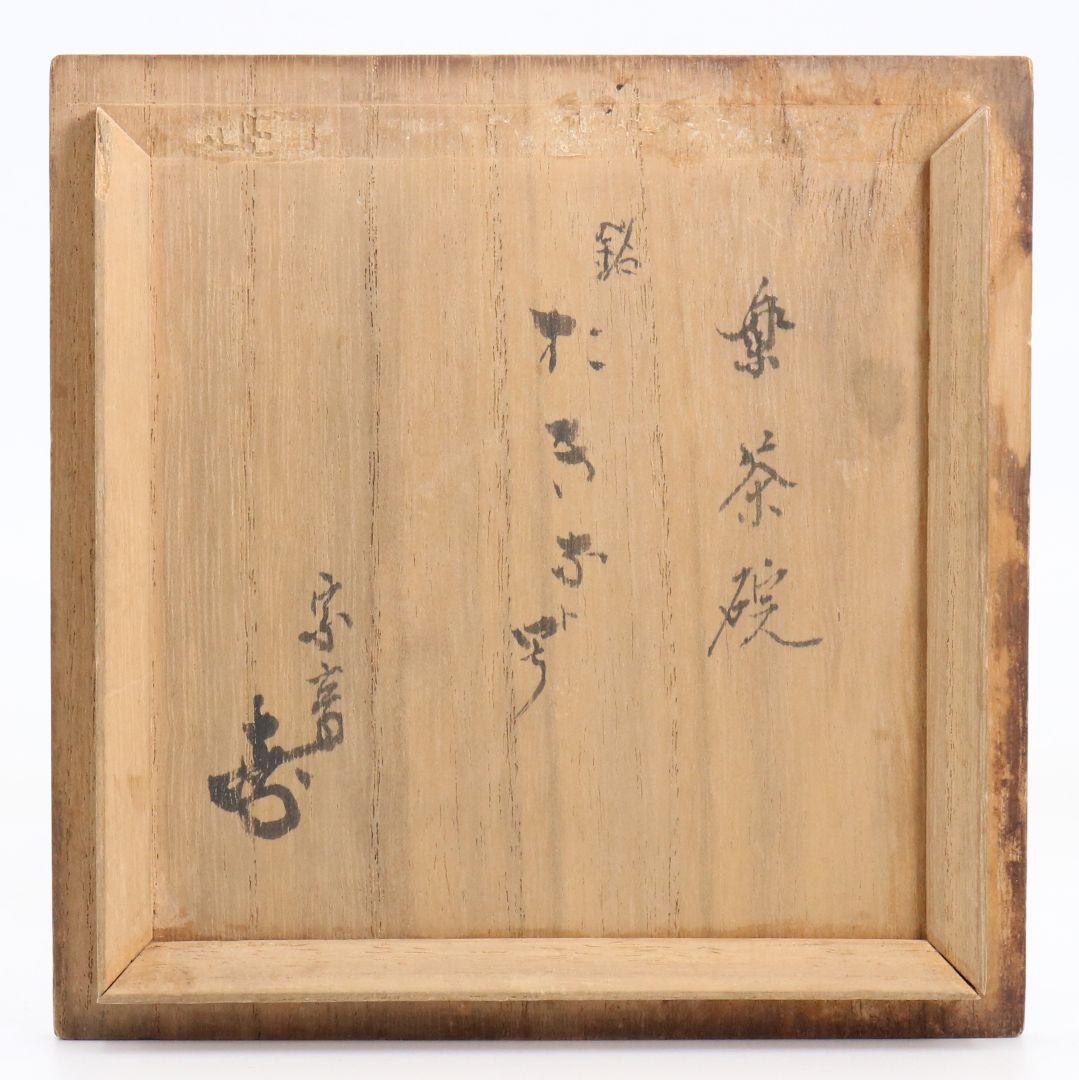
▸ Condition: The bowl itself is in excellent condition — black glaze deep and intact, hand-formed walls sound. The tomobako shows significant age wear and tape reinforcement but retains its paper label and calligraphy.
▸ Box: Aged tomobako with paper label inscribed "黒茶碗"
Keinyuu was one of the most prolific and technically assured potters in the Raku succession. His black chawan are recognized by the density and depth of their glaze — what appears flat from a distance reveals, at close range, a surface of fine pitting and tonal variation that can only be read by handling. The sunagime texture — a sandy, granular quality to the glaze — is characteristic of his kiln practice.
The hand-building technique (tezukune) used throughout the Raku tradition means that no two bowls share a profile. The walls are formed by pressing, not throwing — the marks of thumbs and palms remain inside the clay. When you hold a Raku bowl, you hold the shape of the maker's hand.
The condition of this piece reflects honest history: a working bowl from the late Edo period, used in ceremony, preserved through the Meiji transformation of Japanese culture. The box has aged as boxes age. The bowl has not.
【日本語説明】
十一代楽吉左衛門・慶入(1817-1902)作・黒楽茶碗。楽家はセン・ノー・リキュウの指導のもと長次郎が創始した、茶道専用陶芸の最古の家系。慶入の黒楽は深い光沢と砂目の質感で知られ、手づくね(テズクネ)技法により二つとして同じ形はない。釉薬の奥深さは手に取って初めてその全貌が現れる。碗の状態は極めて良好。共箱は経年劣化・テープ補強あり、ラベル「黒茶碗」の墨書は判読可能。寸法:高さ約7.7cm、直径約11.2cm。
▸ SHIPPING & PACKAGING
Each piece is wrapped in traditional Japanese washi paper, cushioned with bubble wrap, and double-boxed for international transit. We ship from Japan via Japan Post EMS or DHL. Estimated delivery: 5–10 business days. Tracking provided. For any customs duties or import taxes, buyers are responsible per their country's regulations.
🔹 [ SHIPPING & PACKAGING ]
• Dispatch: Within 1-6 business days
• Carrier: Japan Post EMS / UPS (with tracking)
• Packaging: Carefully wrapped with protective materials
• Insurance: Included for all shipments
• Note: Import duties and taxes may apply depending on your country's regulations
This chawan was made by the eleventh-generation Raku Kichizaemon, known posthumously as Keinyuu (1817–1902). The Raku lineage is the oldest unbroken pottery tradition dedicated exclusively to the tea ceremony, founded in the late sixteenth century by Chojiro under Rikyu's guidance. Each generation inherits not only technique but a philosophy of form: that a tea bowl must meet the hand before it meets the eye.
🔹 [ BASIC DETAILS ]
▸ Type: Black Raku chawan (kuro-chawan)
▸ Artist: 11th-generation Raku Kichizaemon, Keinyuu (楽吉左衛門 慶入, 1817–1902)
▸ Dimensions: H approx. 7.7 cm × D approx. 11.2 cm
▸ Condition: The bowl itself is in excellent condition — black glaze deep and intact, hand-formed walls sound. The tomobako shows significant age wear and tape reinforcement but retains its paper label and calligraphy.
▸ Box: Aged tomobako with paper label inscribed "黒茶碗"
Keinyuu was one of the most prolific and technically assured potters in the Raku succession. His black chawan are recognized by the density and depth of their glaze — what appears flat from a distance reveals, at close range, a surface of fine pitting and tonal variation that can only be read by handling. The sunagime texture — a sandy, granular quality to the glaze — is characteristic of his kiln practice.
The hand-building technique (tezukune) used throughout the Raku tradition means that no two bowls share a profile. The walls are formed by pressing, not throwing — the marks of thumbs and palms remain inside the clay. When you hold a Raku bowl, you hold the shape of the maker's hand.
The condition of this piece reflects honest history: a working bowl from the late Edo period, used in ceremony, preserved through the Meiji transformation of Japanese culture. The box has aged as boxes age. The bowl has not.
【日本語説明】
十一代楽吉左衛門・慶入(1817-1902)作・黒楽茶碗。楽家はセン・ノー・リキュウの指導のもと長次郎が創始した、茶道専用陶芸の最古の家系。慶入の黒楽は深い光沢と砂目の質感で知られ、手づくね(テズクネ)技法により二つとして同じ形はない。釉薬の奥深さは手に取って初めてその全貌が現れる。碗の状態は極めて良好。共箱は経年劣化・テープ補強あり、ラベル「黒茶碗」の墨書は判読可能。寸法:高さ約7.7cm、直径約11.2cm。
▸ SHIPPING & PACKAGING
Each piece is wrapped in traditional Japanese washi paper, cushioned with bubble wrap, and double-boxed for international transit. We ship from Japan via Japan Post EMS or DHL. Estimated delivery: 5–10 business days. Tracking provided. For any customs duties or import taxes, buyers are responsible per their country's regulations.
🔹 [ SHIPPING & PACKAGING ]
• Dispatch: Within 1-6 business days
• Carrier: Japan Post EMS / UPS (with tracking)
• Packaging: Carefully wrapped with protective materials
• Insurance: Included for all shipments
• Note: Import duties and taxes may apply depending on your country's regulations
Quantity
Couldn't load pickup availability
Out of stock
View full details